Category: Land Clearing & Forestry Mulching

  • How to Create Evacuation Access Routes Safely

    How to Create Evacuation Access Routes Safely

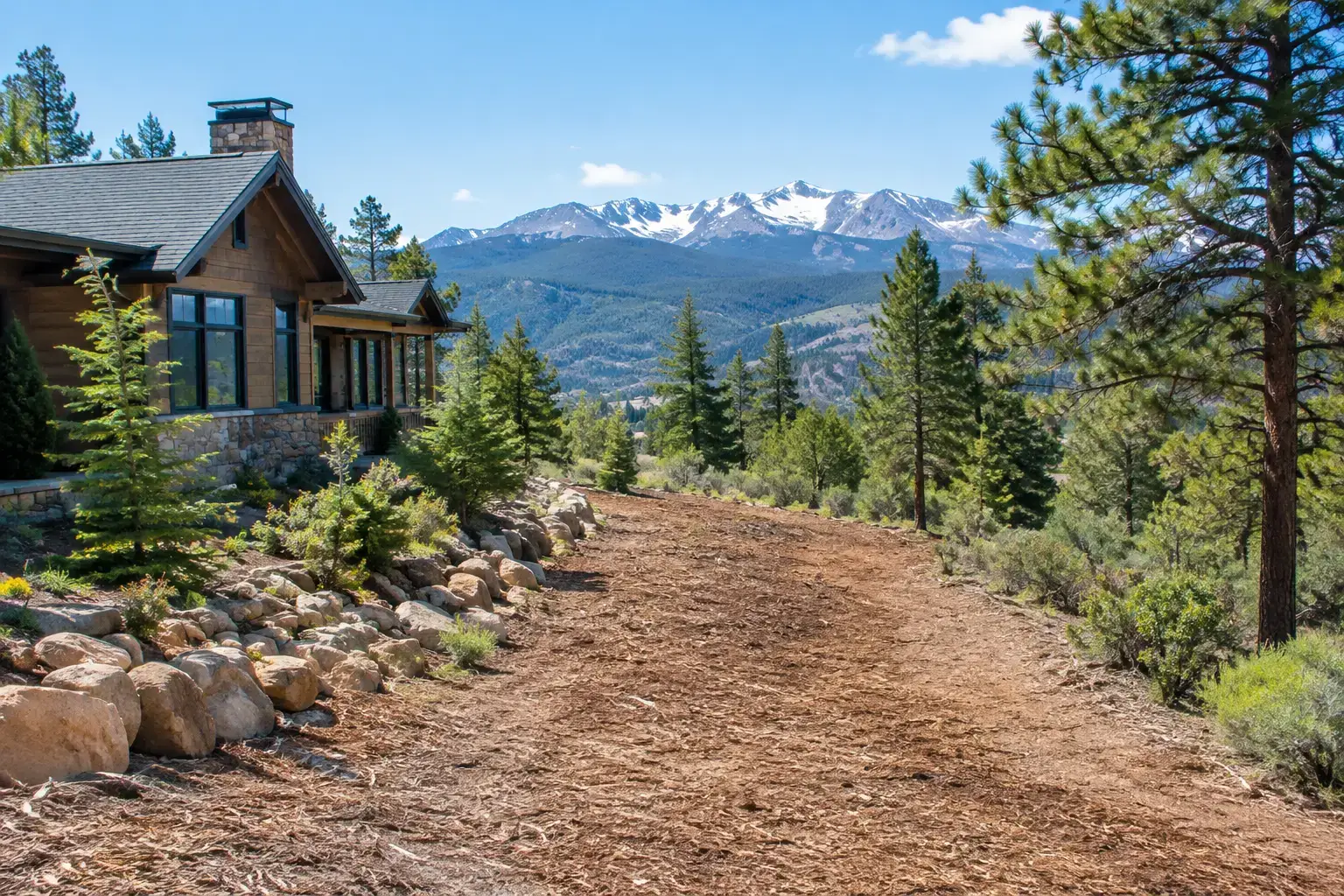
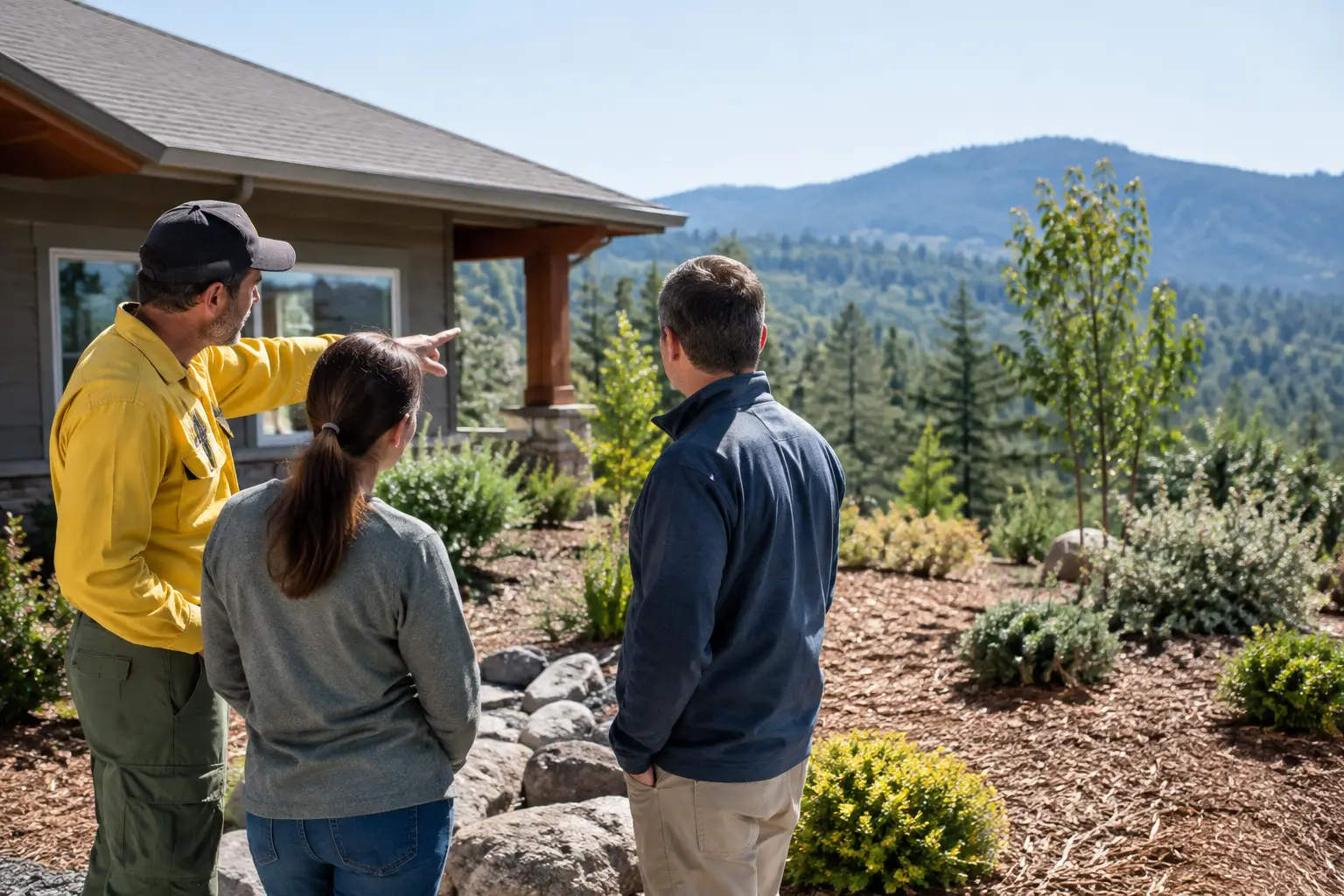
    A narrow driveway choked with Gambel oak, a locked gate, and a sharp blind corner can turn a manageable wildfire evacuation into a dangerous bottleneck. Knowing how to create evacuation access routes means looking beyond a path off the property. You need a route that people can find under stress, drive in low visibility, and share with incoming fire apparatus without getting trapped.

    For Colorado acreage, mountain homes, ranch properties, and remote developments, access is part of wildfire readiness. It also has to work on ordinary days: deliveries, maintenance crews, guests, snow removal, and emergency response. Clear it correctly, then maintain it.

    Start With the Way Out, Not the Clearing Machine

    Walk or drive every possible exit from the property before deciding where to cut. Identify the primary route to a maintained public road, then look for a viable secondary option. A second exit may be another driveway connection, a private road easement, or a turnaround that lets vehicles reverse direction safely if the primary route is blocked.

    Do not assume an old two-track road is an evacuation route because it appears on a map. Check who owns it, whether you have legal access, whether gates can be opened, and whether it remains passable through mud, snow, washouts, or fallen timber. An escape route that works only in perfect weather is not dependable access.

    A good field review answers practical questions. Can two vehicles pass? Can a driver see around the next bend? Is there room to turn around before a steep, narrow section? Are low branches, leaning trees, drainage crossings, or loose road edges likely to block the route? Mark trouble spots now. They are easier and less expensive to address before an emergency.

    How to Create Evacuation Access Routes That Work Under Pressure

    The goal is simple: create a clear travel corridor with enough width, visibility, and turnaround space for the vehicles that may need it. The final dimensions depend on your terrain, governing fire district requirements, road ownership, and the equipment expected to use the route. A private homeowner driveway and a multi-home development road do not carry the same demands.

    Clear vegetation beyond the tire tracks

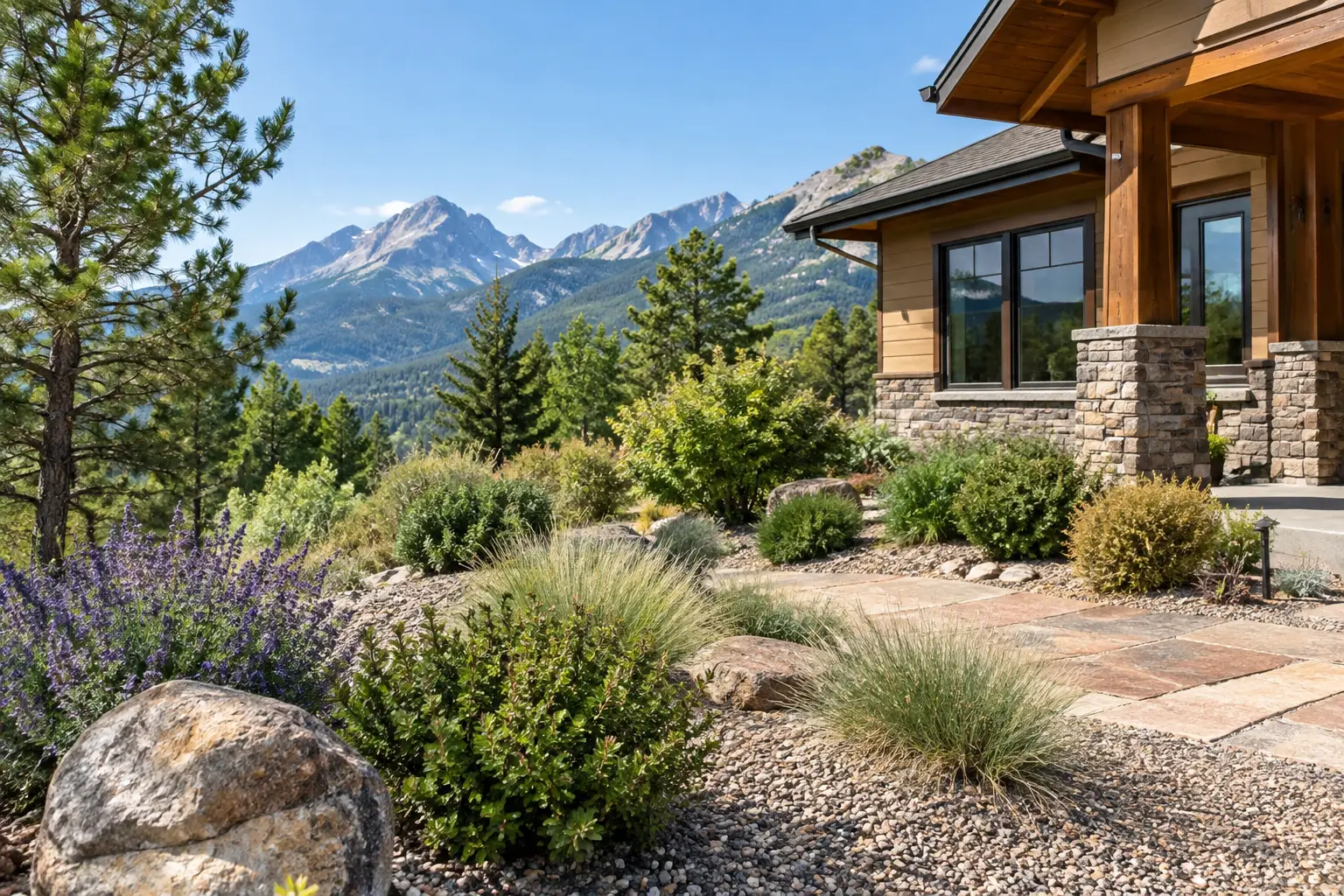
    Do not stop at cutting brush out of the wheel path. Dense shrubs and low limbs can scrape vehicles, hide road edges, restrict visibility, and carry flames close to the travel lane. Remove brush, small trees, dead limbs, and low-hanging branches along the corridor where appropriate. Reduce ladder fuels that allow a surface fire to climb from grass and brush into tree crowns.

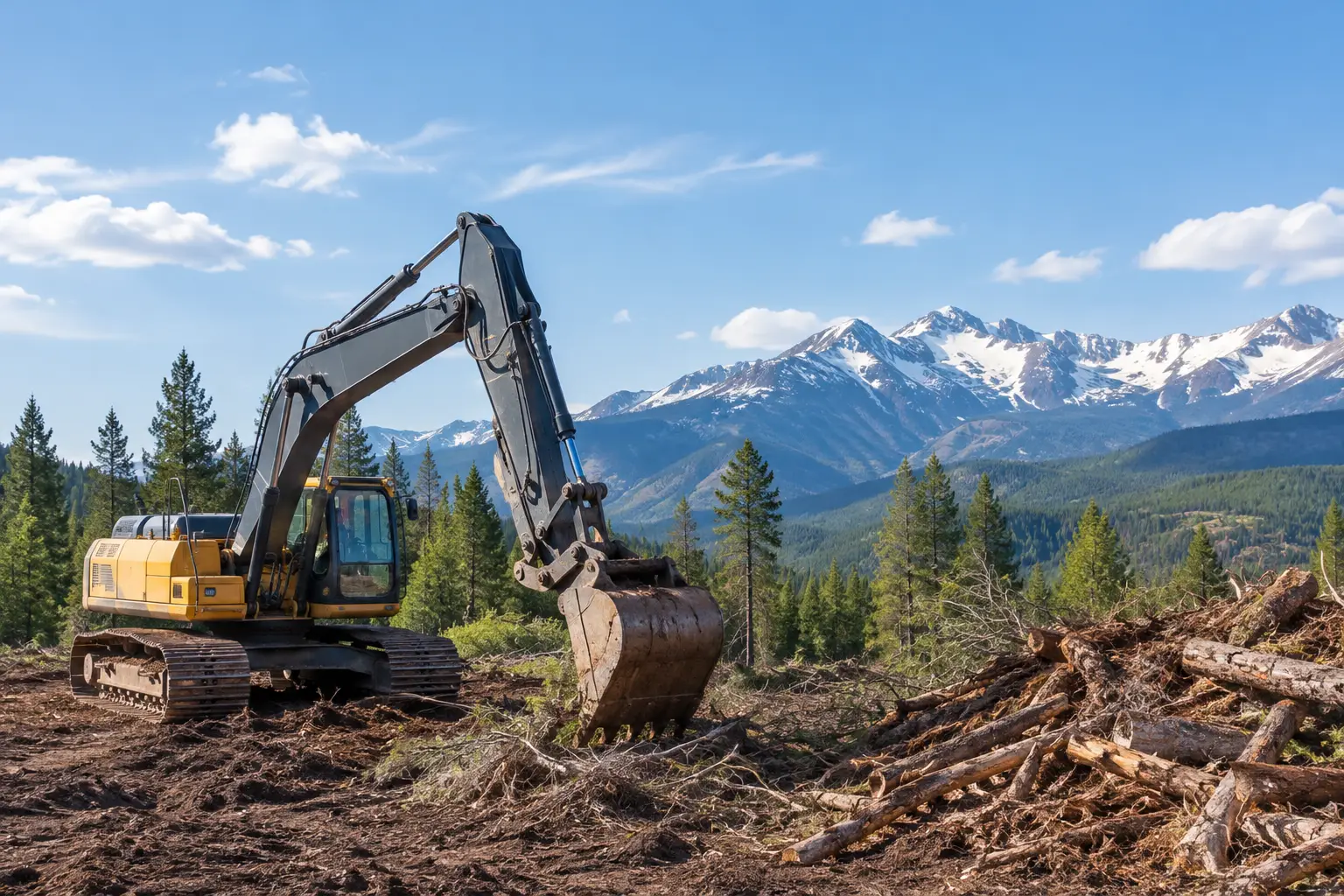
    Forestry mulching is often a strong fit for overgrown access corridors. A drum mulcher can process brush and small trees into mulch without piling burnable debris beside the road. The trade-off is that mulch still needs to be managed thoughtfully. In heavy fuel areas, do not simply leave a deep, continuous mulch layer where it creates a new fire path or interferes with drainage. Site conditions decide the right finish.

    Keep larger healthy trees when they provide shade, slope stability, or screening and do not compromise clearance or fire safety. The work is targeted, not reckless. Remove the fuel and obstruction problem while keeping the land usable.

    Build room for turning and passing

    Dead-end driveways need a safe place to turn around. Without one, residents may be forced to back long distances while smoke is reducing visibility and emergency vehicles are trying to enter. A turnaround also makes routine access safer for trailers, contractors, and snowplows.

    The best location depends on grade, drainage, property boundaries, and existing improvements. Flat ground near the home is often convenient, but it can be a poor choice if it puts turning vehicles against a retaining wall, propane tank, or steep drop-off. On rugged parcels, clearing and grading a dedicated turnaround may be the more reliable answer.

    Long or narrow routes may also need pullouts where vehicles can pass. This matters on shared drives and single-lane mountain roads. Plan them where drivers can see one another, not just wherever the ground happens to open up.

    Correct the road surface and drainage

    Vegetation clearing alone will not fix a route that washes out every spring. Ruts, soft shoulders, steep cross-slopes, failed culverts, and loose material can stop a vehicle quickly. Grade the road to shed water without sending runoff into a ditch, driveway base, or neighboring property.

    On steep terrain, this work requires judgment. Aggressive grading can destabilize slopes or create erosion issues. In some cases, the right fix is modest shaping, drainage improvement, and surface reinforcement rather than widening the entire road. Where waterways, wetlands, easements, or county roads are involved, confirm permits and requirements before moving dirt.

    Remove overhead and fixed obstructions

    Look up as well as down. Low limbs, dead snags, utility conflicts, hanging signs, and poorly placed gate structures can interfere with emergency access. A route may be wide enough for a pickup but still fail for a fire engine or utility truck.

    Address trees carefully. Dead or compromised trees near the road deserve priority, especially if they could fall across the only exit during wind or fire activity. For utility-line clearance, use the proper utility provider or qualified tree professionals. Never cut near energized lines without the right expertise and authorization.

    Make Gates and Signs Help, Not Hinder

    A locked gate protects a property until it delays evacuation or emergency response. Every gate on an escape route should open reliably, remain reachable from a vehicle, and avoid creating a pinch point on the road. If an electric opener loses power, know how to operate it manually.

    Use visible address markers at the road and clear route markers where guests or tenants may hesitate. Reflective numbering and simple directional signs can make a major difference at night or in smoke. Keep signs readable. A faded address hidden behind shrubs does not help anyone find your property.

    If a route serves several owners, put the plan in writing. Establish who maintains vegetation, handles snow removal, repairs washouts, manages gate codes, and approves work. Shared access fails when everyone assumes someone else is handling it.

    Tie Access Work to Your Wildfire Plan

    An evacuation route is not a substitute for a wildfire action plan. Every household should know when to leave, where to go, who handles pets and livestock, and what essentials travel in the vehicle. Keep vehicles fueled during high-risk periods and avoid parking where they block the turnaround or narrow the drive.

    For landowners, access improvements should connect to defensible-space work around structures. Clear combustible vegetation near buildings, reduce fuels along the driveway, and address dense brush that could push fire toward both the home and the exit. The same overgrowth that raises fire exposure often limits access for responders.

    Before starting work, check guidance from your local fire protection district, county road department, homeowners association, and insurance carrier where applicable. They may set specific requirements for driveway width, vertical clearance, road grades, turnarounds, gates, and address signage. Meet the applicable standard, not a guess based on a neighboring driveway.

    Maintain the Route Before Fire Season

    Access is not a one-time project. Colorado weather, fast-growing brush, winter damage, and falling timber can change a road quickly. Inspect the route at least before wildfire season and after major wind, snow, or rain events.

    Focus on the conditions most likely to shut down travel: new brush at corners, limbs hanging over the road, rutted sections, plugged culverts, leaning trees, damaged gates, and washed-out shoulders. Keep the route free of parked equipment, stacked materials, and debris piles. If your only exit is blocked by a trailer or firewood delivery, it is not truly available.

    Yeti Defensible Landworks helps Colorado property owners turn overgrown, difficult ground into cleared access and workable defensible space. With forestry mulching, targeted clearing, and grading where the site calls for it, the focus stays on a usable result: safer travel in, a clearer way out, and land you can manage with confidence.

    Start before the smoke is in the valley. Walk the route, find the choke points, and fix the access problems while there is time to do the job right.

  • Insurance Non-Renewal: Fire Mitigation by Mastication

    Insurance Non-Renewal: Fire Mitigation by Mastication

    A homeowners insurance non-renewal & fire mitigation with equipment mastication issue becomes real the moment a carrier asks for photos, requests vegetation work, or sends a non-renewal notice. For Colorado property owners, dense brush, ladder fuels, small conifers, and blocked access can turn a manageable acreage into an insurance problem fast. The answer is not cosmetic cleanup. It is targeted fuel reduction that leaves the property safer, cleaner, and easier to maintain.

    A non-renewal notice does not automatically mean a home is uninsurable. It does mean time matters. Carriers may reassess wildfire exposure based on vegetation near structures, slope, surrounding fuel continuity, road access, and the ability of emergency crews to reach the home. Your best move is to understand what needs correction, build a practical scope of work, and document the completed conditions.

    Why Insurance Carriers Focus on Vegetation

    Wildfire risk is not limited to a house surrounded by tall trees. Fire can move through dry grass, brush, fallen limbs, woodpiles, ornamental shrubs, and low branches that connect surface fire to tree crowns. Those connected fuels are often called ladder fuels because they give flames a route upward and outward.

    Insurers look at this exposure because embers can travel well ahead of an active fire. A property with thick vegetation against the house, a narrow overgrown driveway, or brush packed beneath mature trees presents more ignition opportunities and makes suppression harder. In mountain, foothill, and rural Front Range communities, those conditions are common after years of deferred land work.

    The goal is not to strip a property bare. A bare slope can create erosion problems, damage usable ground, and leave the land looking rough. Effective mitigation breaks up fuel continuity while retaining healthy, well-spaced vegetation where it makes sense. Every site is different. A flat lot with heavy brush needs a different plan than a steep wooded parcel, a ranch entrance, or a mountain home surrounded by mixed conifers.

    Homeowners Insurance Non-Renewal and Fire Mitigation

    Start by reading the carrier’s letter closely. Some notices identify a specific issue, such as brush within a defined distance of the home or lack of drivable access. Others provide limited detail. If the direction is broad, ask the carrier or agent what documentation they need and whether there is a correction window, inspection requirement, or appeal process.

    Do not assume that clearing one visible patch will satisfy the concern. The work should address the conditions that create exposure across the property: fuels near structures, dense vegetation along access routes, accumulation beneath trees, and unmanaged growth that connects one area to the next.

    A practical mitigation plan usually works outward from the home and critical improvements. That includes the residence, garages, outbuildings, propane tanks, decks, fences, utility areas, and the primary driveway. The strongest plans also consider where an approaching fire could move from surrounding ground toward those assets.

    Keep records as work progresses. Before-and-after photos from the same viewpoints are useful. Save contractor scopes, invoices, site maps, and any written confirmation that identifies what was removed or treated. Documentation does not force an insurer to renew a policy, and carrier standards vary. It does give you clear proof that the condition of the property has changed.

    Where Equipment Mastication Makes Sense

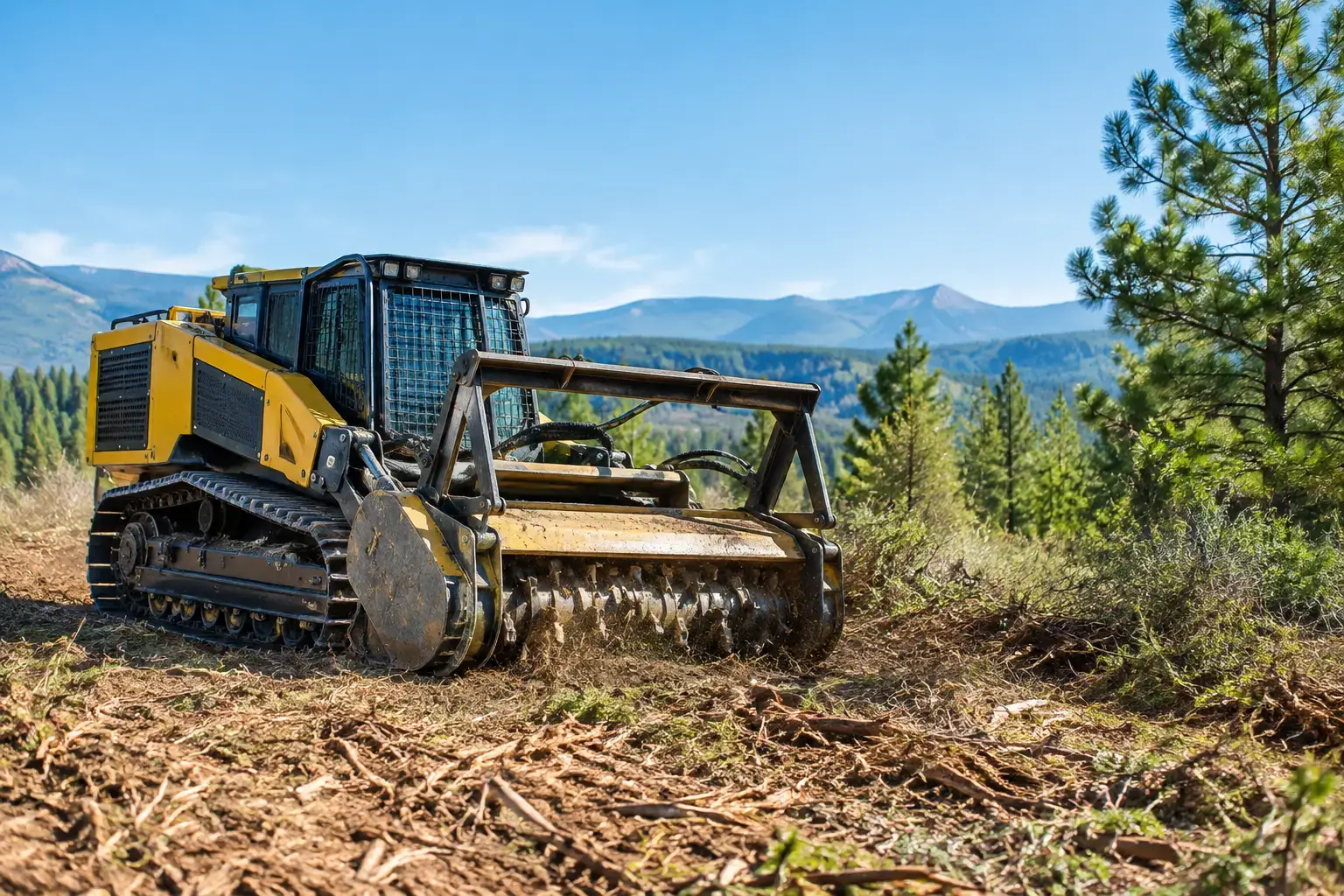
    Equipment mastication uses a purpose-built mulching head to process brush, small trees, invasive vegetation, and accumulated fuels into mulch across the ground. A high-flow compact track loader with a drum mulcher can work efficiently through dense material that would take hand crews far longer to cut, drag, pile, and haul.

    For many Colorado properties, mastication is the workhorse phase of wildfire mitigation. It can open defensible space around a home, widen an overgrown approach, reduce brush beneath tree stands, and reclaim neglected portions of a lot or acreage. The equipment works material in place, reducing the need for burn piles or large haul-off operations.

    That mulch layer is not magic, and it should not be treated as a finished fireproof surface. Heavy mulch can still burn under the right conditions. Proper application matters. Mulch depth, material size, proximity to structures, slope, and the property’s ongoing maintenance plan all affect the result. The objective is to reduce hazardous standing and connected fuels, not simply grind everything within reach.

    Mastication also has limits. Large timber may require selective felling and separate handling. Extremely steep ground, wet soils, protected areas, underground utilities, and tight spaces may call for a different approach. A disciplined contractor evaluates access, terrain, drainage, utility locations, and the material itself before putting equipment on the site.

    Build a Scope That Solves the Real Problem

    Insurance-driven work is often urgent, but urgency should not produce a vague “clear it all” job. A strong scope gives the crew clear priorities and gives you useful documentation afterward.

    First, identify the zones closest to the structures and the driveway. Remove dead brush, low limbs, stacked debris, volunteer trees, and other fuels that could carry fire toward buildings. Then address dense pockets farther out that create continuous pathways through the property. Open travel routes where possible so residents, contractors, and emergency vehicles can move more safely.

    Next, decide what stays. Mature healthy trees, stable ground cover, desirable native vegetation, and landscape features may remain when they are properly spaced and maintained. Selective removal often produces a better long-term result than indiscriminate clearing. You want usable land, not a scarred lot that creates a new erosion or drainage headache.

    Finally, plan for the material after the machine leaves. Vegetation grows back. Wind deposits needles and limbs. New brush appears at fence lines, drainage areas, and property edges. Annual walk-throughs and periodic touch-up work keep a defensible-space project from sliding back into an insurance concern.

    Access Is Part of Fire Readiness

    A narrow, brush-choked driveway is more than an inconvenience. It can delay access, limit vehicle turnaround, and make it harder for crews to work around the home. Clearing encroaching vegetation along an access route improves day-to-day use while supporting wildfire readiness.

    Access improvements may include vegetation clearing, selective tree removal, driveway-edge cleanup, rough grading, or creating room for safer vehicle movement. The right scope depends on the road, terrain, drainage, gates, and available turnaround area. Do not grade or widen blindly. Water needs a place to go, and careless dirt work can create washouts that cost more to fix later.

    On larger properties, access and mitigation often go together. The same equipment that processes brush can help reclaim routes to outbuildings, fence lines, utility areas, and undeveloped ground. That means one coordinated project can reduce fuels, improve visibility, and make more of the property usable.

    Avoid the Common Mistakes

    Waiting until the final week of a non-renewal deadline is the biggest mistake. Qualified equipment crews book out, weather can shift ground conditions, and a proper project may need more than one day. Start as soon as you receive notice.

    The second mistake is treating photos as an afterthought. Take clear images before work starts, during the project, and after completion. Show the home, surrounding vegetation, cleared routes, and the space created between fuels and structures. Wide shots establish context; close shots show the condition of the ground and remaining vegetation.

    The third is assuming every insurance carrier uses the same standard. They do not. Some may respond favorably to documented mitigation. Others may make underwriting decisions based on factors beyond your property condition, including broader wildfire modeling or market availability. Fuel reduction remains worthwhile either way because it helps protect the place you own.

    Put the Land Back Under Control

    A non-renewal notice can feel like a deadline hanging over the property. Treat it as a trigger to fix conditions that have been building for years. Clear the brush. Break up the fuel paths. Open the access. Keep the evidence.

    For Colorado owners dealing with thick vegetation, rugged terrain, or acreage that has become hard to manage, equipment-based mastication can turn a slow, labor-heavy job into visible progress. The best time to create defensible space is before the next notice, the next wind event, or the next fire season puts the property to the test.

  • How to Prepare Land for Utility Installation

    How to Prepare Land for Utility Installation

    Utility crews cannot do clean, safe work through thick brush, loose rock, soft ground, and blocked access. Knowing how to prepare land for utility installation helps prevent damaged lines, delayed inspections, stuck equipment, and costly rework once the trenching starts. On Colorado properties, solid preparation also means accounting for slopes, wildfire fuels, drainage, frost, and terrain that changes fast after rain or snowmelt.

    Whether you are bringing power, water, sewer, gas, communications, or fiber to a new build, the job starts before the utility contractor arrives. Clear the route. Confirm what is already in the ground. Build access that can handle equipment. Then establish a stable, drainable work area.

    Start With the Utility Plan, Not the Brush Cutter

    Before clearing land, know exactly where the utility needs to go. A rough idea is not enough. Utility routes affect clearing limits, driveway placement, building pads, drainage, septic areas, retaining walls, and future landscaping.

    Review the site plan with your builder, engineer, utility provider, or excavation contractor. Identify the planned connection point, the route across the property, the location of meters or pedestals, and any required easements. Ask where crews need room to stage materials, turn equipment around, and stockpile excavated soil.

    This is where many property owners lose time. They clear a broad area, then find out the trench must shift because of grade, a drainage swale, a protected area, or an existing line. Marking the corridor first lets you remove only what needs to go while protecting trees, features, and usable ground outside the work zone.

    If the final route is still under design, clear for access and visibility without grading or excavating the corridor prematurely. Heavy work should follow an approved layout.

    Get Utility Locates Before Any Ground Disturbance

    Never assume an undeveloped or overgrown lot is free of buried infrastructure. Old power feeds, abandoned irrigation lines, private propane lines, water services, septic components, and communications cables can be present even when there is no visible evidence above ground.

    Request utility locates before digging, trenching, ripping, grading, or driving stakes in the planned work area. Public utility marking is a critical first step, but it may not identify every private line on the property. Private facilities often require separate locating.

    Walk the property after markings are complete. Compare the painted marks and flags with the planned route. If there is a conflict, stop and resolve it before equipment begins moving dirt. A shifted trench on paper is cheap. A cut line in the field is not.

    Clear the Route and Build Equipment Access

    Utility installation needs more than a narrow trench path. Crews need room for trenchers, excavators, service trucks, reels, pipe, conduit, spoils, bedding material, and compaction equipment. A route that looks passable on foot may be unusable for machinery.

    Remove brush, small trees, deadfall, invasive vegetation, and low limbs that block the corridor or access road. Forestry mulching is often the right tool for dense vegetation because it processes brush and small woody material in place, leaving a manageable mulch layer instead of burn piles or large debris stacks. It is especially useful on rural acreage, mountain properties, and lots with elevated wildfire-fuel loads.

    The right clearing width depends on the utility type, terrain, equipment, and local requirements. Avoid clearing more than necessary, especially on steep slopes or areas vulnerable to erosion. The goal is a clean, workable route with enough room to operate safely, not a stripped property.

    Protect What Should Stay

    Flag mature trees, drainage features, fences, rock outcrops, corners, and areas outside the work limit before clearing starts. A compact track loader and mulcher can work precisely, but clear boundaries still matter.

    Keep heavy equipment away from tree root zones when possible. Damaging roots can weaken healthy trees, create future hazard trees, and leave a property looking worse after the utility work is complete. If a tree must be removed, handle it before trenching so roots and stumps do not interfere with line depth or compaction.

    Establish Stable Grades and Positive Drainage

    Utilities need proper depth, but the land above them must also shed water. Poor grading can send runoff down the trench line, expose shallow lines, saturate backfill, or create ruts that become a maintenance problem every spring.

    Grade the work zone so water moves away from building sites, access roads, utility structures, and trench corridors. On sloped Colorado ground, this may require rolling dips, swales, water bars, or other drainage controls that slow runoff without directing it toward the new installation.

    Do not grade blindly just to make a route look flat. Flattening slopes can remove stable ground, create erosion, and add unnecessary cost. In many cases, the better move is selective clearing, targeted shaping, and a route that follows terrain intelligently.

    Soil conditions matter too. Clay-heavy ground can turn slick and unstable when wet. Rocky ground may require different excavation methods. Loose fill may need compaction before it can support traffic. If equipment is sinking, spinning, or cutting deep ruts, pause the work. Pushing ahead can damage the route and drive up restoration costs.

    Plan for Spoils, Materials, and Staging

    Every trench produces excavated soil. Every utility installation brings materials onto the site. If there is no staging plan, piles end up in the driveway, drainage path, fire-access lane, or future building area.

    Choose a level staging area close enough to the work zone to keep crews efficient but outside drainage channels and away from protected features. The area should handle delivery trucks and give equipment room to load, unload, and turn safely.

    Decide where trench spoils will go before digging begins. Some material can be reused as backfill. Rocky material, wet soil, oversized roots, or unsuitable fill may need separation or removal. Keep topsoil separate when practical, especially if the corridor will be restored with seed, mulch, or native vegetation after installation.

    Account for Colorado Weather and Fire Conditions

    In Colorado, weather can control the schedule as much as equipment availability. Frozen ground, spring mud, high winds, summer storms, and fire restrictions all affect land preparation and utility work.

    Plan around seasonal conditions. Frozen soil can slow excavation and increase wear on equipment. Saturated ground can fail under trucks and compact poorly. Monsoon storms can wash loose soil into a new trench before it is stabilized. In wildfire-prone areas, clearing for utilities can also be an opportunity to reduce ladder fuels and improve emergency access.

    Do not leave slash, brush piles, or dry woody debris along the new corridor. Process it, remove it, or manage it in a way that supports defensible space and site safety. A cleared utility route should not become a line of concentrated fuel across the property.

    Make the Site Safe for Crews and Inspections

    A prepared site lets contractors focus on installation instead of fighting avoidable hazards. Remove junk, wire, unstable debris, loose fence materials, and concealed hazards from the work zone. Repair or mark washouts, soft shoulders, and steep drop-offs near access routes.

    Confirm gates are wide enough for equipment and that access instructions are clear. If the property is remote, crews should know where to park, where to turn around, and who to contact if conditions change. For larger or more complicated projects, walk the route with the contractor before mobilization.

    Keep in mind that preparation does not replace utility specifications. Depth requirements, conduit type, bedding, separation distances, warning tape, and inspection steps vary by utility and jurisdiction. Your land work should support those requirements, not guess at them.

    Restore the Corridor After Installation

    The last pass matters. Once the line is installed and inspected, backfill should be compacted correctly and the surface restored to drain properly. Ruts, spoil piles, exposed roots, and bare slopes should not be left for the next rainstorm to handle.

    Final restoration may include light grading, erosion control, reseeding, mulch, driveway repair, or reestablishing access features. On mountain and rural properties, the best finish is often functional rather than overly polished: stable ground, controlled water, reduced fuels, and a route that remains serviceable when crews need future access.

    Preparing land for utilities is not just clearing a path. It is disciplined site work that gives every crew a safer place to operate and gives the finished property a better foundation. Clear the hazards, respect the terrain, and set the route up right before the first trench is cut.

  • Rocky Terrain Clearing Without Wrecking Your Land

    Rocky Terrain Clearing Without Wrecking Your Land

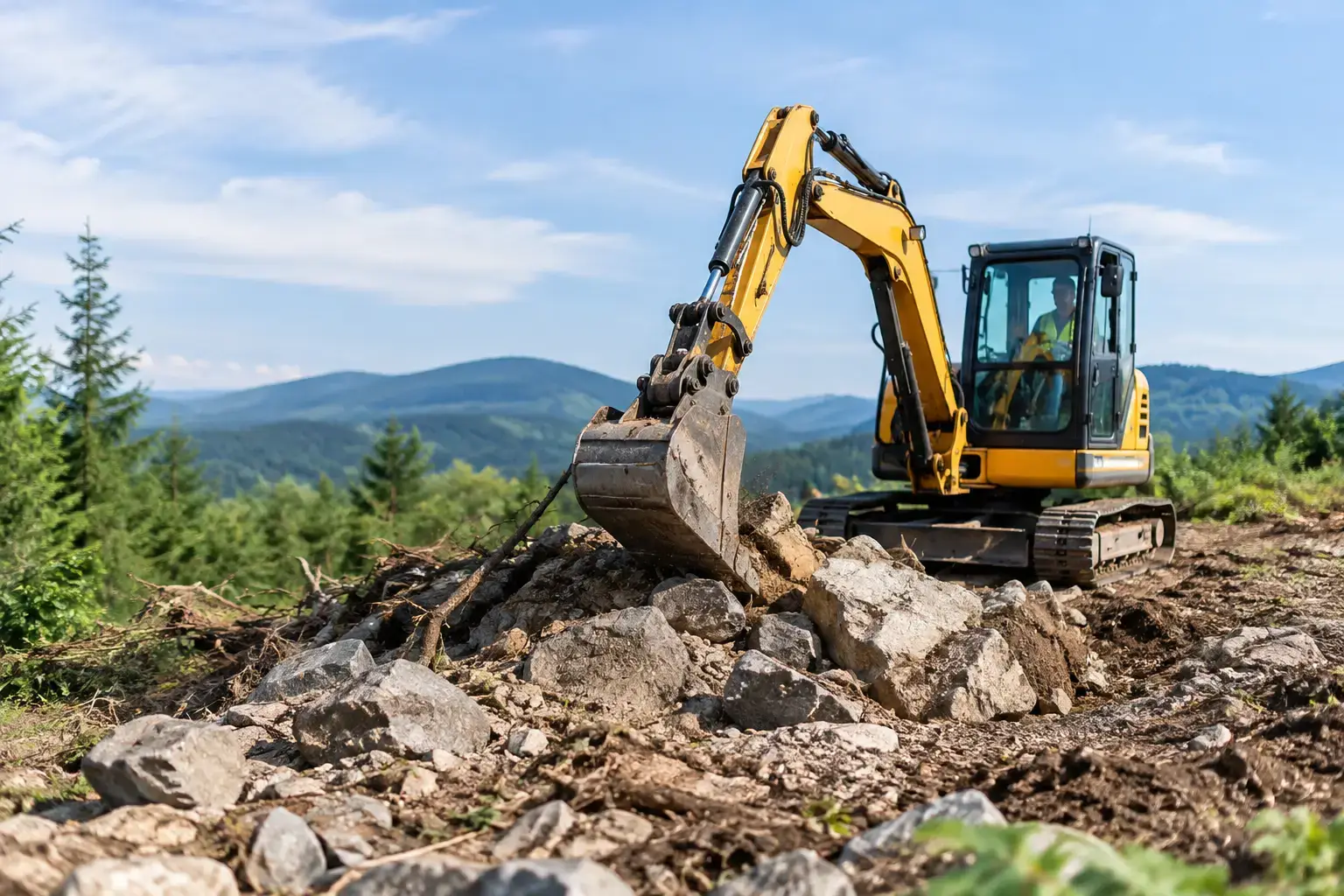
    A Colorado property can look manageable from the gate, then turn into a different job 200 yards uphill. Loose rock, buried ledge, steep grades, thick gambel oak, deadfall, and narrow access all change the plan. Rocky terrain clearing is not about charging in and making a mess. It is controlled work that removes fuels and unwanted vegetation while protecting the ground, access routes, and usable portions of the property.

    The right approach can open a driveway, reduce wildfire exposure, create room for a future build, reclaim neglected acreage, or make a steep lot easier to maintain. The wrong approach can scar slopes, damage retained trees, push material into drainage paths, and leave behind a bigger problem than the one you started with.

    Why Rocky Terrain Clearing Requires a Different Plan

    Rocky ground puts limits on every piece of equipment. Surface boulders can shift. Sharp rock can damage tracks, hoses, and cutting tools. Hidden ledge can stop grading passes cold. On a slope, loose material can roll downhill into fencing, roads, structures, or neighboring ground.

    That does not mean the land cannot be cleared. It means the work must match the site. A field that needs broad brush reduction calls for a different method than a mountain driveway corridor, a building envelope surrounded by rock, or a wooded slope above a home.

    Before machines start, a capable contractor looks at access, slope direction, visible rock, drainage, vegetation density, utilities, structures, and the final purpose of the cleared area. That purpose matters. Land being prepared for defensible space should not be treated exactly like land being prepared for a pad, road, fence line, or pasture recovery.

    Colorado terrain also changes fast with weather. Ground that holds equipment well in dry conditions may become slick after rain or snowmelt. A plan that works in one season may need adjusted travel routes or work limits in another.

    Start With Access, Not the Brush

    Many rocky-property jobs succeed or fail at the entrance. If a machine cannot safely reach the work area, the rest of the project is irrelevant. Tight gates, sharp switchbacks, creek crossings, soft shoulders, and low branches need to be considered before mobilization.

    Access clearing may include trimming back encroaching vegetation, removing brush along a drive, widening a travel corridor where practical, and addressing small obstructions that limit equipment movement. It does not always mean building a new road. Often, the smart move is simply creating a stable, workable route to the areas that need attention.

    On steep or uneven ground, machine travel should be deliberate. Repeated passes in the wrong place can disturb soil, expose rock, and create ruts that funnel water. Sometimes the best result comes from clearing in sections, working from stable ground, and leaving sensitive areas untouched.

    A property owner should also think beyond the machine’s arrival. Will emergency vehicles have better access after the work? Can you reach a shed, well house, fence line, or upper parcel without fighting brush? Is the route wide enough to maintain later? Good clearing creates a usable path, not just a one-day opening.

    Use the Right Tool for the Material

    Drum mulching is often a strong fit for brush, small trees, dense understory, and accumulated wildfire fuels on rugged ground. A high-flow compact track loader can work with a low ground-pressure footprint compared with heavier equipment, while a drum mulcher processes vegetation into mulch instead of leaving slash piles across the property.

    That mulch layer can help cover exposed soil and reduce the amount of loose woody debris left behind. But it is not a cure-all. Mulch depth, slope, existing ground cover, drainage, and the landowner’s intended use all matter. A heavily mulched building area or driveway corridor may still require follow-up site work.

    Rock creates real limits for a mulching head. The operator has to manage cutting height, watch for buried stone, and avoid treating the machine like a rock grinder. Large boulders, solid bedrock, concrete, wire, old fencing, and hidden debris can require a different method or manual removal before the mulcher goes to work.

    For rocky terrain clearing, productivity is not measured only in acres per day. It is measured by what the land looks like when the equipment leaves: reduced fuel load, cleaner access, controlled disturbance, and a property that is easier to use and maintain.

    Protect Slopes and Drainage While You Clear

    Water always finds the weak point. On rocky ground, that weak point may be a freshly disturbed path, a bare slope, an old two-track, or a cleared strip that now directs runoff toward a structure. Clearing should account for where water moves before changing vegetation or ground cover.

    Vegetation is not all bad. Mature, healthy trees with proper spacing may be worth retaining. Stable native grasses and rooted ground cover can help hold soil. Rock outcrops may be part of the property’s natural drainage pattern. The goal is not to scrape a hillside clean. The goal is to remove the vegetation and fuel conditions that create risk or prevent practical use.

    This is especially important around homes, roads, culverts, seasonal drainages, and steep draws. Work may need to stop short of a drainage area, follow contours, or use a lighter touch near sensitive ground. If the project includes significant grading, retaining needs, major excavation, or a future structure, those items should be planned separately from vegetation clearing.

    Define the Finish Line Before Work Starts

    “Clear it out” is not a work scope. A better project conversation identifies what stays, what goes, and what the land needs to do afterward.

    For wildfire mitigation, the finish line may be reduced ladder fuels, better tree spacing, cleaner zones around buildings, and access for emergency response. For site preparation, it may be a defined building envelope, improved equipment access, and removal of brush and small trees before the next trade arrives. For acreage maintenance, it may be opening fence lines, reclaiming overgrown corners, and making the land manageable again.

    Marking priorities helps avoid expensive mistakes. Flag trees you want protected. Identify wells, septic components, irrigation, utilities, historic features, and property boundaries. Point out areas where rock should remain for erosion control, visual screening, or slope stability. A direct walk-through before work begins can save hours of rework later.

    It also helps to be realistic about finish grade. Land clearing can remove vegetation, reduce fuels, and improve access, but it does not automatically produce a flat construction-ready pad. Rocky slopes may need excavation, imported material, engineered design, or specialized grading after the clearing phase. Clear expectations keep the job moving and the budget grounded.

    Common Mistakes That Cost Property Owners

    The biggest mistake is choosing a method based only on the lowest price. Cheap clearing can mean uncontrolled disturbance, damaged trees, poor debris handling, or a machine that is not suited to the terrain. Repairing ruts, drainage problems, or damaged access can cost more than doing the work correctly from the start.

    Another mistake is removing every plant on the property. Bare ground may look clean for a week, then become muddy, dusty, or unstable. Defensible space is selective. Practical site preparation is selective. Keeping the right vegetation in the right places often produces a safer, better-looking result.

    Waiting too long is also costly. Dense brush grows into larger stems. Deadfall accumulates. Access tightens. Wildfire fuels build up season after season. Clearing before the problem becomes a wall of vegetation gives the contractor more options and gives you a cleaner final result.

    What a Professional Rocky Terrain Clearing Crew Brings

    The machine matters, but judgment matters more. A professional crew brings the ability to read the ground, adjust to changing conditions, and work around rock without turning the site into a torn-up slope. That means choosing stable travel routes, controlling the cutting area, keeping debris out of critical drainage, and knowing when a section calls for a different approach.

    For Colorado landowners, this work often connects directly to wildfire readiness. In Douglas, Jefferson, El Paso, Park, Clear Creek, and mountain communities across the service area, fuel reduction and access improvements can make a property more defensible while improving daily use. Yeti Defensible Landworks brings equipment-built execution to those difficult jobs: clear brush, process small trees, improve access, and leave the property in a more manageable condition.

    If your land has rock, slope, and overgrowth, do not judge the job from the roadside. Walk the problem areas, decide what the property needs to become, and build the clearing plan around that result. The right first pass can make every future project on the land easier.

  • Firebreak Options for Colorado Properties

    Firebreak Options for Colorado Properties

    A firebreak is not just a cleared strip around the edge of a property. The right firebreak options reduce the fuel available to a moving wildfire, give crews room to work, and make your land easier to manage long after the job is done. The wrong approach can leave bare soil washing downhill, create a false sense of security, or clear ground that did not need to be disturbed.

    For Colorado acreage, mountain homes, ranch entrances, and rural developments, the best answer usually is not one wide line scraped to dirt. It is a connected fuel-reduction plan built around vegetation, slope, structures, roads, and access. Clear what feeds fire. Keep the ground stable. Build practical space for response and maintenance.

    Start With the Job the Firebreak Must Do

    A firebreak can mean several different things. On one property, it may be a low-fuel strip along a driveway that lets a fire engine reach the home. On another, it may be a widened zone between dense brush and a barn, shop, fence line, or neighboring timber. Larger parcels may need strategic breaks along ridges, property boundaries, roads, and access routes.

    The goal is not to guarantee that wildfire cannot cross the line. Wind-driven embers can travel far beyond any cleared area. The goal is to interrupt continuous fuels, reduce flame length near assets, and create safer working conditions for suppression crews. That takes more than cutting vegetation to the same height everywhere.

    Walk the property before choosing a method. Look for ladder fuels that carry fire from grass and brush into low branches. Identify heavy pockets of gamble oak, juniper, pine regeneration, deadfall, tall grass, and invasive growth. Pay close attention to uphill slopes, drainages, fence corners, sheds, propane tanks, woodpiles, and narrow roads. Those are the places where fire behavior and access problems often stack up.

    Firebreak Options That Fit Colorado Ground

    Forestry mulching for thick brush and small trees

    Forestry mulching is often the most practical choice for overgrown acreage, steep ground, and areas where hauling or burning debris would be difficult. A drum mulcher cuts brush and small trees into chips and spreads the material across the ground. That reduces vertical fuel, removes dense brush cover, and leaves a more stable surface than full-scale excavation.

    Mulching works especially well when the objective is a shaded fuel break or defensible-space zone rather than a bare-earth fire line. It keeps roots in place, limits soil disturbance, and can turn tangled vegetation into manageable ground in a single pass.

    The trade-off is maintenance. Mulch is still organic material. If it is left too deep or applied in a continuous blanket beside a structure, it can carry fire. A professional operator should manage the depth, pull material away from buildings and critical features, and avoid treating every area the same way. Mulching also does not replace pruning, removal of hazardous trees, or cleanup of large dead material when those conditions are present.

    Hand thinning for selective work near valuable trees

    Hand thinning is slower, but it gives the most control around mature trees, landscaping, utility lines, rock outcrops, fencing, and tight spaces. Crews can remove ladder fuels, dead branches, dense saplings, and individual problem trees while protecting the vegetation worth keeping.

    This option makes sense near homes, cabins, historic structures, and areas with uneven terrain that cannot safely support equipment. It is also useful where a property owner wants to preserve a specific look while still opening up the understory and breaking up fuel continuity.

    The limitation is production speed. Hand work costs more per acre than equipment-based clearing and creates slash that must be chipped, hauled, piled where allowed, or otherwise managed. It is best used as a precise tool within a broader plan, not as the only answer for a heavily overgrown ten-acre parcel.

    Mowing and brush cutting for grass and light growth

    Mowing and brush cutting can create effective low-fuel strips in grassland, along driveways, around outbuildings, and beside fences. This is a clean option for lighter vegetation that regrows quickly, especially on flatter, accessible terrain.

    Timing matters. Cutting tall grass before peak fire season lowers flame height, but dry clippings left in place can still burn. Where practical, remove or disperse cut material so it does not form a windrow of fine fuels. Keep blades and equipment maintained, and avoid running machinery in hot, dry, windy conditions when sparks or overheated components could start a fire.

    Mowing alone is not enough for dense shrub fields or small-tree thickets. It handles surface fuels well, but it will not solve ladder fuels or open up a blocked access route.

    Mineral-soil breaks for high-risk edges and operational access

    A mineral-soil break removes vegetation and organic material down to exposed soil. This is the closest thing to a traditional fire line. It can be useful along a road, around a work area, beside a fuel storage location, or at a strategic perimeter where land managers need a hard separation between fuels.

    It is also the most disruptive option. Bare ground can erode fast on Colorado slopes, particularly after heavy rain or spring runoff. It may create drainage problems, damage roots, spread weeds, and require grading or stabilization. A scraped line across every hill is rarely a smart long-term plan.

    Use mineral-soil breaks selectively. Pair them with water-control features, stable grading, and revegetation where appropriate. On many properties, a maintained road or dozer-width access lane combined with thinned vegetation provides more value than a long strip of exposed dirt.

    Access lanes and roads that serve two purposes

    A well-built access lane can function as both a fuel break and a working route for equipment, maintenance, and emergency response. Widening clearance along a driveway, removing overhanging limbs, cutting brush back from road edges, and improving turnarounds can make a major difference when time matters.

    This option is particularly valuable for rural homes with one way in and one way out. A narrow driveway enclosed by brush may trap heat, block visibility, and limit emergency access. Clearing the corridor improves everyday usability while reducing the fuels that sit directly beside the route.

    Road work needs discipline. Poor drainage and soft shoulders can make access worse, not better. Grade for water movement, stabilize weak sections, and make sure the route is wide enough for the equipment and vehicles that may need to use it.

    Width Depends on Fuel, Slope, and What You Are Protecting

    There is no responsible one-size-fits-all width for a firebreak. A narrow mowed strip may be useful in short grass on level ground. Dense brush on a steep, south-facing slope may require a much wider treated zone, thinning beyond the break, and additional defensible space around structures.

    Fire travels faster uphill. Flames preheat vegetation above them, so the fuel break on the uphill side of a home, barn, or access road often needs more attention. Wind exposure matters too. Open ridges and canyon mouths can push embers and flame farther than a calm site would suggest.

    Think in layers. Start with the immediate area around buildings, where combustible debris, stacked firewood, vegetation, and flammable materials need close control. Then extend treatment outward by removing brush clumps, separating tree crowns where appropriate, and reducing the continuity of grass, shrubs, and low branches. Finally, build strategic breaks along roads, ridges, and property edges where they support access or slow a fire moving toward the site.

    Avoid the Common Mistakes

    The biggest mistake is treating a firebreak as a finished project that never needs attention. Grass returns. Brush resprouts. Wind drops limbs. Pine needles gather against buildings. A fuel break that is not maintained becomes another continuous fuel bed.

    Another mistake is clearing too aggressively. Removing every tree can expose soil, increase erosion, and reduce the shade that helps retain moisture. The goal is safer spacing and lower fuel loading, not a stripped landscape. Selective thinning and mulching usually preserve more value than indiscriminate clearing.

    Finally, do not overlook the material created by the work. Slash piles, chipped debris, cut branches, and stacked logs need a plan. Keep combustible material away from structures, utilities, and access routes. If large material must remain, place it where it will not create a direct path for fire into the assets you are protecting.

    Build a Firebreak That Works After the Crew Leaves

    The best firebreak options improve more than wildfire readiness. They open access, make fence repair easier, create usable building pads and trail corridors, improve visibility, and make future maintenance faster. That is why equipment choice and finish quality matter.

    For dense, difficult Colorado ground, Yeti Defensible Landworks combines high-flow compact track loader capability with drum mulching and practical site work. The objective is clear: reduce fuels without making a bigger land-management problem.

    Start with the area that matters most – the route in, the structure zone, the uphill brush, or the overgrown edge where fire would gain momentum. A focused first phase can protect the property now and give you a solid plan for the rest of the ground.

  • Property Fuel Breaks That Help Slow Wildfire

    Property Fuel Breaks That Help Slow Wildfire

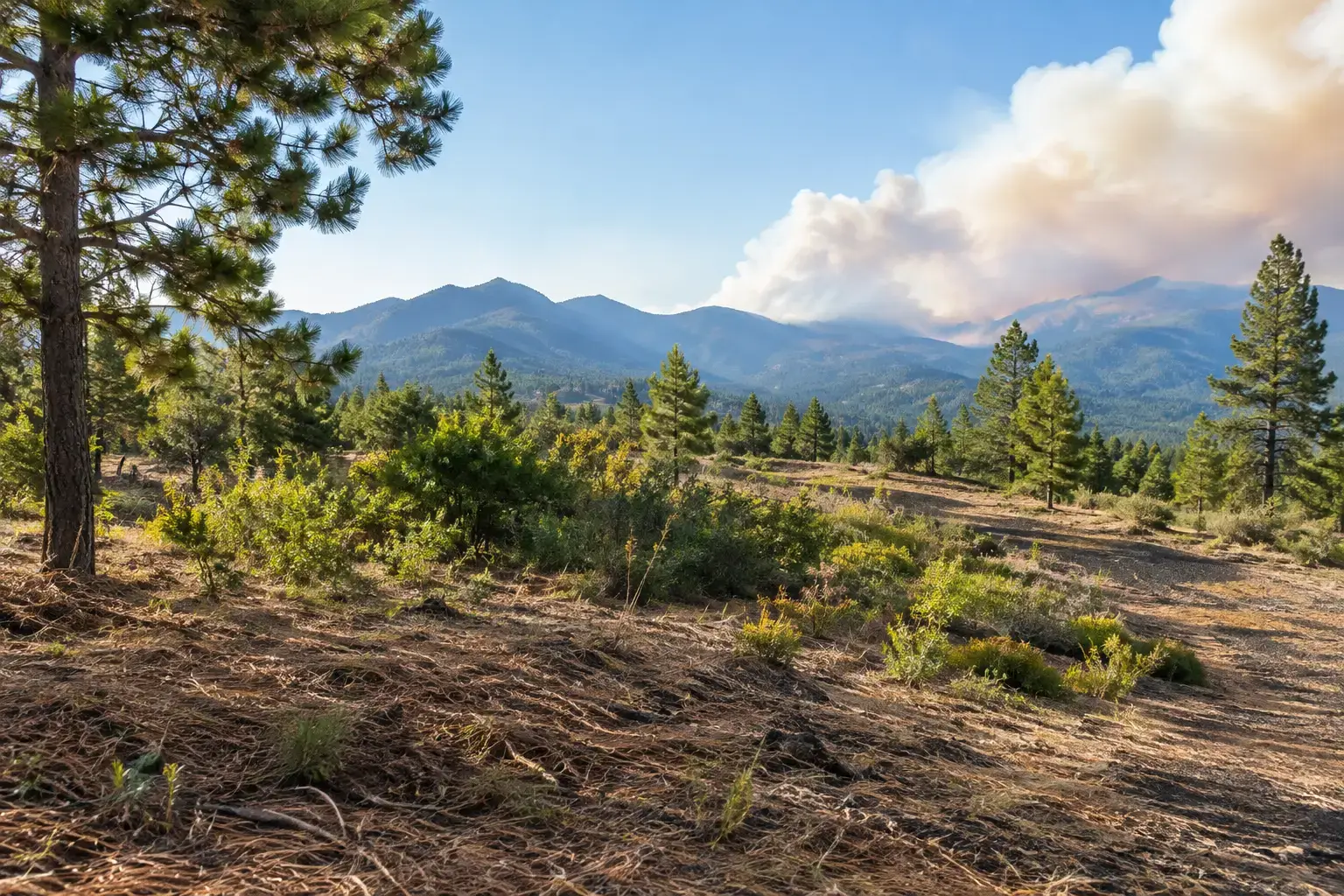
    A wildfire does not need a wall of timber to threaten a home. It can run through dry grass, ladder into brush, catch low branches, and reach a structure with embers long before the main flame front arrives. Property fuel breaks interrupt that path. Done right, they give fire less continuous material to burn and give crews a safer, more workable area to defend.

    They are not a guarantee and they are not a substitute for maintaining defensible space around the home. They are a practical land-management tool: a planned strip or zone where vegetation has been reduced, rearranged, or converted so fire has a harder time moving across the property.

    What Property Fuel Breaks Actually Do

    A fuel break changes fire behavior by breaking up the fuels that carry flame. That may mean thinning small trees, removing dense brush, mowing or mulching heavy vegetation, pruning lower limbs, or using an existing road, driveway, rocky area, or irrigated ground as part of the break.

    The objective is not to leave bare dirt across an entire property. Bare ground can create erosion problems, invite weeds, and damage the land you are trying to protect. The better approach is to reduce continuity. Space plants apart. Remove dead material. Eliminate low branches that let a grass fire climb into tree crowns. Keep a route where fire has fewer easy handoffs.

    A well-built break can slow surface fire, reduce flame length, limit the chance of crown fire, and create room for suppression work. It may also provide better access for equipment, inspections, evacuation, and ongoing maintenance. On a Colorado acreage, that often makes it useful well beyond wildfire season.

    A Fuel Break Is Not Just a Cleared Line

    Property owners sometimes picture a narrow strip bulldozed through vegetation. That can be one option, but it is rarely the full answer. Fire can cast embers far beyond a cleared line. Wind, slope, fuel type, weather, and ignition source all affect whether a break holds, slows the fire, or gets crossed.

    Think of a fuel break as part of a larger protection layout. The land closest to structures needs the most attention. The area farther out should reduce the volume and continuity of available fuel. A break placed beyond that managed zone can add another layer by disrupting the route fire takes toward the house, barn, shop, or access road.

    This is why location matters as much as width. A break on the wrong side of a slope or hidden behind a wall of untreated brush may look clean but provide limited practical value.

    Start With the Fire’s Likely Approach

    Look at how fire could enter your property. On many Front Range and mountain properties, the highest-risk route follows dry grass, brush-filled draws, fence lines, unmanaged property edges, or uphill timber. Fire generally moves faster uphill because heat rises and preheats fuel above it.

    Wind exposure matters too. A break should address the side of the property where wind-driven fire is most likely to arrive, while still accounting for changing wind directions. There is no single width that works for every parcel. Open grassland, dense Gambel oak, piñon-juniper, ponderosa, mixed conifer, and overgrown acreage each call for a different plan.

    A contractor can walk the ground, identify fuel concentrations, evaluate terrain and equipment access, then build a treatment that fits the property instead of forcing a one-size-fits-all strip across it.

    Use Existing Features When They Make Sense

    Driveways, private roads, trails, gravel pads, maintained pasture, rock outcrops, and irrigated landscaping can all contribute to a fuel-break system. These features are already interruptions in the fuel bed. The work is often about improving what exists: clearing brush along a road, widening a pinch point, removing overhanging limbs, and treating vegetation that connects one side to the other.

    This approach can control cost and preserve more of the property’s natural character. It also creates practical access for trucks, trailers, equipment, and emergency response. The trade-off is that an existing feature only helps if it stays maintained. A driveway with grass, brush, and low limbs crowding both sides is not functioning as a dependable break.

    What to Clear, Thin, and Mulch

    The highest-value work usually targets the vegetation that makes fire move easily. Deadfall, dry grass, slash piles, dense brush, small crowded trees, and low limbs are common problem fuels. These are the materials that connect ground fire to shrubs and tree canopies.

    Forestry mulching is especially effective on thick brush, small-diameter trees, and overgrown vegetation. A high-flow compact track loader with a drum mulcher can process material in place, leaving a mulch layer rather than creating large piles that need to be hauled or burned. The result is cleaner ground, reduced fuel height, and better visibility across the property.

    Mulch is not maintenance-free. Thick, continuous mulch can still burn, particularly under hot, dry, windy conditions. The goal is to apply it appropriately and avoid leaving heavy accumulations against structures or in areas where fire exposure is highest. On steep slopes or erosion-prone ground, mulch can also help hold soil in place, which is one reason total clearing is often the wrong move.

    Selective thinning is the better fit where mature trees add value and shade. Remove suppressed, damaged, dead, or tightly packed small trees. Prune lower branches where appropriate. Keep enough spacing that flames cannot easily climb or move tree to tree. The exact treatment depends on species, slope, tree health, and the condition of surrounding fuels.

    Build for Access, Not Just Appearance

    A fuel break that equipment cannot reach is harder to maintain and less useful in an emergency. Access improvements often belong in the same project. That can include clearing a route through brush, improving turning areas, opening a gate approach, trimming roadside limbs, or grading rough sections that prevent safe travel.

    This is especially relevant for rural homes, cabins, ranches, and undeveloped parcels with one narrow way in and out. A clean, passable route gives residents a better evacuation path and gives service vehicles more room to operate. It also makes future fuel maintenance faster and more affordable because crews do not have to fight their way through the property before the actual work begins.

    Do not overlook gates, culverts, bridges, and tight corners. A route may look open from the road yet fail to accommodate a truck, trailer, or emergency apparatus once the terrain narrows. Good planning identifies those limits before vegetation work is finished.

    Maintenance Keeps the Break Working

    Fuel breaks are not install-once projects. Grass grows back. Brush resprouts. Wind drops limbs. Dead material accumulates. A neglected break can lose much of its value in a few seasons.

    The right maintenance cycle depends on moisture, elevation, vegetation type, grazing, irrigation, and how aggressively the land was treated initially. Some properties need annual mowing, trimming, and cleanup. Others may need periodic touch-up mulching every few years, with routine removal of fallen branches and new ladder fuels in between.

    Walk the break before fire season. Look for continuous grass, dense regrowth, dead shrubs, low branches, and debris piles. Check the approach roads at the same time. If a break is part of your property protection plan, it needs to remain visible, accessible, and intentionally managed.

    Avoid the Common Mistakes

    The biggest mistake is treating a fuel break as a magic barrier. Fire can spot over it. Embers can land in gutters, woodpiles, decks, vents, and ornamental vegetation near the home. Pair landscape work with structure hardening and immediate-home-zone maintenance.

    Another mistake is clearing only what looks bad from the driveway. The thickest fuels are often behind buildings, down a drainage, along a back fence, or on the uphill side of the parcel. Those areas may be less visible, but they can control how fire reaches the property.

    Finally, avoid creating new hazards through poor cleanup. Do not leave slash piles, scattered cut limbs, or dense mulch against structures. Clearing vegetation without addressing the material left behind simply changes the fuel arrangement.

    A capable fuel break should make the land safer and more usable at the same time. Start with the likely fire path, treat the fuels that connect flame to canopy, protect access, and maintain the work. That is how overgrown Colorado ground becomes a property you can manage with confidence.

  • Firebreak Construction for Colorado Land

    Firebreak Construction for Colorado Land

    A firebreak is not a strip of scraped dirt that gets forgotten after one summer. Done right, firebreak construction creates a planned break in vegetation and fuel continuity that helps slow a ground fire, gives crews safer access, and makes the rest of your defensible-space work more effective. On Colorado acreage, that line may run through gambel oak, dense grass, juniper, small conifers, slash piles, or years of neglected brush.

    The goal is simple: reduce the amount of available fuel and prevent flames from carrying easily across the property. The right approach depends on slope, vegetation, structures, road access, and how the land is used. A firebreak around a mountain cabin will not look the same as one protecting a rural home, ranch outbuilding, commercial site, or undeveloped parcel.

    What Firebreak Construction Actually Does

    Wildfire moves where fuel allows it to move. Continuous grass, brush, deadfall, low branches, and tightly packed small trees can carry fire across a property and push it toward buildings. A properly built firebreak interrupts that path by widening the spacing between fuels, reducing fuel depth, and creating a zone that is easier to defend.

    That does not mean every firebreak needs to expose bare mineral soil. In fact, aggressive ground disturbance can create erosion, damage roots, spread invasive weeds, and leave a steep property worse than it started. On many Colorado sites, the better answer is a fuel break built through forestry mulching, selective clearing, pruning, mowing, or a combination of methods.

    A good break also improves operations. It can create a route for equipment, a turnaround area, a safer line for maintenance crews, or a buffer between overgrown acreage and a home site. If access is poor, a firebreak project may need to include trail clearing, rough grading, drainage work, or gate improvements before the fuel reduction work begins.

    Start With the Fire Path, Not a Random Line

    The biggest mistake property owners make is clearing a line simply because it is easy to reach. Wildfire does not care where the fence line sits or where an old trail runs. It follows wind, slope, fuel, and terrain.

    Before equipment starts, walk the property and look for the places where fire is most likely to gain speed. South- and west-facing slopes often dry out early. Draws and drainages can hold thick vegetation. Narrow gaps between trees, brush fields below structures, and overgrown roadsides can become fuel corridors.

    Consider Slope and Wind

    Fire generally moves faster uphill because flames preheat vegetation above them. That means a narrow break on a steep slope may not provide enough separation. The steeper the terrain and the heavier the vegetation, the more width and fuel treatment the line may need.

    Wind matters just as much. A break placed uphill or downwind of a structure can be more valuable than a clean strip in a low-risk section of the property. Local fire conditions change, so a contractor should evaluate the actual ground, not apply one standard width to every job.

    Tie the Break Into Defensible Space

    A firebreak is one part of a larger system. The immediate area around a home, shop, barn, propane tank, and other critical structures should receive close attention first. Remove accumulated dead vegetation, cut back brush, prune lower limbs where appropriate, and keep combustible materials away from buildings.

    From there, extend outward into broader fuel-reduction zones and strategic breaks. This layered approach gives you more than one line of defense. It also prevents a common failure: building a good firebreak far from the home while leaving dense vegetation directly against the structure.

    Choose the Right Construction Method

    Firebreak construction should fit the ground. Heavy equipment can make fast work of difficult brush and small trees, but the machine and method need to match the site.

    Forestry mulching works well for many Colorado properties with thick brush, saplings, small trees, and invasive vegetation. A high-flow compact track loader with a drum mulcher can reduce standing fuels into mulch without hauling every piece of material away. The mulch layer helps protect soil from erosion, but it is still organic material. It should be managed at the right depth and not piled against structures, fence posts, trees, or other assets.

    Selective clearing may be the better choice when the goal is to retain healthy mature trees while opening spacing between them. This approach removes ladder fuels and overcrowded stems without turning a wooded property into bare ground. In grass-dominated areas, mowing or targeted brush removal can maintain a clean, visible fuel break with less disturbance.

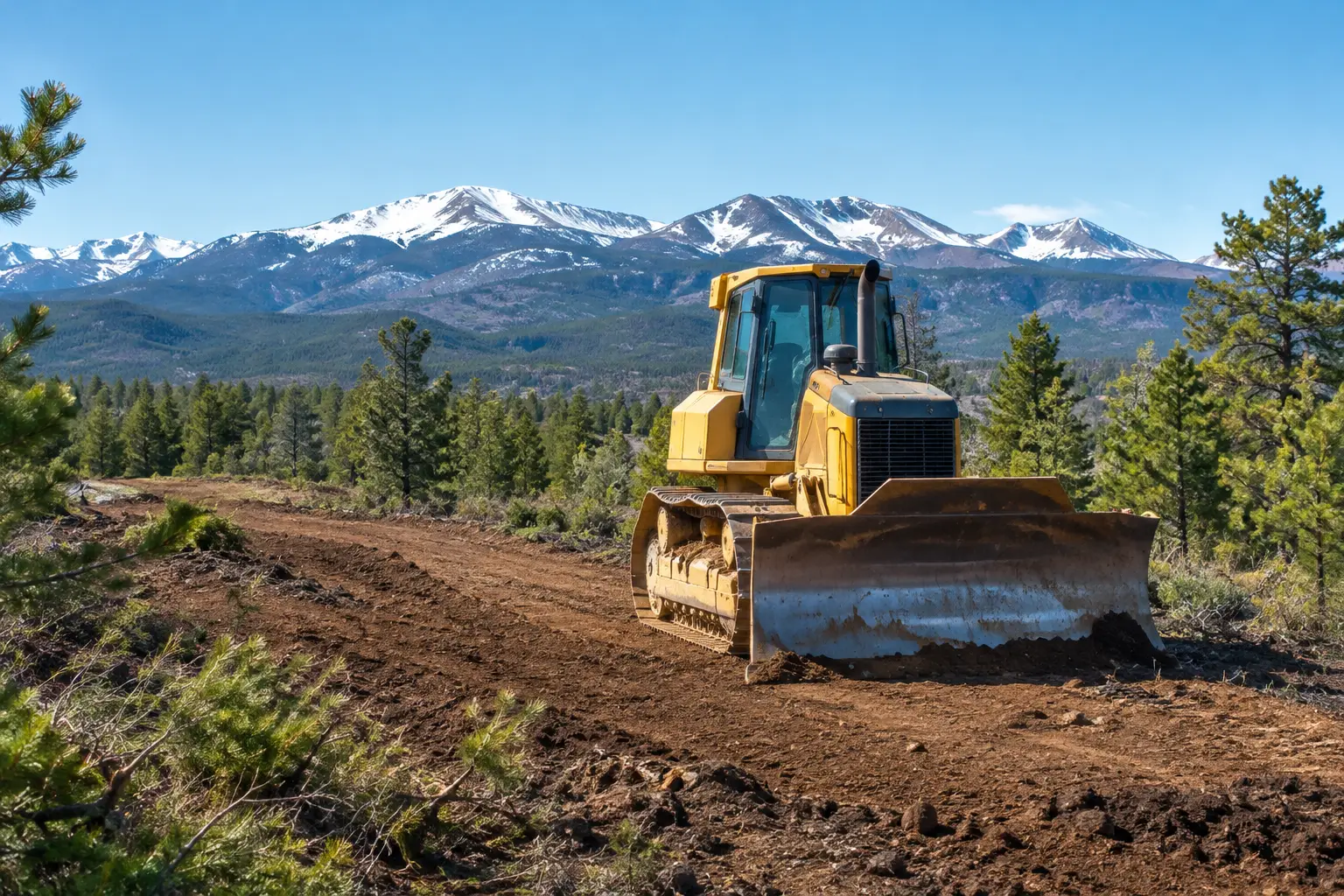
    Where a true equipment access lane is needed, grading and surface preparation may be part of the work. That can be useful for long driveways, perimeter roads, construction access, or properties where emergency equipment would otherwise have limited options. Water still has to go somewhere, so drainage and erosion control should be considered before cutting a new route across a slope.

    The best projects often combine methods. Mulch the brush. Remove hazardous small trees. Open access. Clean up deadfall. Grade only where the ground and intended use justify it. That produces a working firebreak without unnecessary damage to the property.

    Avoid These Firebreak Mistakes

    Fire mitigation work has trade-offs. Clearing too little leaves continuous fuel. Clearing too much can create erosion, weaken healthy trees, expose soil, and make the land harder to maintain.

    Watch for these common problems:

    • Building a narrow line through heavy fuel on steep terrain.
    • Leaving slash piles, cut limbs, or mulch mounds close to structures.
    • Clearing brush without addressing low tree limbs and ladder fuels.
    • Ignoring driveway access, gate width, turnarounds, and drainage.
    • Treating once, then allowing regrowth to close the break within a few seasons.

    Permits, HOA rules, county requirements, and seasonal restrictions can also affect the work. This is especially true near waterways, on sensitive slopes, in mountain communities, and on development sites. A field review helps identify those constraints before the job gets expensive.

    Build It So You Can Maintain It

    A firebreak is not a one-time improvement. Grass grows back. Oak resprouts. Pine needles, deadfall, and windblown debris accumulate. The line needs regular inspection, especially before the dry season.

    Maintenance does not always require a full rebuild. A yearly walk-through may reveal only a few issues: brush returning at the edges, low limbs filling in, a fallen tree blocking access, or mulch collecting where it should not. Handle those problems early and the break stays functional with less work later.

    For larger acreage, plan maintenance zones that equipment can reach safely. A perfectly designed break that cannot be accessed after a wet spring, heavy snow season, or years of regrowth will be difficult to keep effective. Clear access is part of the protection.

    Yeti Defensible Landworks approaches these jobs with the same standard used for hard ground and overgrown sites across Colorado: assess the terrain, bring capable equipment, remove the fuel that matters, and leave the property safer and more usable.

    Before the next dry season, walk your property from the outside in. If dense vegetation gives a fire a direct path toward your home, buildings, or access road, that is the place to start building a better line.

  • Wildfire Adapted Partnership Defensible Space Cost Share

    Wildfire Adapted Partnership Defensible Space Cost Share

    A wildfire adapted partnership defensible space cost share program can help turn a necessary land-management job into a more affordable one. But cost share is not a blank check for clearing every tree on a property. Funding is usually tied to specific wildfire-risk work, defined treatment areas, required inspections, and a program timeline. The property owner still needs a solid plan, qualified execution, and a clear understanding of what the program will – and will not – cover.

    For Colorado acreage owners, mountain homeowners, and rural communities, that structure is a good thing. It keeps the focus where it belongs: reducing hazardous fuels near homes, access roads, outbuildings, and evacuation routes.

    What Defensible Space Cost Share Usually Covers

    Defensible space work creates a managed area around a structure where wildfire has less fuel to build intensity and spread. The goal is not to strip a lot bare. The goal is to break up continuous vegetation, remove receptive fuels, and give firefighters a safer place to operate if conditions allow.

    A cost-share program may help pay for work such as forestry mulching, thinning dense small trees, removing ladder fuels, cutting back brush, treating invasive vegetation, and clearing access along a driveway. The exact scope depends on the funding source, local wildfire priorities, property conditions, and the rules in place when applications open.

    Many programs concentrate on the first zones around a home or critical structure. That often includes the immediate area closest to the building, then extends outward into thicker vegetation where trees, brush, grass, and debris can carry fire toward the structure.

    The work must be defensible-space work, not general landscaping. Clearing a neglected lot for a future building pad may improve the site, but it may not qualify unless the approved scope directly supports wildfire mitigation. The same goes for ornamental tree removal, routine mowing, or broad land clearing with no connection to a protected structure or community risk-reduction plan.

    How Wildfire Adapted Partnership Defensible Space Cost Share Works

    Wildfire Adapted Partnership programs and similar local efforts typically operate through scheduled funding cycles. Homeowners apply, receive a review or assessment, complete approved work, then submit documentation for reimbursement or receive contractor coordination through the program. The exact process varies by area and funding source.

    That last detail matters. Some programs reimburse a percentage of eligible costs after the job is finished. Others set a maximum award amount. Some require an owner match, while others may have separate funding tiers for income-qualified households, high-risk areas, or neighborhood projects. Never assume the full invoice will be covered.

    Before scheduling equipment, confirm four things with the program administrator: the approved treatment area, the eligible work, the reimbursement rate or cap, and the required paperwork. Ask whether the contractor must provide a detailed estimate, proof of insurance, before-and-after photos, invoices, or a specific treatment prescription.

    Get those answers in writing. A verbal approval from a neighbor, fire district contact, or community volunteer is not the same as a funded project authorization.

    Approval Comes Before the Mulcher Starts

    This is where good intentions can create expensive problems. A homeowner sees a grant announcement, hires a crew, clears the property, then learns the work needed pre-approval or did not follow the approved scope. The property may be safer, but the reimbursement can still be denied.

    Do not start early unless the program clearly says you can. Keep copies of the approval notice, site plan, estimate, paid invoice, and photos. If conditions change during the job – such as finding heavier fuel loads, poor access, or a drainage feature that changes the approach – contact the program before expanding the work.

    Build a Scope That Reduces Fire Risk First

    The strongest cost-share applications show a direct connection between the work and the risk. Start at the structure and work outward. Look for dry grass against siding, brush under windows, stacked firewood near buildings, low limbs that can carry flames upward, and dense tree stands that allow fire to move from crown to crown.

    On larger Colorado properties, access deserves the same attention. A narrow driveway choked with brush can slow resident evacuation and emergency response. Clearing vegetation along travel routes, creating turnaround space where appropriate, and improving equipment access may support both wildfire readiness and day-to-day property use.

    A practical scope may include thinning crowded small-diameter trees, removing dead and down material, lifting lower limbs where appropriate, and mulching brush that would otherwise create a continuous fuel bed. It depends on the terrain, vegetation type, slope, and how close the fuel is to the home.

    Steep slopes require added caution because fire can move uphill fast. Dense conifer stands need different treatment than gambel oak, scrub brush, grassland, or a mixed property with heavy weed pressure. There is no one-size-fits-all clearing distance. The right treatment reduces connected fuels while retaining healthy vegetation, soil stability, privacy, and the character of the land.

    Cost Share Is Not the Same as Lowest Bid

    A low number on paper can become the expensive choice if the contractor cannot safely reach the work area, does not understand the approved scope, or leaves behind slash and debris that still create a fire problem. Defensible space is measured by results, not by how much vegetation was knocked down in a day.

    Ask contractors how they will treat material. Will they mulch brush and small trees on site? Haul material away? Chip it? Pile it for a permitted burn window? Each method affects the price, the finished appearance, and the funding eligibility. Fine mulch can be useful for erosion control and site appearance, but it should not be left deep against a home or packed into a continuous heavy layer.

    Equipment also matters. A high-flow compact track loader with a drum mulcher can work efficiently through dense brush and small trees while minimizing repeated handling of material. That is useful on rough Colorado ground where hand crews alone can be slow or where hauling every piece of vegetation is not practical. It is not the right answer for every acre, though. Sensitive soils, large timber, extreme slopes, wet conditions, and protected areas may require a different approach.

    When reviewing an estimate, make sure it identifies the treatment area, vegetation type, access limits, expected disposal method, and whether cleanup or final grading is included. A vague estimate makes it harder to compare bids and harder to submit clean documentation for reimbursement.

    Prepare Your Property Before the Work Day

    Once the project is approved, make the site easy and safe to work. Mark septic components, wells, irrigation lines, utility boxes, propane tanks, fences, gates, and any known underground lines. Move vehicles, trailers, portable equipment, and loose materials away from the treatment area.

    Open access where possible. A mulching crew needs room to enter, turn, stage equipment, and work without damaging improvements. If the driveway has tight turns, low branches, soft shoulders, or a locked gate, discuss it before mobilization. Small access problems can add real time to a project.

    Talk through priorities on site before work begins. Some owners want maximum visibility around the home. Others want to preserve screening, wildlife cover, or specific mature trees. Those preferences can usually be worked into the plan if they do not conflict with the fire-risk objective or cost-share requirements.

    Keep the Work Maintained After Reimbursement

    Defensible space is not a one-time finish line. Grass grows back. Seedlings return. Wind drops branches. A clean treatment from this year can become a connected fuel bed again if it is ignored for several seasons.

    Plan for annual walk-throughs, especially before the dry season. Remove fresh deadfall, keep grass and weeds managed near structures, maintain separation between shrubs and tree limbs, and inspect access routes. A lighter maintenance pass costs less than waiting until brush and small trees rebuild into a major project.

    For property owners in wildfire-prone Colorado counties, cost share can make a serious safety upgrade more reachable. Use the funding window well: get approval first, hire for the actual risk, document the job, and leave the land cleaner, safer, and ready for the next fire season. Yeti Defensible Landworks can help turn an approved treatment plan into equipment-ready work on rugged ground.

  • When Should Land Clearing Occur in Colorado?

    When Should Land Clearing Occur in Colorado?

    A property can look manageable from the driveway while brush, ladder fuels, deadfall, and volunteer trees are stacking up behind the home. Waiting until smoke is in the air or a building schedule is already moving creates pressure, fewer options, and sometimes higher costs. So, when should land clearing occur? In Colorado, the best answer is usually before wildfire season, before construction mobilizes, and before vegetation turns a simple job into a larger hazard.

    The right window still depends on your land, your objective, access conditions, local rules, and the kind of vegetation on site. A drum mulcher can work through dense brush and small trees efficiently, but good land work starts with timing the project for the result you need.

    Clear Before Wildfire Season Builds Momentum

    For many Colorado property owners, late fall through early spring is the strongest window for clearing wildfire fuels and building defensible space. Grasses are down, deciduous brush is dormant, and crews can often see the ground, tree spacing, and fuel buildup more clearly. Removing dense understory during this period helps prepare your property before dry conditions and wind turn ordinary vegetation into a fire pathway.

    That does not mean clearing must stop once spring arrives. Wildfire mitigation is valuable whenever hazardous fuels are present. But work completed ahead of peak fire season gives you time to assess the finished area, address access routes, and make any follow-up improvements without racing the calendar.

    If your property sits in a foothill, mountain, or wooded setting, do not wait for a nearby fire to drive the decision. The best time to reduce fuels is when you can make deliberate choices about what stays, what goes, and how crews and equipment will move across the land.

    When Should Land Clearing Occur for Construction?

    Clear early enough that the site is truly ready when builders need it. For a home pad, barn, driveway, fence line, utility route, or commercial improvement, land clearing should generally occur after planning and approvals are in place but before excavation, deliveries, and framing schedules begin.

    Starting too late can force other trades to work around brush piles, stumps, poor access, or soft ground. Starting far too early can also create erosion concerns or leave exposed soil through a long wet period. The target is a clean, stable work area that matches the next phase of the project.

    Before clearing for construction, identify the practical limits of the job. Flag utility corridors, septic areas, drainage features, retained trees, property lines, and planned access. A clearing plan should also account for where equipment turns, where material is processed, and how water will move after vegetation is removed. Clearing is not just making land look open. It is preparing it to perform.

    Winter Clearing: Strong Visibility, Real Ground Limits

    Winter can be an excellent season for forestry mulching and selective clearing in Colorado. Dormant vegetation improves visibility, and frozen ground may reduce rutting in some locations. It can also be an efficient time to open overgrown access, remove dead or damaged small trees, and tackle dense fuels before spring growth.

    The trade-off is snow, ice, steep terrain, and freeze-thaw cycles. A site that is firm in the morning can turn slick or soft by afternoon. Deep snow can hide rocks, stumps, drainage dips, and other obstacles. Experienced operators adjust the work plan to actual field conditions rather than forcing equipment onto ground that will not support safe production.

    Winter scheduling also varies by elevation. Conditions near Denver may be workable while a mountain property in Park, Clear Creek, or San Miguel County is snowed in. A site review is the fastest way to determine whether winter clearing is practical on your ground.

    Spring and Summer: Productive, but Plan Around Restrictions

    Spring growth makes neglected vegetation easy to spot, and summer can be the right time for clearing access, maintaining acreage, or responding to a newly identified fire-risk area. Dry conditions can support equipment travel where winter mud or snow prevented work.

    These seasons require closer attention to fire restrictions, weather, and biological timing. High heat, low humidity, and wind can affect daily operating conditions. Local fire restrictions may limit certain activities or change how a project is carried out. A professional crew should monitor conditions and keep the work focused on safe, controlled execution.

    Nesting birds are another factor. Active nests and protected wildlife can affect the timing and boundaries of vegetation removal. Avoid assuming every brushy area can be cleared on demand during spring or early summer. A site-specific review can identify whether the work needs to shift, pause, or proceed around protected areas.

    Spring can also bring soft soils. Compact track equipment spreads weight well, but saturated ground still has limits. Working too soon can leave ruts, damage drainage, or create a cleanup problem that could have been avoided with a short delay.

    Fall Is a Smart Window for Many Properties

    Fall often offers a practical balance: summer growth is visible, temperatures are more manageable, and property owners can reduce fuels before winter winds and the next fire season. It is a strong time to reclaim fence lines, improve driveway clearance, mulch dense brush, and clean up acreage that got away from you during the growing season.

    For defensible-space work, fall clearing gives mulch time to settle and leaves the property in a more manageable condition before spring. It also gives owners a clearer picture of tree spacing and problem areas once leaves drop.

    Do not confuse timing with delay, though. If deadfall, thick brush, or encroaching small trees are creating a clear hazard, the best season may be the first safe opening in the schedule.

    Let the Job Goal Set the Schedule

    The calendar matters, but the reason for clearing matters more. A property being prepared for sale needs clean access, visible usable acreage, and a maintained appearance. A rural home in a wildfire-prone area needs reduced ladder fuels, better spacing, and reliable emergency access. A development site needs a work-ready footprint with grading and drainage considered from the start.

    The right timing changes with the goal:

    • Wildfire mitigation: Schedule ahead of peak fire conditions whenever possible, with priority on dense brush, dead material, and vegetation that carries fire toward structures.
    • Site preparation: Clear after plans, boundaries, and permits are confirmed, then leave enough time for grading, utilities, and the next trade.
    • Access improvement: Clear before seasonal use, emergency access needs, deliveries, or heavy construction traffic expose a narrow or overgrown route.
    • Invasive vegetation control: Time work around the plant species and follow-up needs. Cutting or mulching may be one step in a longer control plan.

    A one-time clearing job can make an immediate difference, but vegetation does not stop growing. Properties with fast regrowth, invasive plants, or heavy fuel loads benefit from a maintenance plan instead of waiting until conditions become unmanageable again.

    Check Rules Before Equipment Arrives

    No two parcels carry the same requirements. Depending on the location and scope, your project may involve county rules, HOA standards, zoning requirements, utility coordination, erosion-control measures, burn restrictions, or permits. Clearing near waterways, steep slopes, public roads, or property lines may require additional care.

    Property owners should also confirm ownership boundaries before work begins. Removing brush on the wrong side of a fence, damaging a retained tree, or crossing an unapproved access route can turn a straightforward job into an expensive dispute.

    A disciplined contractor will ask what the property needs, inspect access and terrain, and define the work area before running equipment. That upfront clarity protects the land, the schedule, and the finished result.

    Do Not Wait for the Perfect Season

    There is no single month that fits every Colorado property. Dry, accessible ground may make summer ideal for one site. Dormant vegetation and clear visibility may make winter better for another. The common thread is acting before brush, small trees, and accumulated fuels create a bigger problem.

    Yeti Defensible Landworks approaches clearing with the equipment and field judgment to match the work to the ground. Whether the goal is defensible space, a cleaner building site, improved access, or reclaimed acreage, start with a clear look at the property and a plan built for real conditions.

    If your land is getting thicker, access is closing in, or fire fuels are building near structures, do not wait for an ideal date on the calendar. Get the site assessed, set the work limits, and clear the ground while you still control the schedule.

  • Colorado Firewise Landscaping That Holds Up

    Colorado Firewise Landscaping That Holds Up

    A wood-sided home tucked into dense gambel oak may look like classic Colorado. During a fast-moving wildfire, that same brush can carry flame straight to the structure. Colorado Firewise landscaping is not about stripping a property bare or turning it into gravel. It is about breaking fuel continuity, protecting the first few critical feet around the home, and building a landscape you can realistically maintain.

    The goal is simple: give embers less to land in, give flames less to climb, and give firefighters a safer, clearer place to work. Every property is different. A foothills lot with ponderosa pine needs a different plan than a wind-exposed acreage in Elbert County or a mountain cabin surrounded by spruce. The principles stay the same. The work starts at the house and moves outward.

    Colorado Firewise Landscaping Starts at the House

    Wildfire does not need a wall of flame to damage a home. Wind-driven embers can travel well ahead of the fire front and collect in pine needles, dry leaves, bark mulch, deck corners, window wells, and brush against the foundation. That is why the area closest to the structure deserves the most attention.

    Treat the first 0 to 5 feet as the noncombustible zone. Keep this area clean and simple. Rock, gravel, pavers, concrete, and well-maintained hardscape are practical choices. If plants belong here, use limited, low-growing, well-watered options and keep them away from vents, windows, decks, and siding.

    This is also where routine cleanup matters most. Remove needles from roof valleys and gutters. Clear leaves from window wells. Do not stack firewood, lumber, cardboard, propane cylinders, or spare building materials against the house. A clean perimeter does not guarantee survival in every fire, but it removes easy ignition paths that cause preventable losses.

    Build Separation Instead of a Fuel Ladder

    From roughly 5 to 30 feet out, the job is to reduce the chance that fire moves from the ground into shrubs, lower branches, and tree crowns. Think in terms of spacing and separation, not a perfectly manicured yard.

    Grass, native plants, and selected shrubs can still have a place in this zone. The key is keeping vegetation broken into manageable groups instead of allowing one continuous mass of fuel to connect the property. Maintain clear space between plant groupings. Keep shrubs from touching siding or crowding decks. Prune lower limbs where appropriate so surface fire has fewer routes into the canopy.

    Fuel ladders are a common problem on neglected Colorado properties. Dry grass feeds a dense shrub. The shrub reaches low tree limbs. Those limbs lead into the crown. Removing every tree is not the answer. Removing the connection is often the move that changes how fire behaves.

    Spacing depends on slope, prevailing wind, vegetation type, and tree size. Steeper ground requires more distance because fire moves uphill faster and preheats fuel above it. Tight stands of conifers may require selective thinning. Open ponderosa stands may need lower-limb pruning, brush removal, and regular needle cleanup more than heavy tree removal. A site walk tells the real story.

    Choose Plants for Maintenance, Not Just Appearance

    No plant is fireproof. A healthy, irrigated plant may resist ignition better than drought-stressed brush, but any vegetation can burn under severe enough conditions. Avoid buying landscaping on the promise of a single “fire-resistant” label.

    A stronger approach is to choose plants that fit the site, space them properly, remove dead material, and keep irrigation realistic. Native and adapted plants can work well when they are managed. The problem is not simply having vegetation. The problem is letting dry, crowded, unmanaged vegetation build up next to the home.

    Mulch deserves a practical conversation. Organic mulch helps retain moisture and improve soil, but shredded bark, dry wood chips, and pine needles can catch embers. Keep combustible mulch out of the immediate perimeter around structures. Use gravel or other noncombustible material near foundations, decks, and vulnerable openings. Farther from the home, mulch may still be useful, but it should be placed with fuel management in mind and kept free of dry debris.

    Decorative grasses can also create trouble when they are allowed to dry out and stand through late summer. They are not automatically off limits. They do require placement away from structures and disciplined seasonal cutting.

    Manage the Ground Layer and the Overstory

    Most property risk sits in the messy middle: thick brush under trees, deadfall tucked into draws, volunteer saplings, invasive weeds, and years of accumulated needles. This is where a property can look green in spring yet carry heavy wildfire fuel by late summer.

    Start by identifying what needs to go. Dead trees, downed limbs, dense brush patches, overgrown fence lines, small conifers growing under mature trees, and vegetation crowding driveways deserve attention. Then decide what stays. Healthy, well-spaced mature trees often add value, shade, privacy, and character. The objective is a cleaner stand with less continuous fuel, not a clear-cut lot.

    Forestry mulching can be an effective option for dense brush, small trees, and invasive vegetation on larger or rugged parcels. A high-flow compact track loader with a drum mulcher can process material close to the ground and spread mulch across the site, reducing the need to haul every piece away. It is fast, controlled, and well suited to difficult terrain.

    That said, mulching is not a one-and-done cure. The remaining mulch layer, future regrowth, and changing conditions still need monitoring. In some areas, hand work, selective removal, chipping, hauling, or grading may be the better fit. The right method depends on access, slope, vegetation, drainage, project goals, and local requirements.

    Protect Access Before You Need It

    A defensible property also needs practical access. Narrow, brush-lined driveways slow down residents leaving and make it harder for emergency crews to enter. Low branches can block larger vehicles. Unstable shoulders, washouts, and tight turnarounds create problems long before a fire arrives.

    Clear vegetation back from driveways and private roads. Prune overhead limbs for adequate clearance. Keep gates operable and make sure the address is visible from the road. On acreage, consider whether an engine, skid steer, or service vehicle can reach key areas without crossing weak culverts or getting trapped by tight corners.

    Access improvement is not glamorous work, but it matters. A cleared approach also helps with ordinary maintenance, snow access, fence repair, material delivery, and future construction.

    Make Firewise Work a Seasonal Routine

    Colorado landscapes change quickly. Spring growth fills in gaps. Summer heat dries fine fuels. Fall wind piles needles against buildings and fences. A defensible-space project should be followed by regular maintenance, especially near the home.

    Walk the property several times a year. After wind events, check roofs, decks, gutters, and fence lines for debris. Mow or manage dry grass before it becomes tall, cured fuel. Remove new brush growth before it turns into another dense thicket. Inspect trees for dead limbs, insect damage, and overcrowding.

    For many owners, the hard part is scale. A few shrubs near a suburban home can be handled on a weekend. Several wooded acres with steep ground, thick oak, slash piles, and limited access may call for professional equipment and a defined work plan. That is where Yeti Defensible Landworks can turn a high-fuel property into cleaner, more manageable ground with clearing, forestry mulching, access work, and site preparation built around the conditions on site.

    Start With the Highest-Impact Work

    Do not wait for the entire property to be perfect before taking action. Start at the structure, clear combustible material from the first few feet, address brush connected to decks and fences, and open the most critical access routes. Then work outward into tree spacing, brush reduction, and larger acreage management.

    A good Colorado Firewise landscaping plan should leave your property looking intentional, not abandoned. Keep the trees worth keeping. Preserve the views and privacy that matter. Cut back the fuel that puts those assets at risk. The strongest results come from steady maintenance and decisive work where it counts most.