
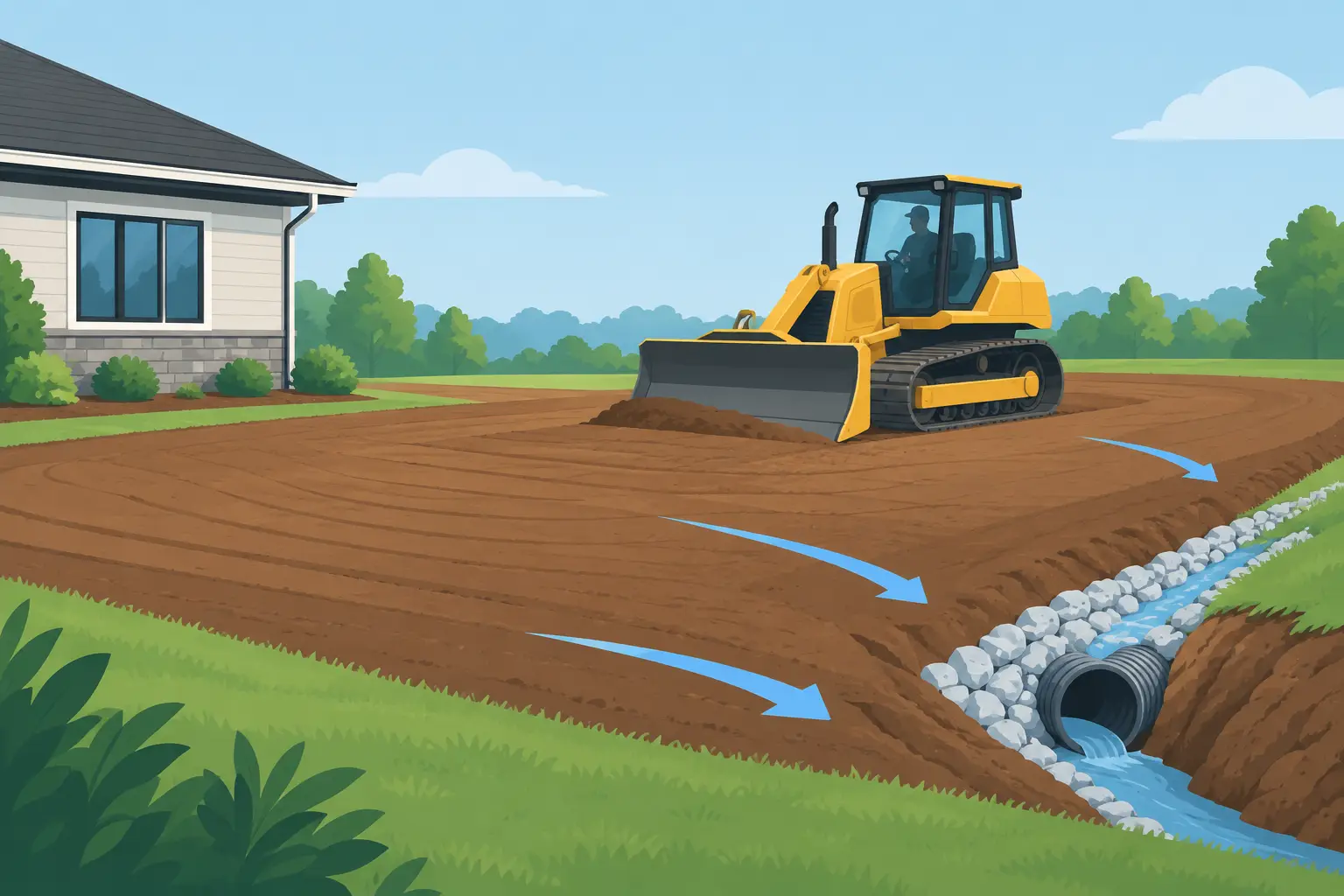
Water does not need much of an opening. A shallow low spot beside a foundation, a driveway that drops toward the garage, or a hard-packed swale with nowhere to discharge can turn rain and snowmelt into a property problem. Grading land for drainage is how you give that water a controlled path before it cuts ruts, softens roads, floods structures, or turns usable ground into mud.
Colorado properties make the job more demanding. Many sites deal with steep terrain, dense clay, decomposed granite, rocky soil, fast summer storms, and snowmelt that can expose every weak point in a grade. The goal is not simply to make land look level. The goal is to move water where it can safely go.
Start With Where Water Is Coming From
Before equipment touches the ground, walk the property after a storm if possible. Look for standing water, washout channels, sediment deposits, soft spots, and water marks on siding, fencing, or outbuildings. Those signs show where water is collecting and how it is already trying to leave.
Also look uphill. A drainage issue near a home, barn, driveway, or building pad often starts well above it. Runoff may be coming off a slope, neighboring property, access road, roof, or cleared area with exposed soil. Fixing only the puddle at the bottom without handling the upstream flow usually means the puddle comes back.
On acreage and mountain properties, natural drainage patterns matter. A seasonal swale, draw, or low drainage channel may look dry most of the year, but it can carry serious water during runoff or a hard storm. Filling or blocking it without a plan can push water into a road, structure, or adjacent parcel.
What Good Drainage Grading Must Accomplish
Effective grading creates positive drainage. That means the surface slopes away from buildings and other critical improvements so water does not settle against them. The exact slope depends on the site, soil, existing structures, and available discharge area, but the direction of flow must be clear and continuous.
Water needs a destination. A graded slope that sends runoff toward a dead-end low spot only relocates the problem. Depending on the property, runoff may need to reach a vegetated drainage area, stable swale, ditch, detention feature, approved drainage route, or a properly designed rock-lined channel. The right answer depends on terrain and local requirements.
The grade also has to hold up. Bare dirt can look clean on day one and wash apart after the first heavy rain. Where water moves with speed or volume, the finish may need compaction, erosion-control material, rock, mulch, seed, vegetation, or drainage structures to keep the soil in place.
Grading Land for Drainage Around Buildings
Buildings are where drainage mistakes get expensive. Water held against a foundation can create moisture intrusion, frozen ground pressure, settlement concerns, and damage to finishes. It can also make access routes slick and unusable when temperatures drop.
The ground immediately around a structure should shed water outward, without creating abrupt drops that are hard to maintain or unsafe to walk. Downspouts deserve attention too. A roof can concentrate a surprising amount of water in one small area. If that discharge lands beside the foundation or at the top of an unprotected slope, it can undermine the work below it.
Do not assume adding soil against a building solves the problem. Raising grade too high can interfere with siding clearance, vents, window wells, utility equipment, and existing drainage details. A site needs enough fall to move water, but it also needs to respect the structure already in place.
Driveways, Roads, and Access Need Their Own Plan
A driveway is a drainage system whether it was designed as one or not. Water running down a road surface gains force fast. It carries gravel, creates ruts, cuts ditches, and can leave a property inaccessible when you need it most.
Proper driveway grading sheds water off the travel surface before it runs the full length of the road. On some sites, that means a crowned surface that drains to both sides. On others, especially where a road crosses a slope, the road may need to drain to one controlled side. Ditches, rolling dips, water bars, culverts, and armored outlets may all have a role, but only if they fit the terrain and flow volume.
Culverts are not a universal fix. An undersized, clogged, or poorly placed culvert can force runoff over the road or concentrate it into a destructive outlet. The inlet, outlet, alignment, cover depth, and erosion protection all matter. If the road crosses an active drainage path, get the drainage approach right before rebuilding the driving surface.
Swales Move Water Without Making It a Problem Elsewhere
A swale is a shallow, shaped channel that guides runoff across the land. It is often a better fit than a deep ditch for residential lots, cleared building sites, and open acreage because it can blend into the terrain while handling sheet flow.
The key is consistent fall. A swale that is too flat can hold standing water. One that is too steep can become an erosion channel. Its outlet matters just as much as its shape. Water must leave the swale without scouring soil, flooding a lower use area, or crossing onto another property in a damaging way.
Vegetated swales work well when conditions allow. Roots help hold soil, slow runoff, and filter sediment. In rocky or high-flow areas, a swale may need stone reinforcement at turns, inlets, outlets, or steep sections. The cleanest-looking option is not always the toughest option. Match the finish to the force of the water.
Soil, Slope, and Season Change the Job
Colorado soil can change dramatically across one property. Clay tends to drain slowly and can stay slick after a storm. Sandy soil may absorb water quickly but erode under concentrated flow. Rocky ground can make shaping difficult and expose material that needs a different finish than native soil.
Steep slopes add another layer of risk. Cutting too aggressively into a hillside can destabilize soil, redirect runoff, or create a slope that cannot be safely maintained. Filling low ground without proper preparation can lead to settlement later. On significant slopes, near foundations, retaining features, or where large volumes of water are involved, a civil engineer or qualified drainage professional may be needed before field work begins.
Timing matters as well. Grading before a forecasted storm without stabilizing exposed soil can create washouts immediately. Winter conditions can limit compaction and make finish grading difficult. A disciplined plan accounts for weather, access, soil moisture, and the order of operations.
Clearing and Grading Work Better Together
Overgrown vegetation can hide the real drainage pattern. Brush, deadfall, invasive growth, and accumulated debris may block swales, clog culverts, and trap runoff against fences or structures. Clearing those obstructions often reveals the actual shape of the ground.
But clearing alone can increase runoff if roots and ground cover are removed without a follow-up plan. That is why site preparation should be coordinated. Clear the vegetation that blocks access or creates wildfire fuel, preserve useful stabilizing cover where possible, then grade and protect the disturbed areas.
Yeti Defensible Landworks uses equipment built for rough Colorado ground to clear, mulch, shape, and prepare difficult sites. The work should leave the property safer and more usable, not trade one problem for another.
Common Drainage Grading Mistakes
The most common failure is grading toward the obvious low point without confirming whether that low point has a safe outlet. Another is making everything flat because flat ground looks finished. Flat ground often traps water.
Property owners also run into trouble by directing runoff toward a neighbor, public right-of-way, septic area, or unstable slope. Drainage work can affect more than one parcel, and local rules may govern how runoff is handled. Check requirements before altering established drainage paths, installing culverts, or moving substantial soil.
Finally, do not overlook erosion control. A freshly graded surface needs protection suited to the site. A drainage route that works during a light rain but fails during a Colorado downpour is not finished work.
Know When to Bring in a Professional
Small adjustments can be manageable when the problem is simple, the ground is gentle, and runoff has a clear, legal place to go. Larger drainage issues need more planning. Bring in experienced help when water threatens a structure, crosses a driveway, cuts a slope, ponds repeatedly, involves a culvert, or affects neighboring land.
The right crew starts by reading the property, not by pushing dirt at the first wet spot. They identify flow paths, shape the grade with purpose, protect vulnerable soil, and leave access routes and work areas ready for use.
Water will follow gravity every time. Give it a controlled route now, and your land stays firmer, safer, and ready for whatever comes next.
Leave a Reply