
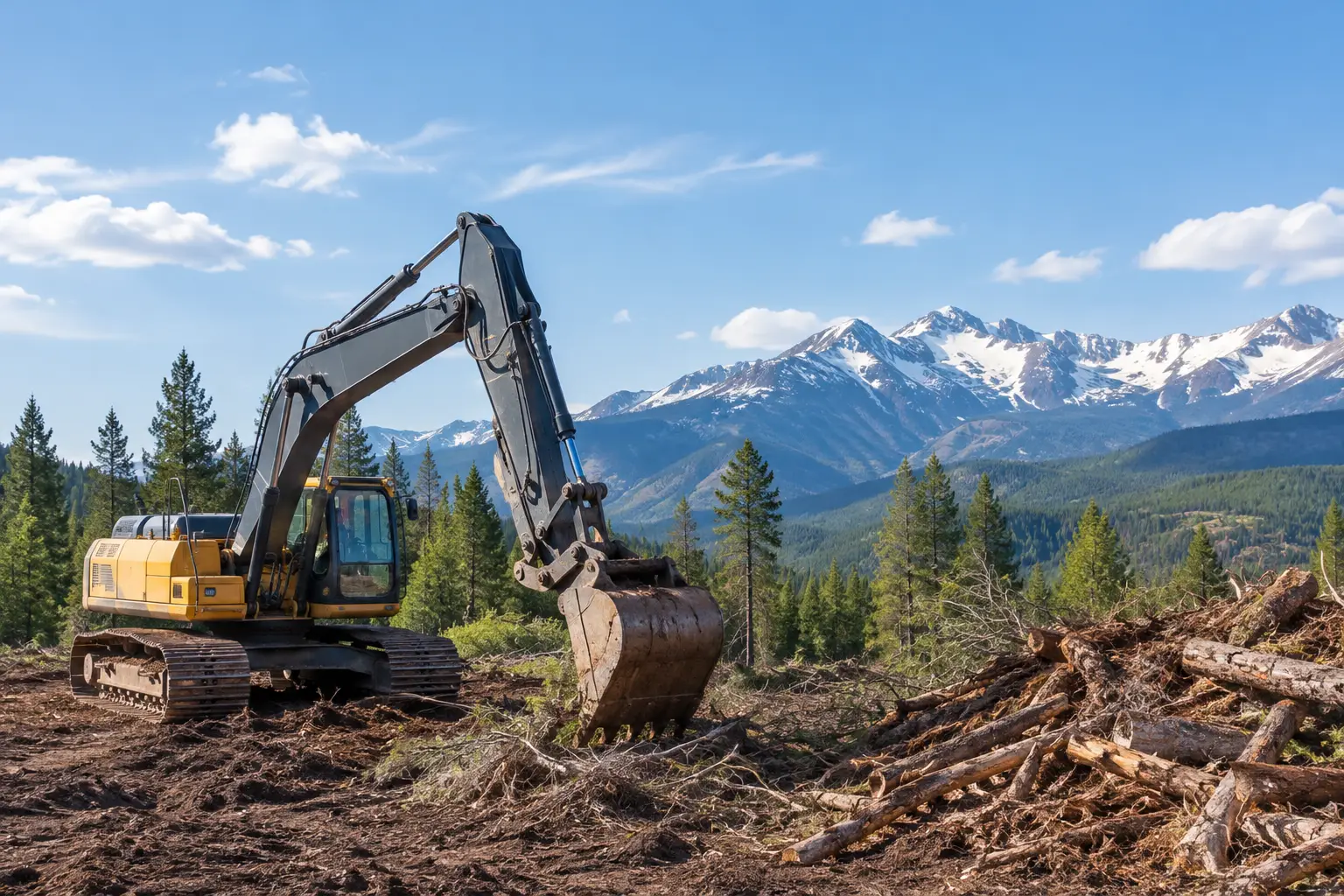
A property can look manageable from the driveway while brush, ladder fuels, deadfall, and volunteer trees are stacking up behind the home. Waiting until smoke is in the air or a building schedule is already moving creates pressure, fewer options, and sometimes higher costs. So, when should land clearing occur? In Colorado, the best answer is usually before wildfire season, before construction mobilizes, and before vegetation turns a simple job into a larger hazard.
The right window still depends on your land, your objective, access conditions, local rules, and the kind of vegetation on site. A drum mulcher can work through dense brush and small trees efficiently, but good land work starts with timing the project for the result you need.
Clear Before Wildfire Season Builds Momentum
For many Colorado property owners, late fall through early spring is the strongest window for clearing wildfire fuels and building defensible space. Grasses are down, deciduous brush is dormant, and crews can often see the ground, tree spacing, and fuel buildup more clearly. Removing dense understory during this period helps prepare your property before dry conditions and wind turn ordinary vegetation into a fire pathway.
That does not mean clearing must stop once spring arrives. Wildfire mitigation is valuable whenever hazardous fuels are present. But work completed ahead of peak fire season gives you time to assess the finished area, address access routes, and make any follow-up improvements without racing the calendar.
If your property sits in a foothill, mountain, or wooded setting, do not wait for a nearby fire to drive the decision. The best time to reduce fuels is when you can make deliberate choices about what stays, what goes, and how crews and equipment will move across the land.
When Should Land Clearing Occur for Construction?
Clear early enough that the site is truly ready when builders need it. For a home pad, barn, driveway, fence line, utility route, or commercial improvement, land clearing should generally occur after planning and approvals are in place but before excavation, deliveries, and framing schedules begin.
Starting too late can force other trades to work around brush piles, stumps, poor access, or soft ground. Starting far too early can also create erosion concerns or leave exposed soil through a long wet period. The target is a clean, stable work area that matches the next phase of the project.
Before clearing for construction, identify the practical limits of the job. Flag utility corridors, septic areas, drainage features, retained trees, property lines, and planned access. A clearing plan should also account for where equipment turns, where material is processed, and how water will move after vegetation is removed. Clearing is not just making land look open. It is preparing it to perform.
Winter Clearing: Strong Visibility, Real Ground Limits
Winter can be an excellent season for forestry mulching and selective clearing in Colorado. Dormant vegetation improves visibility, and frozen ground may reduce rutting in some locations. It can also be an efficient time to open overgrown access, remove dead or damaged small trees, and tackle dense fuels before spring growth.
The trade-off is snow, ice, steep terrain, and freeze-thaw cycles. A site that is firm in the morning can turn slick or soft by afternoon. Deep snow can hide rocks, stumps, drainage dips, and other obstacles. Experienced operators adjust the work plan to actual field conditions rather than forcing equipment onto ground that will not support safe production.
Winter scheduling also varies by elevation. Conditions near Denver may be workable while a mountain property in Park, Clear Creek, or San Miguel County is snowed in. A site review is the fastest way to determine whether winter clearing is practical on your ground.
Spring and Summer: Productive, but Plan Around Restrictions
Spring growth makes neglected vegetation easy to spot, and summer can be the right time for clearing access, maintaining acreage, or responding to a newly identified fire-risk area. Dry conditions can support equipment travel where winter mud or snow prevented work.
These seasons require closer attention to fire restrictions, weather, and biological timing. High heat, low humidity, and wind can affect daily operating conditions. Local fire restrictions may limit certain activities or change how a project is carried out. A professional crew should monitor conditions and keep the work focused on safe, controlled execution.
Nesting birds are another factor. Active nests and protected wildlife can affect the timing and boundaries of vegetation removal. Avoid assuming every brushy area can be cleared on demand during spring or early summer. A site-specific review can identify whether the work needs to shift, pause, or proceed around protected areas.
Spring can also bring soft soils. Compact track equipment spreads weight well, but saturated ground still has limits. Working too soon can leave ruts, damage drainage, or create a cleanup problem that could have been avoided with a short delay.
Fall Is a Smart Window for Many Properties
Fall often offers a practical balance: summer growth is visible, temperatures are more manageable, and property owners can reduce fuels before winter winds and the next fire season. It is a strong time to reclaim fence lines, improve driveway clearance, mulch dense brush, and clean up acreage that got away from you during the growing season.
For defensible-space work, fall clearing gives mulch time to settle and leaves the property in a more manageable condition before spring. It also gives owners a clearer picture of tree spacing and problem areas once leaves drop.
Do not confuse timing with delay, though. If deadfall, thick brush, or encroaching small trees are creating a clear hazard, the best season may be the first safe opening in the schedule.
Let the Job Goal Set the Schedule
The calendar matters, but the reason for clearing matters more. A property being prepared for sale needs clean access, visible usable acreage, and a maintained appearance. A rural home in a wildfire-prone area needs reduced ladder fuels, better spacing, and reliable emergency access. A development site needs a work-ready footprint with grading and drainage considered from the start.
The right timing changes with the goal:
- Wildfire mitigation: Schedule ahead of peak fire conditions whenever possible, with priority on dense brush, dead material, and vegetation that carries fire toward structures.
- Site preparation: Clear after plans, boundaries, and permits are confirmed, then leave enough time for grading, utilities, and the next trade.
- Access improvement: Clear before seasonal use, emergency access needs, deliveries, or heavy construction traffic expose a narrow or overgrown route.
- Invasive vegetation control: Time work around the plant species and follow-up needs. Cutting or mulching may be one step in a longer control plan.
A one-time clearing job can make an immediate difference, but vegetation does not stop growing. Properties with fast regrowth, invasive plants, or heavy fuel loads benefit from a maintenance plan instead of waiting until conditions become unmanageable again.
Check Rules Before Equipment Arrives
No two parcels carry the same requirements. Depending on the location and scope, your project may involve county rules, HOA standards, zoning requirements, utility coordination, erosion-control measures, burn restrictions, or permits. Clearing near waterways, steep slopes, public roads, or property lines may require additional care.
Property owners should also confirm ownership boundaries before work begins. Removing brush on the wrong side of a fence, damaging a retained tree, or crossing an unapproved access route can turn a straightforward job into an expensive dispute.
A disciplined contractor will ask what the property needs, inspect access and terrain, and define the work area before running equipment. That upfront clarity protects the land, the schedule, and the finished result.
Do Not Wait for the Perfect Season
There is no single month that fits every Colorado property. Dry, accessible ground may make summer ideal for one site. Dormant vegetation and clear visibility may make winter better for another. The common thread is acting before brush, small trees, and accumulated fuels create a bigger problem.
Yeti Defensible Landworks approaches clearing with the equipment and field judgment to match the work to the ground. Whether the goal is defensible space, a cleaner building site, improved access, or reclaimed acreage, start with a clear look at the property and a plan built for real conditions.
If your land is getting thicker, access is closing in, or fire fuels are building near structures, do not wait for an ideal date on the calendar. Get the site assessed, set the work limits, and clear the ground while you still control the schedule.
Leave a Reply