
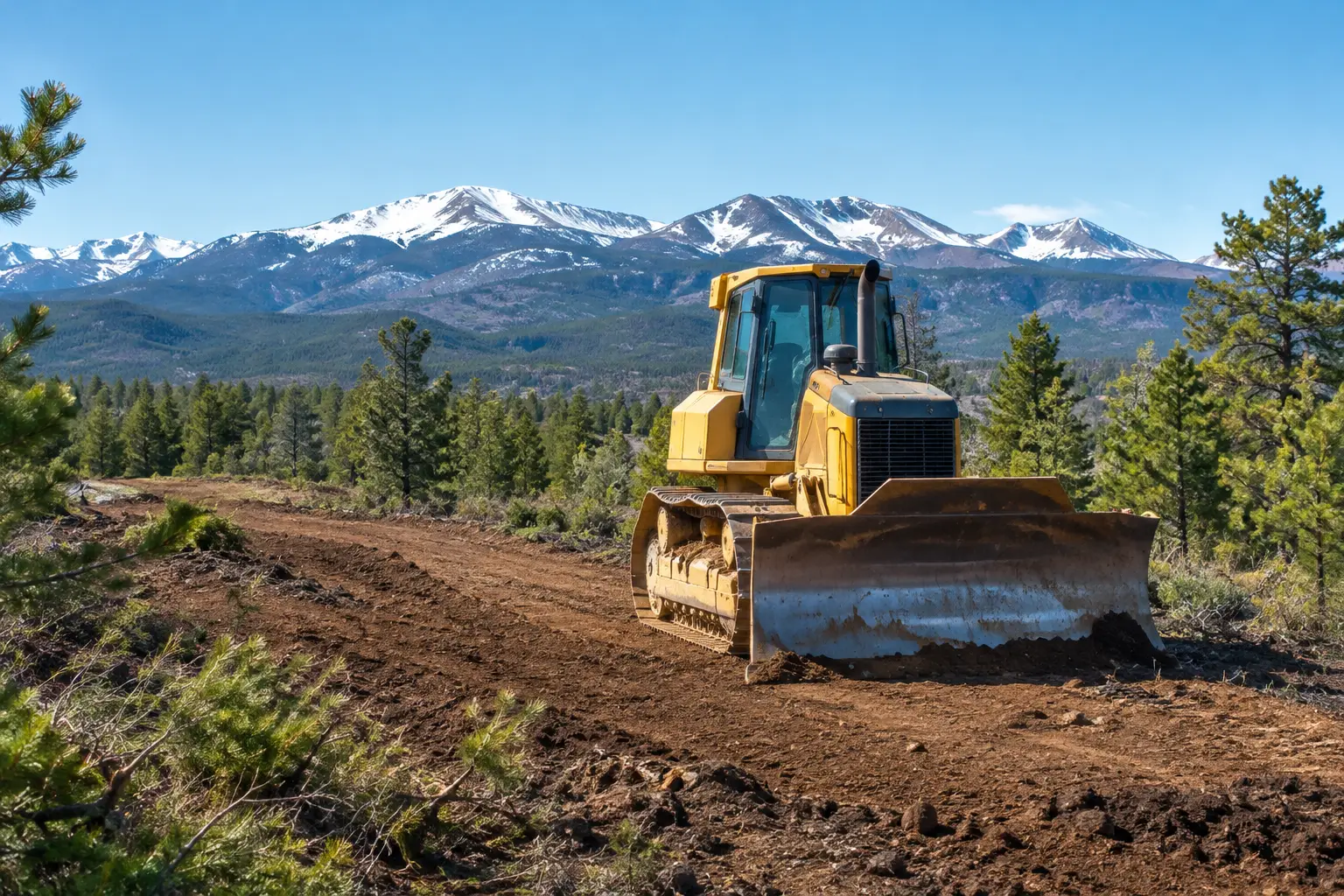
A firebreak is not a strip of scraped dirt that gets forgotten after one summer. Done right, firebreak construction creates a planned break in vegetation and fuel continuity that helps slow a ground fire, gives crews safer access, and makes the rest of your defensible-space work more effective. On Colorado acreage, that line may run through gambel oak, dense grass, juniper, small conifers, slash piles, or years of neglected brush.
The goal is simple: reduce the amount of available fuel and prevent flames from carrying easily across the property. The right approach depends on slope, vegetation, structures, road access, and how the land is used. A firebreak around a mountain cabin will not look the same as one protecting a rural home, ranch outbuilding, commercial site, or undeveloped parcel.
What Firebreak Construction Actually Does
Wildfire moves where fuel allows it to move. Continuous grass, brush, deadfall, low branches, and tightly packed small trees can carry fire across a property and push it toward buildings. A properly built firebreak interrupts that path by widening the spacing between fuels, reducing fuel depth, and creating a zone that is easier to defend.
That does not mean every firebreak needs to expose bare mineral soil. In fact, aggressive ground disturbance can create erosion, damage roots, spread invasive weeds, and leave a steep property worse than it started. On many Colorado sites, the better answer is a fuel break built through forestry mulching, selective clearing, pruning, mowing, or a combination of methods.
A good break also improves operations. It can create a route for equipment, a turnaround area, a safer line for maintenance crews, or a buffer between overgrown acreage and a home site. If access is poor, a firebreak project may need to include trail clearing, rough grading, drainage work, or gate improvements before the fuel reduction work begins.
Start With the Fire Path, Not a Random Line
The biggest mistake property owners make is clearing a line simply because it is easy to reach. Wildfire does not care where the fence line sits or where an old trail runs. It follows wind, slope, fuel, and terrain.
Before equipment starts, walk the property and look for the places where fire is most likely to gain speed. South- and west-facing slopes often dry out early. Draws and drainages can hold thick vegetation. Narrow gaps between trees, brush fields below structures, and overgrown roadsides can become fuel corridors.
Consider Slope and Wind
Fire generally moves faster uphill because flames preheat vegetation above them. That means a narrow break on a steep slope may not provide enough separation. The steeper the terrain and the heavier the vegetation, the more width and fuel treatment the line may need.
Wind matters just as much. A break placed uphill or downwind of a structure can be more valuable than a clean strip in a low-risk section of the property. Local fire conditions change, so a contractor should evaluate the actual ground, not apply one standard width to every job.
Tie the Break Into Defensible Space
A firebreak is one part of a larger system. The immediate area around a home, shop, barn, propane tank, and other critical structures should receive close attention first. Remove accumulated dead vegetation, cut back brush, prune lower limbs where appropriate, and keep combustible materials away from buildings.
From there, extend outward into broader fuel-reduction zones and strategic breaks. This layered approach gives you more than one line of defense. It also prevents a common failure: building a good firebreak far from the home while leaving dense vegetation directly against the structure.
Choose the Right Construction Method
Firebreak construction should fit the ground. Heavy equipment can make fast work of difficult brush and small trees, but the machine and method need to match the site.
Forestry mulching works well for many Colorado properties with thick brush, saplings, small trees, and invasive vegetation. A high-flow compact track loader with a drum mulcher can reduce standing fuels into mulch without hauling every piece of material away. The mulch layer helps protect soil from erosion, but it is still organic material. It should be managed at the right depth and not piled against structures, fence posts, trees, or other assets.
Selective clearing may be the better choice when the goal is to retain healthy mature trees while opening spacing between them. This approach removes ladder fuels and overcrowded stems without turning a wooded property into bare ground. In grass-dominated areas, mowing or targeted brush removal can maintain a clean, visible fuel break with less disturbance.
Where a true equipment access lane is needed, grading and surface preparation may be part of the work. That can be useful for long driveways, perimeter roads, construction access, or properties where emergency equipment would otherwise have limited options. Water still has to go somewhere, so drainage and erosion control should be considered before cutting a new route across a slope.
The best projects often combine methods. Mulch the brush. Remove hazardous small trees. Open access. Clean up deadfall. Grade only where the ground and intended use justify it. That produces a working firebreak without unnecessary damage to the property.
Avoid These Firebreak Mistakes
Fire mitigation work has trade-offs. Clearing too little leaves continuous fuel. Clearing too much can create erosion, weaken healthy trees, expose soil, and make the land harder to maintain.
Watch for these common problems:
- Building a narrow line through heavy fuel on steep terrain.
- Leaving slash piles, cut limbs, or mulch mounds close to structures.
- Clearing brush without addressing low tree limbs and ladder fuels.
- Ignoring driveway access, gate width, turnarounds, and drainage.
- Treating once, then allowing regrowth to close the break within a few seasons.
Permits, HOA rules, county requirements, and seasonal restrictions can also affect the work. This is especially true near waterways, on sensitive slopes, in mountain communities, and on development sites. A field review helps identify those constraints before the job gets expensive.
Build It So You Can Maintain It
A firebreak is not a one-time improvement. Grass grows back. Oak resprouts. Pine needles, deadfall, and windblown debris accumulate. The line needs regular inspection, especially before the dry season.
Maintenance does not always require a full rebuild. A yearly walk-through may reveal only a few issues: brush returning at the edges, low limbs filling in, a fallen tree blocking access, or mulch collecting where it should not. Handle those problems early and the break stays functional with less work later.
For larger acreage, plan maintenance zones that equipment can reach safely. A perfectly designed break that cannot be accessed after a wet spring, heavy snow season, or years of regrowth will be difficult to keep effective. Clear access is part of the protection.
Yeti Defensible Landworks approaches these jobs with the same standard used for hard ground and overgrown sites across Colorado: assess the terrain, bring capable equipment, remove the fuel that matters, and leave the property safer and more usable.
Before the next dry season, walk your property from the outside in. If dense vegetation gives a fire a direct path toward your home, buildings, or access road, that is the place to start building a better line.
Leave a Reply