
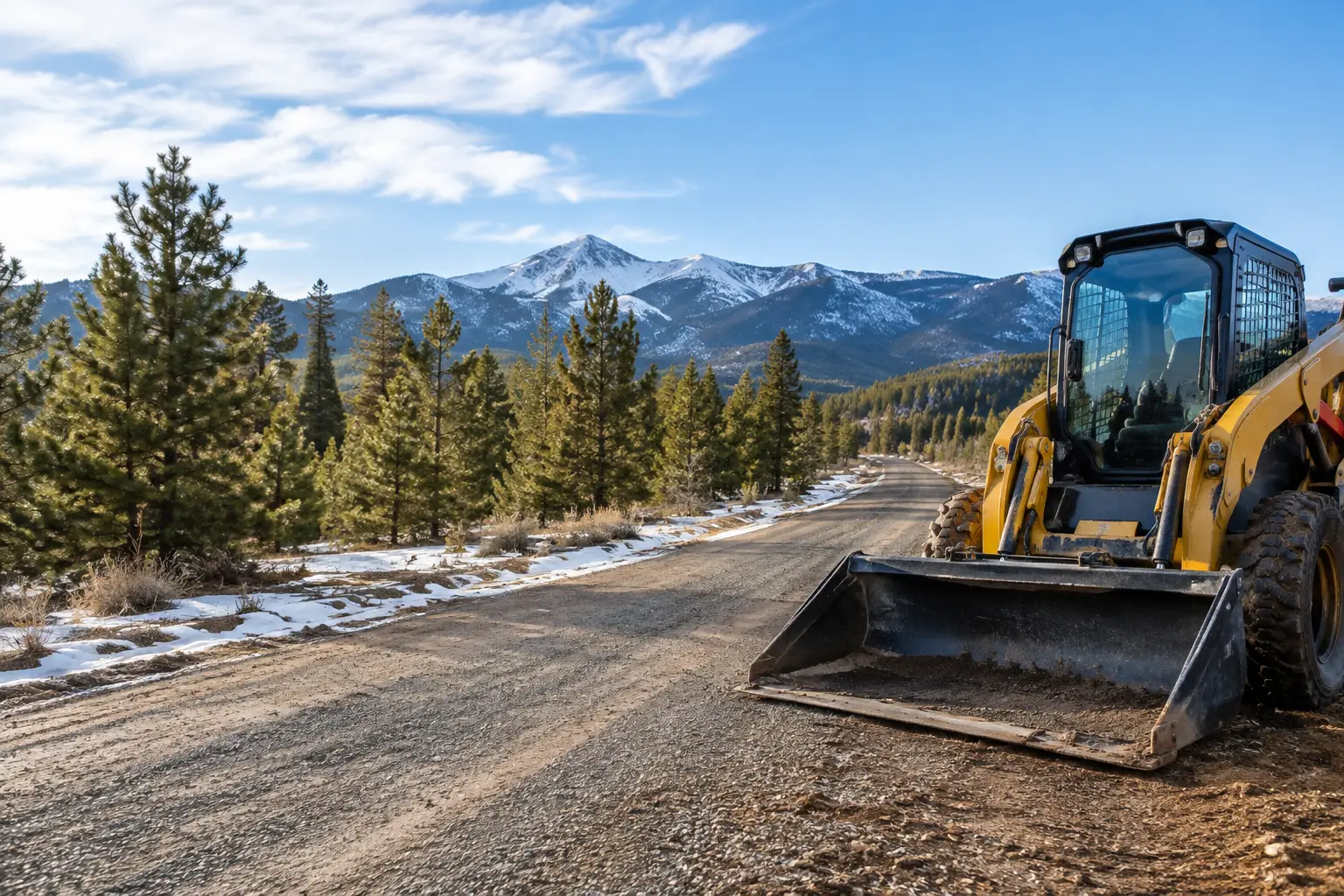
A private road can look passable right up until it is not. Brush crowds the mirrors, low branches scrape equipment, runoff cuts ruts into the travel lane, and one downed tree blocks an emergency vehicle. This private road clearing guide gives Colorado landowners a practical way to assess the problem, clear the right ground, and build access that holds up when conditions get rough.
Start With the Road’s Real Job
Do not clear a road based on appearance alone. Start by defining who needs to use it and under what conditions. A driveway serving one residence has different needs than an access road supporting a ranch, a construction project, multiple homes, or wildfire response.
Walk or drive the full route before any equipment mobilizes. Look beyond the obvious brush. Mark tight turns, soft shoulders, steep sections, blind corners, drainage crossings, gates, culverts, overhead lines, and areas where the road narrows. Note where a pickup can pass today, but a fire engine, delivery truck, trailer, or excavation crew cannot.
The goal is not to strip every inch of vegetation from the property. The goal is clear, dependable access. That usually means opening the travel corridor, improving sightlines, removing hazardous trees and brush, and correcting the drainage problems that keep damaging the road.
Check Ownership, Easements, and Boundaries First
Private roads often cross more than one parcel. Before clearing begins, confirm who owns the road and who has access rights. An easement may set the route, the allowed width, maintenance responsibilities, or limits on work outside the established corridor.
This matters most when trees, fences, drainage features, or utility lines sit near the road edge. A contractor can clear heavy growth quickly with the right machine, but speed does not replace permission. Get agreement from affected owners before removing vegetation or changing the road footprint.
If the road serves a homeowners association, shared ranch access, or a development parcel, establish who approves the scope and who will maintain the finished work. A newly cleared road still needs upkeep after spring runoff, wind events, and winter damage.
Set a Clear Travel Corridor
Road clearing starts at the edge of the tires, then expands outward only as far as the road’s use demands. Light vegetation brushing the lane may be a nuisance. Dense brush and low limbs can reduce visibility, trap moisture, add wildfire fuel, and force vehicles toward unstable shoulders.
For most properties, the clearing plan should address three areas: the driving surface, the immediate roadside, and the overhead path. The driving surface needs firm, unobstructed passage. The roadside needs enough room for visibility, drainage, and safe vehicle recovery. The overhead path must accommodate the tallest vehicle expected to use the route.
There is no single width that fits every road. A narrow mountain driveway may need targeted trimming and a few widened passing points. A road that must handle construction deliveries or emergency equipment needs more room, stronger shoulders, and broader turns. Clearing too little leaves the same access problem in place. Clearing too much can create unnecessary cost, expose soils, and remove useful screening vegetation.
Remove the Growth That Creates Real Risk
Prioritize vegetation that blocks movement or creates a hazard. That includes dead or leaning trees, low limbs, thick brush at blind corners, volunteer trees encroaching into the road, invasive growth, and woody fuel buildup along the route.
Forestry mulching is often a strong fit for dense brush, small trees, and overgrown roadside vegetation. A high-flow compact track loader with a drum mulcher can work through uneven Colorado ground while processing material into mulch close to where it stands. That can reduce hauling, eliminate burn piles, and leave a cleaner finish than pushing slash into heaps.
Larger timber, utility conflicts, protected areas, and extremely steep slopes may require a different approach. A good scope matches the machine and method to the terrain instead of forcing one solution onto every mile of road.
Handle Drainage Before It Handles Your Road
Vegetation clearing improves access, but water determines whether that access lasts. A road that holds water or sends runoff down the wheel tracks will rut, washboard, soften, and fail. Clearing without drainage work can make the surface look better for a short time while the real problem remains underneath.
Watch how water moves during rain or snowmelt. Standing water, muddy depressions, exposed aggregate, eroded ditches, and deep ruts all point to drainage trouble. Check culvert inlets and outlets for brush, sediment, rock, and debris. A blocked culvert can redirect runoff across the road and cut it apart fast.
The road surface should shed water instead of trapping it. Depending on the grade and terrain, that may mean restoring a crown, cleaning or reshaping ditches, opening outlet paths, adding water bars, or installing and sizing culverts correctly. On steep mountain ground, small drainage details make a major difference.
Avoid pushing brush, mulch, or soil into ditches and drainage crossings. It may look like cleanup, but it can block flow and create a bigger repair later. Keep outlets open and protect the ground below them from erosion where needed.
Repair the Base, Not Just the Ruts
Ruts are a symptom. The cause may be weak subgrade, poor drainage, insufficient aggregate, overloaded traffic, or a road grade that sends water straight downhill. Filling holes without fixing the cause usually buys a short window before the damage returns.
After clearing, inspect the road base. Soft sections may need excavation and rebuilding. Low spots may need material and compaction. Heavily traveled roads may need new aggregate, grading, and a compacted driving surface. If water is moving across the road, correct that flow before placing fresh material.
Grade work should be deliberate. Over-grading can remove good material, flatten the crown, and push gravel into the ditch. The right finish is smooth enough for reliable travel but shaped to drain. It also needs enough strength for the vehicles that will use it, not just the vehicle inspecting it on a dry day.
Build Wildfire Readiness Into the Clearing Plan
A private road is part of a property’s defensible-space strategy. It is also an evacuation route and a potential access route for firefighters. Heavy roadside fuels can increase fire intensity near the road, block visibility, and make the route harder to use when seconds matter.
Focus on reducing continuous fuels along the access corridor. Remove dead brush, ladder fuels, and dense small trees where they create a connected path for fire. Prune or remove vegetation that narrows the route. Keep turnaround areas, gates, and address markers usable.
Do not confuse wildfire mitigation with bare ground. Healthy spacing, selective removal, and mulched material can be more effective and more stable than indiscriminate clearing. Site conditions matter. A dry, dense foothills parcel calls for a different treatment than a wet mountain road or an open Western Slope acreage.
Choose the Right Time and Contractor
Road clearing can happen in many seasons, but timing affects the work. Dry conditions may allow cleaner access and better grading. Frozen ground can support equipment in some areas. Wet soil, active runoff, nesting concerns, and seasonal fire restrictions may change the plan.
Ask a contractor how they will access the road, manage debris, protect drainage, and handle steep or soft ground. Ask what equipment fits the job and whether they can combine clearing, forestry mulching, grading, and site preparation in one coordinated scope. One crew that can clear the corridor and address the road condition can prevent the handoff problems that leave work unfinished.
For Colorado properties with rugged access, Yeti Defensible Landworks brings equipment-forward clearing and grading work to the ground that needs it most. The right plan protects the route without treating every property like a flat, open lot.
Keep the Road Clear After the Heavy Work
A cleared private road needs routine attention, especially after storms and runoff. Walk it after major rain, spring snowmelt, or high winds. Remove new debris before it becomes a blockage. Keep culvert inlets open, cut back fast-growing roadside vegetation, and repair small ruts before traffic turns them into deep failures.
Set a maintenance standard based on use. A seasonal cabin road may need inspection before and after winter. A shared residential road or working ranch route may need scheduled checks throughout the year. The cost of regular trimming and drainage cleanup is usually far lower than an emergency repair when access is blocked.
A dependable road does more than get you from the gate to the house. It gives your property a safer way in, a safer way out, and a stronger foundation for every project that comes next.
Leave a Reply