
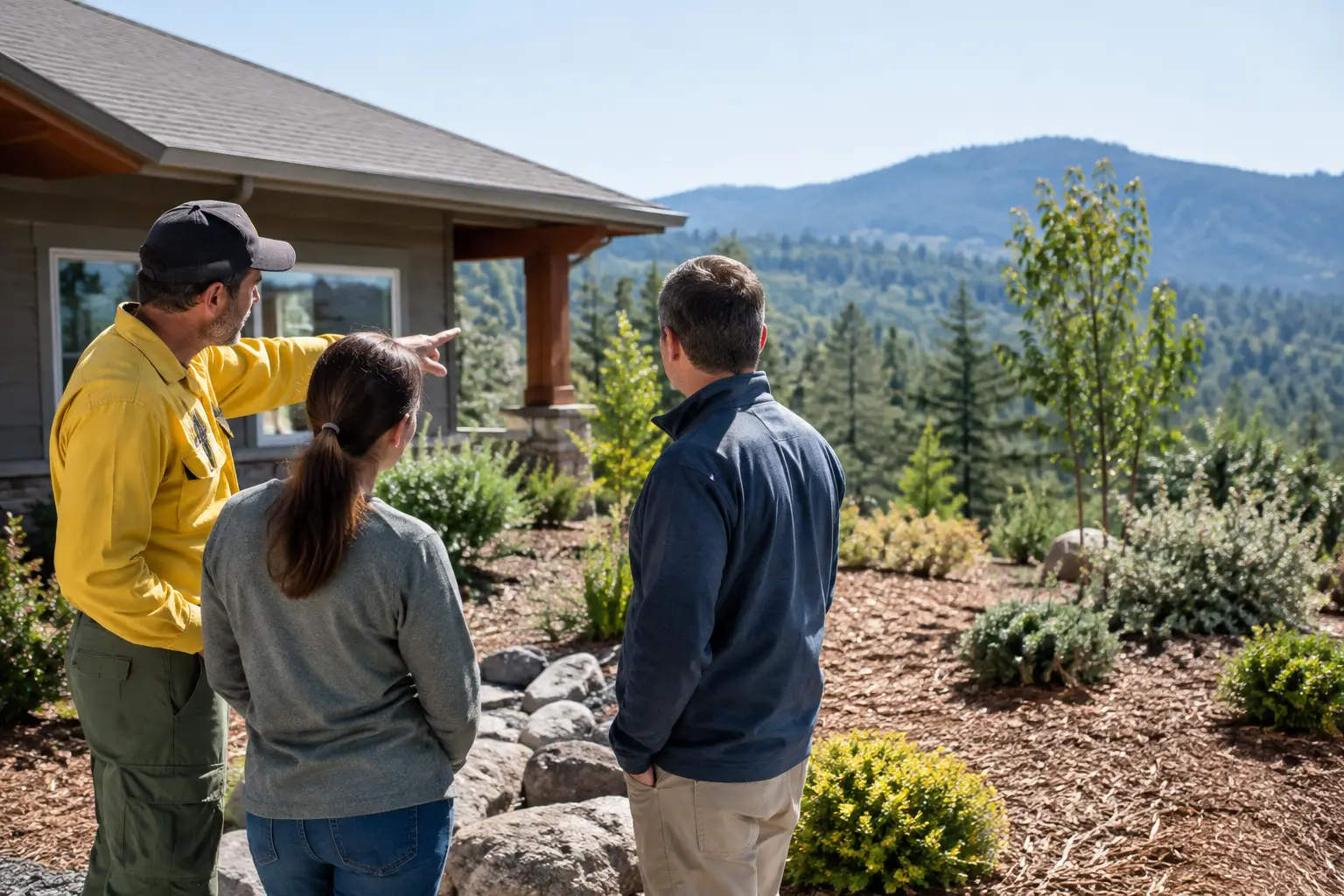
A wildfire adapted partnership defensible space cost share program can help turn a necessary land-management job into a more affordable one. But cost share is not a blank check for clearing every tree on a property. Funding is usually tied to specific wildfire-risk work, defined treatment areas, required inspections, and a program timeline. The property owner still needs a solid plan, qualified execution, and a clear understanding of what the program will – and will not – cover.
For Colorado acreage owners, mountain homeowners, and rural communities, that structure is a good thing. It keeps the focus where it belongs: reducing hazardous fuels near homes, access roads, outbuildings, and evacuation routes.
What Defensible Space Cost Share Usually Covers
Defensible space work creates a managed area around a structure where wildfire has less fuel to build intensity and spread. The goal is not to strip a lot bare. The goal is to break up continuous vegetation, remove receptive fuels, and give firefighters a safer place to operate if conditions allow.
A cost-share program may help pay for work such as forestry mulching, thinning dense small trees, removing ladder fuels, cutting back brush, treating invasive vegetation, and clearing access along a driveway. The exact scope depends on the funding source, local wildfire priorities, property conditions, and the rules in place when applications open.
Many programs concentrate on the first zones around a home or critical structure. That often includes the immediate area closest to the building, then extends outward into thicker vegetation where trees, brush, grass, and debris can carry fire toward the structure.
The work must be defensible-space work, not general landscaping. Clearing a neglected lot for a future building pad may improve the site, but it may not qualify unless the approved scope directly supports wildfire mitigation. The same goes for ornamental tree removal, routine mowing, or broad land clearing with no connection to a protected structure or community risk-reduction plan.
How Wildfire Adapted Partnership Defensible Space Cost Share Works
Wildfire Adapted Partnership programs and similar local efforts typically operate through scheduled funding cycles. Homeowners apply, receive a review or assessment, complete approved work, then submit documentation for reimbursement or receive contractor coordination through the program. The exact process varies by area and funding source.
That last detail matters. Some programs reimburse a percentage of eligible costs after the job is finished. Others set a maximum award amount. Some require an owner match, while others may have separate funding tiers for income-qualified households, high-risk areas, or neighborhood projects. Never assume the full invoice will be covered.
Before scheduling equipment, confirm four things with the program administrator: the approved treatment area, the eligible work, the reimbursement rate or cap, and the required paperwork. Ask whether the contractor must provide a detailed estimate, proof of insurance, before-and-after photos, invoices, or a specific treatment prescription.
Get those answers in writing. A verbal approval from a neighbor, fire district contact, or community volunteer is not the same as a funded project authorization.
Approval Comes Before the Mulcher Starts
This is where good intentions can create expensive problems. A homeowner sees a grant announcement, hires a crew, clears the property, then learns the work needed pre-approval or did not follow the approved scope. The property may be safer, but the reimbursement can still be denied.
Do not start early unless the program clearly says you can. Keep copies of the approval notice, site plan, estimate, paid invoice, and photos. If conditions change during the job – such as finding heavier fuel loads, poor access, or a drainage feature that changes the approach – contact the program before expanding the work.
Build a Scope That Reduces Fire Risk First
The strongest cost-share applications show a direct connection between the work and the risk. Start at the structure and work outward. Look for dry grass against siding, brush under windows, stacked firewood near buildings, low limbs that can carry flames upward, and dense tree stands that allow fire to move from crown to crown.
On larger Colorado properties, access deserves the same attention. A narrow driveway choked with brush can slow resident evacuation and emergency response. Clearing vegetation along travel routes, creating turnaround space where appropriate, and improving equipment access may support both wildfire readiness and day-to-day property use.
A practical scope may include thinning crowded small-diameter trees, removing dead and down material, lifting lower limbs where appropriate, and mulching brush that would otherwise create a continuous fuel bed. It depends on the terrain, vegetation type, slope, and how close the fuel is to the home.
Steep slopes require added caution because fire can move uphill fast. Dense conifer stands need different treatment than gambel oak, scrub brush, grassland, or a mixed property with heavy weed pressure. There is no one-size-fits-all clearing distance. The right treatment reduces connected fuels while retaining healthy vegetation, soil stability, privacy, and the character of the land.
Cost Share Is Not the Same as Lowest Bid
A low number on paper can become the expensive choice if the contractor cannot safely reach the work area, does not understand the approved scope, or leaves behind slash and debris that still create a fire problem. Defensible space is measured by results, not by how much vegetation was knocked down in a day.
Ask contractors how they will treat material. Will they mulch brush and small trees on site? Haul material away? Chip it? Pile it for a permitted burn window? Each method affects the price, the finished appearance, and the funding eligibility. Fine mulch can be useful for erosion control and site appearance, but it should not be left deep against a home or packed into a continuous heavy layer.
Equipment also matters. A high-flow compact track loader with a drum mulcher can work efficiently through dense brush and small trees while minimizing repeated handling of material. That is useful on rough Colorado ground where hand crews alone can be slow or where hauling every piece of vegetation is not practical. It is not the right answer for every acre, though. Sensitive soils, large timber, extreme slopes, wet conditions, and protected areas may require a different approach.
When reviewing an estimate, make sure it identifies the treatment area, vegetation type, access limits, expected disposal method, and whether cleanup or final grading is included. A vague estimate makes it harder to compare bids and harder to submit clean documentation for reimbursement.
Prepare Your Property Before the Work Day
Once the project is approved, make the site easy and safe to work. Mark septic components, wells, irrigation lines, utility boxes, propane tanks, fences, gates, and any known underground lines. Move vehicles, trailers, portable equipment, and loose materials away from the treatment area.
Open access where possible. A mulching crew needs room to enter, turn, stage equipment, and work without damaging improvements. If the driveway has tight turns, low branches, soft shoulders, or a locked gate, discuss it before mobilization. Small access problems can add real time to a project.
Talk through priorities on site before work begins. Some owners want maximum visibility around the home. Others want to preserve screening, wildlife cover, or specific mature trees. Those preferences can usually be worked into the plan if they do not conflict with the fire-risk objective or cost-share requirements.
Keep the Work Maintained After Reimbursement
Defensible space is not a one-time finish line. Grass grows back. Seedlings return. Wind drops branches. A clean treatment from this year can become a connected fuel bed again if it is ignored for several seasons.
Plan for annual walk-throughs, especially before the dry season. Remove fresh deadfall, keep grass and weeds managed near structures, maintain separation between shrubs and tree limbs, and inspect access routes. A lighter maintenance pass costs less than waiting until brush and small trees rebuild into a major project.
For property owners in wildfire-prone Colorado counties, cost share can make a serious safety upgrade more reachable. Use the funding window well: get approval first, hire for the actual risk, document the job, and leave the land cleaner, safer, and ready for the next fire season. Yeti Defensible Landworks can help turn an approved treatment plan into equipment-ready work on rugged ground.
Leave a Reply