
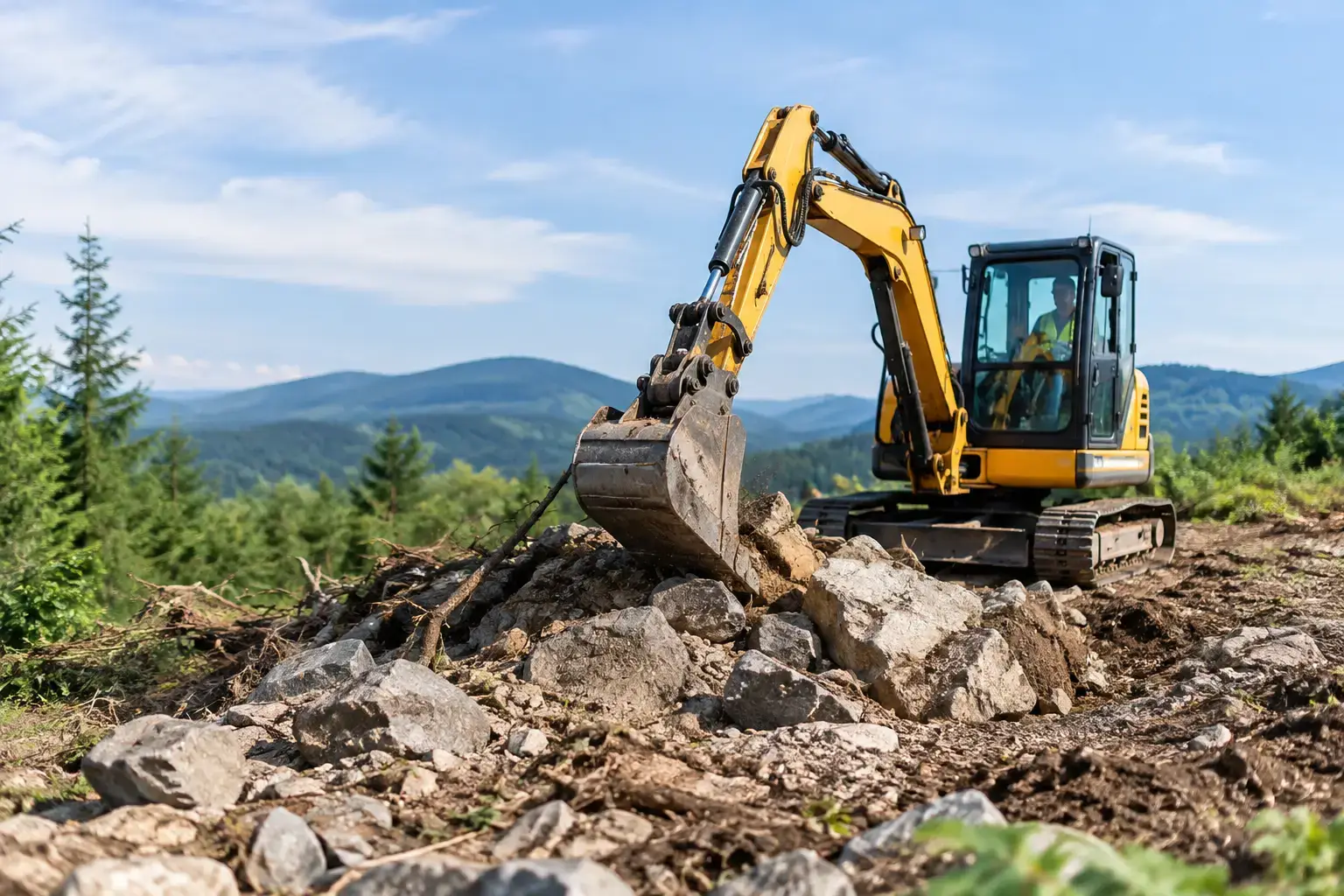
A Colorado property can look manageable from the gate, then turn into a different job 200 yards uphill. Loose rock, buried ledge, steep grades, thick gambel oak, deadfall, and narrow access all change the plan. Rocky terrain clearing is not about charging in and making a mess. It is controlled work that removes fuels and unwanted vegetation while protecting the ground, access routes, and usable portions of the property.
The right approach can open a driveway, reduce wildfire exposure, create room for a future build, reclaim neglected acreage, or make a steep lot easier to maintain. The wrong approach can scar slopes, damage retained trees, push material into drainage paths, and leave behind a bigger problem than the one you started with.
Why Rocky Terrain Clearing Requires a Different Plan
Rocky ground puts limits on every piece of equipment. Surface boulders can shift. Sharp rock can damage tracks, hoses, and cutting tools. Hidden ledge can stop grading passes cold. On a slope, loose material can roll downhill into fencing, roads, structures, or neighboring ground.
That does not mean the land cannot be cleared. It means the work must match the site. A field that needs broad brush reduction calls for a different method than a mountain driveway corridor, a building envelope surrounded by rock, or a wooded slope above a home.
Before machines start, a capable contractor looks at access, slope direction, visible rock, drainage, vegetation density, utilities, structures, and the final purpose of the cleared area. That purpose matters. Land being prepared for defensible space should not be treated exactly like land being prepared for a pad, road, fence line, or pasture recovery.
Colorado terrain also changes fast with weather. Ground that holds equipment well in dry conditions may become slick after rain or snowmelt. A plan that works in one season may need adjusted travel routes or work limits in another.
Start With Access, Not the Brush
Many rocky-property jobs succeed or fail at the entrance. If a machine cannot safely reach the work area, the rest of the project is irrelevant. Tight gates, sharp switchbacks, creek crossings, soft shoulders, and low branches need to be considered before mobilization.
Access clearing may include trimming back encroaching vegetation, removing brush along a drive, widening a travel corridor where practical, and addressing small obstructions that limit equipment movement. It does not always mean building a new road. Often, the smart move is simply creating a stable, workable route to the areas that need attention.
On steep or uneven ground, machine travel should be deliberate. Repeated passes in the wrong place can disturb soil, expose rock, and create ruts that funnel water. Sometimes the best result comes from clearing in sections, working from stable ground, and leaving sensitive areas untouched.
A property owner should also think beyond the machine’s arrival. Will emergency vehicles have better access after the work? Can you reach a shed, well house, fence line, or upper parcel without fighting brush? Is the route wide enough to maintain later? Good clearing creates a usable path, not just a one-day opening.
Use the Right Tool for the Material
Drum mulching is often a strong fit for brush, small trees, dense understory, and accumulated wildfire fuels on rugged ground. A high-flow compact track loader can work with a low ground-pressure footprint compared with heavier equipment, while a drum mulcher processes vegetation into mulch instead of leaving slash piles across the property.
That mulch layer can help cover exposed soil and reduce the amount of loose woody debris left behind. But it is not a cure-all. Mulch depth, slope, existing ground cover, drainage, and the landowner’s intended use all matter. A heavily mulched building area or driveway corridor may still require follow-up site work.
Rock creates real limits for a mulching head. The operator has to manage cutting height, watch for buried stone, and avoid treating the machine like a rock grinder. Large boulders, solid bedrock, concrete, wire, old fencing, and hidden debris can require a different method or manual removal before the mulcher goes to work.
For rocky terrain clearing, productivity is not measured only in acres per day. It is measured by what the land looks like when the equipment leaves: reduced fuel load, cleaner access, controlled disturbance, and a property that is easier to use and maintain.
Protect Slopes and Drainage While You Clear
Water always finds the weak point. On rocky ground, that weak point may be a freshly disturbed path, a bare slope, an old two-track, or a cleared strip that now directs runoff toward a structure. Clearing should account for where water moves before changing vegetation or ground cover.
Vegetation is not all bad. Mature, healthy trees with proper spacing may be worth retaining. Stable native grasses and rooted ground cover can help hold soil. Rock outcrops may be part of the property’s natural drainage pattern. The goal is not to scrape a hillside clean. The goal is to remove the vegetation and fuel conditions that create risk or prevent practical use.
This is especially important around homes, roads, culverts, seasonal drainages, and steep draws. Work may need to stop short of a drainage area, follow contours, or use a lighter touch near sensitive ground. If the project includes significant grading, retaining needs, major excavation, or a future structure, those items should be planned separately from vegetation clearing.
Define the Finish Line Before Work Starts
“Clear it out” is not a work scope. A better project conversation identifies what stays, what goes, and what the land needs to do afterward.
For wildfire mitigation, the finish line may be reduced ladder fuels, better tree spacing, cleaner zones around buildings, and access for emergency response. For site preparation, it may be a defined building envelope, improved equipment access, and removal of brush and small trees before the next trade arrives. For acreage maintenance, it may be opening fence lines, reclaiming overgrown corners, and making the land manageable again.
Marking priorities helps avoid expensive mistakes. Flag trees you want protected. Identify wells, septic components, irrigation, utilities, historic features, and property boundaries. Point out areas where rock should remain for erosion control, visual screening, or slope stability. A direct walk-through before work begins can save hours of rework later.
It also helps to be realistic about finish grade. Land clearing can remove vegetation, reduce fuels, and improve access, but it does not automatically produce a flat construction-ready pad. Rocky slopes may need excavation, imported material, engineered design, or specialized grading after the clearing phase. Clear expectations keep the job moving and the budget grounded.
Common Mistakes That Cost Property Owners
The biggest mistake is choosing a method based only on the lowest price. Cheap clearing can mean uncontrolled disturbance, damaged trees, poor debris handling, or a machine that is not suited to the terrain. Repairing ruts, drainage problems, or damaged access can cost more than doing the work correctly from the start.
Another mistake is removing every plant on the property. Bare ground may look clean for a week, then become muddy, dusty, or unstable. Defensible space is selective. Practical site preparation is selective. Keeping the right vegetation in the right places often produces a safer, better-looking result.
Waiting too long is also costly. Dense brush grows into larger stems. Deadfall accumulates. Access tightens. Wildfire fuels build up season after season. Clearing before the problem becomes a wall of vegetation gives the contractor more options and gives you a cleaner final result.
What a Professional Rocky Terrain Clearing Crew Brings
The machine matters, but judgment matters more. A professional crew brings the ability to read the ground, adjust to changing conditions, and work around rock without turning the site into a torn-up slope. That means choosing stable travel routes, controlling the cutting area, keeping debris out of critical drainage, and knowing when a section calls for a different approach.
For Colorado landowners, this work often connects directly to wildfire readiness. In Douglas, Jefferson, El Paso, Park, Clear Creek, and mountain communities across the service area, fuel reduction and access improvements can make a property more defensible while improving daily use. Yeti Defensible Landworks brings equipment-built execution to those difficult jobs: clear brush, process small trees, improve access, and leave the property in a more manageable condition.
If your land has rock, slope, and overgrowth, do not judge the job from the roadside. Walk the problem areas, decide what the property needs to become, and build the clearing plan around that result. The right first pass can make every future project on the land easier.
Leave a Reply