
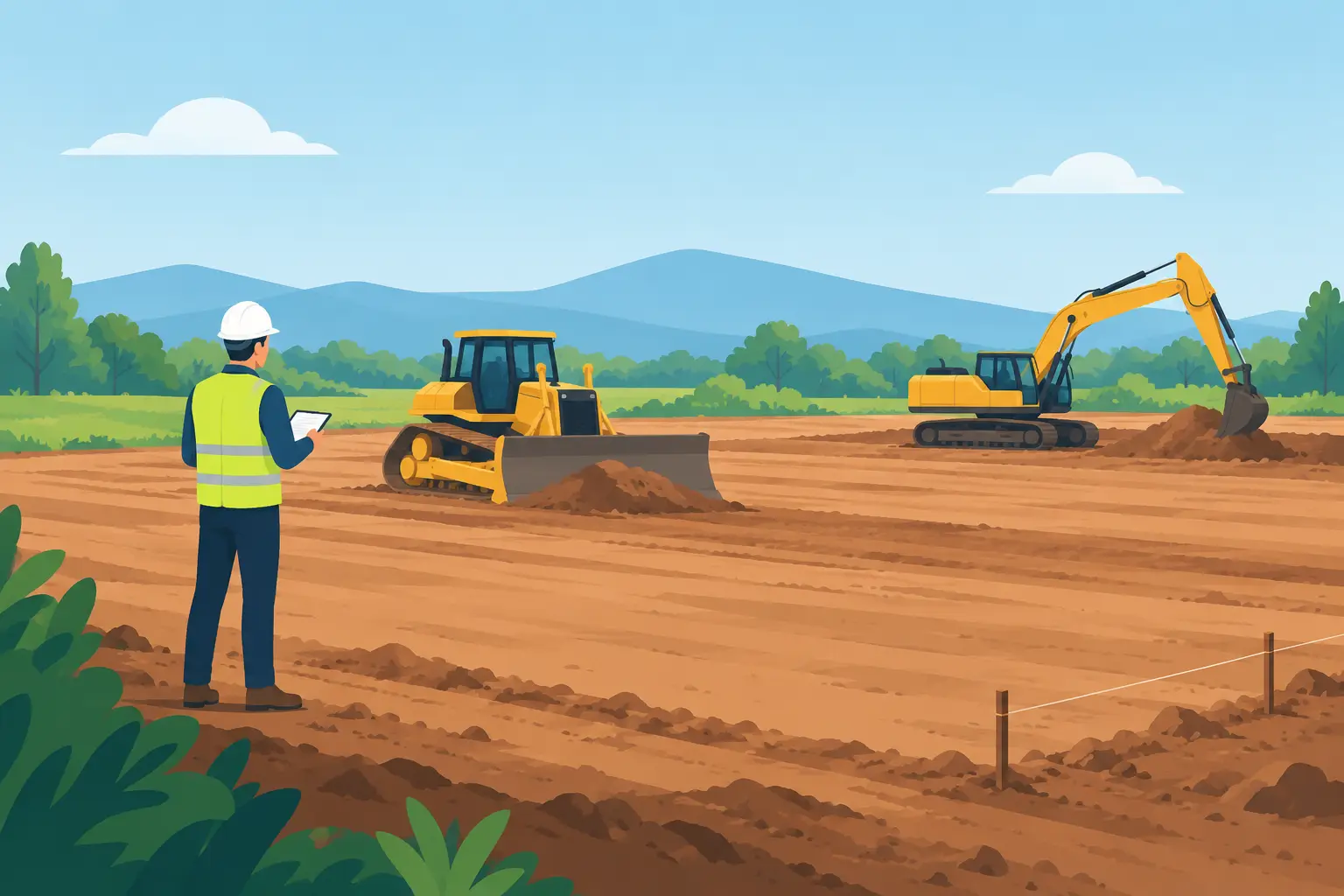
A building site can look ready from the road and still hide the problems that burn time and money once equipment arrives. Dense brush, buried debris, soft ground, steep approaches, drainage paths, and poor staging space can all slow a project before the first footing is laid. Land preparation before construction puts those problems in the open and gives the build a solid place to start.
For Colorado property owners, this work is rarely just about making a lot look cleaner. It is about creating safe access, managing wildfire fuels, controlling water, and giving contractors room to work without fighting the terrain every day. Done right, site prep reduces surprises. Done halfway, it can create expensive ones.
What Land Preparation Before Construction Actually Includes
Land preparation is the field work required to turn raw, neglected, or difficult ground into a usable construction site. The exact scope depends on the property, the planned structure, local requirements, and the time of year. A flat infill lot in Denver needs a different approach than a wooded mountain parcel, a rural driveway extension, or a future home site on acreage.
Most projects begin with clearing unwanted vegetation and obstacles. That can include brush, small trees, deadfall, invasive growth, old fence material, slash piles, stumps, surface rock, or abandoned debris. The goal is not to scrape every inch of land bare. The goal is to clear only what the project needs while protecting stable soil, mature trees worth keeping, and the natural features that matter.
After clearing comes access and usable work space. Construction crews need a safe way in, a place to turn around, and room to stage materials and equipment. On rugged properties, improving an approach road or establishing a stable equipment path can be just as important as clearing the building pad itself.
Grading is the next major piece. It shapes the site for drainage, building elevation, access, and practical use. Sometimes that means rough grading a pad. Other times it means correcting ruts, smoothing a work area, directing surface water away from the future structure, or restoring disturbed ground after heavy work is complete.
Start With the Ground, Not the Building Plan
A site plan tells you where the structure goes. The ground tells you what it will take to get there. Before mobilizing equipment, walk the property with the actual project in mind. Identify the planned building location, driveway route, utility path, drainage areas, slopes, mature trees, property lines, and any areas that need to remain undisturbed.
This early look often changes the work plan. A proposed access route may be too steep for regular truck traffic. A low spot may hold seasonal water. Heavy brush may conceal rock outcrops, old wire, or uneven ground. Catching these conditions before construction starts is cheaper than discovering them after concrete, lumber, or delivery trucks are already on site.
Call utility-locating services before digging or grading. If the property has existing power, water, gas, communications lines, septic components, or irrigation, mark them clearly and build the work plan around them. Never assume a line is shallow, accurately mapped, or out of the way.
Permits and local rules also belong at the front of the process. Clearing, grading, driveway work, drainage changes, tree removal, and disturbance near waterways may require approvals. In mountain and rural areas, access, erosion, and wildfire mitigation standards can affect the scope. Confirm the requirements before the equipment shows up, not after work has begun.
Clear Vegetation Without Creating a Bigger Problem
Overgrown vegetation can block access, hide hazards, and load a property with wildfire fuel. But clearing needs control. Pushing brush into piles or stripping soil with the wrong equipment can leave exposed dirt, drainage problems, and disposal headaches.
Forestry mulching is often a strong fit for brush, small trees, and dense understory. A drum mulcher processes vegetation into mulch on the ground rather than creating haul-off piles across the property. That mulch can help protect exposed soil, reduce erosion, and make the site easier to manage. It also breaks up continuous fuel beds, which matters on Colorado properties where wildfire exposure is part of the planning picture.
Mulching is not the right answer for every condition. Large trees, substantial stumps, construction debris, heavy rock, and material that must be removed from the site may require different methods. A good contractor matches the machine and the approach to the ground instead of forcing one solution across the entire property.
Keep a clear line between site preparation and indiscriminate clearing. Retaining healthy trees in the right locations can provide shade, wind protection, privacy, and slope stability. The target is a clean, workable site with reduced hazards, not a scarred piece of ground that becomes harder to build on.
Build Access That Can Handle the Job
A narrow, soft, or overgrown approach can become the first serious construction delay. Delivery trucks, excavation equipment, concrete vehicles, and crews all need dependable access. If the road fails under traffic, the entire schedule takes a hit.
Start by considering the largest and heaviest equipment that will need to reach the site. That determines needed width, overhead clearance, turning room, slope management, and surface condition. Low limbs, brush, loose soil, washouts, and sharp turns can all limit access long before a truck reaches the building pad.
On acreage and mountain properties, access improvements may include clearing corridor vegetation, widening tight sections, repairing ruts, shaping drainage, and establishing a stable route to the work area. Water is the enemy of weak roads. A route that appears solid during dry weather may become unusable after runoff or spring thaw if water has nowhere to go.
Do not overlook emergency access. A practical route improves day-to-day construction logistics, but it also gives first responders a better chance of reaching the property if something goes wrong.
Grade for Water Before Water Finds Its Own Route
Water will move through a site whether it was planned for or not. The job of grading is to give it a controlled path that protects the future structure, access route, and surrounding ground.
Rough grading establishes the broad shape of the site. Fine grading comes later, when final elevations and finish surfaces are known. For early construction work, the focus is usually creating a stable pad, keeping water away from the proposed foundation area, and avoiding channels that wash through drive lanes or staging zones.
This is where shortcuts cause trouble. Moving soil without understanding the slope can send runoff toward the building area, neighboring land, a road, or a drainage feature. Cutting too aggressively into a hillside can destabilize the ground. Filling low areas without proper compaction can create settlement issues later.
The right grade depends on the project. A small outbuilding may need a straightforward pad and drainage path. A new home, commercial site, or development parcel may require engineered plans, compaction standards, and more precise earthwork. Know where general site prep ends and engineered work begins.
Plan the Work in the Right Order
Site preparation is more efficient when each phase supports the next one. Clearing access after materials arrive, for example, puts the project backward. The usual sequence is to confirm boundaries and utilities, establish access, remove vegetation and obstacles, create a work area, complete rough grading, and then prepare for the next trade.
Weather can change that sequence. Wet soil may not support equipment without damage. Frozen ground can limit grading. Fire restrictions may affect operations during dry periods. A disciplined plan leaves room for real field conditions instead of promising a one-size-fits-all timeline.
Yeti Defensible Landworks approaches difficult Colorado ground with high-flow compact track loader power, drum mulching capability, and a direct focus on safe, usable results. The work is built around the conditions on site: clear what needs clearing, improve what needs improving, and leave the property ready for the next move.
Do Not Treat Cleanup as an Afterthought
The best-prepared site is not simply cleared. It is organized. Material piles are handled, loose debris is removed, access remains open, and disturbed ground is left in a condition that makes sense for the next phase.
Before the crew leaves, walk the site and compare it to the original plan. Confirm the pad area is accessible, routes are clear, drainage has not been blocked, protected areas remain intact, and no new hazards were created. If construction will not start immediately, consider whether exposed soil, mulched areas, or cleared corridors need temporary erosion control or periodic maintenance.
A clean site does more than look professional. It lets the next contractor arrive, set up, and work without wasting the first day solving preventable problems.
The right land preparation gives a project momentum before the foundation work begins. Walk the property early, make the hard calls before equipment and materials stack up, and build the site around safe access, stable ground, and water control. That is how difficult Colorado land becomes ground you can build on.
Leave a Reply