
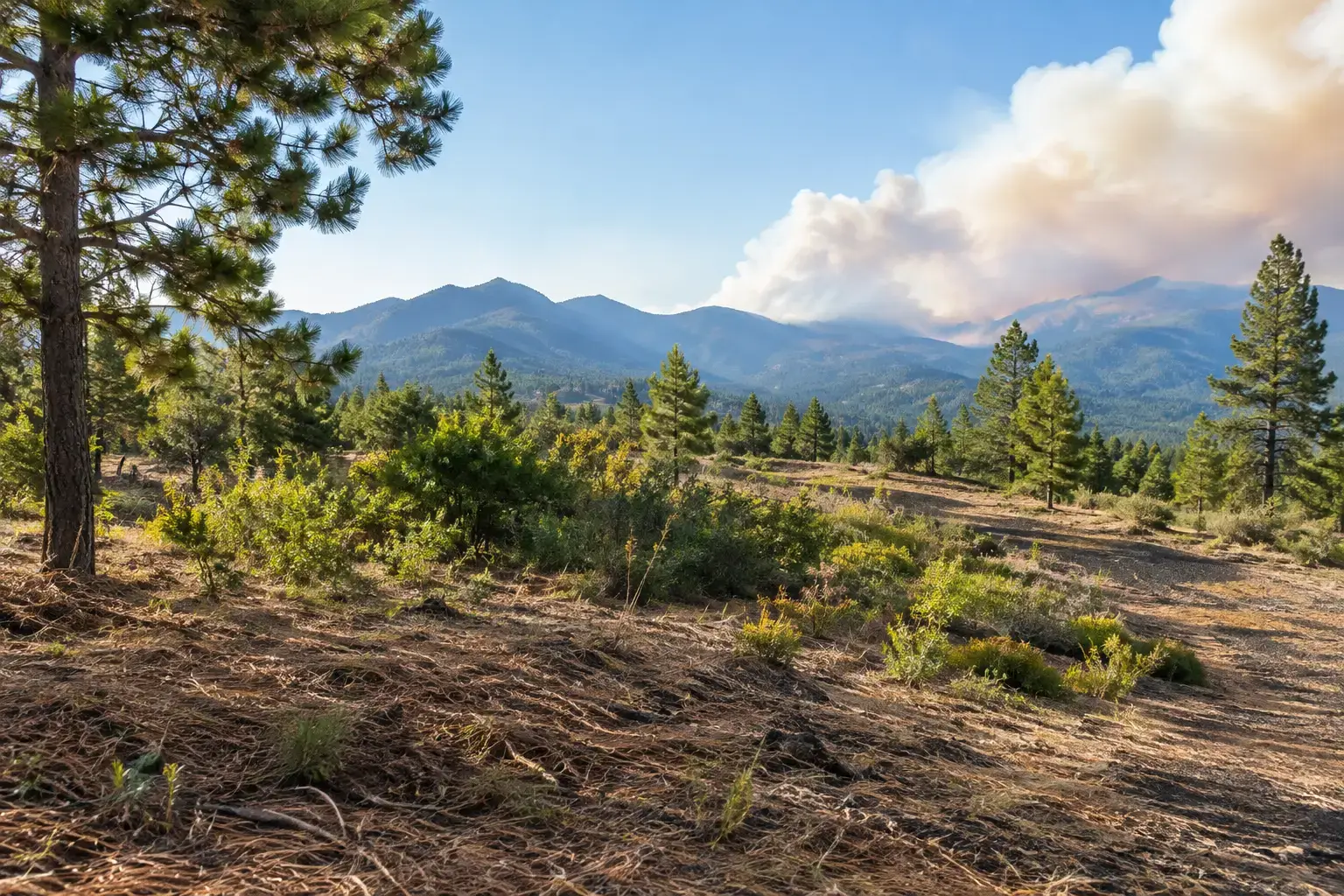
A wildfire does not need a wall of timber to threaten a home. It can run through dry grass, ladder into brush, catch low branches, and reach a structure with embers long before the main flame front arrives. Property fuel breaks interrupt that path. Done right, they give fire less continuous material to burn and give crews a safer, more workable area to defend.
They are not a guarantee and they are not a substitute for maintaining defensible space around the home. They are a practical land-management tool: a planned strip or zone where vegetation has been reduced, rearranged, or converted so fire has a harder time moving across the property.
What Property Fuel Breaks Actually Do
A fuel break changes fire behavior by breaking up the fuels that carry flame. That may mean thinning small trees, removing dense brush, mowing or mulching heavy vegetation, pruning lower limbs, or using an existing road, driveway, rocky area, or irrigated ground as part of the break.
The objective is not to leave bare dirt across an entire property. Bare ground can create erosion problems, invite weeds, and damage the land you are trying to protect. The better approach is to reduce continuity. Space plants apart. Remove dead material. Eliminate low branches that let a grass fire climb into tree crowns. Keep a route where fire has fewer easy handoffs.
A well-built break can slow surface fire, reduce flame length, limit the chance of crown fire, and create room for suppression work. It may also provide better access for equipment, inspections, evacuation, and ongoing maintenance. On a Colorado acreage, that often makes it useful well beyond wildfire season.
A Fuel Break Is Not Just a Cleared Line
Property owners sometimes picture a narrow strip bulldozed through vegetation. That can be one option, but it is rarely the full answer. Fire can cast embers far beyond a cleared line. Wind, slope, fuel type, weather, and ignition source all affect whether a break holds, slows the fire, or gets crossed.
Think of a fuel break as part of a larger protection layout. The land closest to structures needs the most attention. The area farther out should reduce the volume and continuity of available fuel. A break placed beyond that managed zone can add another layer by disrupting the route fire takes toward the house, barn, shop, or access road.
This is why location matters as much as width. A break on the wrong side of a slope or hidden behind a wall of untreated brush may look clean but provide limited practical value.
Start With the Fire’s Likely Approach
Look at how fire could enter your property. On many Front Range and mountain properties, the highest-risk route follows dry grass, brush-filled draws, fence lines, unmanaged property edges, or uphill timber. Fire generally moves faster uphill because heat rises and preheats fuel above it.
Wind exposure matters too. A break should address the side of the property where wind-driven fire is most likely to arrive, while still accounting for changing wind directions. There is no single width that works for every parcel. Open grassland, dense Gambel oak, piñon-juniper, ponderosa, mixed conifer, and overgrown acreage each call for a different plan.
A contractor can walk the ground, identify fuel concentrations, evaluate terrain and equipment access, then build a treatment that fits the property instead of forcing a one-size-fits-all strip across it.
Use Existing Features When They Make Sense
Driveways, private roads, trails, gravel pads, maintained pasture, rock outcrops, and irrigated landscaping can all contribute to a fuel-break system. These features are already interruptions in the fuel bed. The work is often about improving what exists: clearing brush along a road, widening a pinch point, removing overhanging limbs, and treating vegetation that connects one side to the other.
This approach can control cost and preserve more of the property’s natural character. It also creates practical access for trucks, trailers, equipment, and emergency response. The trade-off is that an existing feature only helps if it stays maintained. A driveway with grass, brush, and low limbs crowding both sides is not functioning as a dependable break.
What to Clear, Thin, and Mulch
The highest-value work usually targets the vegetation that makes fire move easily. Deadfall, dry grass, slash piles, dense brush, small crowded trees, and low limbs are common problem fuels. These are the materials that connect ground fire to shrubs and tree canopies.
Forestry mulching is especially effective on thick brush, small-diameter trees, and overgrown vegetation. A high-flow compact track loader with a drum mulcher can process material in place, leaving a mulch layer rather than creating large piles that need to be hauled or burned. The result is cleaner ground, reduced fuel height, and better visibility across the property.
Mulch is not maintenance-free. Thick, continuous mulch can still burn, particularly under hot, dry, windy conditions. The goal is to apply it appropriately and avoid leaving heavy accumulations against structures or in areas where fire exposure is highest. On steep slopes or erosion-prone ground, mulch can also help hold soil in place, which is one reason total clearing is often the wrong move.
Selective thinning is the better fit where mature trees add value and shade. Remove suppressed, damaged, dead, or tightly packed small trees. Prune lower branches where appropriate. Keep enough spacing that flames cannot easily climb or move tree to tree. The exact treatment depends on species, slope, tree health, and the condition of surrounding fuels.
Build for Access, Not Just Appearance
A fuel break that equipment cannot reach is harder to maintain and less useful in an emergency. Access improvements often belong in the same project. That can include clearing a route through brush, improving turning areas, opening a gate approach, trimming roadside limbs, or grading rough sections that prevent safe travel.
This is especially relevant for rural homes, cabins, ranches, and undeveloped parcels with one narrow way in and out. A clean, passable route gives residents a better evacuation path and gives service vehicles more room to operate. It also makes future fuel maintenance faster and more affordable because crews do not have to fight their way through the property before the actual work begins.
Do not overlook gates, culverts, bridges, and tight corners. A route may look open from the road yet fail to accommodate a truck, trailer, or emergency apparatus once the terrain narrows. Good planning identifies those limits before vegetation work is finished.
Maintenance Keeps the Break Working
Fuel breaks are not install-once projects. Grass grows back. Brush resprouts. Wind drops limbs. Dead material accumulates. A neglected break can lose much of its value in a few seasons.
The right maintenance cycle depends on moisture, elevation, vegetation type, grazing, irrigation, and how aggressively the land was treated initially. Some properties need annual mowing, trimming, and cleanup. Others may need periodic touch-up mulching every few years, with routine removal of fallen branches and new ladder fuels in between.
Walk the break before fire season. Look for continuous grass, dense regrowth, dead shrubs, low branches, and debris piles. Check the approach roads at the same time. If a break is part of your property protection plan, it needs to remain visible, accessible, and intentionally managed.
Avoid the Common Mistakes
The biggest mistake is treating a fuel break as a magic barrier. Fire can spot over it. Embers can land in gutters, woodpiles, decks, vents, and ornamental vegetation near the home. Pair landscape work with structure hardening and immediate-home-zone maintenance.
Another mistake is clearing only what looks bad from the driveway. The thickest fuels are often behind buildings, down a drainage, along a back fence, or on the uphill side of the parcel. Those areas may be less visible, but they can control how fire reaches the property.
Finally, avoid creating new hazards through poor cleanup. Do not leave slash piles, scattered cut limbs, or dense mulch against structures. Clearing vegetation without addressing the material left behind simply changes the fuel arrangement.
A capable fuel break should make the land safer and more usable at the same time. Start with the likely fire path, treat the fuels that connect flame to canopy, protect access, and maintain the work. That is how overgrown Colorado ground becomes a property you can manage with confidence.
Leave a Reply