Category: Land Clearing & Forestry Mulching

  • Colorado Firewise Landscaping That Holds Up

    Colorado Firewise Landscaping That Holds Up

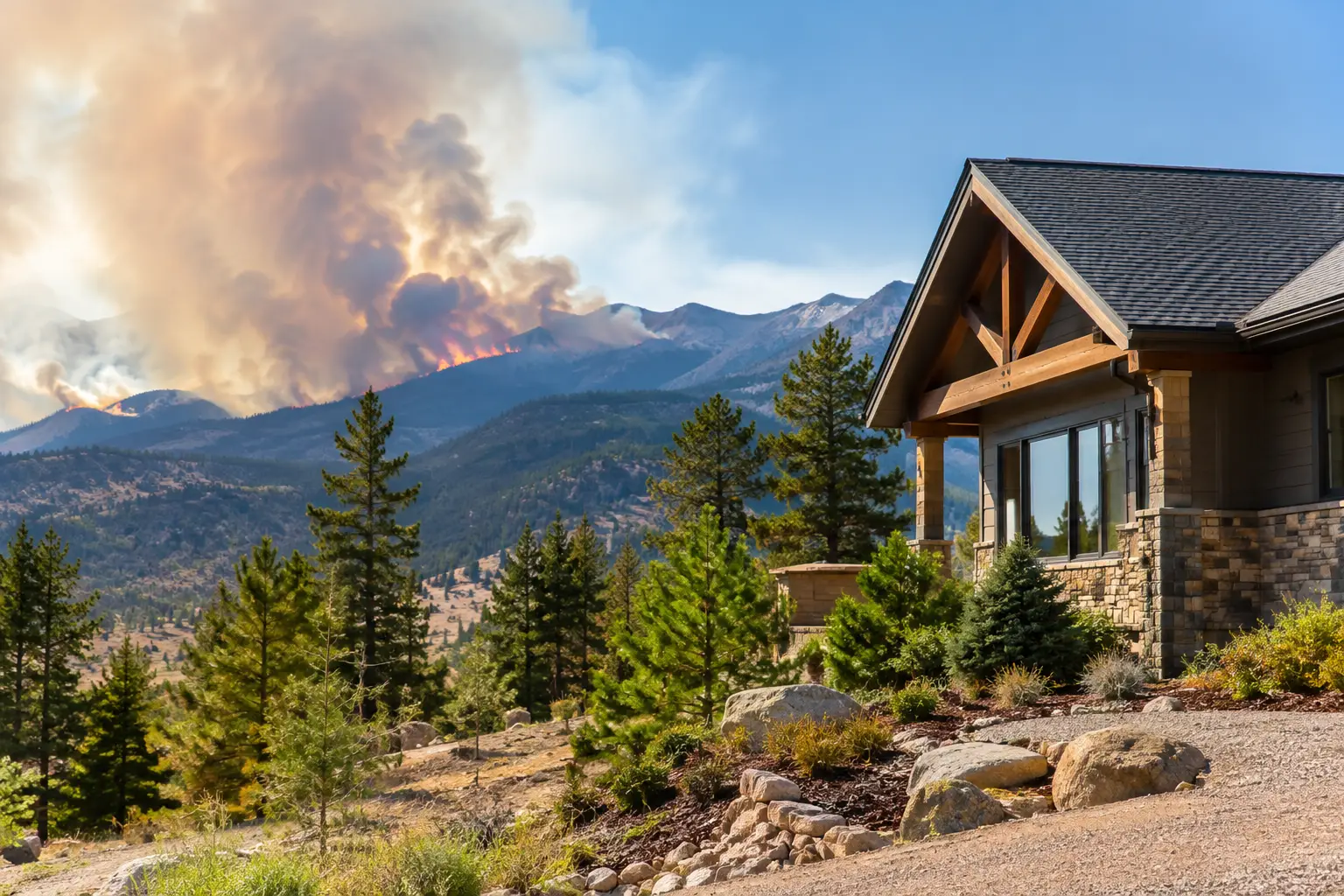
    A wood-sided home tucked into dense gambel oak may look like classic Colorado. During a fast-moving wildfire, that same brush can carry flame straight to the structure. Colorado Firewise landscaping is not about stripping a property bare or turning it into gravel. It is about breaking fuel continuity, protecting the first few critical feet around the home, and building a landscape you can realistically maintain.

    The goal is simple: give embers less to land in, give flames less to climb, and give firefighters a safer, clearer place to work. Every property is different. A foothills lot with ponderosa pine needs a different plan than a wind-exposed acreage in Elbert County or a mountain cabin surrounded by spruce. The principles stay the same. The work starts at the house and moves outward.

    Colorado Firewise Landscaping Starts at the House

    Wildfire does not need a wall of flame to damage a home. Wind-driven embers can travel well ahead of the fire front and collect in pine needles, dry leaves, bark mulch, deck corners, window wells, and brush against the foundation. That is why the area closest to the structure deserves the most attention.

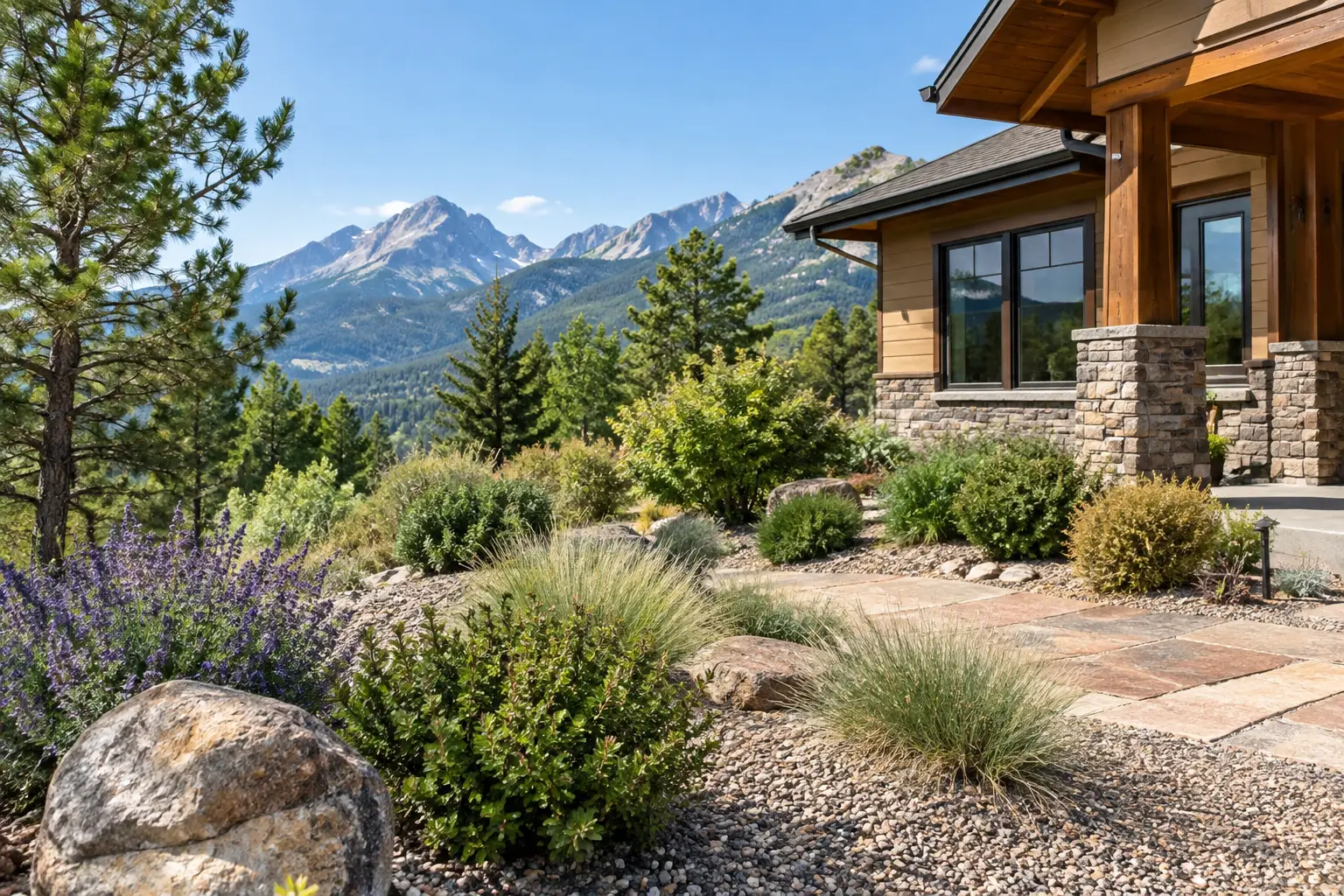
    Treat the first 0 to 5 feet as the noncombustible zone. Keep this area clean and simple. Rock, gravel, pavers, concrete, and well-maintained hardscape are practical choices. If plants belong here, use limited, low-growing, well-watered options and keep them away from vents, windows, decks, and siding.

    This is also where routine cleanup matters most. Remove needles from roof valleys and gutters. Clear leaves from window wells. Do not stack firewood, lumber, cardboard, propane cylinders, or spare building materials against the house. A clean perimeter does not guarantee survival in every fire, but it removes easy ignition paths that cause preventable losses.

    Build Separation Instead of a Fuel Ladder

    From roughly 5 to 30 feet out, the job is to reduce the chance that fire moves from the ground into shrubs, lower branches, and tree crowns. Think in terms of spacing and separation, not a perfectly manicured yard.

    Grass, native plants, and selected shrubs can still have a place in this zone. The key is keeping vegetation broken into manageable groups instead of allowing one continuous mass of fuel to connect the property. Maintain clear space between plant groupings. Keep shrubs from touching siding or crowding decks. Prune lower limbs where appropriate so surface fire has fewer routes into the canopy.

    Fuel ladders are a common problem on neglected Colorado properties. Dry grass feeds a dense shrub. The shrub reaches low tree limbs. Those limbs lead into the crown. Removing every tree is not the answer. Removing the connection is often the move that changes how fire behaves.

    Spacing depends on slope, prevailing wind, vegetation type, and tree size. Steeper ground requires more distance because fire moves uphill faster and preheats fuel above it. Tight stands of conifers may require selective thinning. Open ponderosa stands may need lower-limb pruning, brush removal, and regular needle cleanup more than heavy tree removal. A site walk tells the real story.

    Choose Plants for Maintenance, Not Just Appearance

    No plant is fireproof. A healthy, irrigated plant may resist ignition better than drought-stressed brush, but any vegetation can burn under severe enough conditions. Avoid buying landscaping on the promise of a single “fire-resistant” label.

    A stronger approach is to choose plants that fit the site, space them properly, remove dead material, and keep irrigation realistic. Native and adapted plants can work well when they are managed. The problem is not simply having vegetation. The problem is letting dry, crowded, unmanaged vegetation build up next to the home.

    Mulch deserves a practical conversation. Organic mulch helps retain moisture and improve soil, but shredded bark, dry wood chips, and pine needles can catch embers. Keep combustible mulch out of the immediate perimeter around structures. Use gravel or other noncombustible material near foundations, decks, and vulnerable openings. Farther from the home, mulch may still be useful, but it should be placed with fuel management in mind and kept free of dry debris.

    Decorative grasses can also create trouble when they are allowed to dry out and stand through late summer. They are not automatically off limits. They do require placement away from structures and disciplined seasonal cutting.

    Manage the Ground Layer and the Overstory

    Most property risk sits in the messy middle: thick brush under trees, deadfall tucked into draws, volunteer saplings, invasive weeds, and years of accumulated needles. This is where a property can look green in spring yet carry heavy wildfire fuel by late summer.

    Start by identifying what needs to go. Dead trees, downed limbs, dense brush patches, overgrown fence lines, small conifers growing under mature trees, and vegetation crowding driveways deserve attention. Then decide what stays. Healthy, well-spaced mature trees often add value, shade, privacy, and character. The objective is a cleaner stand with less continuous fuel, not a clear-cut lot.

    Forestry mulching can be an effective option for dense brush, small trees, and invasive vegetation on larger or rugged parcels. A high-flow compact track loader with a drum mulcher can process material close to the ground and spread mulch across the site, reducing the need to haul every piece away. It is fast, controlled, and well suited to difficult terrain.

    That said, mulching is not a one-and-done cure. The remaining mulch layer, future regrowth, and changing conditions still need monitoring. In some areas, hand work, selective removal, chipping, hauling, or grading may be the better fit. The right method depends on access, slope, vegetation, drainage, project goals, and local requirements.

    Protect Access Before You Need It

    A defensible property also needs practical access. Narrow, brush-lined driveways slow down residents leaving and make it harder for emergency crews to enter. Low branches can block larger vehicles. Unstable shoulders, washouts, and tight turnarounds create problems long before a fire arrives.

    Clear vegetation back from driveways and private roads. Prune overhead limbs for adequate clearance. Keep gates operable and make sure the address is visible from the road. On acreage, consider whether an engine, skid steer, or service vehicle can reach key areas without crossing weak culverts or getting trapped by tight corners.

    Access improvement is not glamorous work, but it matters. A cleared approach also helps with ordinary maintenance, snow access, fence repair, material delivery, and future construction.

    Make Firewise Work a Seasonal Routine

    Colorado landscapes change quickly. Spring growth fills in gaps. Summer heat dries fine fuels. Fall wind piles needles against buildings and fences. A defensible-space project should be followed by regular maintenance, especially near the home.

    Walk the property several times a year. After wind events, check roofs, decks, gutters, and fence lines for debris. Mow or manage dry grass before it becomes tall, cured fuel. Remove new brush growth before it turns into another dense thicket. Inspect trees for dead limbs, insect damage, and overcrowding.

    For many owners, the hard part is scale. A few shrubs near a suburban home can be handled on a weekend. Several wooded acres with steep ground, thick oak, slash piles, and limited access may call for professional equipment and a defined work plan. That is where Yeti Defensible Landworks can turn a high-fuel property into cleaner, more manageable ground with clearing, forestry mulching, access work, and site preparation built around the conditions on site.

    Start With the Highest-Impact Work

    Do not wait for the entire property to be perfect before taking action. Start at the structure, clear combustible material from the first few feet, address brush connected to decks and fences, and open the most critical access routes. Then work outward into tree spacing, brush reduction, and larger acreage management.

    A good Colorado Firewise landscaping plan should leave your property looking intentional, not abandoned. Keep the trees worth keeping. Preserve the views and privacy that matter. Cut back the fuel that puts those assets at risk. The strongest results come from steady maintenance and decisive work where it counts most.
  • Land Grading That Prepares Colorado Sites Right

    Land Grading That Prepares Colorado Sites Right

    A driveway that sends runoff toward a garage, a building pad that holds water, or a rough lot that cannot support equipment is not a minor inconvenience. It is a site problem. Proper land grading gives water a controlled path, creates usable ground, and prepares Colorado property for the next phase of work.

    What Land Grading Actually Does

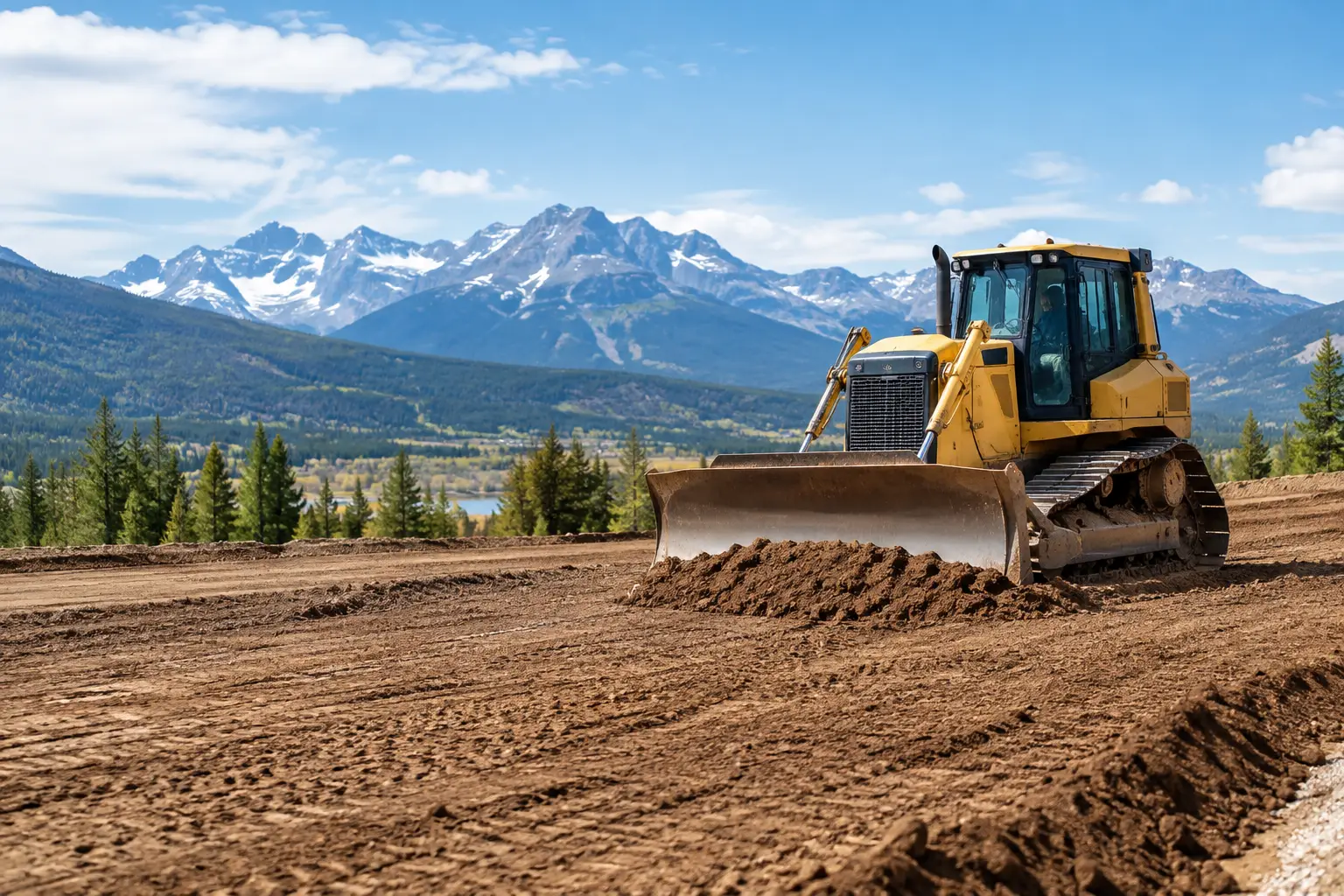
    Land grading is the controlled shaping of soil to create the elevations, slopes, and drainage paths a property needs. It may involve cutting high areas down, filling low areas, smoothing rough ground, establishing a building pad, improving a driveway approach, or directing runoff away from structures and access routes.

    The goal is not to make every property flat. On Colorado acreage, flat is often the wrong answer. A well-graded site works with the terrain while creating stable areas for access, construction, drainage, and everyday use. The finished grade should move water where it belongs without creating erosion, ruts, ponding, or a new problem downhill.

    For a homeowner, that might mean a clean, usable yard around a mountain home. For a ranch owner, it can mean better equipment access and a stable area for outbuildings. For a developer or commercial property manager, grading often sets the baseline for safe construction access and site preparation.

    Start With Water, Not Dirt

    Water decides whether a grading job holds up. Before equipment starts moving soil, the property needs a clear look at where water enters, crosses, and exits the work area.

    Colorado sites can change fast. A dry slope in July may become a hard-running drainage path during a summer storm or spring snowmelt. Clay soils can hold water near the surface. Decomposed granite, loose fill, and disturbed ground can wash out quickly if runoff is concentrated. Freeze-thaw cycles add another layer of stress around driveways, pads, and drainage features.

    A good grading plan accounts for the existing contours, nearby structures, natural swales, road edges, and downslope conditions. Water should generally move away from buildings and travel through planned channels, swales, or drainage areas that can handle the flow. The exact approach depends on the site. A steep foothills lot needs a different solution than a flatter property on the plains.

    This is where rushed work gets expensive. Pushing dirt toward the lowest corner may look productive for a day, but it can create standing water, soft subgrade, erosion, or runoff that affects a neighbor. Grade with intent from the start.

    When a Property Needs Land Grading

    Some grading needs are obvious. Others show up as repeating maintenance problems. If you are repairing the same washed-out driveway after every storm, fighting mud near a structure, or unable to get equipment onto a portion of the property, the grade may be part of the issue.

    Land grading is often the right next step after clearing brush, small trees, and invasive growth. Once dense vegetation and accumulated debris are removed, the actual ground condition becomes visible. Ruts, hidden holes, old berms, unstable fill, and drainage paths can be addressed before the property is seeded, graveled, built on, or put back into use.

    It is also common before building a shop, barn, garage, cabin, fence line, parking area, or access road. A prepared site gives crews a safer, more predictable place to work. It also helps prevent the costly mistake of building first and trying to correct drainage afterward.

    The Difference Between Rough Grading and Finish Grading

    Not every project needs the same level of precision. Rough grading handles the major earthmoving work. It establishes general slopes, cuts high spots, fills low areas, creates access, and forms the basic shape of a pad or work zone.

    Finish grading comes later. It refines the surface for its intended use, whether that is a gravel driveway base, a lawn area, a building pad, a drainage swale, or restoration work. The surface may need to be smooth, compacted, shaped for positive drainage, or prepared for topsoil and seed.

    The right sequence matters. If a property still needs forestry mulching, utility work, trenching, retaining work, or heavy construction traffic, finish grading too early can waste money. Heavy equipment will disturb the surface again. In many cases, rough grading first and finish grading after the disruptive work is complete is the smarter move.

    What Affects the Scope of a Grading Job

    No two properties grade the same way. A small backyard correction may be straightforward. A steep, overgrown parcel with limited access and drainage concerns is a different operation entirely.

    The main factors are slope, soil type, access, drainage, material volume, existing vegetation, and the intended use of the finished area. A compact track loader can work efficiently in tight spaces and rugged terrain, but a project still needs room for safe equipment movement and material handling. If soil must be imported, removed, or compacted in layers, the job changes again.

    Underground utilities, septic systems, wells, irrigation lines, property boundaries, and drainage easements also matter. Grading should never be treated as blind excavation. Mark known utilities, identify sensitive areas, and communicate the final purpose of the site before work begins.

    Permits and local requirements may apply depending on the property, the amount of disturbance, drainage impacts, and the type of development planned. A contractor can prepare the ground, but property owners should confirm what approvals, engineered plans, or inspections are required for their specific project.

    A Better Sequence for Site Preparation

    A strong land-preparation job usually follows a practical order. First, clear the work area of brush, small trees, woody debris, and obstacles that limit visibility or equipment access. Then identify the site elevations, water flow, and locations that need to remain protected.

    Next comes the heavy shaping work. This is when high ground is cut, low areas are filled where appropriate, and access routes or pads take form. Once the primary grade is established, the surface can be refined for drainage, compaction, gravel, topsoil, seeding, or construction.

    Do not skip the cleanup phase. Loose debris, soft edges, poorly blended fill, and abrupt transitions can undermine an otherwise solid job. The final site should look intentional and function under real conditions, not just appear smooth from the road.

    Common Grading Mistakes That Cost Property Owners Later

    The most common mistake is grading for appearance instead of performance. A smooth surface is not necessarily a stable surface. If it does not shed water correctly, it will eventually show you where the problem is.

    Another mistake is placing fill without considering compaction and material quality. Organic material, brush, stumps, and unsuitable debris buried in fill can settle over time. That settlement can damage a driveway, create depressions, or weaken a building area.

    Owners also get into trouble when they create steep slopes that cannot hold soil, direct runoff toward neighboring property, or install gravel before the base is shaped correctly. Gravel cannot fix a failing subgrade. It may hide the problem briefly, then sink, rut, or wash out with traffic and weather.

    Finally, avoid treating drainage as an add-on. Drainage controls need to be part of the grading plan, especially around homes, driveways, retaining areas, and structures planned for the future.

    Grade for the Property You Want to Use

    The best grading plan starts with a clear answer to one question: What does this piece of land need to do next?

    A future shop pad needs different preparation than a horse turnout. A wildfire-mitigation project may need stable access and turnaround space for equipment. A rural driveway may need drainage control, proper crown, and durable transitions at the road. A restoration area may need gentler contours that support erosion control and vegetation establishment.

    That is why a site walk matters. A contractor should look beyond the immediate pile of dirt and understand the use case, the terrain, equipment access, and the water movement across the property. The result is a plan that solves the current issue without creating a bigger one after the next hard storm.

    Yeti Defensible Landworks brings equipment-forward site preparation to difficult Colorado ground, from cleared access routes to practical grading for safer, more usable property. The work starts with the terrain in front of us and ends with ground that is ready for its next job.

    If your property has rough access, poor drainage, overgrowth, or an unfinished building area, do not wait for runoff and traffic to make the decision for you. Put a clear plan behind the dirt work, and give the site a grade built to hold up.

  • Colorado Strategic Wildfire Action Program (COSWAP)

    Colorado Strategic Wildfire Action Program (COSWAP)

    A wildfire does not need to start on your property to threaten it. Dense brush, low branches, deadfall, and neglected access can turn a nearby ember shower into a fast-moving problem. The Colorado Strategic Wildfire Action Program (COSWAP) exists to help Colorado communities take practical action before that moment arrives.

    For property owners, HOAs, fire protection districts, local governments, and community groups, COSWAP can be a path toward funded wildfire mitigation work. But it is not a blank check for clearing every acre. Projects need a clear purpose, a defined scope, strong local coordination, and work that reduces real wildfire risk. Knowing where your property fits can help you plan smarter and move faster when funding opportunities open.

    What Is the Colorado Strategic Wildfire Action Program?

    COSWAP is a Colorado program focused on reducing wildfire risk through planning, mitigation, and community preparedness. It supports work that helps communities address hazardous fuels, improve evacuation and emergency access, strengthen local wildfire planning, and carry out projects with measurable public benefit.

    The practical goal is straightforward: reduce the vegetation and site conditions that allow fire to move quickly through a neighborhood, along a roadway, or toward structures. That can mean thinning dense small trees, removing ladder fuels, treating brush, maintaining fuel breaks, improving access routes, or completing the planning needed to guide larger mitigation efforts.

    COSWAP funding has been administered through state wildfire and forestry partners, with opportunities and requirements changing by funding cycle. Project categories, application windows, matching requirements, and eligible applicants can vary. Treat the program as a resource to pursue with a current plan, not as money you can assume will be available later.

    What COSWAP Can Help Fund

    The Colorado Strategic Wildfire Action Program is built for projects that create a broader safety benefit. A well-designed project usually connects individual parcels to a neighborhood, evacuation corridor, community facility, watershed, or larger wildland-urban interface area.

    Hazardous-fuel reduction is often central to that work. On the ground, that may include forestry mulching, mechanical thinning, slash treatment, brush removal, invasive vegetation control, and removal of small-diameter trees. The right method depends on terrain, vegetation type, site access, desired finish, and what needs protection nearby.

    Forestry mulching is often a strong fit where thick brush and smaller trees are the main fuel problem. A compact track loader with a drum mulcher can work through uneven ground, process vegetation close to grade, and leave mulch that helps reduce erosion. It is fast, effective, and less disruptive than hauling every piece of material away.

    Still, mulching is not the answer to every site. Larger merchantable trees may require selective cutting. Heavy slash may need separate treatment. Sensitive drainages, steep slopes, utility corridors, and protected areas can require different methods or additional approvals. Good mitigation is not about making land look scraped clean. It is about reducing fire intensity while protecting the ground, usable vegetation, and the property’s long-term condition.

    COSWAP may also support planning and readiness work. Community wildfire protection plans, risk assessments, evacuation planning, and project design can be just as valuable as the machinery work itself. A community that knows where its fuel hazards are and has a defined treatment plan is in a better position to compete for implementation funding.

    Who Should Pay Attention to COSWAP?

    A single homeowner may benefit from COSWAP work, but individual residential cleanup is not always the direct focus of a grant program. The strongest applications often come from entities that can show a shared benefit and manage a project across multiple properties.

    That can include fire protection districts, counties, municipalities, special districts, nonprofit organizations, watershed groups, and homeowner associations. Ranch owners, rural neighborhoods, developers, and commercial property managers may also have a role when they coordinate with an eligible applicant or participate in a larger treatment area.

    If you own acreage in Douglas, Jefferson, Boulder, Park, El Paso, Clear Creek, or another wildfire-prone Colorado county, look beyond your fence line. Ask whether your neighborhood has an HOA, local fire district, wildfire council, or community group already working on mitigation. A connected project can protect more ground and may carry more weight than scattered, uncoordinated clearing.

    That does not mean you should wait on a grant before improving your own defensible space. If brush is pressing against your home, access is blocked, or ladder fuels are carrying fire from the ground into tree canopies, those conditions need attention now. Grant-funded community work and private property maintenance should reinforce each other.

    Build a Project That Makes Sense on the Ground

    Funding programs reward a clear problem and a workable solution. Before an application is written, walk the property and identify what fire would use to spread. Look at thick brush, dead and down material, continuous stands of young trees, low limbs, overgrown fence lines, driveway pinch points, and vegetation along roads or structures.

    Then define the outcome. “Clear the lot” is not a strong project description. “Reduce continuous ladder fuels along the community’s primary evacuation route and create defensible space around shared infrastructure” is specific, measurable, and tied to public safety.

    A strong scope also accounts for access and finish work. Equipment needs room to enter, turn, and operate safely. Steep ground, soft soils, overhead utilities, culverts, gates, and adjacent structures all affect production. Include staging areas, material handling, erosion control, and post-treatment expectations before equipment shows up.

    For a community-scale job, map treatment boundaries and identify every landowner involved. Get agreement early. Delays often come from unclear access, changing boundaries, or assumptions about who will handle slash, gates, and follow-up maintenance.

    Defensible Space Still Starts at the Structure

    Community fuel reduction lowers the chance of a fast-moving wildfire reaching your area. Defensible space helps your home or building resist the embers that can arrive ahead of the flame front.

    The work closest to structures deserves the most attention. Remove flammable debris from around foundations, decks, propane tanks, sheds, and fence connections. Keep grasses managed. Prune and space vegetation according to your site and local guidance. Move firewood and stored materials away from buildings. Make sure emergency vehicles can identify and reach the property.

    There is no universal number that fits every property. A mountain cabin surrounded by conifers needs a different treatment than a foothills home in grass and gambel oak. Slope matters. Wind exposure matters. Construction materials matter. The goal is to break up fuel continuity and give firefighters a safer, more workable space if they can defend the structure.

    Get Ready Before Funding Opens

    The best time to prepare is before an application deadline is announced. Gather parcel information, maps, photos, rough acreage, ownership details, and notes on the fuel conditions you want to address. Document the public benefit: homes protected, road segments improved, community assets nearby, or connections to existing treatments.

    Talk with your local fire protection district or county wildfire contact. They can help determine whether a proposed project aligns with local priorities and whether an eligible organization is already building an application. If your neighborhood has a community wildfire protection plan, use it. Projects tied to documented priorities tend to be easier to explain and justify.

    Next, get a realistic field assessment from a qualified land-services contractor. An estimate should reflect the vegetation, slope, access, equipment needs, acreage, and finish standard – not just a number pulled from an aerial image. Reliable pricing makes grant budgeting stronger and prevents a project from stalling after award because the actual work costs more than expected.

    Yeti Defensible Landworks brings high-flow compact track loader and drum mulching capability to difficult Colorado ground, with a field-first focus on safer properties, cleared access, and clean, usable results. The right contractor should be able to explain what equipment will do on your site, where it will not be the best fit, and what the land will look like after treatment.

    Treat the Work as Ongoing Protection

    Wildfire mitigation is maintenance, not a one-time photo opportunity. Grass grows back. Brush returns. Wind drops limbs. New seedlings fill gaps. A well-executed project can reduce risk significantly, but it needs inspection and follow-up to keep doing its job.

    Start with the highest-risk ground, build a realistic treatment plan, and keep your property ready for the next phase of work. The strongest COSWAP projects do more than clear vegetation. They leave communities better prepared to protect what matters when fire weather arrives.

  • Acreage Brush Management That Holds the Line

    Acreage Brush Management That Holds the Line

    A property can look green and still be loaded with fuel. Thick Gambel oak, deadfall, volunteer pine, rabbitbrush, and knee-high grass can turn a neglected slope, fence line, or building area into a fire pathway. Acreage brush management puts that growth back under control. Done right, it makes land safer, opens usable ground, and leaves a property easier to maintain long after the equipment leaves.

    For Colorado acreage owners, this is not cosmetic work. It is practical land protection. The goal is not to scrape every inch bare. The goal is to reduce hazardous fuels, improve access, and keep healthy, useful parts of the landscape working for the property.

    What Acreage Brush Management Actually Does

    Brush management is the planned removal or treatment of unwanted vegetation across a property. That can include dense brush, small-diameter trees, invasive plants, dead material, ladder fuels, and overgrown grass around structures, roads, and fence lines.

    The best approach depends on the land. A wooded mountain parcel needs a different treatment than a dry foothills lot, an overgrown pasture, or a future homesite. One property may need selective thinning to break up fuel continuity. Another may need a heavy first pass to reclaim a road, improve sight lines, or make room for construction equipment.

    Mechanical forestry mulching is often the right tool for broad brush removal. A high-flow compact track loader with a drum mulcher can chew through brush and small trees while leaving mulch spread across the soil surface. That mulch helps reduce erosion, holds moisture, and limits the hauling and burn-pile work that comes with conventional clearing.

    It is not always the answer. Larger trees may require felling and removal. Steep, rocky ground may call for a more selective approach. Wet soil can limit when equipment should run. Good landwork starts with reading the site, not forcing one method onto every acre.

    Why Brush Becomes a Wildfire Problem

    Wildfire does not need a wall of timber to move. It can travel through grass, brush, low branches, and dead vegetation, then climb from the ground into tree crowns. That vertical connection is called ladder fuel. It is one of the main reasons a manageable surface fire can become harder to control.

    Dense vegetation also creates horizontal fuel continuity. When brush touches brush for long distances, fire has a connected route across the property. Breaking up that route matters around homes, barns, shops, driveways, propane tanks, utility areas, and neighboring parcels.

    A proper treatment does more than make the land look cleaner. It creates separation. It removes dead material. It reduces the volume of brush available to burn. It helps firefighters and property owners move through the site if an emergency occurs.

    No contractor can fireproof a property. Wind, weather, terrain, neighboring fuels, and ignition source all matter. But reducing the fuel load is one of the strongest actions an acreage owner can take before fire season puts pressure on the landscape.

    Where to Start on an Overgrown Property

    Start where risk and access overlap. Most acreage does not need the same level of clearing everywhere. Focus first on the areas that protect structures, support evacuation, or make the rest of the property reachable.

    Build Defensible Space Around Structures

    The ground nearest a home or outbuilding deserves the closest attention. Remove dead brush, reduce dense vegetation, and create spacing between plants and low tree limbs. Keep vegetation from piling against siding, decks, crawlspace vents, wood fences, and propane equipment.

    The exact amount of clearing depends on slope, surrounding vegetation, and local guidance. A flat parcel with short grass is not the same as a steep site with thick oak and conifer. The principle stays the same: reduce the chance that flames can travel directly to the structure.

    Clear the Way In and Out

    A driveway buried by brush is more than an inconvenience. It can slow evacuation, limit emergency access, and make routine property work harder than it needs to be. Brush management along roads and access lanes improves visibility, creates room for vehicles, and helps keep branches from closing in over travel routes.

    This is also where many owners see immediate value. Once an access route is clear, fencing crews, builders, utility contractors, and maintenance equipment can get where they need to go. Land becomes easier to inspect, improve, and use.

    Treat Fence Lines, Drainages, and Property Edges

    Fence lines often collect brush, fallen limbs, and invasive growth. Drainages and draws can hold thick vegetation and carry fire across a parcel, especially when slopes and wind line up. Property edges can also become fuel-heavy transition zones between maintained ground and unmanaged vegetation.

    These areas do not always need to be cleared wide open. Often, selective removal and spacing are the smarter move. Preserve soil stability and desirable vegetation while taking out the material that creates a continuous fuel path.

    Forestry Mulching vs. Traditional Clearing

    Traditional clearing can involve chainsaws, hand crews, skid steers, hauling, chipping, piling, and burning. That approach has its place, especially around large trees, tight spaces, or material that needs to leave the site. It can also take more time and create more handling steps.

    Forestry mulching brings speed and reach to brush-heavy acreage. The machine cuts and processes vegetation in one pass, placing the finished material back on the ground. There are no burn piles waiting for the right weather window and no repeated handling of every branch.

    The trade-off is that mulch is still organic material. It should be distributed rather than left in thick mounds, particularly near structures or in high-risk areas. Regrowth is also part of land ownership. Mulching resets an overgrown site and reduces risk, but it does not stop seeds, shoots, and seasonal growth forever.

    For many Colorado properties, the strongest plan is a heavy initial treatment followed by targeted maintenance. That keeps the job from becoming another expensive reclamation project five years down the road.

    A Smart Scope Saves Time and Ground Disturbance

    Before any work starts, identify what stays and what goes. Flag desirable trees, note utility lines, mark irrigation or septic components, and point out hidden hazards such as old wire, rock piles, culverts, and abandoned equipment. A clean scope protects the property and keeps production moving.

    It also helps to define the outcome in plain terms. Do you need a safer home ignition zone? A cleared building pad? Better vehicle access? A more manageable pasture edge? A contractor can choose the right method faster when the end use is clear.

    On rugged sites, timing matters. Running heavy equipment when soils are saturated can leave ruts and create unnecessary repair work. Working during the right conditions protects the ground while allowing the machine to do what it does best.

    Yeti Defensible Landworks approaches acreage work with that field-first mindset: assess the terrain, set the priority, run capable equipment, and leave the property safer and more usable than it was before.

    What Property Owners Should Expect After the Work

    A well-managed acreage should not look stripped or abandoned. It should look intentional. You should be able to see where you are walking, drive where you need to drive, and identify the vegetation you want to keep. Brush should no longer crowd structures, choke access routes, or hide hazards under a dense layer of growth.

    Expect some follow-up. Mulched areas settle. Grass and brush regrow. Wind brings down limbs. Invasive plants may need separate treatment if they are widespread. Annual walks around the property, especially before fire season, help catch small problems before they become another major project.

    The right time to manage brush is before it becomes an emergency, a blocked driveway, or a fire-season concern. Walk your acreage with a hard eye: find the connected fuels, the restricted access, and the ground you cannot use. Then put a clear plan behind the work and hold that line.

  • Douglas County Wildfire Mitigation Cost-Share Program

    Douglas County Wildfire Mitigation Cost-Share Program

    A thick stand of gambel oak, ladder fuels under ponderosa pine, and one narrow driveway can turn a manageable acreage into a hard-to-defend property. The Douglas County wildfire mitigation cost-share program may help eligible landowners offset part of the cost to reduce that exposure. But cost-share funding is not a blank check for clearing. It is a project-driven program with rules, timing, inspections, and paperwork that can determine whether a job qualifies.

    For property owners, the practical question is simple: what work should be done first, and how can you complete it in a way that supports a safer property and fits the program requirements? Start with the risk on the ground. Then build a clear scope, confirm the current funding rules, and schedule the work around approval deadlines.

    What the Douglas County Wildfire Mitigation Cost-Share Program Can Support

    Douglas County cost-share opportunities are generally designed to help residents reduce hazardous vegetation and improve wildfire readiness. Specific funding levels, eligibility rules, application windows, and approved practices can change from one funding cycle to the next. Always verify the active program requirements before spending money or mobilizing equipment.

    Work commonly considered for wildfire mitigation includes thinning small trees in overcrowded stands, removing dense brush, breaking up continuous fuels, reducing ladder fuels, treating slash, and creating or improving defensible space. Access work may also matter when it supports emergency response, such as clearing vegetation back from a driveway or improving a turnaround area. Whether those items qualify depends on the program’s current standards and the conditions of the site.

    The goal is not to make mountain or rural property look stripped bare. Good mitigation keeps healthy, desirable trees where appropriate while changing how fire can move through the property. A ground fire should have fewer opportunities to climb into tree crowns. Flames should encounter breaks, lower fuel heights, and more room around structures and access routes.

    That distinction matters. Randomly removing vegetation may improve appearance but fail to meet the intent of a wildfire mitigation plan. A focused treatment creates a safer fuel profile without creating unnecessary erosion, damaged root systems, or a property that is harder to maintain later.

    Start With a Field-Level Assessment

    Before applying, walk the property with wildfire behavior in mind. Look beyond the house itself. Fire can approach from a neighboring parcel, climb a draw, run through a fence line, or move uphill through brush below a structure. Slope, wind exposure, vegetation density, and access all affect the priority list.

    Pay close attention to the first 100 feet around homes, garages, sheds, propane tanks, and other critical improvements. The highest-risk areas often include brush against structures, low limbs beneath tree canopies, needle and leaf buildup, wood piles near buildings, and ornamental vegetation that has grown into a continuous fuel bed.

    Then move outward. Dense stands of small conifers, oak brush, scrubby understory, deadfall, and unmanaged slash can create a connected path for fire. A practical mitigation scope may call for selective thinning, brush removal, limbing, chipping, hauling, or forestry mulching. The right method depends on terrain, material size, soil conditions, and what the program permits.

    Forestry mulching can be an efficient option for thick brush, small trees, and overgrown fuel beds. A drum mulcher processes material close to the ground and leaves a mulch layer rather than piles of untreated slash. That can reduce hauling and burn-pile work, but it is not the right answer for every site. On steep slopes, sensitive soils, or areas with heavy mature timber, a different approach or a combination of methods may be better.

    Build a Scope That Matches the Funding Rules

    A cost-share application is stronger when the proposed work is specific. “Clear brush” is vague. A defined scope explains the treatment area, vegetation type, acres or square footage, intended fuel reduction, disposal method, and expected result.

    For example, a solid project description may identify a dense oak and small-conifer area below a residence, call for removal of selected stems and ladder fuels, specify mulch or slash disposal, and state that the treatment will create separation between the wildland edge and the home ignition zone. It gives reviewers something concrete to evaluate and gives the contractor a workable plan.

    Do not assume every part of a larger land-clearing job is eligible. Site preparation for a new building pad, cosmetic clearing for views, fence-line cleanup, or broad grading may be worthwhile work, but it may fall outside wildfire cost-share criteria. Keep eligible mitigation items separate from non-eligible improvements in the scope and estimate. That separation makes budgeting cleaner and helps avoid confusion during review or reimbursement.

    Property boundaries also matter. If the treatment area reaches shared land, a homeowners association common area, or a neighbor’s parcel, get written authorization before work begins. A good mitigation plan should improve the larger fuel picture, but no contractor should be asked to solve boundary issues with a machine already on site.

    Apply Before the Work Starts

    This is where many property owners lose funding. Cost-share programs often require approval before work begins. Starting early may feel productive, especially when fire season is approaching, but it can make completed work ineligible for reimbursement.

    Expect the application process to require property information, project details, photographs, a map or treatment sketch, contractor estimates, and sometimes a site visit or written mitigation recommendation. Requirements vary, so treat the active application packet as the controlling document.

    Once approved, read the award terms closely. Confirm the approved treatment area, maximum reimbursement amount, required completion date, acceptable disposal methods, documentation standards, and inspection process. If the scope changes because conditions on the ground are different than expected, ask before expanding the job. A surprise change order can be normal in rugged terrain. A surprise reimbursement denial is not.

    Keep records from the beginning. Save the approved application, award notice, project map, contractor agreement, invoices, proof of payment, and before-and-after photos. Take photos from repeatable locations so the finished treatment is easy to document. Wide shots show the treatment area. Close shots show ladder-fuel removal, brush reduction, and slash handling.

    Choose Work That Holds Up After the Inspection

    A completed project should look intentional, not simply disturbed. Inspectors and property owners alike should be able to see that hazardous fuels were reduced and that slash was handled according to the approved plan.

    That means avoiding common shortcuts: leaving concentrated debris piles near structures, pushing brush into drainages, damaging remaining tree trunks, or mowing material in a way that leaves it too deep against buildings. It also means protecting the parts of the property that need protection, including septic components, utilities, irrigation, retaining walls, and access surfaces.

    Equipment matters on Colorado ground. A high-flow compact track loader with a drum mulcher can work efficiently in tight, uneven terrain where larger equipment cannot operate cleanly. Still, the operator needs a plan for slope, rock, soil moisture, overhead hazards, and machine access. Fast work only helps when it remains controlled work.

    Yeti Defensible Landworks approaches mitigation as field execution, not a generic cleanup job: assess the fuels, define the treatment, protect the site, and leave the property more defensible and more usable.

    Plan for the Cost Share, Not Just the First Pass

    Most mitigation is maintenance, not a one-time finish line. Oak brush resprouts. Grasses grow. Needles drop. New seedlings fill openings. The work funded this year should make next year’s maintenance simpler and less expensive.

    Ask the contractor how the site will look after treatment and what upkeep it will require. Mulch depth, retained vegetation, drainage patterns, and access routes all influence that answer. In some cases, removing every small stem is unnecessary. In others, especially around structures or along emergency access, a more aggressive treatment is justified.

    The best use of cost-share funds is often the work that removes the biggest fire pathways first: fuels touching structures, ladder fuels below tree canopies, heavy brush along access, and dense vegetation on the uphill or wind-exposed side of improvements. Once those hazards are under control, landowners can phase broader acreage treatment over time.

    Move Early and Keep the Scope Clear

    Funding windows can close, contractor schedules tighten, and wet weather can limit access. If your Douglas County property has accumulated brush, small trees, dead material, or restricted emergency access, do not wait until smoke is already in the air to define the job.

    Walk the ground, document the hazards, confirm the current cost-share rules, and build a scope that produces visible fuel reduction. The useful outcome is not a stack of application paperwork. It is a cleaner, safer property with fewer ways for wildfire to gain speed near the places that matter most.

  • Denver Land Grading for Safer, Build-Ready Sites

    Denver Land Grading for Safer, Build-Ready Sites

    A Colorado lot can look flat from the road and still create expensive problems once water starts moving. Denver land grading is the work that puts the ground in command: directing runoff, building dependable access, creating usable pads, and preparing a property for construction, restoration, or safer day-to-day use.

    Good grading is not simply pushing dirt until an area looks level. It is a planned change to the way a site performs. On Front Range properties, the right finish must account for clay soils, sudden hard rain, freeze-thaw cycles, existing drainage routes, slopes, trees, utilities, roads, and the intended use of the land. Get those details right before equipment mobilizes, and the property works harder for you afterward.

    What Denver Land Grading Must Solve

    Every site has a different objective. A homeowner may need runoff pulled away from a foundation and driveway. An acreage owner may need a rough, rutted access route reshaped so trucks, trailers, and emergency equipment can get through. A builder may need a stable pad and a workable route for the next phase of site preparation.

    The common thread is control. Grading creates intentional high points, low points, and slopes so water does not collect where it can damage structures, cut ruts, soften drive lanes, or turn cleared ground into mud. It also establishes a surface that equipment and people can actually use.

    That does not always mean a dead-flat yard. In fact, perfectly flat ground often holds water. Most successful grading uses measured fall to move runoff toward a planned outlet while keeping it away from buildings, retaining features, neighboring property, and sensitive areas. The exact slope depends on the site, soil, available drainage paths, and local requirements.

    Start With the Ground You Have

    Before a machine cuts or fills, walk the property with a practical eye. Look for standing water, erosion scars, washouts, soft spots, exposed roots, failing driveway edges, and areas where runoff already concentrates. These are not cosmetic flaws. They show how the land behaves under pressure.

    Property owners should also identify the final use of each area. A future shop pad, parking area, fire-access route, pasture entrance, and backyard all require different preparation. A pad needs a stable, properly built surface. An access lane needs drainage and durable material placement. A defensible-space project may require light contouring after vegetation removal so the cleaned area sheds water without exposing bare soil to erosion.

    Utilities matter just as much. Mark underground lines and confirm overhead clearance before work begins. If the project connects to public drainage, changes a major drainage path, involves a steep slope, or supports new construction, permits, engineering, or site-specific approvals may be required. A capable contractor can identify field conditions, but property owners should verify the permitting path that applies to their address and project scope.

    Clear First, Grade Second

    Overgrowth can hide the real condition of a site. Thick brush, small trees, invasive vegetation, old debris, and root balls make it difficult to see low areas, drainage channels, and unstable ground. They also limit where equipment can travel safely.

    On many Colorado properties, clearing and grading belong in the same work plan. Forestry mulching can reduce brush and small trees while leaving mulch on the ground to help protect disturbed soil. Selective removal opens the area without stripping every living feature from the property. Once the site is visible and accessible, grading can address the actual contours instead of guessing beneath vegetation.

    There is a trade-off. Mulch is useful for erosion control and moisture retention, but it is not a substitute for structural base material beneath a driveway or building pad. Where a surface must carry repeated vehicle weight, the organic layer and weak material may need to be removed or managed before aggregate and compaction work begin.

    Drainage Is the Job That Keeps Paying Off

    Water is usually the deciding factor in whether a grading project holds up. Denver-area storms can deliver a lot of water fast, while snowmelt creates a slower but persistent flow. If runoff has no planned route, it finds one. That route may be through a driveway, beside a foundation, across a neighbor’s lot, or down the steepest section of your property.

    A sound plan preserves or creates positive drainage away from structures. It may use shallow swales, drainage ditches, shaped shoulders, properly placed culverts, or controlled outlets depending on the layout. On rural and mountain properties, drainage work often needs to protect access roads from being undercut or washed out during heavy weather.

    Avoid the temptation to solve standing water by filling it without finding the source. Raising one low spot can push water toward a house, garage, fence line, or adjacent parcel. Likewise, cutting a channel without protecting the outlet can trade ponding for erosion. The finish has to work as a connected system.

    Building Pads and Driveways Need More Than a Smooth Finish

    A smooth-looking surface can still fail under a loaded truck, concrete delivery, or spring moisture. For building pads and access improvements, the question is not only whether the surface is level. It is whether the ground below can support the work ahead.

    Topsoil, vegetation, loose organic material, and saturated soil can create weak zones. Depending on site conditions and project requirements, preparation may include stripping unsuitable material, shaping subgrade, placing aggregate, compacting in lifts, and building enough fall for drainage. Larger construction projects may need engineered specifications and testing. That is not overkill when the site will carry a structure or regular heavy traffic.

    Driveways deserve the same discipline. A road that looks fine in dry weather can become a rutting, pothole-filled mess after runoff reaches it. Proper crown or cross-slope, stabilized base, controlled roadside drainage, and culverts where needed make the difference. The right approach depends on grade, soil type, vehicle traffic, and where water enters and leaves the route.

    Equipment Matters on Difficult Ground

    Tight residential lots, rocky acreage, uneven hillsides, and overgrown sites call for equipment that can work without causing unnecessary damage. Compact track loaders spread weight across a larger footprint than wheeled equipment, giving operators better traction and control on soft or irregular ground. With the right attachments, they can clear vegetation, move material, shape terrain, and improve access in areas that larger machines may struggle to reach.

    Equipment alone does not make a grading job successful. Operator judgment matters. That means knowing when to work with existing contours, when to remove material, where to protect topsoil, and when wet conditions make the ground too vulnerable to traffic. Rushing across saturated soil can create compaction, rutting, and repairs that were avoidable.

    Plan for the Finish, Not Just the First Day

    The work is not complete when the machine leaves. Disturbed ground needs a finish that matches its purpose. A cleared and graded homesite may need erosion-control measures until construction begins. A rural access road may need periodic maintenance after major storms. A restored area may need seed, mulch, or other stabilization suited to the season and soil conditions.

    Ask practical questions before booking the work. Where will material be placed or removed? How will runoff leave the improved area? What surfaces need aggregate or compaction? Which trees, fence lines, utilities, and drainage features must be protected? A clear answer to these questions prevents change orders and keeps the project focused on the result you actually need.

    For property owners, the right Denver land grading project creates more than a cleaner view. It gives water a route, equipment a path, and future work a solid place to start. Walk your property after the next hard rain. What that water does will tell you where to begin.

  • Colorado State Forest Service (CSFS) Grants Explained

    Colorado State Forest Service (CSFS) Grants Explained

    Colorado State Forest Service (CSFS) grants can put real money behind wildfire mitigation, but they are not a blank check for clearing every overgrown acre. The strongest projects show a clear public benefit: reduced wildfire fuels, safer evacuation routes, protected homes, healthier forest conditions, or coordinated work across multiple properties. If your land needs work, the right first move is to understand how the grant structure fits the job before equipment ever hits the ground.

    What CSFS Grants Are Built to Fund

    CSFS grant programs help Colorado communities prepare for wildfire and improve forest health. Funding sources, program names, eligibility rules, and application windows can change from year to year. Still, the purpose stays consistent: move practical mitigation work from plan to completed ground treatment.

    For property owners, that work may include thinning small trees, removing dense brush, treating ladder fuels, clearing vegetation along access routes, reducing roadside hazards, or creating defensible space around structures. Forestry mulching can be an effective treatment method when the prescription calls for it. It cuts and processes brush and small-diameter material close to the ground, reducing fuel continuity without hauling every piece off site.

    The key distinction is this: many awards go to eligible entities rather than directly to one homeowner. Counties, municipalities, fire protection districts, conservation districts, homeowner associations, nonprofit organizations, and similar sponsors often apply and manage the project. Private land may be included when it supports the larger project area and meets the program requirements.

    That can sound like extra red tape. In practice, it is how grant programs stretch money across neighborhoods and high-risk landscapes instead of funding isolated cleanup jobs with no wider wildfire plan.

    Colorado State Forest Service (CSFS) Grants: Who Qualifies?

    It depends on the active program and the project location. A rural homeowner may not be able to submit a standalone application, but may be able to participate through an HOA, fire district, county program, or community wildfire mitigation effort. Larger landowners may have a stronger path when their work ties into a recognized forest health or wildfire-risk objective.

    Projects are commonly more competitive when they sit in or near a wildfire hazard area, align with a Community Wildfire Protection Plan, protect multiple homes or critical infrastructure, and show cooperation among neighboring landowners. Access matters, too. A treatment area that improves emergency ingress and egress can carry more value than a disconnected patch of brush removal.

    This does not mean every property needs a large acreage footprint. A concentrated defensible-space project around homes in a mountain subdivision can be a strong fit. So can coordinated roadside clearing that gives responders better access and reduces the chance of flames moving through brush along an evacuation route.

    Start With a Ground-Truth Scope

    Grant applications can fail long before the application is submitted. The usual problem is a weak scope. “Remove vegetation” does not tell a reviewer what will be treated, why the treatment matters, how much ground is involved, or what the finished condition will look like.

    Walk the property and define the actual problem. Identify dense brush, dead and down material, small conifers beneath mature trees, invasive vegetation, overgrown fence lines, narrow driveways, and areas where flames could climb from surface fuels into tree canopies. Mark structures, utilities, septic systems, drainages, slopes, gates, and access limits.

    Then turn that field assessment into a work plan. A good scope names the treatment acreage, treatment type, equipment access, material handling approach, expected outcomes, and any areas that must be avoided. It also separates wildfire mitigation from ordinary landscaping. Cutting weeds around a patio may improve appearance, but it will not necessarily meet a grant program’s forest health or community protection goals.

    For rugged sites, equipment planning is part of the scope. A compact track loader with a drum mulcher can work efficiently on uneven terrain and in tight, brush-heavy areas, but slopes, soil moisture, rock, protected vegetation, and haul access all affect production. There is no one-size-fits-all treatment. Mulching may be right for one section while hand crews, selective removal, chipping, or no treatment at all makes more sense elsewhere.

    Build the Application Package Before Deadlines Hit

    Grant windows can move quickly. Waiting until the deadline is posted to figure out maps, signatures, ownership, and contractor pricing puts a project behind from day one. Build the core package early so your sponsoring entity can act when the right funding opportunity opens.

    A complete project file usually needs these items:

    • A clear map showing property boundaries, treatment units, structures, roads, gates, and access points.
    • Photos that document existing fuel loads and problem areas.
    • A written scope that explains the wildfire or forest-health objective.
    • A realistic budget with labor, equipment, material disposal, administration, and required matching funds if applicable.
    • Landowner permissions, partner commitments, and a maintenance plan for keeping treated ground from growing back into a fuel problem.

    Accuracy matters more than optimistic numbers. A low estimate may look attractive on paper, but it can leave the project short when crews encounter steep ground, heavy rock, limited access, or more material than expected. Build a budget that reflects the actual field conditions.

    Also pay attention to reimbursement terms. Some grants reimburse completed work, which means the sponsoring entity or landowner may need to carry costs first. Other programs may set specific procurement, reporting, inspection, or environmental review requirements. Know those rules before signing a contract or mobilizing equipment.

    Avoid the Mistakes That Delay Good Projects

    The biggest mistake is treating a grant as permission to start work. In many cases, work completed before formal approval is not eligible for reimbursement. Do not assume an invoice can be backdated into a funded project.

    The second mistake is failing to coordinate adjacent properties. Wildfire does not stop at a fence line. A lone treated lot can still benefit the owner, especially around the home ignition zone, but coordinated treatment often delivers a stronger result and a stronger grant case.

    Another common issue is skipping permits, utility locates, or site restrictions. Clearing around overhead lines, near waterways, on steep slopes, or in areas with sensitive habitat may require added planning. A fast start that ignores these conditions can turn into a stop-work order, damaged ground, or an expensive correction.

    Finally, do not confuse treatment with permanent maintenance. Brush returns. Seedlings establish. Mulch decomposes. A funded project should leave behind a manageable condition and a plan to maintain it, not a false promise that wildfire risk has been eliminated.

    Turn Funding Into Finished Ground Work

    Once funding is approved, the job still needs disciplined execution. Confirm treatment boundaries, define equipment routes, protect no-go areas, and document conditions before work begins. During the project, track acreage, production, photos, invoices, and any approved scope changes. Those records protect the grant administrator and prove that the field work matched the funded plan.

    The finished result should be visible. Safer clearance around structures. Reduced brush density. Improved access. Better separation between surface fuels and tree crowns. Ground that can be maintained instead of ignored until it becomes a hazard again.

    If you are pursuing a community project or preparing private land for a larger wildfire mitigation effort, bring in a qualified field contractor early. Yeti Defensible Landworks can help turn a defined treatment scope into clean, equipment-ready work across Colorado’s rugged terrain. The best time to plan is before the next grant deadline, and well before the next fire season.

  • How to Build Home Ignition Zones That Hold Up

    How to Build Home Ignition Zones That Hold Up

    A wildfire does not need a wall of flames to damage a home. Wind-blown embers can land in pine needles, mulch, leaf buildup, firewood stacks, deck corners, and brush against the siding. To build home ignition zones that hold up under real Colorado fire conditions, start at the structure and work outward. The goal is simple: remove or reduce the fuels that can carry fire to your home.

    This is not about stripping every tree from an acreage. It is about making deliberate fuel breaks, improving access, and creating space for a home to stand a better chance when embers start moving.

    Build Home Ignition Zones From the House Out

    Your work closest to the house matters most. Fire behavior changes with wind, slope, vegetation, and weather, but embers commonly find the smallest combustible material near a structure. A clean, hard surface around the home can stop a minor ignition point from becoming a structure fire.

    Think in three working areas: the immediate zone next to the home, the intermediate zone that slows fire movement, and the extended zone that reduces the intensity of approaching fire. The exact distances and requirements can vary by local jurisdiction, insurance carrier, terrain, and property conditions. On steep ground or in dense conifers, the treatment area often needs to reach farther than it would on flat, open land.

    The immediate zone: 0 to 5 feet

    The first five feet around the home deserve the hardest look. This is the area where landscaping, stored materials, and debris either protect the structure or feed a fire.

    Replace combustible ground cover near the foundation with rock, gravel, pavers, or other noncombustible material where practical. Keep this area free of dry needles, leaves, grass clippings, bark mulch, and dead vegetation. Move firewood piles, lumber, propane cylinders, patio furniture cushions, and stored equipment away from the house.

    Look up as well. Tree limbs should not hang over the roof or touch the structure. Clean gutters and roof valleys, especially after wind events and before fire season. If a deck meets the house, remove debris trapped underneath it and avoid letting shrubs or dry grass grow against its edge.

    A decorative landscape can still work here. The trade-off is maintenance. Even lower-risk plants become a problem when they are dry, crowded, or loaded with dead material. Keep plantings sparse, irrigated when appropriate, and separated from the siding.

    The intermediate zone: 5 to 30 feet

    The next section is where you break up continuous fuel. Grass, shrubs, small trees, deadfall, and low branches can form a path for fire to climb from the ground into the canopy. That is called ladder fuel, and it is one of the biggest problems on wooded Colorado properties.

    Start by removing dead brush, downed limbs, dense volunteer trees, and low-hanging limbs. Space shrubs apart. Create separation between tree canopies where conditions allow. Keep grasses mowed or trimmed, and cut back vegetation from fences, sheds, retaining walls, and other structures.

    Do not mistake clearing for careless removal. Mature, healthy trees can provide shade, privacy, and value. The better approach is selective thinning. Remove the trees and brush that crowd one another, grow beneath larger trees, block access, or connect the ground fuel to the canopy.

    On a small lot, this zone may be mostly landscaping and a few trees. On a mountain home, ranch, or acreage, it can mean years of unchecked brush and saplings. This is where forestry mulching often makes sense. A drum mulcher can process thick brush and small trees efficiently, leaving material close to the ground rather than creating large burn piles or hauling every piece offsite.

    The extended zone: 30 to 100 feet and beyond

    The outer zone reduces the force of fire before it reaches the home area. Focus on heavy concentrations of vegetation, thick understory, dead timber, and continuous brush fields. You are building separation, not creating a bare dirt lot.

    Thin dense stands. Remove dead and dying trees when safe to do so. Break up brush patches and trim lower limbs on retained trees. In grassland, manage tall cured grasses and clear strips along driveways, fence lines, and outbuildings.

    Slope changes the job. Fire typically moves faster uphill, so properties below steep, brush-covered terrain need more attention on the upslope side. Prevailing wind, nearby draws, and dense vegetation on neighboring land also affect the plan. A 100-foot circle is a useful reference point, but it is not a universal finish line.

    Clear the Fuels That Create Fast Fire Paths

    The highest-value work usually comes from removing the material that connects one fuel source to another. A dry grass field can carry flames into brush. Brush can ignite lower limbs. Lower limbs can light the tree canopy. Once fire gets into the crowns, it becomes much harder to control.

    Watch for these common problem areas:

    • Dense young pines, scrub oak, gambel oak, and volunteer trees growing beneath mature trees
    • Deadfall, slash piles, woody debris, and years of needle accumulation
    • Brush packed along roads, driveways, fences, sheds, and property lines
    • Wood piles, equipment, trailers, and stored materials placed too close to structures
    • Overgrown access routes that limit emergency vehicle movement or safe evacuation

    The right treatment depends on the fuel. Hand crews work well for detail trimming near homes, fences, and utilities. Chainsaw work may be necessary for larger trees. Forestry mulching is often the efficient answer for brush-heavy acreage, neglected lots, and thick small-diameter timber. Grading or access work may also be needed where a rough driveway prevents equipment, homeowners, or first responders from getting in and out safely.

    Keep the Site Usable After the Work Is Done

    A defensible-space project should improve how you use the property. You should be able to see your driveway, walk the perimeter, access outbuildings, and maintain the land without fighting through brush every season.

    Mulched material can help control erosion and reduce regrowth, but it is not maintenance-free. Heavy mulch accumulation near structures is not the answer. Keep it away from the immediate zone, monitor it as it dries, and plan for follow-up treatment where aggressive vegetation returns.

    Some properties need staged work. Start with the home, access road, and highest-risk brush. Then expand into outer treatment areas as budget and timing allow. That is often more practical than trying to overhaul every acre at once. The key is not to leave a narrow cleared ring around the house while dense fuel remains connected just beyond it.

    Plan for Access, Water, and Emergency Response

    Fuel reduction is stronger when it supports a workable emergency plan. Make sure your address is visible from the road. Keep gates operable and wide enough for the access you need. Trim vegetation back from driveways and turnarounds. Identify more than one way out if your property layout allows it.

    Water sources, pumps, hose connections, and hydrants may matter, but they do not replace defensible space. Neither does a fire-resistant roof by itself. Structure hardening and vegetation management work together. Clean fuel zones give embers fewer places to catch, and accessible roads give responders a safer place to operate.

    Before clearing, check for utility lines, septic systems, drainage features, easements, and local vegetation rules. On rugged ground, equipment selection matters. The wrong machine can scar slopes, damage root systems, or leave behind a mess that becomes the next fuel problem. A disciplined operator works to the terrain, protects what should stay, and removes what puts the property at risk.

    Know When to Bring in a Professional Crew

    A homeowner can handle routine mowing, gutter cleaning, small pruning jobs, and moving stored combustibles. The job changes when brush is dense, terrain is steep, trees are tangled, access is tight, or the treatment area stretches across multiple acres.

    Professional equipment can turn an overgrown section of land into manageable ground quickly, but it still takes a plan. Yeti Defensible Landworks uses equipment-based clearing and forestry mulching to cut heavy fuels, open access, and create workable defensible space without treating every property like the same job.

    Start with the home and the materials closest to it. Clear the easy ignition points now, then build outward with a plan that fits your terrain, vegetation, and ability to maintain the work year after year.

  • Wildfire Preparedness for Colorado Properties

    Wildfire Preparedness for Colorado Properties

    A wind-driven grass fire does not care whether a property is a weekend cabin, a ranch, a mountain home, or an undeveloped lot. It looks for dry grass, brush, low limbs, stacked materials, and a path to the structure. Real wildfire preparedness starts well before evacuation alerts and red-flag warnings. It starts with the ground condition around your home, buildings, driveways, and fence lines.

    Wildfire Preparedness Starts With Fuel Reduction

    Colorado properties can build hazardous fuel loads fast. Gambel oak, scrub brush, volunteer trees, deadfall, tall grass, slash piles, and low-hanging limbs all give fire something to grab. When those fuels connect from the ground into tree canopies or structures, a surface fire can become a much harder problem.

    The goal is not to strip a property bare. Good mitigation creates separation. It breaks up continuous vegetation, removes the weakest fuel sources, and leaves a cleaner, more manageable landscape. The right scope depends on terrain, vegetation type, building placement, access, and how the property is used.

    Forestry mulching is often a practical answer for dense brush, small trees, and overgrown acreage. A drum mulcher can process material at ground level and leave a mulch layer behind instead of creating large burn piles or hauling every piece of vegetation away. That mulch still requires judgment. On dry, exposed ground, too much mulch near a structure can create its own maintenance concern. The work has to match the site.

    Start at the Structure and Work Outward

    The area closest to a home, garage, barn, deck, shed, or propane tank deserves the most attention. This is where embers commonly find receptive material. Clear dry grass, leaf buildup, pine needles, firewood, lumber, old equipment, and brush away from structures. Keep combustible material out from under decks and stairs, and avoid allowing vegetation to grow against siding.

    Move outward from there with purpose. Trim or remove vegetation that touches buildings, hangs over roofs, blocks vents, or creates a direct path from the ground to tree branches. Space shrubs and small trees so fire cannot easily travel from one fuel source to the next. On sloped land, extend that work farther downhill. Flames move uphill faster, and steep Colorado terrain changes the equation.

    Build Defensible Space That Works in Real Conditions

    Defensible space is not a single measured ring cut into every property. It is a working zone that gives firefighters more room to operate and gives your property a better chance during an ember storm. A clean zone around the house helps, but it cannot compensate for an overgrown driveway, blocked turnaround, or heavy brush pressing in from every direction.

    Think in layers. The first layer focuses on the structure itself. The next layer reduces connected fuels around the home and outbuildings. Farther out, the work shifts toward thinning, spacing, mowing, and breaking up larger fuel beds. A rural property may need treatment along roads, fence lines, ridges, draws, and utility corridors as well.

    The standard should be practical, not cosmetic. Clearing every tree from a mountain parcel can increase erosion, expose soil, reduce privacy, and leave an ugly result. Leaving every tree because the property looks natural can preserve a serious fire pathway. The right approach removes the problem vegetation while keeping the land useful and stable.

    Watch for These High-Risk Conditions

    Walk your property with a hard eye. Look for dense brush below mature trees, dead standing timber, ladders of low branches, thick grass around outbuildings, and piles of cut material that never made it off the ground. Pay attention to the places you do not see from the house: behind sheds, below decks, along retaining walls, and at the edge of driveways.

    Also check the transition zones where maintained landscaping meets native vegetation. That boundary often gets ignored until grass cures out and the weeds stand tall. A clean lawn does not provide much protection if thick brush begins ten feet beyond it.

    Access Is Part of Wildfire Preparedness

    A defensible property still needs a way in and out. Narrow, brush-choked driveways slow evacuation and limit emergency access. Low limbs can strike apparatus. Soft shoulders, tight turns, poor visibility, and no turnaround can make a difficult situation worse.

    Clear vertical and horizontal space along access roads and driveways. Cut back brush that crowds the route. Remove low limbs where they interfere with vehicles. Address washouts, ruts, steep transitions, and drainage problems before a fire season emergency forces the issue. If a driveway ends at a home or building, make sure there is enough room for a large vehicle to turn around where conditions allow.

    Address visible property identification, too. A reflective address marker that can be seen from the road is a small job with real value when smoke, darkness, and stress are involved. Gates should be clearly marked and operable. If access is shared, have a straightforward conversation with neighbors about vegetation, emergency entry, and maintenance responsibilities.

    Do Not Create a New Problem While Clearing

    Land clearing can improve wildfire conditions, but rushed work can leave behind slash, exposed soil, unstable slopes, and drainage issues. That is why equipment, operator skill, and a site-specific plan matter.

    On flat ground with light brush, mowing and hand work may be enough. On rugged acreage, dense oak, steep ground, or neglected lots, compact track loaders and forestry mulchers can cover far more ground while working safely over uneven terrain. The equipment is only part of the answer. The operator still needs to protect desirable trees, control material placement, work around utilities and structures, and avoid tearing up ground that should remain stable.

    Before work begins, identify septic components, wells, irrigation lines, utility routes, retaining walls, culverts, and drainage paths. If the property has a steep slope or erosion-prone soil, avoid unnecessary disturbance. In some areas, timing matters too. Wildlife considerations, local burn restrictions, homeowner association rules, and county requirements can affect the plan.

    Turn Mitigation Into a Maintenance Plan

    One major cleanup can change a property fast. It does not make the work permanent. Grasses grow back. Wind drops limbs. New volunteer trees fill openings. Construction materials migrate beside sheds. A property that was clean in spring can become a fire concern by late summer.

    Set a maintenance rhythm based on your vegetation and elevation. Walk the property after winter, before the driest part of the season, and after major wind events. Mow or trim grass before it cures. Remove new brush growth where it threatens spacing. Keep roofs, gutters, decks, and around outbuildings free of combustible debris.

    For larger acreage, divide the work into zones. Handle the home and access route first, then move to outbuildings, fence lines, and perimeter fuel breaks. This makes a large project easier to budget and keeps the highest-value areas from slipping behind. If the property needs heavy brush removal, forestry mulching, grading, or access improvement, bring in qualified equipment support before conditions get dry and schedules tighten.

    Yeti Defensible Landworks helps Colorado property owners turn overgrown, high-fuel ground into cleaner defensible space with equipment built for difficult terrain. The best time to assess the work is when crews can see the problem clearly, not when smoke is already on the horizon.

    Walk your property this week. Start at the structure, follow the driveway, and look for the fuel connections that should not be there. Every cleared pathway, trimmed branch, and removed brush pocket gives fire fewer options and gives you more.

  • How to Assess Wildfire Risk on Your Colorado Land

    How to Assess Wildfire Risk on Your Colorado Land

    A steep driveway lined with gambel oak, deadfall stacked below mature pines, and dry grass tight against a deck can turn one small ember into a property-wide problem. To assess wildfire risk, look beyond whether your land simply appears overgrown. Study how fire could move across the ground, climb into vegetation, reach your structures, and limit access when responders need room to work.

    Wildfire mitigation is not about stripping a property bare. It is about reducing the fuels that carry fire, breaking up continuous vegetation, and creating workable space around the places you need to protect. On Colorado acreage, that work often starts with a hard look at brush, small trees, dead material, slopes, and access.

    Start at the Structure and Work Outward

    Your home, cabin, shop, barn, and other critical structures are the starting point. Firebrands can travel far ahead of a wildfire, landing in dry needles, leaf litter, mulch, woodpiles, open vents, and debris trapped under decks. A property may sit well away from heavy timber and still face a serious ignition risk from embers.

    Walk the immediate area around each structure. Look for vegetation touching siding, limbs hanging over the roof, flammable material stored beneath decks, and dry fuel built up along fences or retaining walls. Pay attention to where windblown needles and leaves collect. Those small pockets of fuel are easy to overlook until they become the first place an ember lands.

    Then widen the view. Ask a simple question: if fire starts at the edge of the property, what route does it have to reach the building? Dense vegetation that connects grass to brush, brush to low limbs, and low limbs to tree crowns is a fuel ladder. Breaking that connection is often more valuable than clearing random patches of vegetation.

    Assess Wildfire Risk by Reading the Fuels

    Not all vegetation creates the same fire behavior. A well-spaced stand of healthy mature trees is different from a thicket of young conifers, dry brush, fallen limbs, and standing dead material. The goal is to identify the fuel types that can ignite quickly and keep a fire moving.

    Surface Fuels Carry Fire Across the Ground

    Surface fuels include dry grass, pine needles, leaves, slash, downed branches, brush piles, and deadfall. They are the material a fire first consumes as it travels across the property. Thick, continuous surface fuels give flames a clear path toward structures, fences, outbuildings, and wooded areas.

    Look for accumulated debris under trees, along property lines, beside roads, and in drainage areas. Pay close attention to neglected corners where past trimming, storm damage, or previous clearing left piles behind. Removing or processing these fuels can make a major difference without changing the character of the land.

    Ladder Fuels Let Ground Fire Climb

    Ladder fuels are low branches, saplings, tall brush, and small trees that allow flames to climb from the ground into the canopy. Once fire reaches the crowns of trees, it becomes faster, hotter, and far harder to control.

    In many Colorado properties, dense scrub oak, young pine, and overgrown understory create this connection. You do not need to remove every tree to reduce the threat. Strategic thinning, pruning where appropriate, and forestry mulching of brush and small-diameter growth can create separation between surface fuels and higher vegetation.

    Crown Density Drives Bigger Fire Behavior

    When tree canopies touch or nearly touch, fire can move from crown to crown. This matters most in dense stands on slopes, in draws, and on the windward side of a structure. Look upward, not just at the ground. Are mature trees crowded together? Are branches interlocking? Are smaller trees filling every open space below them?

    The right spacing depends on tree species, slope, exposure, and the condition of the stand. A steep, wind-exposed lot generally needs more separation than flatter ground with scattered trees. A site walk can identify where selective thinning will slow fire spread while retaining the shade, privacy, and habitat you want.

    Dead and Dying Vegetation Raises the Stakes

    Dead trees, broken tops, beetle-affected timber, dry brush, and windthrown material add concentrated fuel to the property. They also create safety hazards for people, equipment, and access routes. Dead material does not always need to be removed from every acre, but it should not be allowed to build up around structures, driveways, utility areas, or likely fire paths.

    Check Slope, Wind, and Property Layout

    Fire moves uphill faster because flames preheat the fuels above them. A house above a brushy slope, a barn below dense timber, or a driveway that climbs through narrow vegetation deserves extra attention. Even a modest rise can change how aggressively fire behaves.

    Wind exposure matters too. Ridge tops, open valleys, south- and west-facing slopes, and gaps between hills can funnel strong winds. Consider where prevailing winds would push embers and flame fronts. The side of a building that faces those winds may need more aggressive fuel reduction and cleaner defensible space.

    Property layout can either help or hurt. Fences, stacked lumber, propane tanks, sheds, woodpiles, and parked equipment can extend a fire path. Move combustible materials away from structures where practical. Create separation between fuel sources rather than placing every vulnerable item in one tight cluster.

    Make Sure Access Works Under Pressure

    A wildfire assessment should include the route into and through your property. If a fire truck, utility crew, or contractor cannot safely reach key areas, mitigation and emergency response both become harder. Narrow drives, tight turns, low limbs, unstable shoulders, steep grades, soft crossings, and overgrown gates are more than maintenance issues.

    Clear enough width and vertical clearance for safe access. Identify turnarounds and places where equipment can stage without blocking the only way in or out. Keep address markings visible from the road. If your property has one long driveway through heavy vegetation, that corridor should be treated as a priority area, not an afterthought.

    On larger acreage, access improvements may include brush clearing along roads, forestry mulching, selective tree removal, grading rough sections, and opening routes to water tanks, utility infrastructure, or remote building sites. The exact work depends on terrain and the equipment that needs to reach it.

    Turn the Assessment Into a Work Plan

    Once you identify the hazards, prioritize work by consequence. Start with structures and access. Then focus on dense fuel corridors, steep slopes below buildings, dead material, and areas where vegetation creates a continuous path across the property.

    A practical project plan usually separates work into phases. First, clear the immediate defensible space around homes and outbuildings. Next, open driveways and emergency access. Then address heavier brush, small trees, and ladder fuels farther out. This approach gives you meaningful risk reduction early, even if the entire property cannot be completed at once.

    Forestry mulching is often a strong fit for brush, small trees, and invasive vegetation on rugged ground. A high-flow compact track loader with a drum mulcher can process material close to the ground, reducing the need to haul or burn piles. Mulch still needs to be managed correctly, especially near structures, but it is generally far more controlled than leaving untreated brush and slash across the site.

    Some land calls for selective clearing rather than broad mulching. Mature trees worth retaining, sensitive drainage areas, rocky terrain, utility corridors, and future building plans all affect the right method. Good mitigation work is targeted. It reduces wildfire fuels while keeping the property functional, stable, and ready for the next use.

    Know When to Bring in Equipment

    Hand work can handle light cleanup around a home. It becomes slow and risky when vegetation is dense, slopes are steep, material is heavy, or access is poor. If you have acres of brush, tangled small trees, storm-damaged timber, or an overgrown driveway, equipment-based clearing can move the job forward safely and efficiently.

    Yeti Defensible Landworks evaluates the ground, fuel load, access, and project goal before putting equipment to work. That matters because wildfire mitigation is not a one-size-fits-all cut. The right plan may call for mulching, selective clearing, access improvement, grading, or a combination of services that leaves the property cleaner, safer, and usable.

    A wildfire assessment is most useful when it leads to action. Walk your land before the next dry, windy stretch. Mark the areas where fuel connects, access narrows, and structures sit exposed. Then start clearing the routes a fire would use before fire gets the chance to choose them.