
A homeowners insurance non-renewal & fire mitigation with equipment mastication issue becomes real the moment a carrier asks for photos, requests vegetation work, or sends a non-renewal notice. For Colorado property owners, dense brush, ladder fuels, small conifers, and blocked access can turn a manageable acreage into an insurance problem fast. The answer is not cosmetic cleanup. It is targeted fuel reduction that leaves the property safer, cleaner, and easier to maintain.
A non-renewal notice does not automatically mean a home is uninsurable. It does mean time matters. Carriers may reassess wildfire exposure based on vegetation near structures, slope, surrounding fuel continuity, road access, and the ability of emergency crews to reach the home. Your best move is to understand what needs correction, build a practical scope of work, and document the completed conditions.
Why Insurance Carriers Focus on Vegetation
Wildfire risk is not limited to a house surrounded by tall trees. Fire can move through dry grass, brush, fallen limbs, woodpiles, ornamental shrubs, and low branches that connect surface fire to tree crowns. Those connected fuels are often called ladder fuels because they give flames a route upward and outward.
Insurers look at this exposure because embers can travel well ahead of an active fire. A property with thick vegetation against the house, a narrow overgrown driveway, or brush packed beneath mature trees presents more ignition opportunities and makes suppression harder. In mountain, foothill, and rural Front Range communities, those conditions are common after years of deferred land work.
The goal is not to strip a property bare. A bare slope can create erosion problems, damage usable ground, and leave the land looking rough. Effective mitigation breaks up fuel continuity while retaining healthy, well-spaced vegetation where it makes sense. Every site is different. A flat lot with heavy brush needs a different plan than a steep wooded parcel, a ranch entrance, or a mountain home surrounded by mixed conifers.
Homeowners Insurance Non-Renewal and Fire Mitigation
Start by reading the carrier’s letter closely. Some notices identify a specific issue, such as brush within a defined distance of the home or lack of drivable access. Others provide limited detail. If the direction is broad, ask the carrier or agent what documentation they need and whether there is a correction window, inspection requirement, or appeal process.
Do not assume that clearing one visible patch will satisfy the concern. The work should address the conditions that create exposure across the property: fuels near structures, dense vegetation along access routes, accumulation beneath trees, and unmanaged growth that connects one area to the next.
A practical mitigation plan usually works outward from the home and critical improvements. That includes the residence, garages, outbuildings, propane tanks, decks, fences, utility areas, and the primary driveway. The strongest plans also consider where an approaching fire could move from surrounding ground toward those assets.
Keep records as work progresses. Before-and-after photos from the same viewpoints are useful. Save contractor scopes, invoices, site maps, and any written confirmation that identifies what was removed or treated. Documentation does not force an insurer to renew a policy, and carrier standards vary. It does give you clear proof that the condition of the property has changed.
Where Equipment Mastication Makes Sense
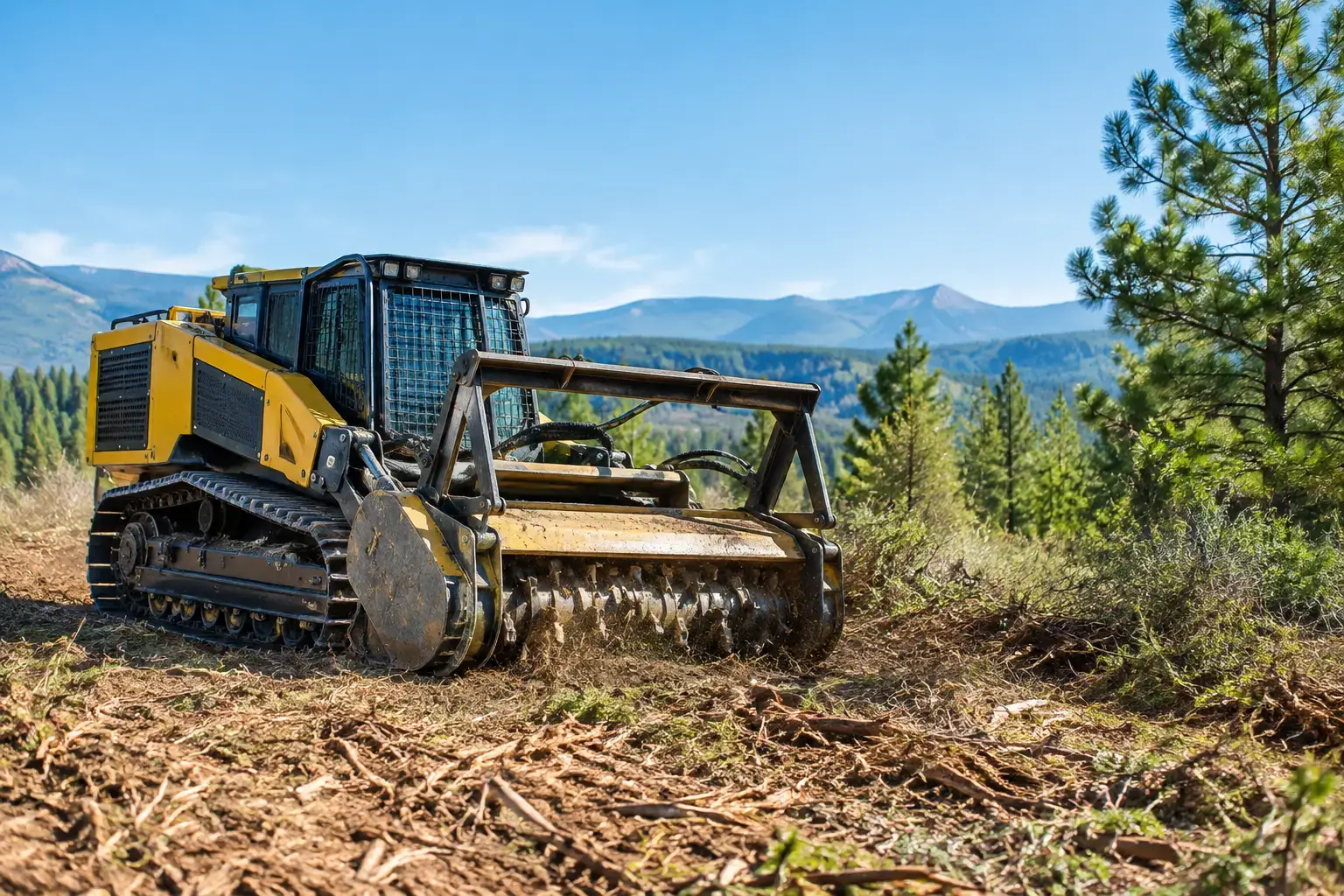
Equipment mastication uses a purpose-built mulching head to process brush, small trees, invasive vegetation, and accumulated fuels into mulch across the ground. A high-flow compact track loader with a drum mulcher can work efficiently through dense material that would take hand crews far longer to cut, drag, pile, and haul.
For many Colorado properties, mastication is the workhorse phase of wildfire mitigation. It can open defensible space around a home, widen an overgrown approach, reduce brush beneath tree stands, and reclaim neglected portions of a lot or acreage. The equipment works material in place, reducing the need for burn piles or large haul-off operations.
That mulch layer is not magic, and it should not be treated as a finished fireproof surface. Heavy mulch can still burn under the right conditions. Proper application matters. Mulch depth, material size, proximity to structures, slope, and the property’s ongoing maintenance plan all affect the result. The objective is to reduce hazardous standing and connected fuels, not simply grind everything within reach.
Mastication also has limits. Large timber may require selective felling and separate handling. Extremely steep ground, wet soils, protected areas, underground utilities, and tight spaces may call for a different approach. A disciplined contractor evaluates access, terrain, drainage, utility locations, and the material itself before putting equipment on the site.
Build a Scope That Solves the Real Problem
Insurance-driven work is often urgent, but urgency should not produce a vague “clear it all” job. A strong scope gives the crew clear priorities and gives you useful documentation afterward.
First, identify the zones closest to the structures and the driveway. Remove dead brush, low limbs, stacked debris, volunteer trees, and other fuels that could carry fire toward buildings. Then address dense pockets farther out that create continuous pathways through the property. Open travel routes where possible so residents, contractors, and emergency vehicles can move more safely.
Next, decide what stays. Mature healthy trees, stable ground cover, desirable native vegetation, and landscape features may remain when they are properly spaced and maintained. Selective removal often produces a better long-term result than indiscriminate clearing. You want usable land, not a scarred lot that creates a new erosion or drainage headache.
Finally, plan for the material after the machine leaves. Vegetation grows back. Wind deposits needles and limbs. New brush appears at fence lines, drainage areas, and property edges. Annual walk-throughs and periodic touch-up work keep a defensible-space project from sliding back into an insurance concern.
Access Is Part of Fire Readiness
A narrow, brush-choked driveway is more than an inconvenience. It can delay access, limit vehicle turnaround, and make it harder for crews to work around the home. Clearing encroaching vegetation along an access route improves day-to-day use while supporting wildfire readiness.
Access improvements may include vegetation clearing, selective tree removal, driveway-edge cleanup, rough grading, or creating room for safer vehicle movement. The right scope depends on the road, terrain, drainage, gates, and available turnaround area. Do not grade or widen blindly. Water needs a place to go, and careless dirt work can create washouts that cost more to fix later.
On larger properties, access and mitigation often go together. The same equipment that processes brush can help reclaim routes to outbuildings, fence lines, utility areas, and undeveloped ground. That means one coordinated project can reduce fuels, improve visibility, and make more of the property usable.
Avoid the Common Mistakes
Waiting until the final week of a non-renewal deadline is the biggest mistake. Qualified equipment crews book out, weather can shift ground conditions, and a proper project may need more than one day. Start as soon as you receive notice.
The second mistake is treating photos as an afterthought. Take clear images before work starts, during the project, and after completion. Show the home, surrounding vegetation, cleared routes, and the space created between fuels and structures. Wide shots establish context; close shots show the condition of the ground and remaining vegetation.
The third is assuming every insurance carrier uses the same standard. They do not. Some may respond favorably to documented mitigation. Others may make underwriting decisions based on factors beyond your property condition, including broader wildfire modeling or market availability. Fuel reduction remains worthwhile either way because it helps protect the place you own.
Put the Land Back Under Control
A non-renewal notice can feel like a deadline hanging over the property. Treat it as a trigger to fix conditions that have been building for years. Clear the brush. Break up the fuel paths. Open the access. Keep the evidence.
For Colorado owners dealing with thick vegetation, rugged terrain, or acreage that has become hard to manage, equipment-based mastication can turn a slow, labor-heavy job into visible progress. The best time to create defensible space is before the next notice, the next wind event, or the next fire season puts the property to the test.
Leave a Reply