
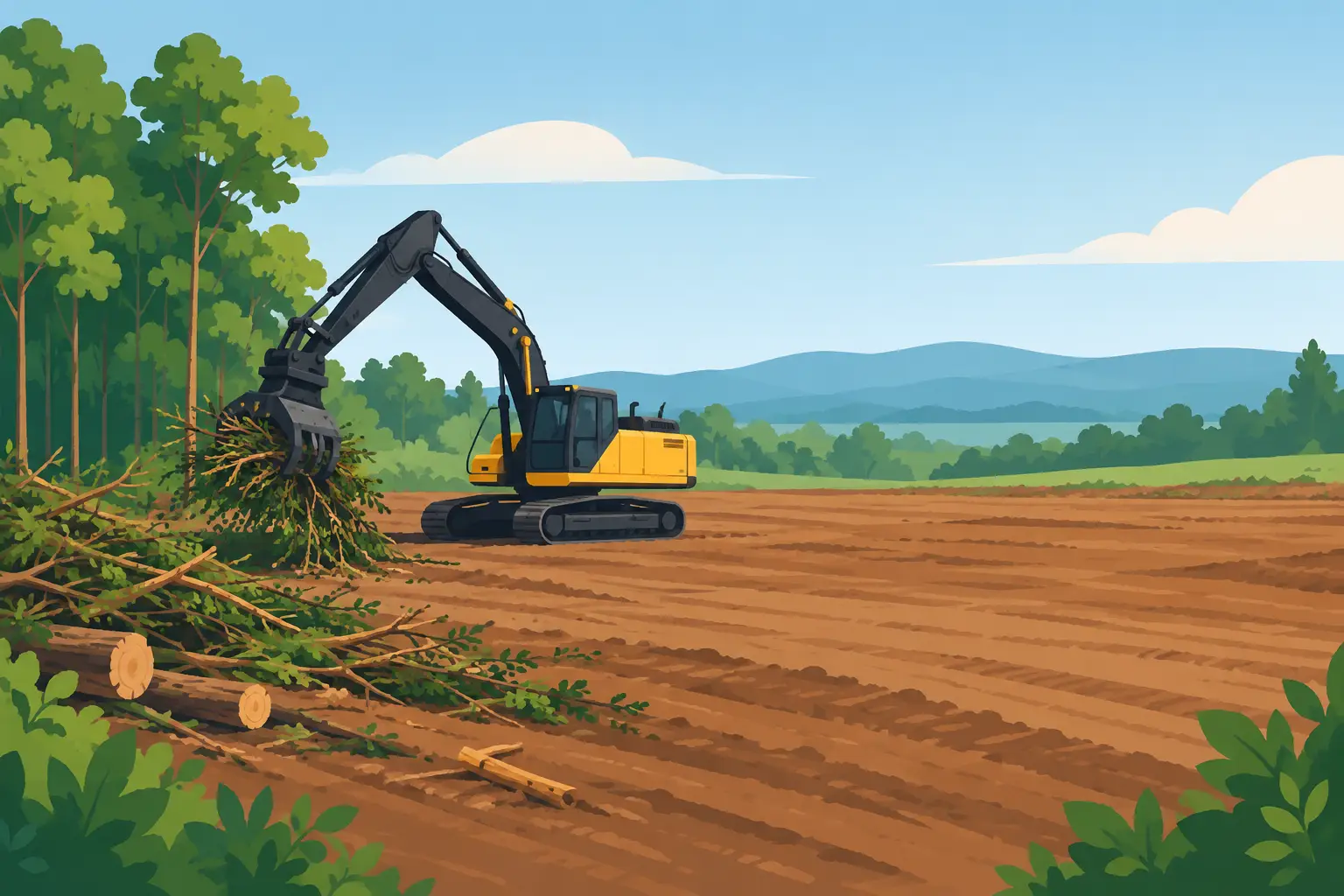
A lot can look manageable from the road and still be a problem once you step into it. Dense brush hides rock, deadfall blocks access, small trees crowd usable ground, and dry vegetation adds fuel where you do not want it. Professional lot clearing services turn that rough, overgrown ground into land you can inspect, maintain, build on, or defend.
For Colorado property owners, clearing is rarely just about making a site look better. It is about gaining control of the property. That may mean reducing wildfire fuels around a home, opening a driveway route, preparing an undeveloped parcel for construction, or reclaiming acreage that has been neglected for years.
What Lot Clearing Services Actually Do
Lot clearing is the removal and management of unwanted vegetation and obstructions so land can serve a practical purpose. The work may include brush removal, small-tree clearing, invasive vegetation control, forestry mulching, deadfall cleanup, access clearing, rough grading, and site preparation.
The right scope depends on the ground and the goal. A wooded mountain lot being prepared for defensible space needs a different approach than a Front Range parcel being opened for a shop pad or new home. Clearing every living thing is not always the answer. In many cases, the better result is selective removal that keeps healthy, well-spaced trees while eliminating ladder fuels, dense understory, and problem vegetation.
A capable crew starts by reading the site. Slope, drainage, soil conditions, rock, utility locations, tree density, and equipment access all affect the plan. Good work protects the parts of the property worth keeping while removing what creates risk or gets in the way.
When It Is Time to Clear Your Lot
Property conditions tend to worsen slowly, then become obvious all at once. A driveway that was barely passable becomes blocked. Brush spreads into a fence line. Dead material stacks up beneath trees. A project is ready to start, but nobody can get equipment where it needs to go.
Lot clearing is usually the right call when vegetation limits access, obscures property boundaries, increases fire exposure, or prevents construction and maintenance. It is also useful before selling land, installing utilities, repairing drainage, building fences, creating trails, or preparing for excavation.
Wildfire mitigation is a major driver across Colorado. Thick brush, low branches, deadfall, and tightly packed small trees can carry fire across a property and toward structures. Clearing fuels around homes, outbuildings, driveways, and access routes gives firefighters more room to work and helps create a more defensible property condition.
There is a practical side, too. Overgrowth holds moisture, hides hazards, and makes routine upkeep harder. Once the ground is opened up, owners can see grades, drainage paths, retaining needs, fence damage, and areas that need restoration. Clear land is easier to manage because problems are no longer buried under vegetation.
Forestry Mulching Versus Traditional Clearing
Forestry mulching is often one of the strongest tools for lot clearing work, especially on properties with brush, saplings, and dense understory. A compact track loader with a drum mulcher cuts and processes vegetation into mulch directly on the ground. Instead of hauling piles away or burning slash, the material is left as a low-profile layer that can help reduce erosion and retain moisture.
That does not mean mulching is right for every job. If a property needs building pads, trenching, deep root removal, major excavation, or large-tree removal, additional equipment and follow-up work may be required. Mulching handles vegetation efficiently, but it does not replace a full earthwork plan.
Traditional clearing methods can also make sense where material must be removed from the site, where vegetation is too large for a mulcher, or where a clean mineral-soil finish is required. The key is matching the method to the next step. If the lot is being prepared for a house, a driveway, or a commercial build, the clearing plan needs to work with the grading and construction plan that follows.
Avoid the mistake of choosing a method based only on what appears cheapest at first. A rushed clearing job can leave stumps in the wrong places, create erosion issues, damage retained trees, or make the next contractor’s work harder. The goal is not simply to knock vegetation down. The goal is to leave the site ready for its intended use.
What a Strong Clearing Plan Looks Like
A solid plan starts with a clear finish line. Tell the contractor what needs to happen after clearing. Are you reducing wildfire fuels around a home? Establishing a driveway? Opening a future building envelope? Cleaning up acreage for grazing, fencing, or regular maintenance? That answer determines how far clearing extends, what stays, what goes, and whether grading or restoration is part of the work.
Property access matters early. Compact tracked equipment can work effectively on uneven terrain and in tighter areas, but it still needs a safe route in and out. Gates, bridges, soft ground, steep slopes, overhead limbs, and nearby structures all need to be considered before mobilization.
Utilities and boundaries also need attention. Owners should identify known utility lines, easements, septic components, wells, irrigation infrastructure, and survey markers before work begins. If boundaries are unclear, get them resolved before clearing starts. It is far easier to protect a boundary marker than replace one after the ground has been opened up.
Finally, decide what happens to the material. Mulch can stay on site when it fits the property goals. Wood, slash, debris, and unsuitable material may need to be piled, hauled, or processed differently. There is no one-size-fits-all answer. The best approach is the one that leaves a safer, cleaner site without creating a new maintenance burden.
Questions to Ask Before Hiring Lot Clearing Services
Do not hire based on a vague promise to “clear it out.” Ask how the contractor plans to handle the vegetation, what equipment will be used, and what the finished condition will look like. The answers should be direct.
You should also ask whether the crew has experience with Colorado terrain, wildfire-fuel reduction, tight access, and selective clearing around structures. A contractor who understands defensible space knows that spacing, ladder-fuel removal, and access routes matter just as much as raw acreage cleared.
Ask for clarity on what is included. That means the work area, vegetation size and type, debris handling, stump treatment if needed, travel conditions, grading limits, and site cleanup. A clear scope prevents surprises and makes it easier to compare proposals fairly.
Equipment matters, but operator judgment matters more. High-flow compact track loaders and drum mulchers bring serious production to rough ground, yet they need an experienced operator who can work close to retained trees, fences, structures, and changing terrain without creating unnecessary damage. Veteran-owned Yeti Defensible Landworks brings that disciplined, safety-first approach to projects across its Colorado service area.
Clearing for Fire Safety, Access, and Build-Ready Ground
The strongest lot clearing projects solve more than one problem. A properly cleared driveway corridor can improve everyday access and provide a better route for emergency equipment. Selective thinning around a home can reduce wildfire fuels while opening views and making the property easier to maintain. Clearing an undeveloped lot can expose the land needed for a real site plan instead of forcing decisions based on guesswork.
There are trade-offs. Removing too much vegetation can increase erosion, reduce privacy, and expose soil to harsh sun and weather. Removing too little can leave the property just as difficult to use. This is why selective, purpose-driven clearing usually delivers a better long-term result than indiscriminate removal.
On sloped or disturbed ground, restoration should be part of the conversation. Mulch coverage, drainage control, reseeding, and erosion measures may be needed after clearing. The right follow-up protects the investment and helps the land settle into a stable, manageable condition.
If your property has become overgrown, hazardous, or hard to reach, do not wait for the next fire season, building deadline, or access failure to force the issue. Walk the ground, define the outcome you need, and bring in a crew equipped to clear it with control. Good land work gives you more than an open lot. It gives you a property you can use with confidence.
Leave a Reply