
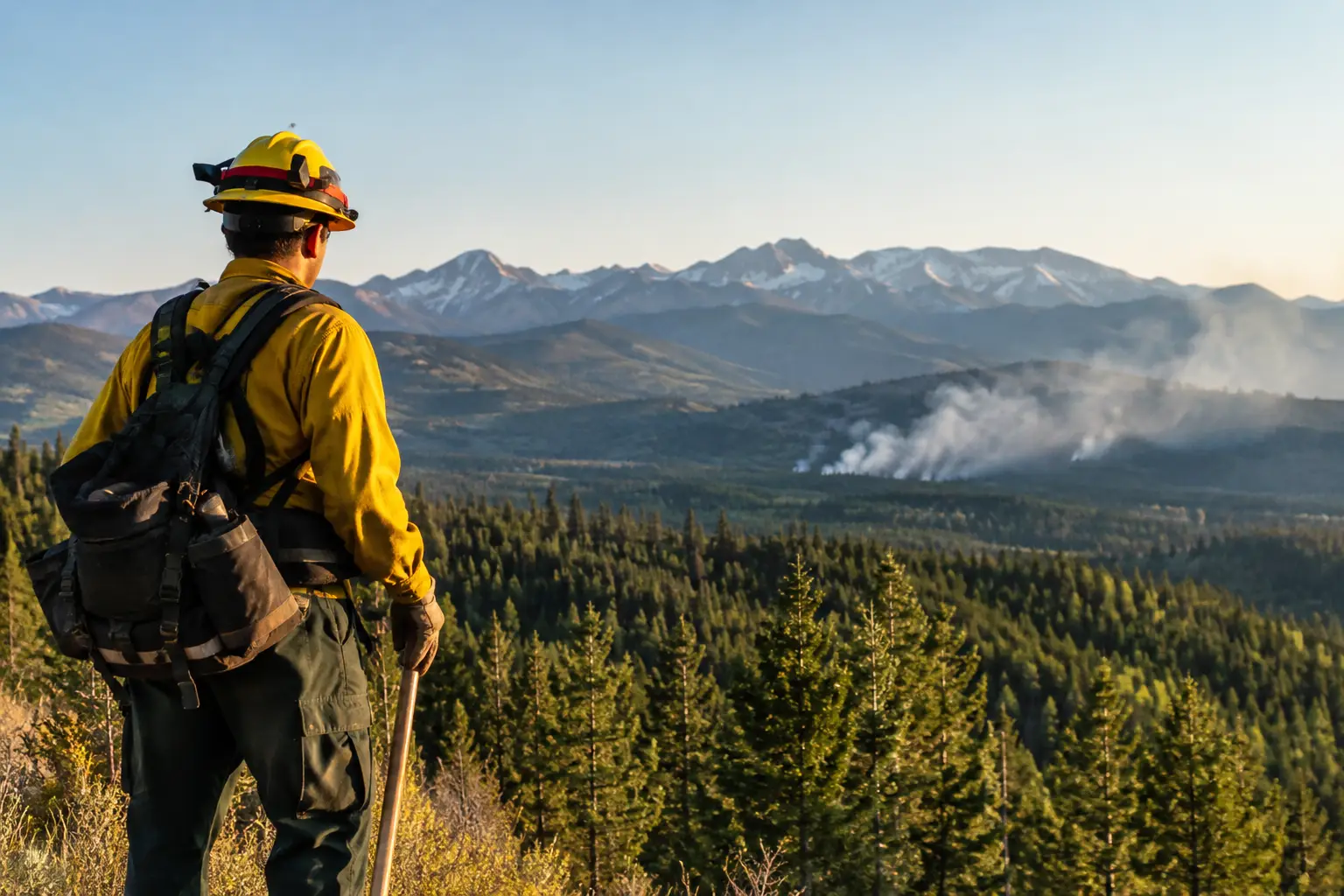
A wildfire does not need to start on your property to threaten it. Dense brush, low branches, deadfall, and neglected access can turn a nearby ember shower into a fast-moving problem. The Colorado Strategic Wildfire Action Program (COSWAP) exists to help Colorado communities take practical action before that moment arrives.
For property owners, HOAs, fire protection districts, local governments, and community groups, COSWAP can be a path toward funded wildfire mitigation work. But it is not a blank check for clearing every acre. Projects need a clear purpose, a defined scope, strong local coordination, and work that reduces real wildfire risk. Knowing where your property fits can help you plan smarter and move faster when funding opportunities open.
What Is the Colorado Strategic Wildfire Action Program?
COSWAP is a Colorado program focused on reducing wildfire risk through planning, mitigation, and community preparedness. It supports work that helps communities address hazardous fuels, improve evacuation and emergency access, strengthen local wildfire planning, and carry out projects with measurable public benefit.
The practical goal is straightforward: reduce the vegetation and site conditions that allow fire to move quickly through a neighborhood, along a roadway, or toward structures. That can mean thinning dense small trees, removing ladder fuels, treating brush, maintaining fuel breaks, improving access routes, or completing the planning needed to guide larger mitigation efforts.
COSWAP funding has been administered through state wildfire and forestry partners, with opportunities and requirements changing by funding cycle. Project categories, application windows, matching requirements, and eligible applicants can vary. Treat the program as a resource to pursue with a current plan, not as money you can assume will be available later.
What COSWAP Can Help Fund
The Colorado Strategic Wildfire Action Program is built for projects that create a broader safety benefit. A well-designed project usually connects individual parcels to a neighborhood, evacuation corridor, community facility, watershed, or larger wildland-urban interface area.
Hazardous-fuel reduction is often central to that work. On the ground, that may include forestry mulching, mechanical thinning, slash treatment, brush removal, invasive vegetation control, and removal of small-diameter trees. The right method depends on terrain, vegetation type, site access, desired finish, and what needs protection nearby.
Forestry mulching is often a strong fit where thick brush and smaller trees are the main fuel problem. A compact track loader with a drum mulcher can work through uneven ground, process vegetation close to grade, and leave mulch that helps reduce erosion. It is fast, effective, and less disruptive than hauling every piece of material away.
Still, mulching is not the answer to every site. Larger merchantable trees may require selective cutting. Heavy slash may need separate treatment. Sensitive drainages, steep slopes, utility corridors, and protected areas can require different methods or additional approvals. Good mitigation is not about making land look scraped clean. It is about reducing fire intensity while protecting the ground, usable vegetation, and the property’s long-term condition.
COSWAP may also support planning and readiness work. Community wildfire protection plans, risk assessments, evacuation planning, and project design can be just as valuable as the machinery work itself. A community that knows where its fuel hazards are and has a defined treatment plan is in a better position to compete for implementation funding.
Who Should Pay Attention to COSWAP?
A single homeowner may benefit from COSWAP work, but individual residential cleanup is not always the direct focus of a grant program. The strongest applications often come from entities that can show a shared benefit and manage a project across multiple properties.
That can include fire protection districts, counties, municipalities, special districts, nonprofit organizations, watershed groups, and homeowner associations. Ranch owners, rural neighborhoods, developers, and commercial property managers may also have a role when they coordinate with an eligible applicant or participate in a larger treatment area.
If you own acreage in Douglas, Jefferson, Boulder, Park, El Paso, Clear Creek, or another wildfire-prone Colorado county, look beyond your fence line. Ask whether your neighborhood has an HOA, local fire district, wildfire council, or community group already working on mitigation. A connected project can protect more ground and may carry more weight than scattered, uncoordinated clearing.
That does not mean you should wait on a grant before improving your own defensible space. If brush is pressing against your home, access is blocked, or ladder fuels are carrying fire from the ground into tree canopies, those conditions need attention now. Grant-funded community work and private property maintenance should reinforce each other.
Build a Project That Makes Sense on the Ground
Funding programs reward a clear problem and a workable solution. Before an application is written, walk the property and identify what fire would use to spread. Look at thick brush, dead and down material, continuous stands of young trees, low limbs, overgrown fence lines, driveway pinch points, and vegetation along roads or structures.
Then define the outcome. “Clear the lot” is not a strong project description. “Reduce continuous ladder fuels along the community’s primary evacuation route and create defensible space around shared infrastructure” is specific, measurable, and tied to public safety.
A strong scope also accounts for access and finish work. Equipment needs room to enter, turn, and operate safely. Steep ground, soft soils, overhead utilities, culverts, gates, and adjacent structures all affect production. Include staging areas, material handling, erosion control, and post-treatment expectations before equipment shows up.
For a community-scale job, map treatment boundaries and identify every landowner involved. Get agreement early. Delays often come from unclear access, changing boundaries, or assumptions about who will handle slash, gates, and follow-up maintenance.
Defensible Space Still Starts at the Structure
Community fuel reduction lowers the chance of a fast-moving wildfire reaching your area. Defensible space helps your home or building resist the embers that can arrive ahead of the flame front.
The work closest to structures deserves the most attention. Remove flammable debris from around foundations, decks, propane tanks, sheds, and fence connections. Keep grasses managed. Prune and space vegetation according to your site and local guidance. Move firewood and stored materials away from buildings. Make sure emergency vehicles can identify and reach the property.
There is no universal number that fits every property. A mountain cabin surrounded by conifers needs a different treatment than a foothills home in grass and gambel oak. Slope matters. Wind exposure matters. Construction materials matter. The goal is to break up fuel continuity and give firefighters a safer, more workable space if they can defend the structure.
Get Ready Before Funding Opens
The best time to prepare is before an application deadline is announced. Gather parcel information, maps, photos, rough acreage, ownership details, and notes on the fuel conditions you want to address. Document the public benefit: homes protected, road segments improved, community assets nearby, or connections to existing treatments.
Talk with your local fire protection district or county wildfire contact. They can help determine whether a proposed project aligns with local priorities and whether an eligible organization is already building an application. If your neighborhood has a community wildfire protection plan, use it. Projects tied to documented priorities tend to be easier to explain and justify.
Next, get a realistic field assessment from a qualified land-services contractor. An estimate should reflect the vegetation, slope, access, equipment needs, acreage, and finish standard – not just a number pulled from an aerial image. Reliable pricing makes grant budgeting stronger and prevents a project from stalling after award because the actual work costs more than expected.
Yeti Defensible Landworks brings high-flow compact track loader and drum mulching capability to difficult Colorado ground, with a field-first focus on safer properties, cleared access, and clean, usable results. The right contractor should be able to explain what equipment will do on your site, where it will not be the best fit, and what the land will look like after treatment.
Treat the Work as Ongoing Protection
Wildfire mitigation is maintenance, not a one-time photo opportunity. Grass grows back. Brush returns. Wind drops limbs. New seedlings fill gaps. A well-executed project can reduce risk significantly, but it needs inspection and follow-up to keep doing its job.
Start with the highest-risk ground, build a realistic treatment plan, and keep your property ready for the next phase of work. The strongest COSWAP projects do more than clear vegetation. They leave communities better prepared to protect what matters when fire weather arrives.
Leave a Reply