
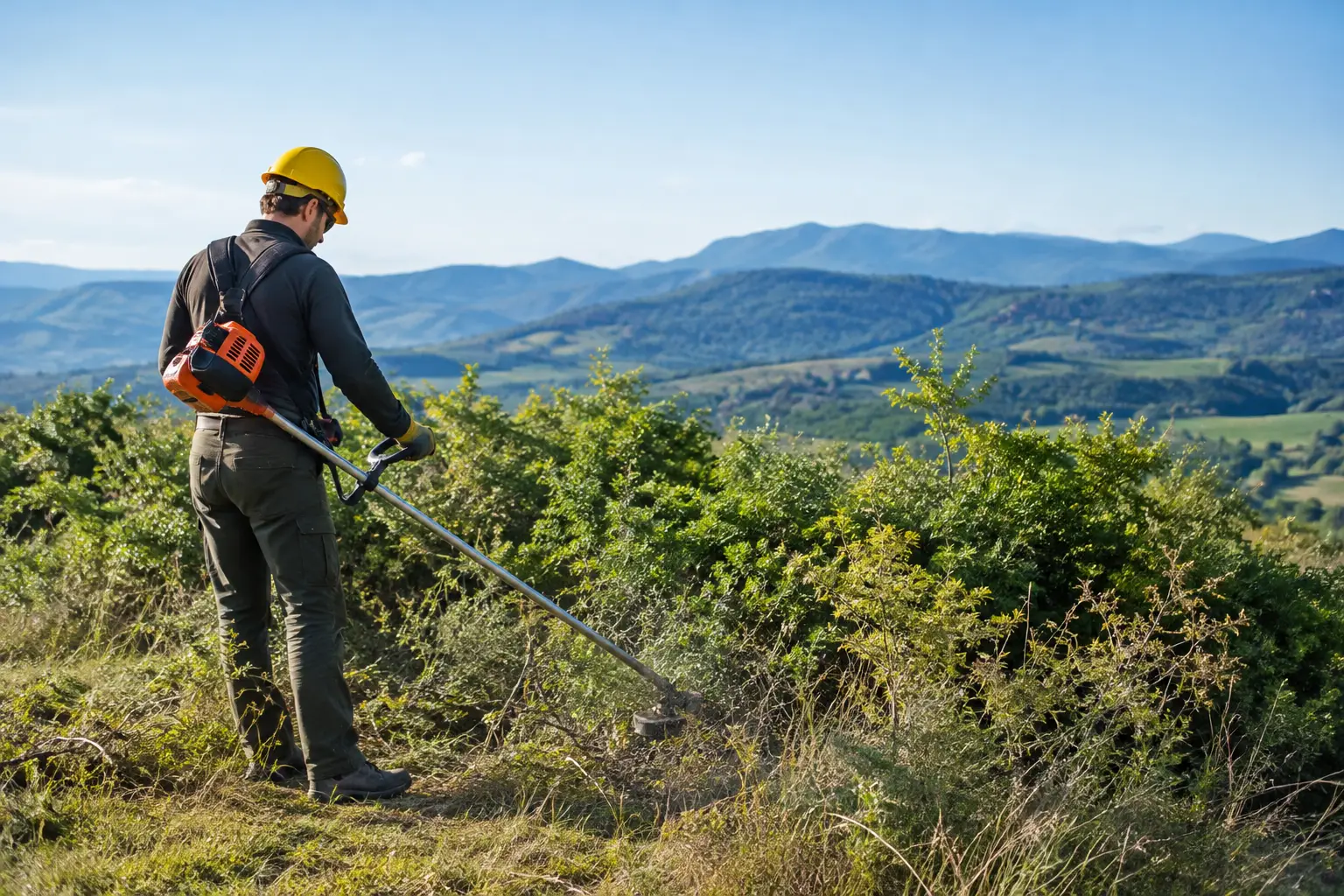
A property can look green and still be loaded with fuel. Thick Gambel oak, deadfall, volunteer pine, rabbitbrush, and knee-high grass can turn a neglected slope, fence line, or building area into a fire pathway. Acreage brush management puts that growth back under control. Done right, it makes land safer, opens usable ground, and leaves a property easier to maintain long after the equipment leaves.
For Colorado acreage owners, this is not cosmetic work. It is practical land protection. The goal is not to scrape every inch bare. The goal is to reduce hazardous fuels, improve access, and keep healthy, useful parts of the landscape working for the property.
What Acreage Brush Management Actually Does
Brush management is the planned removal or treatment of unwanted vegetation across a property. That can include dense brush, small-diameter trees, invasive plants, dead material, ladder fuels, and overgrown grass around structures, roads, and fence lines.
The best approach depends on the land. A wooded mountain parcel needs a different treatment than a dry foothills lot, an overgrown pasture, or a future homesite. One property may need selective thinning to break up fuel continuity. Another may need a heavy first pass to reclaim a road, improve sight lines, or make room for construction equipment.
Mechanical forestry mulching is often the right tool for broad brush removal. A high-flow compact track loader with a drum mulcher can chew through brush and small trees while leaving mulch spread across the soil surface. That mulch helps reduce erosion, holds moisture, and limits the hauling and burn-pile work that comes with conventional clearing.
It is not always the answer. Larger trees may require felling and removal. Steep, rocky ground may call for a more selective approach. Wet soil can limit when equipment should run. Good landwork starts with reading the site, not forcing one method onto every acre.
Why Brush Becomes a Wildfire Problem
Wildfire does not need a wall of timber to move. It can travel through grass, brush, low branches, and dead vegetation, then climb from the ground into tree crowns. That vertical connection is called ladder fuel. It is one of the main reasons a manageable surface fire can become harder to control.
Dense vegetation also creates horizontal fuel continuity. When brush touches brush for long distances, fire has a connected route across the property. Breaking up that route matters around homes, barns, shops, driveways, propane tanks, utility areas, and neighboring parcels.
A proper treatment does more than make the land look cleaner. It creates separation. It removes dead material. It reduces the volume of brush available to burn. It helps firefighters and property owners move through the site if an emergency occurs.
No contractor can fireproof a property. Wind, weather, terrain, neighboring fuels, and ignition source all matter. But reducing the fuel load is one of the strongest actions an acreage owner can take before fire season puts pressure on the landscape.
Where to Start on an Overgrown Property
Start where risk and access overlap. Most acreage does not need the same level of clearing everywhere. Focus first on the areas that protect structures, support evacuation, or make the rest of the property reachable.
Build Defensible Space Around Structures
The ground nearest a home or outbuilding deserves the closest attention. Remove dead brush, reduce dense vegetation, and create spacing between plants and low tree limbs. Keep vegetation from piling against siding, decks, crawlspace vents, wood fences, and propane equipment.
The exact amount of clearing depends on slope, surrounding vegetation, and local guidance. A flat parcel with short grass is not the same as a steep site with thick oak and conifer. The principle stays the same: reduce the chance that flames can travel directly to the structure.
Clear the Way In and Out
A driveway buried by brush is more than an inconvenience. It can slow evacuation, limit emergency access, and make routine property work harder than it needs to be. Brush management along roads and access lanes improves visibility, creates room for vehicles, and helps keep branches from closing in over travel routes.
This is also where many owners see immediate value. Once an access route is clear, fencing crews, builders, utility contractors, and maintenance equipment can get where they need to go. Land becomes easier to inspect, improve, and use.
Treat Fence Lines, Drainages, and Property Edges
Fence lines often collect brush, fallen limbs, and invasive growth. Drainages and draws can hold thick vegetation and carry fire across a parcel, especially when slopes and wind line up. Property edges can also become fuel-heavy transition zones between maintained ground and unmanaged vegetation.
These areas do not always need to be cleared wide open. Often, selective removal and spacing are the smarter move. Preserve soil stability and desirable vegetation while taking out the material that creates a continuous fuel path.
Forestry Mulching vs. Traditional Clearing
Traditional clearing can involve chainsaws, hand crews, skid steers, hauling, chipping, piling, and burning. That approach has its place, especially around large trees, tight spaces, or material that needs to leave the site. It can also take more time and create more handling steps.
Forestry mulching brings speed and reach to brush-heavy acreage. The machine cuts and processes vegetation in one pass, placing the finished material back on the ground. There are no burn piles waiting for the right weather window and no repeated handling of every branch.
The trade-off is that mulch is still organic material. It should be distributed rather than left in thick mounds, particularly near structures or in high-risk areas. Regrowth is also part of land ownership. Mulching resets an overgrown site and reduces risk, but it does not stop seeds, shoots, and seasonal growth forever.
For many Colorado properties, the strongest plan is a heavy initial treatment followed by targeted maintenance. That keeps the job from becoming another expensive reclamation project five years down the road.
A Smart Scope Saves Time and Ground Disturbance
Before any work starts, identify what stays and what goes. Flag desirable trees, note utility lines, mark irrigation or septic components, and point out hidden hazards such as old wire, rock piles, culverts, and abandoned equipment. A clean scope protects the property and keeps production moving.
It also helps to define the outcome in plain terms. Do you need a safer home ignition zone? A cleared building pad? Better vehicle access? A more manageable pasture edge? A contractor can choose the right method faster when the end use is clear.
On rugged sites, timing matters. Running heavy equipment when soils are saturated can leave ruts and create unnecessary repair work. Working during the right conditions protects the ground while allowing the machine to do what it does best.
Yeti Defensible Landworks approaches acreage work with that field-first mindset: assess the terrain, set the priority, run capable equipment, and leave the property safer and more usable than it was before.
What Property Owners Should Expect After the Work
A well-managed acreage should not look stripped or abandoned. It should look intentional. You should be able to see where you are walking, drive where you need to drive, and identify the vegetation you want to keep. Brush should no longer crowd structures, choke access routes, or hide hazards under a dense layer of growth.
Expect some follow-up. Mulched areas settle. Grass and brush regrow. Wind brings down limbs. Invasive plants may need separate treatment if they are widespread. Annual walks around the property, especially before fire season, help catch small problems before they become another major project.
The right time to manage brush is before it becomes an emergency, a blocked driveway, or a fire-season concern. Walk your acreage with a hard eye: find the connected fuels, the restricted access, and the ground you cannot use. Then put a clear plan behind the work and hold that line.
Leave a Reply