
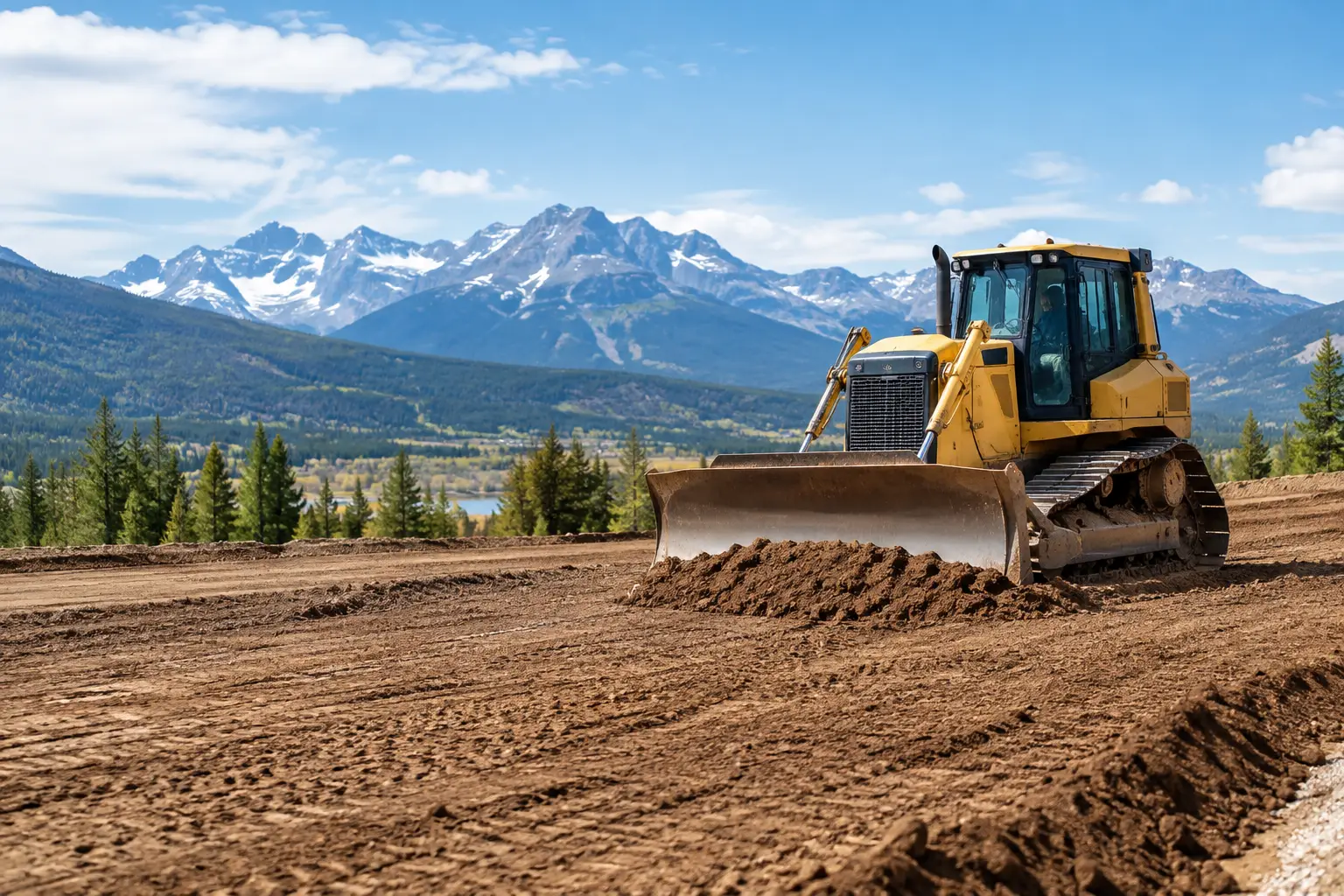
A driveway that sends runoff toward a garage, a building pad that holds water, or a rough lot that cannot support equipment is not a minor inconvenience. It is a site problem. Proper land grading gives water a controlled path, creates usable ground, and prepares Colorado property for the next phase of work.
What Land Grading Actually Does
Land grading is the controlled shaping of soil to create the elevations, slopes, and drainage paths a property needs. It may involve cutting high areas down, filling low areas, smoothing rough ground, establishing a building pad, improving a driveway approach, or directing runoff away from structures and access routes.
The goal is not to make every property flat. On Colorado acreage, flat is often the wrong answer. A well-graded site works with the terrain while creating stable areas for access, construction, drainage, and everyday use. The finished grade should move water where it belongs without creating erosion, ruts, ponding, or a new problem downhill.
For a homeowner, that might mean a clean, usable yard around a mountain home. For a ranch owner, it can mean better equipment access and a stable area for outbuildings. For a developer or commercial property manager, grading often sets the baseline for safe construction access and site preparation.
Start With Water, Not Dirt
Water decides whether a grading job holds up. Before equipment starts moving soil, the property needs a clear look at where water enters, crosses, and exits the work area.
Colorado sites can change fast. A dry slope in July may become a hard-running drainage path during a summer storm or spring snowmelt. Clay soils can hold water near the surface. Decomposed granite, loose fill, and disturbed ground can wash out quickly if runoff is concentrated. Freeze-thaw cycles add another layer of stress around driveways, pads, and drainage features.
A good grading plan accounts for the existing contours, nearby structures, natural swales, road edges, and downslope conditions. Water should generally move away from buildings and travel through planned channels, swales, or drainage areas that can handle the flow. The exact approach depends on the site. A steep foothills lot needs a different solution than a flatter property on the plains.
This is where rushed work gets expensive. Pushing dirt toward the lowest corner may look productive for a day, but it can create standing water, soft subgrade, erosion, or runoff that affects a neighbor. Grade with intent from the start.
When a Property Needs Land Grading
Some grading needs are obvious. Others show up as repeating maintenance problems. If you are repairing the same washed-out driveway after every storm, fighting mud near a structure, or unable to get equipment onto a portion of the property, the grade may be part of the issue.
Land grading is often the right next step after clearing brush, small trees, and invasive growth. Once dense vegetation and accumulated debris are removed, the actual ground condition becomes visible. Ruts, hidden holes, old berms, unstable fill, and drainage paths can be addressed before the property is seeded, graveled, built on, or put back into use.
It is also common before building a shop, barn, garage, cabin, fence line, parking area, or access road. A prepared site gives crews a safer, more predictable place to work. It also helps prevent the costly mistake of building first and trying to correct drainage afterward.
The Difference Between Rough Grading and Finish Grading
Not every project needs the same level of precision. Rough grading handles the major earthmoving work. It establishes general slopes, cuts high spots, fills low areas, creates access, and forms the basic shape of a pad or work zone.
Finish grading comes later. It refines the surface for its intended use, whether that is a gravel driveway base, a lawn area, a building pad, a drainage swale, or restoration work. The surface may need to be smooth, compacted, shaped for positive drainage, or prepared for topsoil and seed.
The right sequence matters. If a property still needs forestry mulching, utility work, trenching, retaining work, or heavy construction traffic, finish grading too early can waste money. Heavy equipment will disturb the surface again. In many cases, rough grading first and finish grading after the disruptive work is complete is the smarter move.
What Affects the Scope of a Grading Job
No two properties grade the same way. A small backyard correction may be straightforward. A steep, overgrown parcel with limited access and drainage concerns is a different operation entirely.
The main factors are slope, soil type, access, drainage, material volume, existing vegetation, and the intended use of the finished area. A compact track loader can work efficiently in tight spaces and rugged terrain, but a project still needs room for safe equipment movement and material handling. If soil must be imported, removed, or compacted in layers, the job changes again.
Underground utilities, septic systems, wells, irrigation lines, property boundaries, and drainage easements also matter. Grading should never be treated as blind excavation. Mark known utilities, identify sensitive areas, and communicate the final purpose of the site before work begins.
Permits and local requirements may apply depending on the property, the amount of disturbance, drainage impacts, and the type of development planned. A contractor can prepare the ground, but property owners should confirm what approvals, engineered plans, or inspections are required for their specific project.
A Better Sequence for Site Preparation
A strong land-preparation job usually follows a practical order. First, clear the work area of brush, small trees, woody debris, and obstacles that limit visibility or equipment access. Then identify the site elevations, water flow, and locations that need to remain protected.
Next comes the heavy shaping work. This is when high ground is cut, low areas are filled where appropriate, and access routes or pads take form. Once the primary grade is established, the surface can be refined for drainage, compaction, gravel, topsoil, seeding, or construction.
Do not skip the cleanup phase. Loose debris, soft edges, poorly blended fill, and abrupt transitions can undermine an otherwise solid job. The final site should look intentional and function under real conditions, not just appear smooth from the road.
Common Grading Mistakes That Cost Property Owners Later
The most common mistake is grading for appearance instead of performance. A smooth surface is not necessarily a stable surface. If it does not shed water correctly, it will eventually show you where the problem is.
Another mistake is placing fill without considering compaction and material quality. Organic material, brush, stumps, and unsuitable debris buried in fill can settle over time. That settlement can damage a driveway, create depressions, or weaken a building area.
Owners also get into trouble when they create steep slopes that cannot hold soil, direct runoff toward neighboring property, or install gravel before the base is shaped correctly. Gravel cannot fix a failing subgrade. It may hide the problem briefly, then sink, rut, or wash out with traffic and weather.
Finally, avoid treating drainage as an add-on. Drainage controls need to be part of the grading plan, especially around homes, driveways, retaining areas, and structures planned for the future.
Grade for the Property You Want to Use
The best grading plan starts with a clear answer to one question: What does this piece of land need to do next?
A future shop pad needs different preparation than a horse turnout. A wildfire-mitigation project may need stable access and turnaround space for equipment. A rural driveway may need drainage control, proper crown, and durable transitions at the road. A restoration area may need gentler contours that support erosion control and vegetation establishment.
That is why a site walk matters. A contractor should look beyond the immediate pile of dirt and understand the use case, the terrain, equipment access, and the water movement across the property. The result is a plan that solves the current issue without creating a bigger one after the next hard storm.
Yeti Defensible Landworks brings equipment-forward site preparation to difficult Colorado ground, from cleared access routes to practical grading for safer, more usable property. The work starts with the terrain in front of us and ends with ground that is ready for its next job.
If your property has rough access, poor drainage, overgrowth, or an unfinished building area, do not wait for runoff and traffic to make the decision for you. Put a clear plan behind the dirt work, and give the site a grade built to hold up.
Leave a Reply