
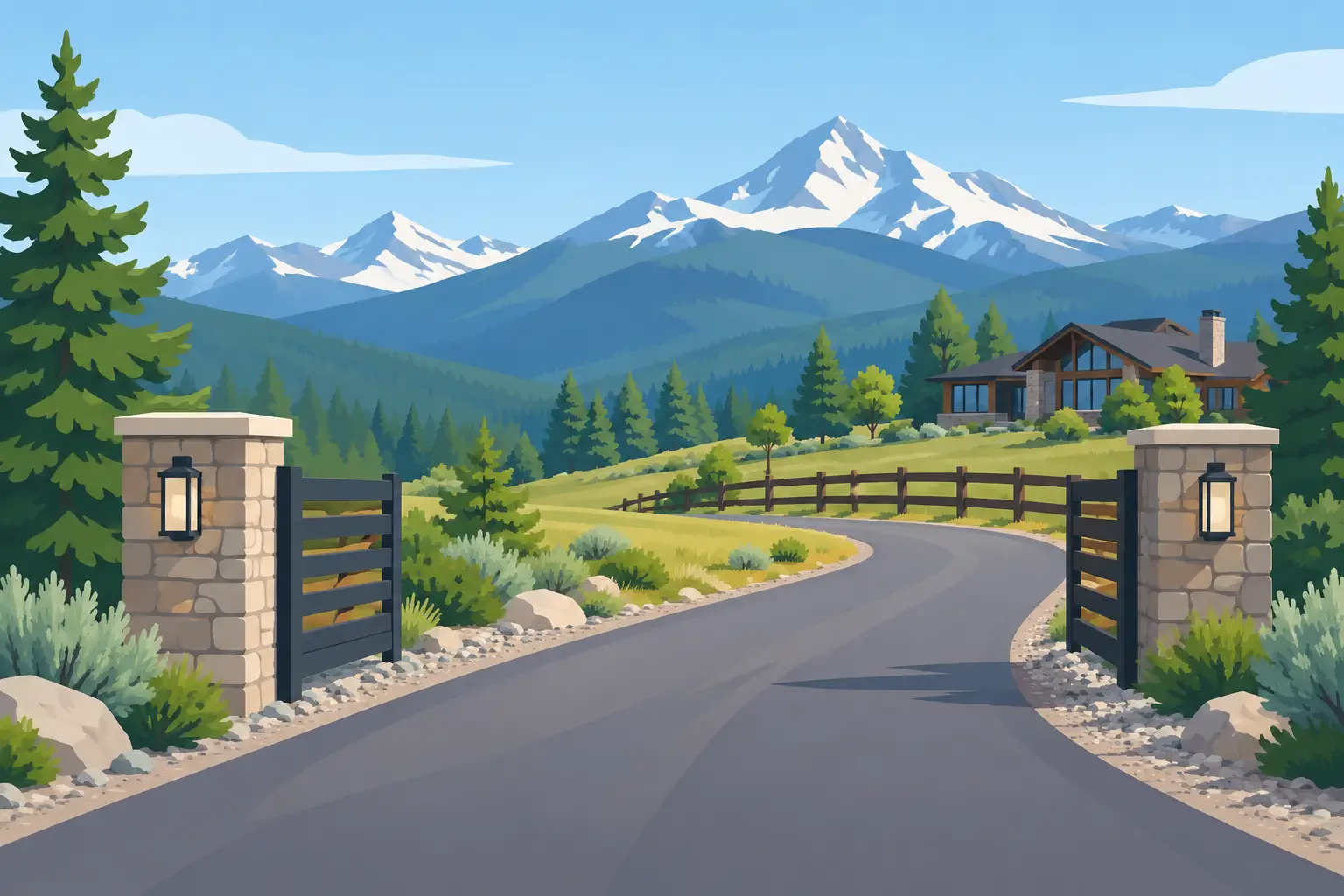
A private road can look passable right up until a delivery truck slides into a rut, an ambulance cannot turn around, or spring runoff cuts a channel through the driving surface. To improve private road access, start by treating the road as a working piece of infrastructure, not just a trail through the property. Clear the corridor, control water, shape the grade, and build a surface that fits the traffic it must carry.
For Colorado acreage, mountain homes, ranches, and undeveloped parcels, access work often solves more than a driving problem. It can improve emergency response, support wildfire mitigation, create room for construction equipment, and make daily property use safer.
Start With the Real Access Problem
Not every rough road needs a full rebuild. The right scope depends on what is failing and how the road will be used. A seasonal road serving a cabin has different needs than a driveway used daily by heavy pickups, horse trailers, propane trucks, or construction equipment.
Walk or drive the route after rain or snowmelt if possible. Water exposes weak points fast. Watch for standing water, soft shoulders, tire ruts, washboarding, exposed rock, low branches, blind corners, and places where two vehicles cannot safely pass. Also look at the road’s entry point. A narrow gate, sharp turn, or steep approach can limit access even when the rest of the road is in decent shape.
Ask a practical question: what must get down this road when conditions are bad? If the answer includes fire apparatus, emergency vehicles, utility crews, concrete trucks, or material deliveries, the road needs more than a smooth-looking surface.
Clear the Road Corridor First
Overgrown brush and low limbs slowly close in on private roads. They scratch vehicles, block sightlines, hide hazards, trap snow, and interfere with larger equipment. In fire-prone areas, roadside vegetation can also add fuel directly beside the route people may need to use for evacuation or emergency access.
Clearing should create usable width, not simply cut back a few branches. Remove encroaching brush, small trees, deadfall, and invasive growth that restrict the travel lane, shoulders, turnarounds, gates, and drainage paths. Keep enough open space for drivers to see around curves and for equipment to work without tearing up the road edge.
Forestry mulching is often a strong fit where dense brush or small-diameter trees are the main problem. A high-flow compact track loader with a drum mulcher can process vegetation on site, reduce hauling, and leave the ground more manageable than a pile of slash. The best approach depends on slope, soil condition, property goals, and whether the cleared material should remain as mulch or be removed from key areas.
Do not clear so aggressively that bare soil is left exposed on steep shoulders. The goal is controlled access, not creating the next erosion problem.
Drainage Does the Heavy Lifting
Most private roads fail because water has nowhere useful to go. A road can have fresh gravel and still break down quickly if runoff flows across it, drains into the wheel tracks, or spills over a low edge.
The driving surface needs a defined crown or cross-slope so water sheds off the road instead of pooling in the center. Ditches, swales, culverts, and rolling dips may be needed to collect and move water safely. Which option works depends on the grade, soil, watershed, existing crossings, and where runoff can discharge without damaging neighboring land or downstream areas.
Culverts deserve particular attention. A clogged, undersized, crushed, or poorly placed culvert can turn a minor drainage crossing into a washed-out road. Before replacing one, verify the pipe location, the flow path, and the condition of the inlet and outlet. A pipe that moves water under the road but dumps it onto an unstable slope is not a complete fix.
On long mountain roads, water control often requires several smaller measures rather than one major ditch at the bottom. Break up the flow. Move water off the road before it gathers speed. Protect outlets with appropriate rock or stabilization where needed.
Grade for Traction, Clearance, and Control
Grading is not just making the road look flat. Good grading shapes the road so vehicles can maintain traction, water can drain, and the surface can handle repeated use.
Start by correcting ruts, potholes, washboarding, soft spots, and edge failures. Then establish the right shape. A road that is too flat holds water. A road that is crowned too sharply can feel unstable and push vehicles toward the shoulder. The right balance depends on the material, width, slope, and expected traffic.
Steep sections may require special attention. Loose gravel on a steep grade can migrate downhill, while runoff can carve deep channels along the tire path. In those areas, the solution may include regrading, drainage breaks, compacted base material, or a different surface treatment. There is no one-size-fits-all answer. The soil under the road matters as much as the gravel on top.
Turnarounds also need grading. If a propane truck, trailer, or emergency vehicle cannot turn safely, the property still has an access problem. Build enough room for the vehicles you expect, with stable ground and clear approach lines.
Choose Road Material for the Job
Gravel is not all the same. The wrong material can create dust, rut under load, roll off the road, or turn soft during wet weather. A well-built private road typically needs a compacted base that locks together, plus a driving surface suited to local conditions and traffic.
Native soils can sometimes be shaped and stabilized successfully. Other sites need imported road base, larger aggregate, geotextile fabric, or additional base depth to separate soft subgrade from the driving surface. If the road crosses wet ground or heavy clay, simply adding another thin layer of gravel may hide the issue for a season without solving it.
Material decisions should match the use case. A lightly traveled access lane may need clearing, drainage, and spot gravel. A daily-use road serving multiple homes or heavy equipment may justify a more complete rebuild. Spend where the failure is occurring. There is little value in placing premium material on top of a drainage problem.
Build Access That Supports Wildfire Readiness
For rural Colorado properties, road access is part of defensible-space planning. Fire crews need room to enter, turn, stage, and operate. Residents need a route out that is not choked with brush, low limbs, or fallen timber.
Focus on the full route from the public road to the home, outbuildings, and potential water sources. Clear vegetation that pinches the corridor. Address tight corners and weak bridges or crossings. Keep gates functional and easy to open. Marking an address clearly can also save critical time when visibility is poor or crews are unfamiliar with the property.
This work should be coordinated with the larger property plan. Roadside clearing can tie directly into fuel reduction around structures, removal of ladder fuels, and access improvements for ongoing land maintenance.
Know When to Bring in Equipment
Hand crews and a chainsaw can handle light trimming. They are rarely the efficient answer for a long, overgrown, rutted, or washed-out access road. When the project involves dense vegetation, rough terrain, substantial grading, drainage shaping, or site preparation, purpose-built equipment saves time and produces more consistent results.
A capable contractor should assess the route before proposing a fix. They should ask about vehicle types, seasonal use, drainage history, fire access, property boundaries, underground utilities, and any county or HOA requirements. Work near creeks, wetlands, public-road connections, or engineered crossings may require added review or permits. Confirm those details before machines move in.
Yeti Defensible Landworks approaches access work the same way it approaches difficult land: clear the obstacles, shape the ground, manage the fuels, and leave the property safer and more usable.
Before the next hard rain, snowstorm, delivery, or fire season, take a hard look at the road your property depends on. A clear, drained, properly graded route gives you more than a better drive in. It gives you a property that is ready to work when it matters.
Leave a Reply