
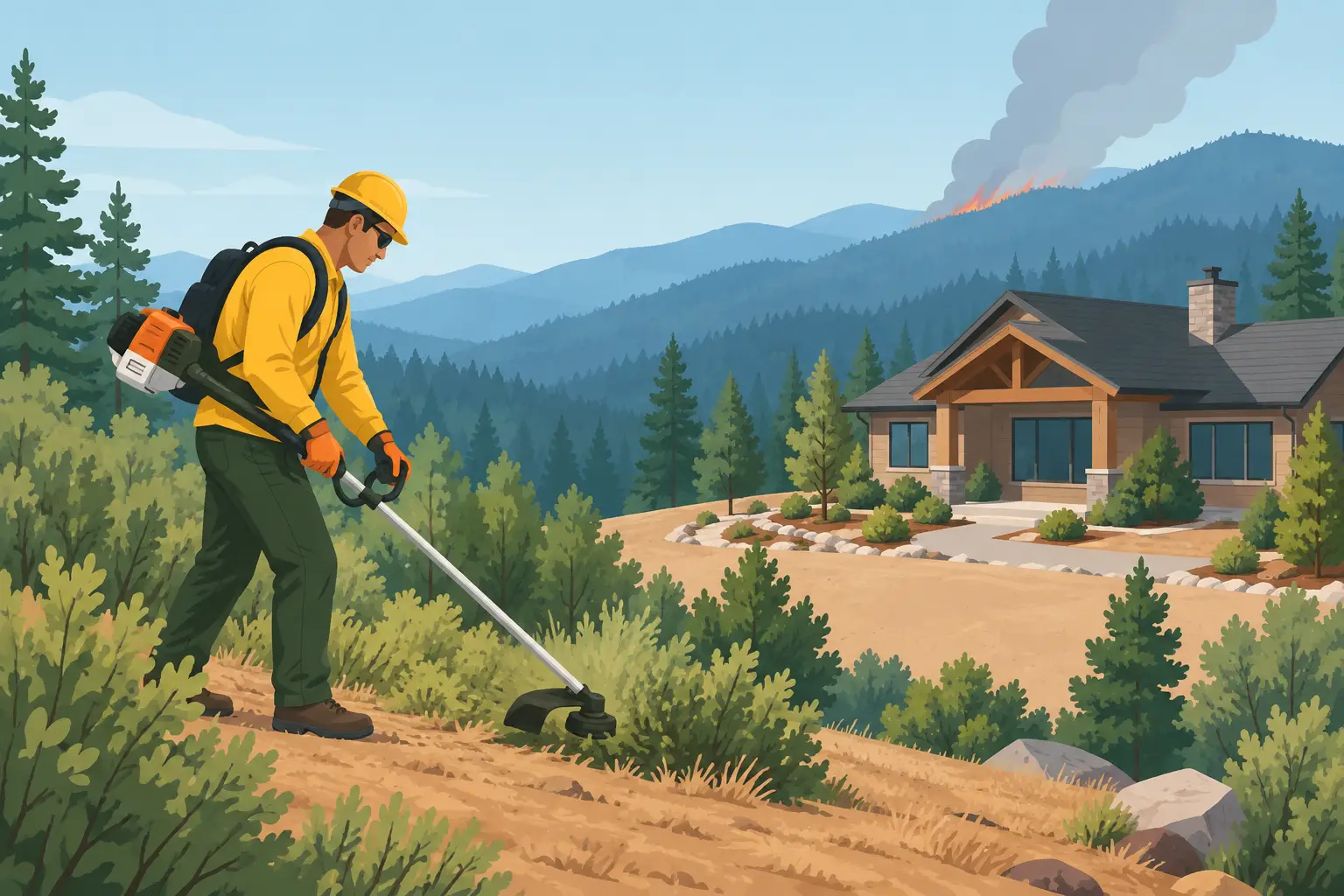
A wind-driven wildfire does not care whether brush has been growing for five years or five months. It looks for dry grass, low limbs, crowded trees, wood piles, and thick vegetation that carry flames toward structures. A wildfire mitigation contractor helps break that path before fire season puts your property to the test.
What a Wildfire Mitigation Contractor Handles
Wildfire mitigation is practical ground work. It is not simply cutting down trees or making a property look cleaner. The job is to identify combustible vegetation, reduce concentrated fuel loads, improve defensible space around buildings, and leave land in a condition that is easier to maintain.
On a Colorado acreage, that may mean forestry mulching dense Gambel oak, clearing scrub brush beneath ponderosa stands, removing ladder fuels, or opening an overgrown driveway so emergency vehicles and equipment can get through. On a smaller residential lot, it may mean clearing vegetation away from a home, outbuildings, fences, propane tanks, and access routes.
The right scope depends on the property. A steep mountain lot with dense conifers needs a different plan than an open parcel along the Front Range with grass, rabbitbrush, and invasive vegetation. Good mitigation work accounts for terrain, slope, prevailing wind exposure, structures, access, fuel type, and how the land will be used after clearing.
The Goal Is to Slow Fire, Not Promise the Impossible
No contractor can make a property fireproof. Wildfire behavior changes fast with wind, drought, topography, and ember exposure. What proper mitigation can do is reduce the vegetation available to burn and improve the odds that flames and embers do not move directly into structures.
Defensible space gives firefighters room to work. It also gives owners a more manageable property. When brush is packed tight against a fence line, stacked beneath tree limbs, or choking a drainage, the risk is visible. So is the maintenance burden.
Forestry mulching is often an efficient answer for brush, small trees, and heavy understory. A high-flow compact track loader with a drum mulcher can process vegetation in place, leaving a mulch layer rather than hauling every piece off site. That can reduce erosion, limit soil disturbance, and turn a tangled area into usable ground quickly.
But mulching is not the answer to every job. Larger trees may require selective removal. Some sites need hand work near structures, rock, utilities, or sensitive features. Material may need to be hauled away when it is too close to buildings or when a clean site is the objective. A capable contractor explains those trade-offs before equipment starts moving.
Where Wildfire Fuels Hide on a Property
Fuel is any material a fire can burn. Property owners often think only about standing trees, but the most urgent hazards are frequently lower to the ground. Fine fuels ignite easily and can carry fire rapidly across a property. Ladder fuels allow surface flames to climb into tree canopies.
Watch for these conditions when assessing your land:
- Dense brush or tall grass growing against structures, decks, fences, or storage areas
- Low branches and understory vegetation connecting ground fuels to tree canopies
- Deadfall, slash piles, old lumber, and accumulated debris in drainage areas or behind outbuildings
- Narrow, overgrown driveways that restrict truck, trailer, or emergency access
- Thick stands of small trees competing for space, moisture, and sunlight
These conditions do not always mean the entire property needs to be cleared. Over-clearing can expose soil, create erosion problems, and strip useful shade or screening. The goal is targeted reduction: create separation between fuels, remove ignition paths, and retain the healthy vegetation that serves the property.
Defensible Space Starts at the Structure
The area nearest a home or building deserves the closest attention. Embers can travel well ahead of a fire front and land in dry vegetation, debris, gutters, wood piles, or gaps around structures. Clearing combustible material near buildings reduces the number of easy ignition points.
From there, mitigation moves outward. Vegetation should be managed in zones, with increasing attention to spacing, pruning, and fuel reduction as the work expands into the surrounding landscape. The exact distances and treatments depend on local guidance, slope, vegetation, and the building itself. Steeper ground can require a wider treatment area because fire tends to move uphill faster.
A wildfire mitigation contractor should walk the site with the property owner and establish priorities. If the budget will not cover the whole parcel at once, start with the home, primary access, outbuildings, and the most heavily loaded fuel corridors. A phased plan is better than waiting for the perfect time to tackle everything.
Access Is Part of Fire Preparedness
A driveway buried under brush is more than an inconvenience. It can limit access for work crews, delivery vehicles, evacuation, and fire response. Low limbs, tight turns, unstable shoulders, ruts, and blocked turnarounds all create operational problems when time matters.
Mitigation work can improve access at the same time it reduces fuels. Clearing brush from road edges improves sightlines. Removing small trees can open a route. Light grading can address rough sections, while targeted clearing creates room for equipment to turn around. For undeveloped land, this work can also prepare a practical route for fencing, utilities, construction, or future site development.
That overlap matters. Property owners get more value when one project improves wildfire readiness and makes the land easier to use year-round.
Questions to Ask Before Hiring a Wildfire Mitigation Contractor
The cheapest bid is not always the best value, especially on rugged ground. Ask what equipment will be used, how the crew will protect structures and utilities, and what the finished site will look like. You should also ask whether the contractor can work safely on your terrain and whether they understand the difference between fuel reduction and indiscriminate clearing.
Get clear answers on material handling. Will brush be mulched, piled, hauled, or burned where permitted? Will the work leave a mulch layer, and how will that layer be managed near structures? Will stumps remain? Are there areas the equipment cannot safely reach? These details affect price, appearance, maintenance, and fire behavior.
A solid contractor also sets expectations about access. Compact track equipment is powerful and versatile, but it still needs a workable entry point, safe travel routes, and room to operate. Wet ground, hidden rock, underground utilities, steep slopes, and tight landscaping can change the plan.
When to Schedule the Work
Do not wait until smoke is visible in the foothills. Spring and early summer are popular times for mitigation because owners want work completed before peak fire conditions. Those schedules can fill quickly, particularly across Douglas, Jefferson, Boulder, El Paso, Park, and mountain communities where fuel reduction is a recurring need.
Fall and winter can also be smart times to tackle larger clearing projects. Cooler conditions may make site work more comfortable, and completing major fuel reduction before spring gives you a head start. Timing still depends on ground conditions, local restrictions, weather, and access.
Yeti Defensible Landworks uses modern forestry mulching and land-clearing equipment to cut through the brush, small trees, and neglected vegetation that turn usable Colorado land into a fuel problem. The work is straightforward: assess the ground, build the plan, clear the hazard, and leave the property in better shape than it was found.
Build a Property You Can Manage
Wildfire mitigation should leave you with more than a cleared view. It should leave you with a property that is safer to maintain, easier to access, and ready for the next job – whether that is a new build, a fence line, better drainage, a usable trail, or simply a home with less fuel at its edge.
Walk your property before the next dry stretch. Look for the brush that connects to your buildings, the low limbs that connect to the brush, and the access routes that need work. Those are the places where disciplined land management starts paying off.
Leave a Reply