Category: Forestry Mulching

  • Does Forestry Mulching Cause Erosion on Slopes?

    Does Forestry Mulching Cause Erosion on Slopes?

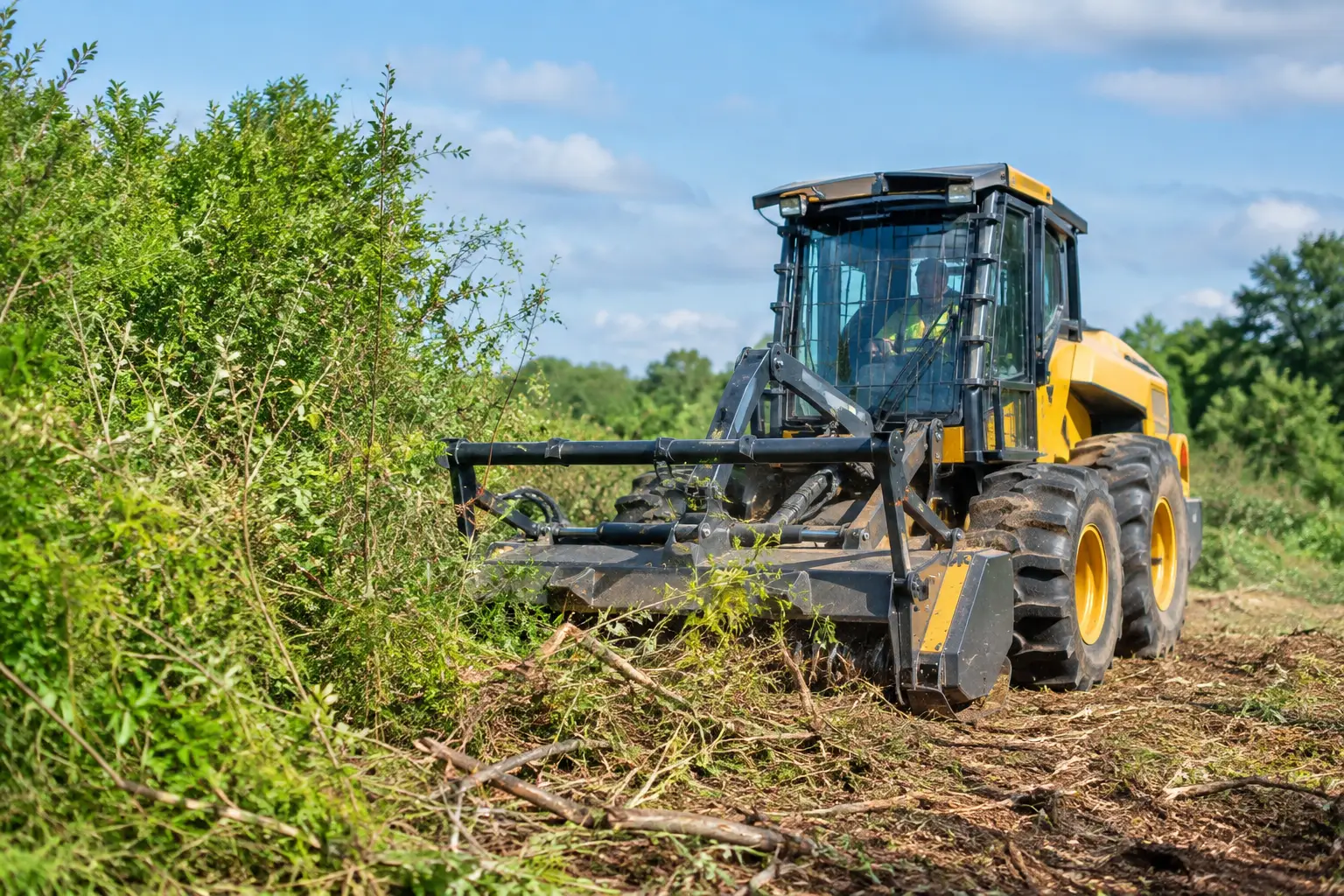
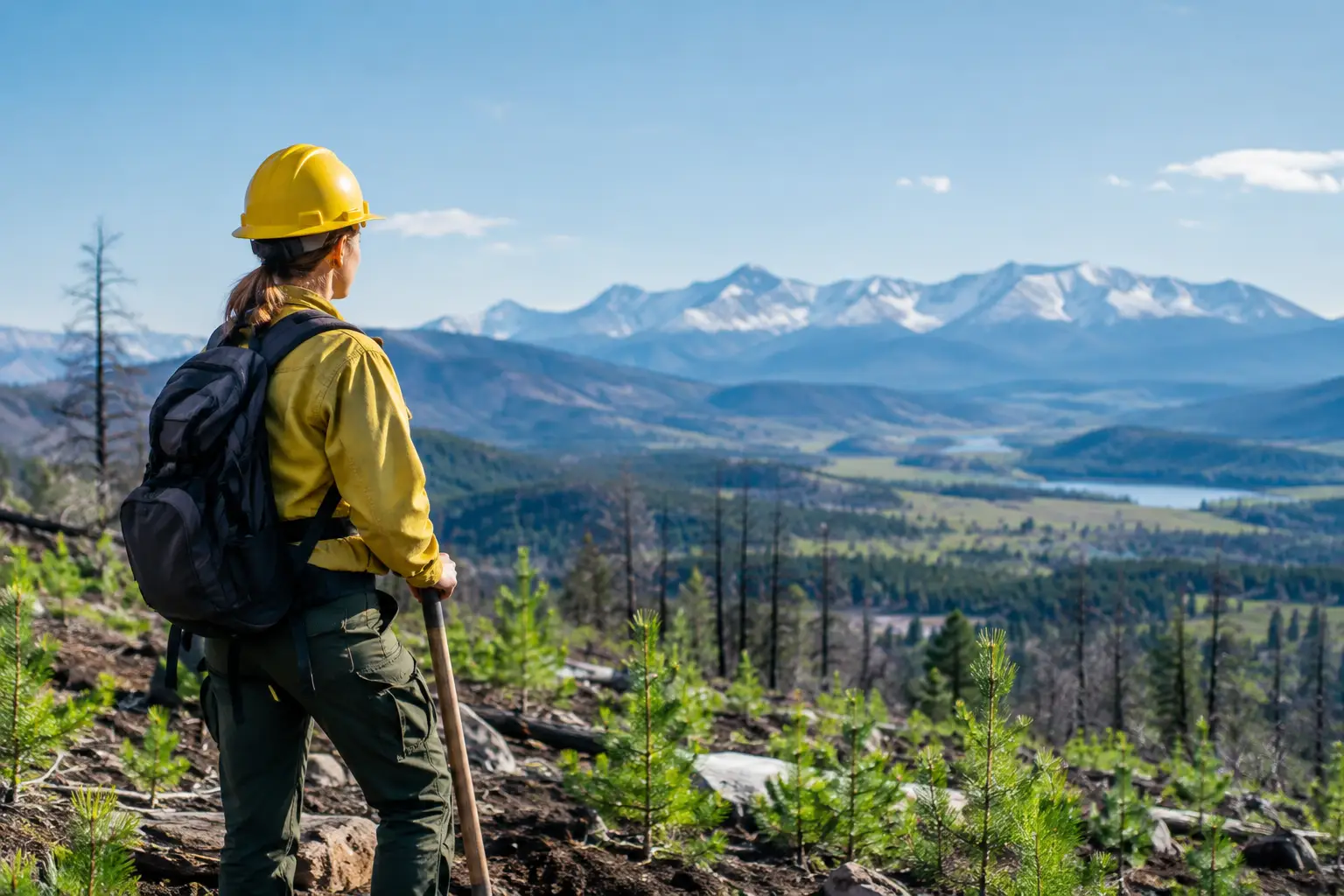
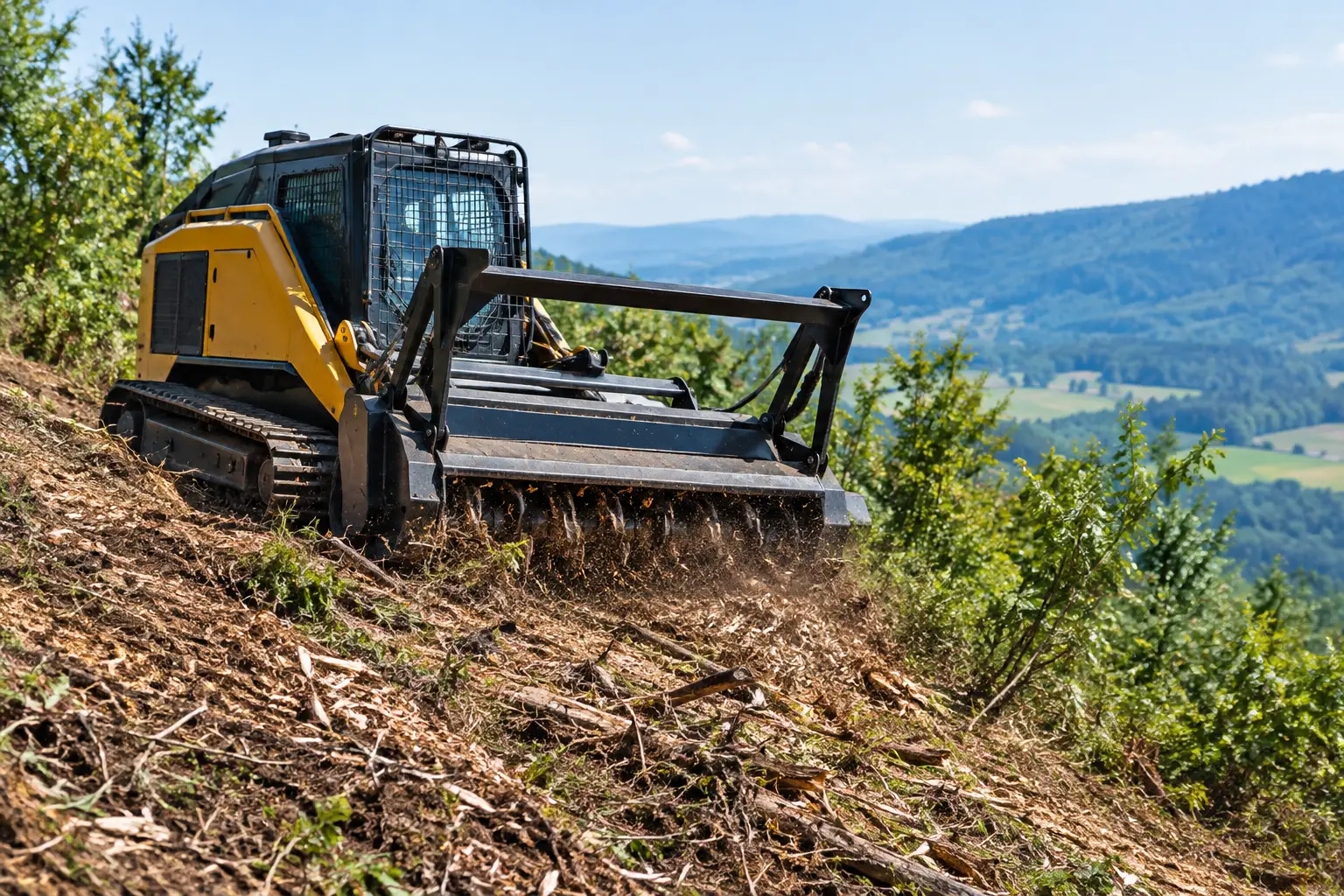
    Does forestry mulching cause erosion? When it is done right, usually no. In fact, forestry mulching can be one of the better ways to clear brush, small trees, and wildfire fuels without leaving Colorado soil bare and exposed. The machine processes vegetation in place, leaving a protective layer of mulch across the ground instead of hauling off debris or pushing everything into burn piles.

    But equipment alone does not prevent erosion. A poorly planned clearing job on a steep, loose, or heavily disturbed site can still create runoff problems. The difference comes down to the slope, soil, drainage, vegetation removed, weather timing, and operator discipline.

    Does Forestry Mulching Cause Erosion? The Straight Answer

    Forestry mulching generally causes less erosion than aggressive clearing methods that strip vegetation and disturb topsoil. A drum mulcher cuts and shreds brush and small trees near ground level. The resulting wood fiber stays on site, covering exposed dirt and helping slow the impact of rain and snowmelt.

    That ground cover matters. Bare soil is vulnerable soil. Once rain starts moving downhill, it can carry fine sediment, cut ruts into access routes, plug drainage paths, and damage lower sections of the property. On Colorado acreage, those issues often show up during intense summer storms or fast spring runoff.

    Mulch helps by softening raindrop impact, holding moisture longer, and slowing water across the surface. It also breaks down over time and adds organic material back into the soil. For defensible-space work, this lets a property owner reduce ladder fuels and overgrown brush without automatically trading wildfire risk for erosion risk.

    The key word is generally. Forestry mulching is not a cure-all for erosion on every property.

    When Forestry Mulching Can Create Erosion Risk

    The biggest concern is not usually the mulch itself. It is site disturbance. Compact track loaders are built to work in rough terrain, but repeated travel can compact soil, especially when the ground is wet. Compacted soil absorbs less water. Instead of soaking in, runoff moves across the surface.

    Steep terrain changes the equation as well. Thick mulch on a moderate slope can help stabilize the ground. On a very steep slope, however, mulch may shift during heavy runoff if it is applied unevenly or if the underlying soil has already been disturbed. Removing too much low vegetation can also expose flow paths that were previously held together by roots.

    Erosion risk increases when a project includes more than mulching. Site preparation may require access improvement, grading, or the removal of larger trees and root systems. Those are valid services when a property needs a usable driveway, building pad, or cleared work area, but they require a different erosion-control plan than brush reduction alone.

    Watch for these conditions before clearing begins:

    • Steep slopes, especially where water already cuts channels after storms
    • Loose decomposed granite, sandy soil, or exposed fill material
    • Drainages, seasonal channels, culverts, and low points that collect runoff
    • Wet or thawing ground that can rut under equipment traffic
    • Areas where full vegetation removal is planned for construction or grading

    A qualified operator should see these conditions before the first pass, not after water starts carrying soil downhill.

    Mulch Protects Soil Only When It Stays Put

    A proper mulch layer is not a uniform carpet laid across every inch of a property. Conditions vary. Dense brush may produce a deeper layer, while open ground may need a lighter pass. The goal is practical ground protection without creating piles that can smother desirable vegetation, block drainage, or become a problem on steep terrain.

    On a defensible-space project, the work should focus on reducing hazardous fuel continuity. That means thinning dense brush, removing ladder fuels, and creating separation between vegetation – not scraping the land clean. Mature, healthy trees may remain. Native grasses and lower-growing plants may remain where they support the soil and do not create an unacceptable fire hazard.

    This selective approach protects more than the view. Roots from retained vegetation help anchor the soil. Natural ground cover slows runoff. Keeping the right plants in the right places reduces the amount of exposed land that needs protection in the first place.

    Drainage Must Be Part of the Clearing Plan

    Water always finds a route. Good land work respects that route instead of forcing water into a new problem area.

    Before mulching, inspect where runoff enters, crosses, and exits the property. Look at existing swales, roadside ditches, culverts, driveways, and natural drainage draws. A cleared access path that sends water straight downhill can turn into a rut after one hard storm. A mulched area that blocks a culvert inlet can create ponding and washouts where they were never expected.

    On larger projects, operators may need to preserve drainage corridors, avoid unnecessary traffic in low areas, and keep mulch from accumulating in channels. If grading is part of the job, the finished surface should shed water in a controlled direction rather than concentrating it against a structure, road, or neighboring parcel.

    For mountain and foothill properties, timing also matters. Working frozen or dry ground can reduce rutting compared with working saturated soil. That does not mean every job must wait for perfect conditions. It means the work plan should match the conditions on the ground.

    Forestry Mulching Versus Dozing and Conventional Clearing

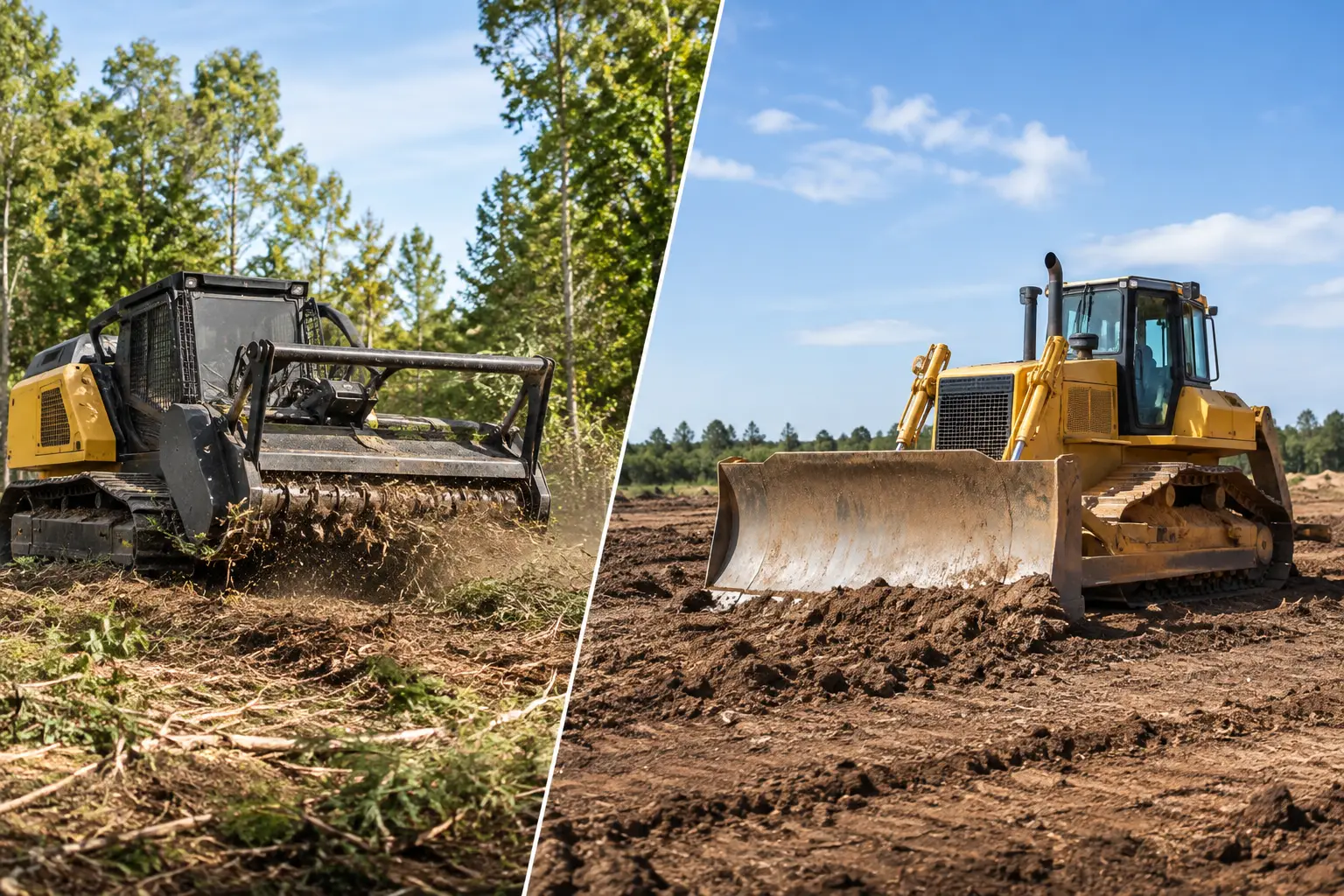
    Compared with bulldozing or heavy root-raking, forestry mulching is typically the lower-disturbance option for brush and small-tree removal. Dozing can remove vegetation, roots, and topsoil in one pass. It has a place in road building, pad construction, and major earthwork, but it exposes soil quickly and often requires follow-up stabilization.

    Forestry mulching leaves root systems largely intact. That matters because roots continue holding soil together after the above-ground fuel has been reduced. There is also less need to burn slash piles or haul vegetative debris away. Fewer disturbed areas and less bare ground usually mean fewer openings for erosion to start.

    Still, do not choose mulching simply because it sounds gentler. Choose it because it fits the objective. If the goal is wildfire mitigation, property cleanup, trail clearing, or reclaiming overgrown acreage, forestry mulching is often a strong fit. If the goal is a level building site or engineered road, clearing may need to be paired with grading, drainage work, and appropriate erosion controls.

    How a Professional Crew Limits Erosion During Mulching

    Good operators work with the terrain. They avoid unnecessary passes, plan travel routes, and keep equipment out of sensitive drainage areas when possible. They do not treat every acre like a flat lot.

    A high-flow compact track loader with a drum mulcher gives a skilled crew the ability to work precisely around trees, structures, fences, rock outcrops, and changing terrain. Precision matters on acreage where one careless turn can rut wet soil or damage a drainage edge.

    The crew should also communicate clearly about the end use of the property. A homeowner preparing for wildfire season needs a different result than a developer preparing access for future construction. A ranch road, a mountain cabin approach, and a commercial site each move water differently. The clearing plan has to reflect that reality.

    After the work, walk the site before the next major storm. Check driveway edges, drainage crossings, steep transitions, and areas where equipment traveled repeatedly. Small issues are easier to correct before they become gullies.

    The Best Result Is Safer Ground That Still Holds Together

    Forestry mulching does not inherently cause erosion. Done with a light touch, sound drainage awareness, and the right equipment, it can reduce wildfire fuels while preserving the soil protection your property already has.

    If your land has steep grades, active runoff, fragile soil, or a mix of clearing and grading needs, do not treat it like a simple brush-cutting job. Build the plan around water first, then clear what needs to go. That is how you end up with safer, cleaner, more usable ground that stays where it belongs.

  • Wildfire Insurance Trends Colorado Owners Face

    Wildfire Insurance Trends Colorado Owners Face

    A Colorado property can look well maintained from the driveway and still raise concerns during an insurer’s wildfire review. Dense brush under ponderosa pines, low limbs over a roofline, a narrow dead-end drive, and years of woody debris can all affect how the property is viewed. Wildfire insurance trends are making that gap between appearance and actual fire exposure harder to ignore.

    For homeowners, ranch owners, and acreage buyers, the question is no longer only, “Can I get insurance?” It is increasingly, “Can I keep the coverage I have, manage the cost, and show that this property is being actively maintained?” The answer depends on the insurer, the location, the home, and the work completed around it.

    Why Wildfire Insurance Trends Are Hitting Colorado Hard

    Colorado has steep terrain, dry fuels, wind-driven fire potential, and growing development along the wildland-urban interface. That puts many mountain, foothill, and rural properties in a difficult category: they offer privacy and views, but they may also sit close to grass, brush, conifers, draws, and undeveloped parcels that can carry fire.

    Insurers have responded with more detailed risk modeling. They are not judging a property only by its ZIP code or a broad county map. Many carriers now consider parcel-level conditions, satellite imagery, historical fire activity, slope, vegetation density, road access, nearby fuel loads, and the distance to fire response resources. Their process is not always visible to the property owner, but it can affect eligibility, renewal terms, deductibles, and premiums.

    That does not mean every wooded property is uninsurable. It means unmanaged fuels carry more weight than they did a few years ago. A home surrounded by dense ladder fuels and deadfall presents a different exposure than a similar home with maintained defensible space, cleared access, and visible separation between vegetation and structures.

    What Insurers Commonly Look At

    Every carrier uses its own underwriting rules, so there is no single inspection checklist that guarantees approval. Still, several conditions repeatedly matter when insurers assess wildfire exposure.

    Fuel loads close to the structure

    Brush, small trees, dry grass, woodpiles, leaf buildup, and dead material near a house can give flames a route to the building. Low branches and dense vegetation beneath mature trees create ladder fuels. Those fuels allow a surface fire to climb into the canopy, increasing heat, embers, and fire intensity around the home.

    The work is practical: remove accumulated brush, thin smaller trees where appropriate, prune limbs away from structures, and create spacing that breaks up continuous fuel. The right scope depends on the terrain, the vegetation type, and local guidance. Clearing everything is rarely the goal. Reducing the pathways fire can use is.

    Access for emergency equipment

    A driveway may work fine for pickups, trailers, and daily traffic but still be a problem for fire apparatus. Tight turns, overhanging limbs, weak culverts, poor turnaround space, and unmarked addresses can slow emergency response.

    Access improvements are not cosmetic. Clearing vegetation back from the drive, improving visibility, creating workable turnarounds, and addressing rough or narrow sections can make a property safer and more usable long before a fire is on the horizon. They can also make a site easier to inspect, maintain, and develop.

    Rooflines, decks, and ember traps

    Wildfire losses often result from windblown embers rather than a wall of flame. Embers collect in gutters, under decks, beside fencing, in roof valleys, and against piles of dry debris. Vegetation that touches or overhangs a structure adds another route for ignition.

    Fuel reduction cannot replace fire-resistant construction details, but it supports them. A clean perimeter around the home and outbuildings gives embers less material to ignite. Property owners should also look at combustible items stored beneath decks, firewood placed against walls, and debris that collects in hard-to-see corners.

    Property maintenance over time

    One cleanup job is not a permanent condition. Grass grows back. Wind drops limbs. Invasive vegetation spreads. New brush fills openings, especially after wet seasons. Insurers and inspectors may see evidence of a past mitigation project, but they also see whether the property has been maintained.

    Build the work into the property calendar. Walk the home zone after winter, again before peak fire season, and after major wind events. Keep photos and invoices for completed work. Documentation may not change an insurer’s decision, but it can help demonstrate responsible upkeep if questions arise.

    What Fuel Reduction Can and Cannot Do

    Defensible-space work is one of the clearest actions a property owner can control. Forestry mulching, brush removal, small-tree thinning, cleanup of downed material, and access clearing reduce available wildfire fuel and improve the working condition of the land. On rough Colorado ground, equipment matters. A high-flow compact track loader with a drum mulcher can process brush and smaller trees efficiently while limiting the need to haul every piece of material off-site.

    But it is worth being direct about the trade-off: mitigation is not an insurance policy, and it does not guarantee lower premiums, policy renewal, or coverage from a specific carrier. A property can be well maintained and still face limited options because of regional fire risk, market conditions, rebuilding costs, or a carrier’s broader business decisions.

    The opposite is also true. Waiting for an insurance issue before addressing heavy fuels puts the owner in a weaker position. Work performed after a nonrenewal notice may still be valuable, but it can be harder to schedule, harder to document under a deadline, and more expensive when every nearby property is trying to complete the same work.

    A Better Way to Prepare Before Renewal Season

    Start with a field-level look at the property, not a view from the kitchen window. Walk the structure perimeter, then work outward. Look for continuous brush, limbs that reach toward the roof, dead standing material, downed wood, grass that can carry fire, and drives that would be difficult for large equipment to use.

    Next, separate what requires routine homeowner maintenance from what requires heavy equipment and experienced execution. Raking pine needles and moving a woodpile are manageable tasks. Dense stands of brush, steep ground, neglected acreage, overgrown access routes, and large volumes of woody material usually call for a planned machine-based approach.

    Then prioritize the work that protects the structure and access first. The house, garage, sheds, propane areas, drive, and evacuation route deserve attention before distant portions of the parcel. Once those critical areas are handled, property owners can expand fuel reduction into broader acreage, fence lines, building pads, and perimeter zones.

    This approach also helps control the budget. A full-property clearing project may be the right move for a development site or heavily overgrown acreage. For an established residence, a phased plan may make more sense: secure the immediate home zone, open access, then tackle larger fuel pockets as conditions and budget allow.

    Questions to Ask Your Agent and Carrier

    Insurance conversations go better when the property owner has specific questions. Ask whether the carrier has any wildfire inspection requirements, whether it uses third-party property data, and whether it accepts updated mitigation information after an inspection. Ask about deductible structure, roof requirements, and whether access or vegetation conditions were noted during underwriting.

    Do not assume a state, county, HOA, or fire district recommendation is identical to an insurer’s underwriting standard. They may overlap, but they serve different purposes. Local mitigation guidance is designed to reduce real-world fire exposure. An insurer’s model is designed to price and manage risk. Both are worth understanding.

    If coverage becomes difficult to place, work with a qualified Colorado insurance professional who can explain available options and deadlines. Keep your focus on the land conditions you can improve while you evaluate coverage choices.

    The Work Is Bigger Than a Renewal Notice

    The strongest reason to reduce wildfire fuels is not a discount that may or may not appear. It is the chance to give your home, family, neighbors, and responding firefighters a better operating environment when conditions turn bad.

    A cleared, maintained property is easier to inspect, easier to access, and easier to use. It can protect views, open future building areas, reduce invasive growth, and turn neglected ground into manageable land. That is a practical return whether an insurer ever sees the before-and-after photos or not.

    Before the next renewal notice lands in the mailbox, walk your property with a hard eye. Identify the brush, small trees, dead material, and access problems that are building risk. Then make a plan to clear, mulch, grade, and protect the ground you own.

  • Forestry Mulching vs Bulldozing for Your Land

    Forestry Mulching vs Bulldozing for Your Land

    A dozer can make a dramatic change fast. It can also leave a property scraped, compacted, and ready for erosion if the job does not call for full-scale earthmoving. That is the real decision behind forestry mulching vs bulldozing: are you managing vegetation and wildfire fuels, or are you rebuilding the ground for construction?

    Both methods have a place on Colorado properties. The right one depends on your end use, terrain, soil conditions, vegetation, access, and what needs to happen after the clearing is complete. Choose the wrong approach, and you can spend more money repairing ground that did not need to be disturbed in the first place.

    Forestry Mulching vs Bulldozing: The Core Difference

    Forestry mulching cuts and processes brush, small trees, invasive vegetation, and downed material with a mulching head. The material is left on site as a layer of chips and shredded organic matter. A high-flow compact track loader with a drum mulcher can work through dense growth while keeping the machine’s footprint relatively controlled.

    Bulldozing pushes, uproots, strips, and relocates material. It is built for force. A dozer can remove larger trees, pull root systems, cut rough roads, reshape slopes, push fill, and prepare a site for excavation or building. It usually creates piles, windrows, or hauled material that must be burned, chipped, buried, or removed.

    Neither method is automatically better. Forestry mulching is often the cleaner answer for vegetation management. Bulldozing is often the necessary answer when the ground itself must change.

    When Forestry Mulching Is the Better Tool

    Forestry mulching works best when your goal is to reduce fuels, improve access, reclaim overgrown ground, or create defensible space without tearing up the soil. It is a strong fit for rural homes, mountain properties, acreage, fence lines, trails, and lots covered in brush and small-diameter trees.

    The biggest advantage is that mulching treats vegetation at ground level without ripping out every root. Existing root systems help hold soil in place. That matters on Colorado slopes, decomposed granite, dry ground, and properties exposed to spring runoff or summer storms. Instead of bare dirt, the finished area has a mulch layer that can help slow moisture loss, reduce splash erosion, and limit immediate weed pressure.

    For wildfire mitigation, mulching can quickly break up continuous brush and ladder fuels. It reduces the vegetation that can carry fire from the ground into lower tree limbs. Done with a property-specific plan, it improves defensible space while preserving the mature trees and natural character worth keeping.

    Mulching also avoids the pile problem. When material is processed where it stands, there are no large burn piles waiting through permit restrictions, weather windows, or fire-season limitations. That can keep a project moving and leave the site cleaner at the end of the day.

    It is especially practical when a property needs to remain usable during the work. A track loader can often navigate tighter access, work around selected trees, and clear sections in a controlled pattern. That is valuable for homesites, outbuildings, utility corridors, and properties where broad dozer passes would be excessive.

    What Mulching Does Not Do

    Forestry mulching is not grading. It will not create a building pad, remove major stumps below grade, install drainage, or correct a slope that sends water toward a structure. It also has limits on tree size, rock exposure, and terrain. Large timber, heavy deadfall, buried debris, thick root balls, and severe rock can require other equipment or a combined approach.

    A mulched property still needs maintenance. Regrowth happens. Seeds remain in the soil, and many brush species resprout. The advantage is that follow-up maintenance is usually easier and less disruptive than starting over after years of unchecked growth.

    When Bulldozing Is the Right Call

    Bulldozing earns its place when the project requires dirt work, not just vegetation work. If you are building a driveway, creating a level homesite, cutting in an access road, removing substantial stumps, reshaping a drainage path, or preparing for foundations and utilities, a dozer may be the right machine.

    A dozer can move material with purpose. It can establish grade, build a road base area, push unsuitable material aside, and provide the broad site changes a future construction project needs. For a heavily neglected parcel headed toward development, that capability can be more valuable than preserving the existing vegetation layer.

    It is also better suited to large trees that need to be fully removed rather than cut down and mulched in place. If roots, stumps, and woody debris would interfere with excavation, concrete, utilities, or road construction, leaving them in the ground is not an option.

    But bulldozing comes with consequences. Uprooting vegetation exposes soil. Heavy passes can compact it. On slopes, stripped ground can shed water quickly and create erosion issues before a stabilization plan is in place. The disturbed material also has to go somewhere. Piles need a disposal strategy, and that strategy affects schedule, cost, permitting, and fire safety.

    That does not make bulldozing a bad choice. It means the work should be intentional. A dozer is a site-preparation tool, not a default answer for every brush-choked property.

    Soil, Slope, and Water Change the Decision

    Colorado ground is rarely simple. One parcel may include flat pasture, rocky draws, steep timbered sections, and a drainage crossing. The clearing method should match each area rather than forcing one machine across the entire property.

    On steep or erosion-prone ground, forestry mulching is often the lower-impact option because it preserves more surface protection. On flatter ground where a road, pad, or drainage improvement is planned, selective dozing may be justified. The key word is selective. Clearing only the area needed for construction keeps unnecessary disturbance off the rest of the property.

    Water is another deciding factor. If a site has seasonal drainage, poor runoff patterns, or erosion scars, do not treat clearing as separate from grading. Removing vegetation can change how water moves. Any project involving earthmoving should account for drainage before equipment starts pushing soil.

    Consider the Finish Line, Not Just the First Day

    Many property owners compare methods by looking only at the clearing price. A better comparison looks at what the ground must do when the equipment leaves.

    If the finish line is a safer, more manageable property with reduced wildfire fuels, mulching is often the more efficient path. It creates a visible change without turning the property into a dirt project. If the finish line is a road, pad, utility route, or developed site, bulldozing and grading may be part of the necessary sequence.

    There is also a middle ground. A smart project may use forestry mulching across the defensible-space zone, around retained trees, along fences, and on slopes. Then it may use dozing or grading only where access roads, turnaround areas, building pads, or drainage features require it. This approach controls disturbance while still preparing the property for real use.

    Questions to Ask Before You Choose

    Start with the outcome. Do you need to reduce brush and small trees, or do you need a level surface for construction? Are there mature trees worth protecting? Is the area steep, rocky, wet, or prone to erosion? Will the material stay on site as mulch, or must it be removed? Do permits, HOA rules, burn restrictions, or utility locations affect the work?

    Also consider access. A machine may be capable of the work but unable to reach the work area without first improving a gate, driveway, crossing, or trail. Tight mountain lots and remote acreage often require a plan that accounts for equipment transport, staging, and safe operating room.

    For Colorado landowners, wildfire risk should stay in the conversation. A clean-looking property is not automatically a fire-resilient one. Effective mitigation focuses on fuel spacing, ladder-fuel removal, access for emergency response, and defensible zones around structures. It does not mean clearing every tree or scraping every acre bare.

    Put the Right Machine on the Right Ground

    Forestry mulching is typically the better choice for controlled vegetation removal, fuel reduction, and lower-impact land cleanup. Bulldozing is the better choice when roots, soil, grade, and construction access need to change. The best projects often use both methods with clear boundaries and a defined end goal.

    Yeti Defensible Landworks evaluates the ground before recommending the work. That means looking past the brush line to the slope, soil, access, future use, and wildfire exposure. Walk your property with the finish line in mind, then choose the method that leaves you with safer, usable ground instead of a bigger problem to solve.

  • 8 Clear Signs Your Property Needs Clearing Now

    8 Clear Signs Your Property Needs Clearing Now

    A property rarely becomes a problem overnight. Brush thickens one season at a time. Deadfall stacks up after wind and snow. Volunteer trees crowd roads, fences, and structures until a once-manageable lot becomes hard to inspect, hard to use, and harder to protect. Knowing the signs your property needs clearing gives you time to act before fire season, construction schedules, or access problems force the issue.

    For Colorado owners, clearing is not about stripping land bare. The right work removes problem vegetation, reduces hazardous fuels, opens usable ground, and leaves a property more manageable than it was before.

    1. Brush Is Building Up Against Structures

    Dense brush, low branches, volunteer trees, and dry grass near a home, garage, shop, or outbuilding create a direct path for fire. On mountain, foothill, and rural properties, that fuel can carry flames toward structures quickly when wind is moving.

    Look closely at the ground around buildings, decks, propane tanks, fences, and utility equipment. If brush is touching structures, growing under decks, or forming a continuous layer from the ground into tree limbs, your defensible space needs attention. The goal is not to remove every tree. It is to break up fuel continuity so a surface fire has less material to burn and less opportunity to climb.

    This matters most before wildfire season, but mitigation work is valuable whenever conditions allow. Waiting until smoke is already in the air can limit scheduling and leave you with fewer good options.

    2. Deadfall and Dry Vegetation Are Piling Up

    Dead branches, downed trees, dry weeds, pine needles, and old slash are more than an eyesore. They are concentrated wildfire fuel. They also make it difficult to see what is happening on the ground, including erosion, fence damage, pests, or new invasive growth.

    A few scattered branches may be a cleanup job. A layer of dead material spread across acreage, wooded lots, drainage areas, or fence lines is a larger land-management issue. Heavy accumulations can make a fire burn hotter and longer, especially where brush and small trees have filled in around mature timber.

    Forestry mulching can be a practical fit for many of these conditions. A drum mulcher processes brush and small trees on site, turning standing and accumulated vegetation into mulch rather than creating large burn piles or hauling every piece away. Conditions matter, though. Large logs, hazardous trees, steep slopes, and sensitive areas may require a different approach or additional work.

    3. You Cannot Reliably Reach Parts of Your Land

    If you cannot drive, walk, inspect, or maintain key areas of your property, the land is telling you something. Overgrown access roads, narrow driveways, brush-covered trails, and trees crowding a gate can delay routine work and create real trouble during an emergency.

    Clear access matters for homeowners, ranch operators, contractors, utility crews, and first responders. It also matters when you need to move equipment onto the site for repairs, fencing, excavation, septic work, or a future build. A route that barely handles a pickup may not support the trucks and machinery needed for a larger project.

    Clearing access is not simply cutting back whatever is visible from the road. It may involve removing brush, addressing small trees, widening tight turns, improving sightlines, and grading rough sections so the route is usable in changing weather. The right scope depends on how the road will be used and what equipment must get through.

    4. Small Trees Are Taking Over Open Ground

    Colorado acreage can change fast when volunteer pine, juniper, scrub oak, or other young growth starts filling in open areas. What once looked like a meadow, building site, pasture edge, or utility corridor can become a dense stand of small stems in a few years.

    That growth competes with desirable vegetation, limits visibility, and adds ladder fuels beneath larger trees. It can also reduce the usable footprint of the property. For owners planning a barn, shop, driveway, home addition, or recreational area, clearing the site early keeps options open.

    There is a trade-off. Young trees are not automatically bad. Some provide screening, shade, habitat, or wind protection. The question is whether they are growing where they serve the property or where they create risk and restrict use. A disciplined clearing plan keeps what has value and removes what does not.

    5. Invasive or Aggressive Vegetation Keeps Spreading

    When one patch of unwanted vegetation turns into several, waiting usually makes the job more expensive. Invasives and aggressive brush can crowd out grasses, reduce access, choke drainage paths, and reclaim cleared areas if they are not addressed.

    The warning signs are simple: growth is expanding across a slope, appearing along roads and fence lines, pushing into open ground, or returning thicker after light cutting. Mowing may temporarily improve appearance, but it often does not solve woody regrowth or deep-rooted plants.

    Mechanical clearing can reset the site and make follow-up management easier. It is not a permanent cure by itself. Depending on the species, soil conditions, and intended use of the land, you may still need monitoring, reseeding, targeted treatment, grazing management, or periodic maintenance. The best time to build that plan is before the problem covers several acres.

    6. Your Lot Is Not Ready for Its Next Use

    A raw or neglected parcel is not automatically ready for construction. Brush, stumps, uneven ground, concealed debris, and poor access can slow surveying, utility work, foundation preparation, and material deliveries. The same applies to smaller projects such as a shed pad, parking area, livestock shelter, or expanded driveway.

    If you are planning to break ground, clearing should happen with the next phase in mind. A contractor needs to know where structures, roads, drainage, utility routes, and staging areas will go. Clearing too broadly wastes money. Clearing too lightly can force another mobilization when site crews discover obstacles later.

    This is where equipment capability matters. Compact track loaders can work effectively across rough ground while applying enough power for brush removal, forestry mulching, grading, and site shaping. A well-prepared site gives the next contractor clean access and a clearer starting point.

    7. Fences, Utilities, and Drainage Are Hidden or Damaged

    Vegetation can hide expensive problems. Brush against a fence invites rot, sagging wire, and difficult repairs. Trees near overhead lines, utility boxes, or service routes create maintenance and safety concerns. Thick growth in swales, culverts, and drainage channels can redirect water where you do not want it.

    Do not treat this as cosmetic work. A blocked drainage route can contribute to erosion, washouts, and damage around drives or foundations. A buried fence line can make it difficult to manage livestock or define property boundaries. Clearing around these features gives you visibility and room to maintain them.

    Before machinery starts, identify utilities, irrigation components, septic features, markers, and boundaries. Good clearing is precise. It protects the infrastructure that must stay while removing the vegetation working against it.

    8. The Property Feels Like a Fire Risk You Cannot Manage

    Sometimes the clearest sign is practical: you look across the property and know you could not maintain it safely with hand tools, a chainsaw, or a weekend of hauling brush. That is not a failure. It is a scope problem.

    Steep terrain, thick stands of small trees, dense brush, heavy fuel loads, and remote corners of acreage demand the right machine, operator, and work plan. Trying to clear beyond your equipment or experience can lead to injury, equipment damage, unstable piles, and incomplete mitigation.

    A professional assessment should focus on outcomes: which fuels need to go, which trees should remain, how access will improve, where mulch can stay, and what ground needs grading or restoration afterward. For properties across Colorado’s Front Range, mountain communities, and rural counties, that plan should also account for terrain, seasonal conditions, and the actual use of the land.

    What to Do When You See These Signs

    Start by walking the property with a purpose. Photograph dense areas, mark blocked access points, note structures and utilities, and identify what you want the land to do when the work is complete. Safer defensible space, a build-ready pad, a drivable access route, open pasture edge, and cleaner views all require different scopes.

    Then get clear on priorities. If wildfire fuels are close to structures, address that first. If a project is waiting on site access, focus on the route and work area. If the entire property is overgrown, phase the work so the highest-risk and highest-use areas are handled first.

    Yeti Defensible Landworks brings equipment-forward clearing, forestry mulching, access improvement, grading, and wildfire-mitigation work to difficult Colorado ground. The right time to clear is while you still have room to plan the job on your terms. Walk the land this week, identify the area causing the most risk or frustration, and put a practical scope behind it.

  • Home Ignition Zone Work Across 0-5, 5-30, and 30-100+ Ft

    Home Ignition Zone Work Across 0-5, 5-30, and 30-100+ Ft

    A wildfire does not need a wall of flame to damage a home. Wind-driven embers can travel well ahead of the main fire, land in dry needles or leaf litter, and ignite the materials closest to your structure. That is why home ignition zone (HIZ) and defensible-space work across the 0-5 ft, 5-30 ft, and 30-100+ ft zones matters. The goal is straightforward: remove or reduce the fuel paths that let embers, flames, and radiant heat turn a vegetation fire into a structure fire.

    For Colorado property owners, this is not a one-time weekend cleanup. It is a practical land-management plan shaped by slope, vegetation density, access, roof materials, nearby structures, and how wildfire can approach the property. Start closest to the home. Then work outward with purpose.

    The Home Ignition Zone Starts at the Structure

    The home ignition zone is the area around a house or other building where conditions directly affect whether it ignites during a wildfire. Defensible space is the work performed within that area to reduce hazardous fuel and slow fire behavior.

    A properly maintained HIZ does not mean stripping every acre bare. It means breaking up continuous vegetation, removing combustible material where it creates the most risk, and keeping fire from having an easy route to the building.

    The three-zone framework provides a working map. The immediate zone, from 0 to 5 feet, should be the most hardened and least combustible. The intermediate zone, from 5 to 30 feet, needs spacing and fuel reduction. The extended zone, from 30 to 100 feet and beyond, focuses on managing heavier fuels, dense brush, ladder fuels, and fire pathways across the larger property.

    Exact requirements can vary by county, HOA, insurance carrier, and local fire authority. Terrain changes the plan too. A home below a steep, brush-covered slope may need more aggressive treatment uphill because fire moves faster and burns harder as it climbs. The zone distances are a solid starting point, not a substitute for site-specific judgment.

    0-5 Feet: Build a Noncombustible Buffer

    The first five feet around the house is the most critical section of the property. This is where a small ember ignition can become a direct threat to siding, decks, doors, windows, and the roof edge.

    Keep this band clean, low-fuel, and preferably noncombustible. Gravel, rock, pavers, concrete, and other hardscape materials are generally better choices than bark, pine needles, wood mulch, or dry groundcover next to the structure. Remove accumulated leaves, cones, needles, dead grass, stored lumber, cardboard, and other burnable material from this area.

    Pay attention to what touches the home. Firewood stacks, propane storage, patio furniture with combustible cushions, trash bins, planters, and decorative wood features can all create an ember-catching problem when placed against a wall or beneath a deck. Move them well away from the structure when conditions allow.

    Vegetation needs the same discipline. Avoid shrubs and small trees directly below windows, vents, eaves, or deck edges. Do not let branches touch siding, roofing, or the chimney. If a deck is low to the ground, clear needles, leaves, and stored material from underneath it. Screened vents, clean gutters, and roof maintenance are also part of the home ignition zone, even though they are not land-clearing tasks.

    This zone is not where aggressive mulching belongs. A drum mulcher is valuable farther out on the property, but piling woody mulch next to a house can create the exact fuel bed you are trying to eliminate. The immediate zone calls for detail work, cleanup, and hardscape-minded decisions.

    5-30 Feet: Create Space Between Fuels

    From 5 to 30 feet, the job shifts from noncombustible separation to vegetation management. The objective is to reduce fuel continuity so fire has less opportunity to build intensity near the home.

    Start by removing dead brush, fallen limbs, dry grass buildup, and dense clumps of shrubs. Thin small trees where crowns are crowded and prune lower limbs to reduce ladder fuels. Ladder fuels are low vegetation and branches that allow a surface fire to climb into tree canopies, where it becomes much harder to control.

    Spacing matters more than making every section look identical. A healthy mature tree may remain valuable. The brush packed beneath it, the dead limbs at its base, and the young trees growing tightly into its canopy are usually the problem. Keep plants separated both horizontally and vertically so flames do not move easily from ground fuels to shrubs, shrubs to branches, and branches to the roofline.

    This is often where equipment-based work delivers the biggest visual and safety improvement. Forestry mulching can process brush, small trees, and invasive growth quickly across difficult terrain. It leaves material processed close to the ground rather than creating large slash piles that need separate disposal. But mulch depth and placement still matter. Avoid creating deep woody fuel accumulations near structures, and do not treat mechanical clearing as a set-it-and-forget-it solution.

    For many Colorado acreage properties, the right result is selective thinning, not clear-cutting. You want cleaner sightlines, better access, healthier spacing, and reduced wildfire fuel without turning the land into exposed dirt. Overclearing can increase erosion, damage desirable vegetation, and create a maintenance problem of its own.

    30-100+ Feet: Reduce the Fire’s Run

    The extended zone is where property-scale planning takes over. From 30 to 100 feet and beyond, focus on reducing the intensity and spread potential of a fire before it reaches the closer zones.

    Look for continuous brush fields, dense stands of small trees, dead and down timber, unmanaged fence lines, overgrown draws, and vegetation stacked along driveways or access roads. These areas can carry fire across the property and restrict firefighter access when minutes matter.

    Treatment may include thinning dense young growth, removing dead trees where practical, cutting back brush corridors, pruning selected trees, and reducing heavy accumulations of woody debris. On larger lots, break the property into manageable sections rather than treating every acre the same. South-facing slopes may dry faster. Drainages can hold dense vegetation. Ridges and steep uphill approaches may need extra attention because wind and topography can drive fire behavior.

    Access belongs in this zone too. A narrow, brush-choked driveway can limit evacuation and make it difficult for fire apparatus, crews, or land-service equipment to reach the work area. Clearing encroaching vegetation, improving turnarounds, and keeping access routes usable can serve both wildfire mitigation and daily property function.

    This is where a high-flow compact track loader and drum mulcher can cover ground that hand crews cannot efficiently tackle. Rugged equipment can work through thick brush, small-diameter trees, invasive vegetation, and uneven Colorado terrain while keeping the project moving. The best approach still depends on the site. Steep ground, fragile soils, large timber, rock, drainage features, and protected vegetation may require a slower, more selective method.

    Defensible Space Needs Ongoing Maintenance

    A cleaned property can build hazardous fuel again faster than most owners expect. Wind drops needles. Grass cures out. Shrubs regrow. Storms bring down limbs. New seedlings fill the gaps left by thinning.

    Walk the immediate zone regularly, especially before wildfire season and after high-wind events. Keep gutters and roof valleys clear. Remove fresh debris from beneath decks and around outbuildings. In the outer zones, schedule seasonal maintenance based on how quickly vegetation grows and how much material your property collects.

    Do not overlook secondary structures. Sheds, barns, detached garages, wood fences, propane tanks, and stacked materials can all become ignition points or fuel bridges. A wood fence connected directly to the house deserves special attention because it can carry flame straight to the structure. Break that connection with a noncombustible gate section or material transition when feasible.

    Put the Work in the Right Order

    If your property is overgrown, start at the building and work out. Clear the 0-5 foot zone first. Address dense vegetation, dead material, and ladder fuels in the 5-30 foot zone next. Then build a larger treatment plan for the 30-100+ foot zone, access routes, slopes, and unmanaged acreage.

    For a property with heavy brush, small trees, or difficult terrain, professional equipment can turn a stalled project into a usable, safer landscape. Yeti Defensible Landworks helps Colorado landowners clear, mulch, improve access, and reduce wildfire fuels with a disciplined, site-focused approach.

    The best time to create separation between your home and wildfire fuel is before smoke is in the air. Walk the first five feet around your structure this week. What is touching the house, collecting dry debris, or waiting for an ember to find it?

  • Ouray County 2025 Colorado Wildfire Resiliency Code

    Ouray County 2025 Colorado Wildfire Resiliency Code

    A steep driveway, thick gambel oak, deadfall below a deck, and one narrow way out can turn a beautiful Ouray County property into a hard wildfire problem. The Ouray County 2025 Colorado Wildfire Resiliency Code puts more attention on how new construction and certain projects perform in wildfire-prone areas. For owners, the practical question is simple: what needs to change on the ground before you build, remodel, or improve access?

    This is not just a paperwork issue. Fire behavior is affected by the conditions around a structure: vegetation density, surface fuels, ember traps, access, slope, and maintenance. A clean, workable property gives you more options when it is time to build, insure, sell, evacuate, or defend what you own.

    What the 2025 wildfire resiliency code means in Ouray County

    Colorado’s wildfire resiliency code establishes construction and site standards intended to reduce losses in areas exposed to wildfire. Local implementation matters. The applicable wildfire hazard area, adopted amendments, permit triggers, and inspection process can vary by jurisdiction and project type.

    That means property owners should not treat a general online checklist as a permit answer. Before ordering materials or starting site work, confirm the current requirements with the authority having jurisdiction. Ask whether the parcel is in a designated wildland-urban interface area, whether your work requires a permit, and which code version and local amendments apply.

    The code conversation often centers on building materials and details that resist embers and direct flame exposure. But site conditions matter too. If dense brush and small trees press close to the building envelope, the land can continue feeding fire even when the structure itself has better protection.

    For many mountain parcels, the work starts before framing. Clear access. Reduce vegetation that can carry flames. Remove piled slash and dead material. Create room for crews and equipment to work safely. Those are practical property improvements whether the project is a new cabin, an addition, a shop, or a long-overdue cleanup.

    Code compliance and defensible space are not the same job

    A wildfire-resilient building code and defensible-space work overlap, but they are not interchangeable. The code may govern a construction project. Defensible space is the managed area around a structure where fuels are reduced and vegetation is maintained to slow fire and limit ember ignition opportunities.

    One does not automatically satisfy the other. A new home may meet required construction details but still sit behind unmanaged brush, low limbs, and unmaintained deadfall. An existing home may have well-managed vegetation but need different construction upgrades if a major renovation triggers code review.

    That distinction matters in Ouray County, where terrain can be steep, lots can be irregular, and vegetation may change dramatically across a single parcel. A flat, open bench near a home and a timbered draw below it should not be treated the same way. The goal is not to strip a property bare. The goal is to manage fuels with the structure, slope, prevailing conditions, and access route in mind.

    The ground conditions owners should address first

    Start with the areas where fire can gain intensity and where people need to move. On a rugged property, that usually means the driveway, the immediate area around buildings, and the vegetation that connects wildland fuels to the home.

    Access has to work under pressure

    A scenic driveway can become a bottleneck when emergency vehicles need in and residents need out. Low branches, encroaching brush, unstable shoulders, tight turns, and poor visibility all make a difficult situation worse.

    Access improvement may involve clearing vegetation along the route, widening usable travel areas where appropriate, improving turnarounds, addressing drainage, and removing obstacles that limit equipment movement. The exact requirements for a project depend on the site and the local authority, but clear access is never wasted work.

    Do not assume that a track wide enough for a pickup is suitable for a fire apparatus or construction equipment. Walk the route with the whole job in mind: delivery trucks, excavation equipment, emergency access, and evacuation. If a gate, bridge, switchback, or soft section controls the route, deal with it early.

    Break up fuel continuity

    Wildfire spreads through continuous fuel. Grass can carry flame to brush. Brush can carry flame into low branches. Low branches can move fire into tree crowns. Dead limbs, downed material, and neglected piles add more heat and longer burn time.

    The answer is targeted reduction, not random clearing. Remove accumulated dead material. Treat dense brush and small-diameter trees that connect fuel layers. Lift or remove lower limbs where appropriate. Reduce vegetation near structures and beneath decks. Keep mulch, firewood, lumber, propane areas, and other combustible storage away from the home according to applicable guidance and local requirements.

    Forestry mulching can be a strong tool on suitable ground because it processes brush and small trees efficiently while leaving a manageable layer of material on the soil. It is not a universal answer. Heavy mulch placed too close to a structure, untreated large dead material, or a site with poor drainage may need a different approach. Good mitigation matches the method to the fuel, terrain, and intended use of the land.

    Treat slopes and draws with respect

    Fire can move faster uphill, and terrain channels wind and heat. A vegetated drainage below a structure, a steep hillside behind a garage, or a brush-filled saddle can deserve more attention than an open area with the same acreage.

    This is where a one-size-fits-all distance can fail. The needed work depends on fuel type, slope, surrounding vegetation, and the structure’s exposure. A capable field assessment looks at how fire could approach the building, where embers may collect, and whether equipment can safely reach the work area without tearing up the property.

    When to plan vegetation work around your project

    The cheapest time to solve access and fuel problems is usually before the site gets crowded. Once foundations, utility trenches, finished driveways, and landscaping are in place, heavy equipment has less room to operate and more things to protect.

    For a new build, handle major clearing, access preparation, and rough grading early in the site plan. Mark trees worth retaining, identify drainage paths, and establish material staging before equipment starts moving. This keeps the property usable while reducing unnecessary disturbance.

    For a remodel or addition, inspect the conditions around the existing structure before construction begins. Contractors need room to work. Temporary materials and debris add combustibles. If the property is overgrown, clearing first can improve jobsite safety and reduce the chance that construction activity creates a bigger cleanup problem later.

    Existing homeowners without a planned construction project should not wait for a permit trigger to improve defensible space. Regular fuel management protects the investment you already have. It also keeps a small maintenance job from becoming a full-scale recovery project after several seasons of growth, windthrow, and neglect.

    A practical plan for Ouray County property owners

    Start with verification, then move to field work. Confirm the parcel’s status and project requirements with local officials. Review your building plans, driveway, vegetation, decks, outbuildings, propane placement, and stored materials as one connected exposure problem.

    Next, define the work in phases. Phase one should focus on immediate hazards: deadfall, brush against structures, blocked access, low limbs, and fuels near utility areas. Phase two can address larger acreage, slope work, thinning, site preparation, drainage, and restoration.

    Finally, set a maintenance standard. Brush grows back. Wind drops limbs. Spring runoff moves material. A defensible space is not a one-time cosmetic cleanup. It is an operating condition that needs periodic inspection and follow-through.

    Yeti Defensible Landworks can help owners turn an overgrown or hard-to-reach site into cleaner, safer, workable ground with equipment-built clearing, forestry mulching, access improvement, and site preparation. A field contractor can execute the ground work, but permit and code determinations should always come from the local authority with jurisdiction.

    Questions to ask before work begins

    Ask the building department which wildfire requirements apply to your address and project. Ask whether local amendments affect materials, access, or vegetation expectations. Ask your contractor how equipment will enter the site, what vegetation will be removed or retained, where processed material will go, and how drainage and erosion will be protected.

    Also ask what happens after the equipment leaves. A clean line through brush is useful, but it needs a maintenance plan. If the property has steep ground, heavy timber, or difficult road access, plan for periodic touch-ups rather than waiting for fuels to rebuild.

    The strongest move is to look at your property before the next permit, sale, storm, or fire season forces the issue. Clear the route. Break up the fuel. Keep the ground around your buildings ready to work when it matters.

  • Brush and Vegetation Clearance That Gets Results

    Brush and Vegetation Clearance That Gets Results

    A property can look manageable from the driveway and still be loaded with wildfire fuel, blocked access, invasive growth, and unusable ground. Brush and vegetation clearance changes that condition fast when it is planned around the land, the slope, and the job ahead. The goal is not to scrape a property bare. It is to remove the material creating risk and obstruction, then leave behind ground you can actually use.

    For Colorado landowners, that work often starts with dense brush, ladder fuels, small trees, deadfall, and years of unchecked growth. Whether you need safer space around a home, access to a build site, or acreage brought back under control, the right clearing method makes the difference.

    What Brush and Vegetation Clearance Should Accomplish

    Good clearing work solves a specific problem. A homeowner in the foothills may need to break up continuous vegetation near structures. A ranch owner may need an overgrown fence line opened up. A developer may need a clean work area, better equipment access, and a site ready for the next phase.

    The common thread is control. Clearing should reduce fuel loads, improve visibility, open travel routes, and remove vegetation that has taken over the property. It should also respect the parts of the land worth keeping, including mature healthy trees, drainage paths, stable slopes, and desirable native cover.

    That is why “clear everything” is rarely the best plan. Heavy-handed work can expose soil, create erosion problems, and leave a site looking rough without making it more useful. Precision work identifies what needs to go, what needs to stay, and how to move equipment through the property without creating a bigger problem.

    The Material That Usually Needs to Go

    Brush and vegetation clearance can include far more than tall weeds. On many Colorado properties, the real fuel problem sits close to the ground or underneath the tree canopy. Dry grass, brush thickets, fallen limbs, dead shrubs, and young conifers can allow fire to move quickly across a property or climb into tree crowns.

    Small trees are another common issue. Thick stands may look natural, but overcrowded growth competes for water and creates a connected fuel bed. Selective removal improves spacing and gives firefighters a better chance of working near the property if a wildfire moves through the area.

    Invasive and nuisance vegetation also deserve attention. These plants can crowd out native cover, spread into open ground, and make a property harder to manage each season. Clearing is often the first step, but long-term control may require follow-up treatment, reseeding, grazing management, or regular maintenance. One pass can reset the ground. It does not always prevent regrowth.

    Why Forestry Mulching Fits Many Colorado Properties

    Forestry mulching is often the right answer for brush, saplings, and smaller woody material. A high-flow compact track loader equipped with a drum mulcher can cut and process vegetation in place, turning it into a layer of mulch across the soil surface.

    That mulch has practical benefits. It reduces the need to haul and burn piles, helps limit erosion, and creates a more finished result than pushing brush into windrows. It also avoids the disruption that comes with extensive excavation or dozer work on sites that do not need it.

    Mulching is not the right tool for every job. Large-diameter tree removal, major grading, stump extraction, and heavily rocky areas may call for different equipment or a combined approach. Ground conditions matter too. Steep terrain, wet soils, protected areas, and tight access can affect how work is performed and what the finished site will look like.

    A capable contractor will not force one method onto every property. They will match the machine and plan to the terrain, vegetation, access, and end use.

    Clearance for Wildfire Mitigation Is Selective

    Defensible space is not a clear-cut. It is a managed zone that reduces the ability of fire to reach and ignite structures. The work may include thinning dense brush, removing dead material, pruning lower limbs where appropriate, increasing spacing between vegetation, and clearing access routes for emergency response.

    The priority changes as work gets closer to a home, barn, shop, propane tank, or other critical structure. Vegetation immediately surrounding buildings needs more careful attention than vegetation farther out on the acreage. The objective is to interrupt fire pathways while keeping the property functional and visually sensible.

    This work has trade-offs. Removing too little can leave a continuous fuel path. Removing too much can sacrifice privacy, shade, screening, and soil stability. A field assessment is where those decisions get made. The best result is safer ground that still looks like your property, not a stripped construction lot.

    Access Is Part of the Job

    Overgrown vegetation does more than raise wildfire risk. It blocks the work you need to do. Brush can narrow a driveway, hide culverts, choke a trail, cover a fence line, or prevent equipment from reaching a damaged area.

    Clearing access improves day-to-day use and gives contractors, utility crews, and emergency vehicles a better route onto the property. For undeveloped land, it can be the first real step toward a future driveway, homesite, outbuilding, pasture improvement, or utility installation.

    Access work needs discipline. The route must account for grade, drainage, turning room, overhead limbs, and soil conditions. Clearing a path without thinking through where water will go can create washouts later. When a project requires more than vegetation removal, clearing can be paired with site preparation, grading, and restoration work to build a route that holds up.

    Plan the Work Before Equipment Arrives

    A strong clearing project begins with a walk-through, not a guess from the road. Before work starts, define the areas that need attention and the outcome you expect. Mark or identify features that must be protected, such as structures, utilities, wells, septic components, fences, drainage features, and healthy trees.

    It also helps to answer a few practical questions:

    • Is the main goal wildfire mitigation, access, site preparation, appearance, or all of the above?
    • Which trees, views, trails, or property features need to remain untouched?
    • Will equipment have firm, legal access to the work area?
    • Does the project require approvals, utility locates, or coordination with an HOA or local authority?

    These details keep the scope clear and reduce expensive surprises. They also help determine whether mulching alone is enough or whether the project needs hauling, grading, erosion control, or additional restoration.

    Timing Matters, but Waiting Can Cost You

    Brush clearing can be completed during much of the year, depending on weather, ground conditions, and fire restrictions. Dry conditions may improve machine access in some areas, but they also increase dust and fire-safety concerns. Wet ground can limit access and create rutting. Snow can hide hazards, while spring growth can make a neglected property look worse almost overnight.

    For wildfire mitigation, the best time is before fire season puts pressure on every contractor and property owner at once. Waiting until smoke is in the air is not a plan. Early scheduling gives you more room to assess the property, make smart decisions, and complete follow-up work if needed.

    Yeti Defensible Landworks brings equipment-forward, safety-first execution to difficult Colorado ground. From foothill lots to rural acreage and undeveloped sites, the standard is simple: clear the hazard, protect what matters, and leave the land ready for what comes next.

    Walk your property with purpose before growth and fuel loads build another season. Identify the brush that blocks access, the dead material near structures, and the ground you want to put back to work. A well-planned clearing project turns those problems into a safer, more manageable piece of land.

  • Mulching Versus Mowing: What Your Land Needs

    Mulching Versus Mowing: What Your Land Needs

    A mower can make a field look cleaner by the end of the day. A forestry mulcher can turn dense brush, saplings, and tangled fuel into a workable surface. Those are very different jobs. For Colorado property owners weighing mulching versus mowing, the right choice comes down to what is growing, what sits nearby, and what you need the land to do next.

    If the property is carrying dry brush, small trees, invasive growth, or ladder fuels that can carry fire toward a structure, mowing alone is usually not enough. If the ground is already open and the goal is to keep grass and light weeds under control, mowing may be the efficient answer. Start with the condition of the land, not the machine you happen to have available.

    Mulching Versus Mowing: The Core Difference

    Mowing cuts vegetation down. It works best on grasses, light weeds, and low, flexible growth in reasonably open terrain. A rotary mower or brush hog can cover a lot of acreage quickly when obstacles are limited and the vegetation is not too woody.

    Forestry mulching cuts and processes vegetation at the same time. A drum mulcher uses hardened teeth to break down brush, woody stems, small trees, and thick overgrowth into mulch spread across the ground. Instead of leaving piles of slash to haul, burn, or chip, the material stays on site as a low-profile ground cover.

    That distinction matters on neglected acreage. A mower may knock tall grass down, but it can leave woody stems, stumps, tangled material, and dense understory in place. A mulcher is built to attack the fuel load itself. It creates visibility, opens access, and reduces the amount of continuous brush that lets fire move across a property.

    When Mowing Is the Better Tool

    Mowing earns its place. It is often the practical choice for regular upkeep after a property has already been cleared and brought under control. Open pastures, lawns, roadside grass, and fields with annual weeds generally do not need the force of a forestry mulcher.

    Choose mowing when the vegetation is mostly grass or soft-stemmed weeds, the terrain is relatively smooth, and the goal is appearance or seasonal maintenance. It can also help maintain a previously established defensible-space zone by keeping cured grass shorter before it becomes a continuous fine fuel bed.

    Mowing is not a cure for every overgrown parcel. Thick brush can wrap equipment, hide rocks and wire, and put a standard mower under real strain. Saplings and woody brush often grow back from the base after being cut. In dry conditions, mowing can also create sparks if blades strike rocks or metal. Timing, equipment condition, and site inspection matter.

    For a maintained property, mowing is a recurring task. It keeps the work you have already done from slipping backward. Think of it as maintenance, not heavy land transformation.

    When Forestry Mulching Makes More Sense

    Forestry mulching is the better fit when the property has crossed from overgrown to difficult. That includes brush-choked lots, dense scrub oak, small pines, volunteer trees, thick Gambel oak, invasive vegetation, old fence-line growth, and land where access has disappeared behind years of unmanaged vegetation.

    A high-flow compact track loader with a drum mulcher can work through material that would stop or damage lighter mowing equipment. It can clear around obstacles with precision, work on uneven ground, and process vegetation without creating large burn piles. The result is a cleaner site with reduced fuel continuity and room to inspect what is actually happening on the ground.

    This matters in Colorado’s wildfire-prone foothills, mountain communities, and rural acreage. Brush and young trees can create ladder fuels – vegetation that allows a surface fire to climb into tree canopies. Removing or breaking up that connection is a central part of defensible-space work. Mulching will not make a property fireproof, but it can materially reduce unmanaged fuel and improve access for maintenance or emergency response.

    Mulching also helps prepare land for practical use. Property owners use it to open driveways, reclaim building areas, create trail corridors, clear fence lines, and make overgrown acreage manageable again. It is often the first serious step before grading, fencing, construction, or restoration work begins.

    Mulch Is Not a Free Pass

    The mulch left behind has value, but it is not magic. It can help limit erosion, moderate soil temperature, and reduce bare-ground exposure. On slopes, that ground cover may be preferable to scraping everything down to dirt.

    At the same time, mulch is organic material. In heavy concentrations near structures, it can still contribute to fire exposure. A defensible-space plan should not simply push mulch against the house, deck, or outbuildings. The amount and placement of processed material should match the site, slope, vegetation type, and proximity to improvements.

    Woody plants can also regrow. Mulching removes above-ground material, but some species resprout from roots or crowns. Follow-up treatment, selective mowing, hand work, or repeat mulching may be needed to keep aggressive vegetation from reclaiming the area.

    Cost: Compare the Whole Job, Not the Day Rate

    Mowing often costs less for an open field because the machine moves fast and the work is straightforward. Forestry mulching costs more per hour because it requires specialized equipment, higher horsepower, and an operator who can work safely around rocks, slopes, structures, and hidden debris.

    But day rate is not the whole comparison. If mowing leaves brush piles, cut saplings, exposed stumps, and recurring fuel problems, the lower first cost can become a series of repeat expenses. Mulching may eliminate the need for separate hauling or pile management while delivering a site that is ready for the next phase of work.

    The most cost-effective plan is often a combination. Mulch the dense perimeter, tree clusters, drainage edges, and inaccessible overgrowth first. Then mow the open ground on a maintenance schedule. This puts the heavy equipment where it produces the most value and keeps future upkeep under control.

    Terrain and Access Change the Decision

    Colorado land rarely behaves like a flat suburban lawn. Slopes, decomposed granite, hidden boulders, old wire, irrigation components, drainage crossings, and narrow gates all affect machine selection. A property may look mowable from the road but become a different job once the operator reaches the back acreage.

    Forestry mulching equipment on tracks can provide better traction and lower ground pressure than many wheeled machines. That does not mean every slope is safe to work. Grade, soil moisture, exposure, and obstacles still set the limits. A disciplined operator evaluates the route, identifies hazards, and works from a plan rather than forcing equipment into unsafe ground.

    Access matters just as much. Before booking work, consider gate width, driveway condition, overhead branches, soft areas, and where equipment can turn around or stage. Good access planning saves time and prevents damage before the work starts.

    How to Choose the Right Approach

    Walk the property with a simple question: are you maintaining open ground, or reclaiming land from woody growth and wildfire fuels? If it is mostly grass, mowing is usually the right starting point. If you see brush layers, saplings, tangled understory, and blocked access, forestry mulching is likely the stronger tool.

    Next, identify the outcome. A clean-looking field, a maintained pasture, and a defensible-space project are not the same scope. Neither are trail clearing, site preparation, and full vegetation removal. The best plan targets the actual result you need instead of applying one method everywhere.

    For difficult acreage, a professional site assessment is worth the time. Yeti Defensible Landworks evaluates vegetation, terrain, access, and end use before putting equipment to work. That helps match the machine and method to the property instead of treating every acre like a mowing job.

    A property does not need to stay overgrown because the work looks too big. Clear the dense material first, establish safer and more usable ground, then maintain it before brush gets the upper hand again.

  • Colorado Fire Resilience Trends Taking Hold

    Colorado Fire Resilience Trends Taking Hold

    A property can look green, private, and well wooded while still carrying too much wildfire fuel. That is the hard truth behind Colorado fire resilience trends. Across the Front Range, mountain communities, and rural acreage, owners are moving beyond one-time brush clearing and taking a more practical view: reduce fuels, improve access, maintain the work, and prepare the whole property to perform better under fire conditions.

    That shift matters. A clean defensible-space ring around a house helps, but it is only one part of a workable plan. Dense brush along a driveway, ladder fuels beneath mature trees, blocked turnaround areas, and neglected outbuildings can all increase exposure and make a property harder for crews to access. Fire resilience is becoming a land-use decision, not just a seasonal chore.

    Colorado Fire Resilience Trends Moving From Talk to Field Work

    The biggest trend is simple: property owners are acting earlier. Instead of waiting until a nearby fire, an insurance question, or a county notice forces the issue, more landowners are scheduling clearing and mulching work before peak fire season. They are also looking beyond the immediate structure to roads, fence lines, utility areas, vacant lots, and the rough ground where vegetation has been building for years.

    This is not about stripping land bare. Good mitigation keeps the character and function of the property intact while removing the fuel arrangement that lets fire climb, spread, and intensify. Mature, healthy trees may stay. Problem brush, dead material, small overcrowded trees, and invasive growth are selectively removed. The goal is spacing, access, and lower fuel loads, not a sterile landscape.

    Forestry mulching has become a major part of that work. A drum mulcher can process brush and small trees directly on site, turning standing fuels into a low-profile mulch layer. It avoids the constant hauling that comes with many clearing methods and can work effectively on rough, overgrown ground. The trade-off is that mulch still needs to be managed correctly. It should not be piled against structures, stacked in heavy windrows, or treated as a permanent fix with no follow-up maintenance.

    Owners are also learning that the best time to clear is not always the most obvious time. Late fall, winter, and early spring can offer better ground conditions, less interference with nesting and growing cycles, and a head start before dry weather arrives. Timing depends on elevation, slope, access, local restrictions, soil moisture, and the scope of the project. The right plan fits the site.

    Defensible Space Is Expanding Beyond the House

    For years, many property owners thought defensible space meant trimming a few branches and raking pine needles near the home. That work still matters. But the broader approach now includes the routes and working areas that support safety.

    A narrow driveway framed by dense brush can limit emergency access. A dead-end road with no turnaround can slow large equipment. Low branches, unstable shoulders, and unmarked gates create problems long before a fire crew reaches the structure. Clearing access lanes, improving visibility, and creating usable turnaround space are becoming part of wildfire preparation, especially on acreage and mountain properties.

    Outbuildings deserve the same attention. Barns, workshops, sheds, propane areas, equipment storage, and detached garages can carry significant fuel loads. Woodpiles, old lumber, brush stacks, and stored materials often collect in the exact places where fire can gain ground. A safer property separates combustible materials from structures and keeps the area around each building clear enough to inspect, maintain, and defend.

    This is where land clearing and site preparation overlap. A property that is easier to access, mow, inspect, and maintain is generally easier to manage during fire season. The work can also improve daily use. Cleared trails, stable access routes, better sightlines, and workable open areas make acreage more functional year-round.

    Home Hardening and Land Work Must Work Together

    Vegetation management is not a substitute for home hardening. Fire-resistant roofing, screened vents, protected decks, noncombustible zones close to the structure, and clean gutters all play a role. Neither approach works as well alone as they do together.

    Think of it in layers. Home hardening helps the structure resist embers. Defensible space reduces nearby ignition opportunities. Fuel reduction across the property helps slow fire movement and gives responders a more workable environment. One layer does not erase the need for the others.

    The exact balance depends on the property. A home on a tight lot in the wildland-urban interface may need focused work near the structure and perimeter. A ranch or large parcel may need wider fuel breaks, treatment along roads and fence lines, and priority work around multiple structures. Steep terrain, heavy timber, prevailing wind, and neighboring vegetation all change the plan.

    Insurance Pressure Is Driving Better Property Records

    Another practical trend is documentation. Insurers, buyers, lenders, and property managers increasingly want a clear picture of how a property is being maintained. Owners are responding by keeping before-and-after photos, invoices, treatment maps, and maintenance schedules.

    This does not mean every cleared property receives the same insurance outcome. Coverage rules, underwriting standards, claim history, location, building materials, and market conditions all factor in. But documented mitigation gives an owner a stronger record than a verbal claim that the land was cleaned up years ago.

    For commercial sites, homeowners associations, and managed communities, the operational value is even bigger. A written maintenance plan helps decision-makers budget work, assign responsibility, and avoid letting cleared areas grow back into the same hazardous condition. The best mitigation work is visible on day one and still functional years later because someone has a plan to maintain it.

    Maintenance Is Replacing the One-and-Done Mindset

    Colorado vegetation does not stay cleared. Grass returns. Sprouts emerge. Gambel oak, brush, and invasive plants push back. Wind brings down limbs. A single treatment can make a major difference, but it is the start of a maintenance cycle, not the end of the job.

    Property owners are increasingly breaking larger projects into phases. The first phase handles the heaviest fuel loads and the highest-priority areas around structures and access routes. Later work expands treatment into outer zones, restores disturbed ground, improves drainage, or maintains regrowth before it becomes dense again.

    That phased approach makes sense for budget and logistics. It also lets an owner see how the land responds after treatment. Some sites need annual touch-ups. Others may need attention every few years. Fast-growing vegetation, moisture, grazing, slope, and how the property is used all affect the schedule.

    Equipment Capability Is Changing What Can Be Treated

    Many Colorado properties were ignored for years because hand crews alone would require too much time, hauling, or physical effort. Modern compact track loaders with high-flow forestry mulchers can change that equation. They can work through dense brush, small trees, and uneven terrain with controlled, ground-level processing.

    Equipment is not a cure-all. Wet ground, unstable slopes, sensitive areas, large timber, buried debris, utility conflicts, and limited access may require a different method or a careful combination of methods. A good contractor does not force a machine into a site that needs another approach.

    Still, the right equipment can turn an overgrown, high-fuel parcel into safer, more usable ground quickly. That is why owners are paying closer attention to capability, not just a low bid. They want a crew that can mobilize, work safely, protect the areas that should remain, and leave behind a result they can actually maintain.

    What a Strong Fire Resilience Plan Looks Like

    A workable plan starts with a walk-through, not a generic checklist. Look at the structures first, then the access routes, vegetation density, slope, drainage, and the places where fire could move from brush into tree canopy or toward buildings. Identify the highest-risk zones and handle those before spending money on cosmetic clearing farther out.

    Then match the treatment to the ground. Forestry mulching may be right for thick brush and small trees. Selective thinning may protect desirable mature trees. Grading or access improvement may be needed where a road is narrow, washed out, or difficult to turn around on. Restoration work may follow where soil needs stabilization or cleared ground needs to be put back into practical use.

    For Colorado landowners, the direction is clear: wildfire mitigation is becoming routine property maintenance, much like roof care, drainage work, or fence repair. The properties that hold up best are not necessarily the ones with the most expensive plans. They are the ones where owners take visible action, treat the right areas, and stay ahead of regrowth.

    Walk your property before the next dry stretch. Look for the brush that connects to structures, the driveway that equipment cannot easily use, and the neglected corners where fuel has been building. Those are the places where disciplined land work can make a real difference.

  • Colorado Wildfire Mitigation That Protects Property

    Colorado Wildfire Mitigation That Protects Property

    A single wind-driven ember can travel far ahead of a wildfire, land in dry needles beside a home, and turn an overgrown property into a hard fight. Colorado wildfire mitigation is not about making land look manicured. It is about reducing the fuels that carry fire, creating room for firefighters to work, and giving your property a better chance when conditions turn bad.

    For Colorado homeowners, acreage owners, ranches, commercial sites, and developers, the work starts on the ground. Dense brush, ladder fuels, deadfall, small crowded trees, and unmanaged vegetation create a continuous path for flames. Break that path. Improve access. Keep the land usable.

    What Colorado Wildfire Mitigation Actually Does

    Wildfire mitigation reduces the amount, arrangement, and connectivity of combustible vegetation on a property. The goal is not to clear every tree or scrape a site bare. Healthy trees, ground cover, drainage, privacy, wildlife habitat, slope stability, and the character of the land still matter. The right scope depends on terrain, vegetation type, structures, access, and how the property will be used.

    The most dangerous conditions often show up where fuels stack together. Dry grass carries surface fire into thick brush. Brush reaches into low branches. Low branches feed small trees and larger timber. That vertical connection is called ladder fuel because it can move fire from the ground into the canopy. Once fire gets into crowns, it becomes faster, hotter, and harder to control.

    Good mitigation interrupts those connections. Crews remove or thin brush and small trees, limb up selected trees where appropriate, address dead and down material, and reduce heavy fuel pockets around buildings, driveways, outbuildings, and work areas. Forestry mulching can process suitable vegetation into a low-profile mulch layer rather than leaving large slash piles behind.

    Mulch is not a magic shield. It must be applied with sound judgment, especially close to structures and in areas with heavy existing fuel loads. But on the right site, mulching is an efficient way to reduce brush, improve visibility, and leave a cleaner finish than cut-and-scatter clearing.

    Start at the Structure, Then Work Outward

    The first priority is the immediate area around a house, cabin, shop, barn, or other critical structure. This is where embers are most likely to find receptive fuel. Needles in gutters, firewood stacked against siding, propane equipment surrounded by weeds, and ornamental shrubs under windows can all create problems that a cleared perimeter alone will not solve.

    Walk the property with a practical eye. Look for dry vegetation touching the building, combustible material under decks, branches over roofs, and unmanaged fuel against fences. A wood fence can carry fire right to a structure. Storage areas, sheds, RV pads, and pump houses deserve the same attention as the main home.

    From there, move into the surrounding vegetation. The work may include thinning dense stands, separating tree crowns where conditions call for it, removing smaller understory growth, and reducing brush concentrations. On steep ground, the spacing and treatment approach may need to change because fire typically moves faster uphill. On exposed ridges, wind and ember exposure can drive decisions. There is no one clearing distance that fits every Colorado property.

    That is why blanket promises and one-size-fits-all packages fall short. A mountain lot with lodgepole pine needs a different plan than a foothill property packed with Gambel oak, a prairie acreage with tall grass and cedar, or an overgrown development parcel with invasive vegetation.

    Access Is Part of Wildfire Protection

    A property can have reduced fuels and still be difficult to defend if crews cannot get to it. Narrow drives, low branches, blind turns, soft shoulders, poor turnaround space, and overgrown gates slow down emergency response and everyday property work.

    Access improvements are not secondary cleanup. They are part of a usable mitigation plan. Clearing encroaching vegetation along a driveway improves sightlines and vehicle passage. Removing low limbs can create needed clearance. Reworking rough sections, correcting minor grading issues, and improving a turnaround can make the property more practical for residents, contractors, and emergency equipment.

    The trade-off is simple: access work must respect drainage and terrain. Aggressive grading in the wrong place can create erosion, rutting, or runoff problems. The goal is not to bulldoze a mountain road into a highway. It is to create dependable access without causing new land-management issues.

    Why Equipment Matters on Colorado Ground

    Hand crews have a place, especially around tight structures, sensitive landscaping, and detailed finish work. But large fuel loads and difficult terrain demand equipment that can work efficiently without turning the job into a months-long project.

    A high-flow compact track loader paired with a drum mulcher can cut through dense brush, small trees, invasive growth, and neglected vegetation while maintaining traction on uneven ground. It can reach areas where larger machines are impractical and process material as it clears. That means less handling, fewer burn-pile concerns, and faster visible progress on many properties.

    Equipment is only as good as the operator and the plan. Wet ground, steep slopes, rock, utilities, septic components, drainage features, and retained trees all affect how work should be performed. A professional crew identifies the working limits before pushing into the thickest vegetation. Fast work is valuable. Controlled work is better.

    Yeti Defensible Landworks uses modern forestry mulching and land-clearing equipment to turn overgrown, high-fuel ground into cleaner, more manageable property conditions across Colorado’s Front Range, mountain communities, Colorado Springs area, Denver Metro, and Western Colorado service areas.

    When to Schedule Mitigation Work

    The best time to schedule work is before smoke is in the air and contractor calendars are packed. Property owners often wait until a nearby fire, an insurance inspection, a home sale, or a county notice creates urgency. By then, weather, access conditions, and demand can limit options.

    Late fall through spring can be a productive window for many projects, but it depends on snowpack, mud, seasonal restrictions, and site access. Summer work can also be appropriate when conditions allow. The right timing is the time that lets crews work safely and lets you complete follow-up tasks before the next high-risk period.

    After clearing, keep the property maintained. Grass grows. Needles drop. Shrubs return. Wind brings new deadfall. Mitigation is not always a one-and-done event, particularly on wooded acreage. A strong initial treatment makes future maintenance faster, more affordable, and easier to manage.

    Common Mistakes That Leave Risk Behind

    The biggest mistake is treating mitigation as random tree removal. Removing a few visible trees while leaving dense brush, dead limbs, and fuel-packed areas near structures may do little to change fire behavior. Another mistake is cutting vegetation and leaving slash piles on site without a plan. Those piles can become concentrated fuel if they are not properly managed.

    Property owners also overlook the small details. A clear driveway does not help much if the address is hard to see. A well-thinned forest does not solve combustible material under the deck. A clean home zone is still vulnerable when a fence, woodpile, or brush strip creates a direct route to the building.

    Finally, do not confuse wildfire mitigation with a guarantee. No contractor can promise a property will survive every fire. Extreme wind, drought, terrain, and fire intensity can overwhelm even well-prepared sites. What good work does provide is reduced fuel, improved access, better working space, and fewer easy ignition points.

    Build a Plan You Can Maintain

    Start with the places that matter most: structures, access routes, critical infrastructure, and the heaviest fuel concentrations. Then build outward based on the terrain and vegetation. If budget requires phasing, prioritize the work that reduces immediate exposure instead of spreading small efforts across the entire acreage.

    Take photos before work starts. Mark utilities, septic areas, irrigation lines, monuments, and trees you want retained. Be clear about the end use of the land. A future building pad, horse area, trail route, pasture edge, or equipment access lane may change the best clearing approach.

    Colorado land is rugged, varied, and worth protecting. Put a real plan behind your property before the next red-flag day turns unmanaged vegetation into a problem you can no longer ignore.