
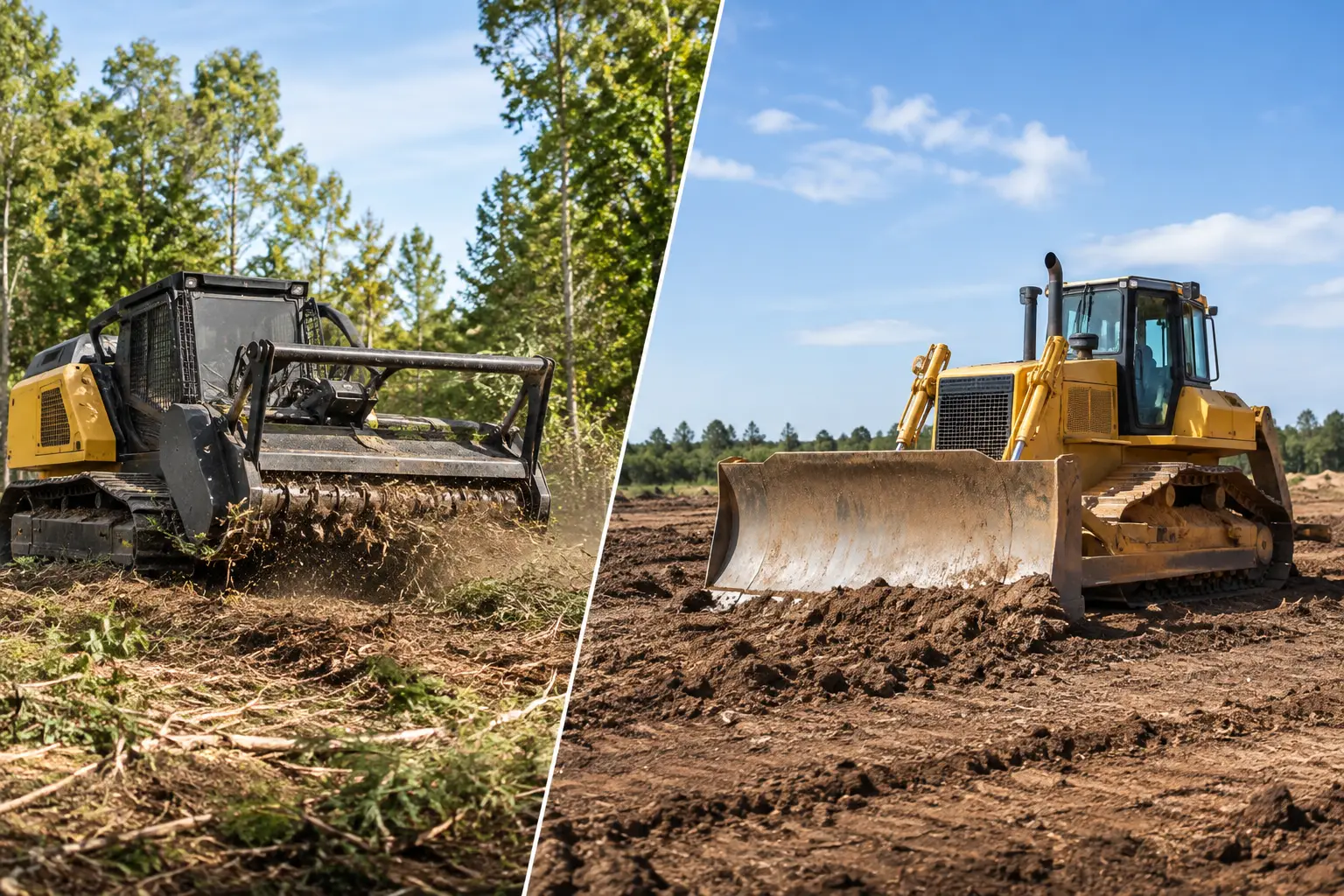
A dozer can make a dramatic change fast. It can also leave a property scraped, compacted, and ready for erosion if the job does not call for full-scale earthmoving. That is the real decision behind forestry mulching vs bulldozing: are you managing vegetation and wildfire fuels, or are you rebuilding the ground for construction?
Both methods have a place on Colorado properties. The right one depends on your end use, terrain, soil conditions, vegetation, access, and what needs to happen after the clearing is complete. Choose the wrong approach, and you can spend more money repairing ground that did not need to be disturbed in the first place.
Forestry Mulching vs Bulldozing: The Core Difference
Forestry mulching cuts and processes brush, small trees, invasive vegetation, and downed material with a mulching head. The material is left on site as a layer of chips and shredded organic matter. A high-flow compact track loader with a drum mulcher can work through dense growth while keeping the machine’s footprint relatively controlled.
Bulldozing pushes, uproots, strips, and relocates material. It is built for force. A dozer can remove larger trees, pull root systems, cut rough roads, reshape slopes, push fill, and prepare a site for excavation or building. It usually creates piles, windrows, or hauled material that must be burned, chipped, buried, or removed.
Neither method is automatically better. Forestry mulching is often the cleaner answer for vegetation management. Bulldozing is often the necessary answer when the ground itself must change.
When Forestry Mulching Is the Better Tool
Forestry mulching works best when your goal is to reduce fuels, improve access, reclaim overgrown ground, or create defensible space without tearing up the soil. It is a strong fit for rural homes, mountain properties, acreage, fence lines, trails, and lots covered in brush and small-diameter trees.
The biggest advantage is that mulching treats vegetation at ground level without ripping out every root. Existing root systems help hold soil in place. That matters on Colorado slopes, decomposed granite, dry ground, and properties exposed to spring runoff or summer storms. Instead of bare dirt, the finished area has a mulch layer that can help slow moisture loss, reduce splash erosion, and limit immediate weed pressure.
For wildfire mitigation, mulching can quickly break up continuous brush and ladder fuels. It reduces the vegetation that can carry fire from the ground into lower tree limbs. Done with a property-specific plan, it improves defensible space while preserving the mature trees and natural character worth keeping.
Mulching also avoids the pile problem. When material is processed where it stands, there are no large burn piles waiting through permit restrictions, weather windows, or fire-season limitations. That can keep a project moving and leave the site cleaner at the end of the day.
It is especially practical when a property needs to remain usable during the work. A track loader can often navigate tighter access, work around selected trees, and clear sections in a controlled pattern. That is valuable for homesites, outbuildings, utility corridors, and properties where broad dozer passes would be excessive.
What Mulching Does Not Do
Forestry mulching is not grading. It will not create a building pad, remove major stumps below grade, install drainage, or correct a slope that sends water toward a structure. It also has limits on tree size, rock exposure, and terrain. Large timber, heavy deadfall, buried debris, thick root balls, and severe rock can require other equipment or a combined approach.
A mulched property still needs maintenance. Regrowth happens. Seeds remain in the soil, and many brush species resprout. The advantage is that follow-up maintenance is usually easier and less disruptive than starting over after years of unchecked growth.
When Bulldozing Is the Right Call
Bulldozing earns its place when the project requires dirt work, not just vegetation work. If you are building a driveway, creating a level homesite, cutting in an access road, removing substantial stumps, reshaping a drainage path, or preparing for foundations and utilities, a dozer may be the right machine.
A dozer can move material with purpose. It can establish grade, build a road base area, push unsuitable material aside, and provide the broad site changes a future construction project needs. For a heavily neglected parcel headed toward development, that capability can be more valuable than preserving the existing vegetation layer.
It is also better suited to large trees that need to be fully removed rather than cut down and mulched in place. If roots, stumps, and woody debris would interfere with excavation, concrete, utilities, or road construction, leaving them in the ground is not an option.
But bulldozing comes with consequences. Uprooting vegetation exposes soil. Heavy passes can compact it. On slopes, stripped ground can shed water quickly and create erosion issues before a stabilization plan is in place. The disturbed material also has to go somewhere. Piles need a disposal strategy, and that strategy affects schedule, cost, permitting, and fire safety.
That does not make bulldozing a bad choice. It means the work should be intentional. A dozer is a site-preparation tool, not a default answer for every brush-choked property.
Soil, Slope, and Water Change the Decision
Colorado ground is rarely simple. One parcel may include flat pasture, rocky draws, steep timbered sections, and a drainage crossing. The clearing method should match each area rather than forcing one machine across the entire property.
On steep or erosion-prone ground, forestry mulching is often the lower-impact option because it preserves more surface protection. On flatter ground where a road, pad, or drainage improvement is planned, selective dozing may be justified. The key word is selective. Clearing only the area needed for construction keeps unnecessary disturbance off the rest of the property.
Water is another deciding factor. If a site has seasonal drainage, poor runoff patterns, or erosion scars, do not treat clearing as separate from grading. Removing vegetation can change how water moves. Any project involving earthmoving should account for drainage before equipment starts pushing soil.
Consider the Finish Line, Not Just the First Day
Many property owners compare methods by looking only at the clearing price. A better comparison looks at what the ground must do when the equipment leaves.
If the finish line is a safer, more manageable property with reduced wildfire fuels, mulching is often the more efficient path. It creates a visible change without turning the property into a dirt project. If the finish line is a road, pad, utility route, or developed site, bulldozing and grading may be part of the necessary sequence.
There is also a middle ground. A smart project may use forestry mulching across the defensible-space zone, around retained trees, along fences, and on slopes. Then it may use dozing or grading only where access roads, turnaround areas, building pads, or drainage features require it. This approach controls disturbance while still preparing the property for real use.
Questions to Ask Before You Choose
Start with the outcome. Do you need to reduce brush and small trees, or do you need a level surface for construction? Are there mature trees worth protecting? Is the area steep, rocky, wet, or prone to erosion? Will the material stay on site as mulch, or must it be removed? Do permits, HOA rules, burn restrictions, or utility locations affect the work?
Also consider access. A machine may be capable of the work but unable to reach the work area without first improving a gate, driveway, crossing, or trail. Tight mountain lots and remote acreage often require a plan that accounts for equipment transport, staging, and safe operating room.
For Colorado landowners, wildfire risk should stay in the conversation. A clean-looking property is not automatically a fire-resilient one. Effective mitigation focuses on fuel spacing, ladder-fuel removal, access for emergency response, and defensible zones around structures. It does not mean clearing every tree or scraping every acre bare.
Put the Right Machine on the Right Ground
Forestry mulching is typically the better choice for controlled vegetation removal, fuel reduction, and lower-impact land cleanup. Bulldozing is the better choice when roots, soil, grade, and construction access need to change. The best projects often use both methods with clear boundaries and a defined end goal.
Yeti Defensible Landworks evaluates the ground before recommending the work. That means looking past the brush line to the slope, soil, access, future use, and wildfire exposure. Walk your property with the finish line in mind, then choose the method that leaves you with safer, usable ground instead of a bigger problem to solve.
Leave a Reply