
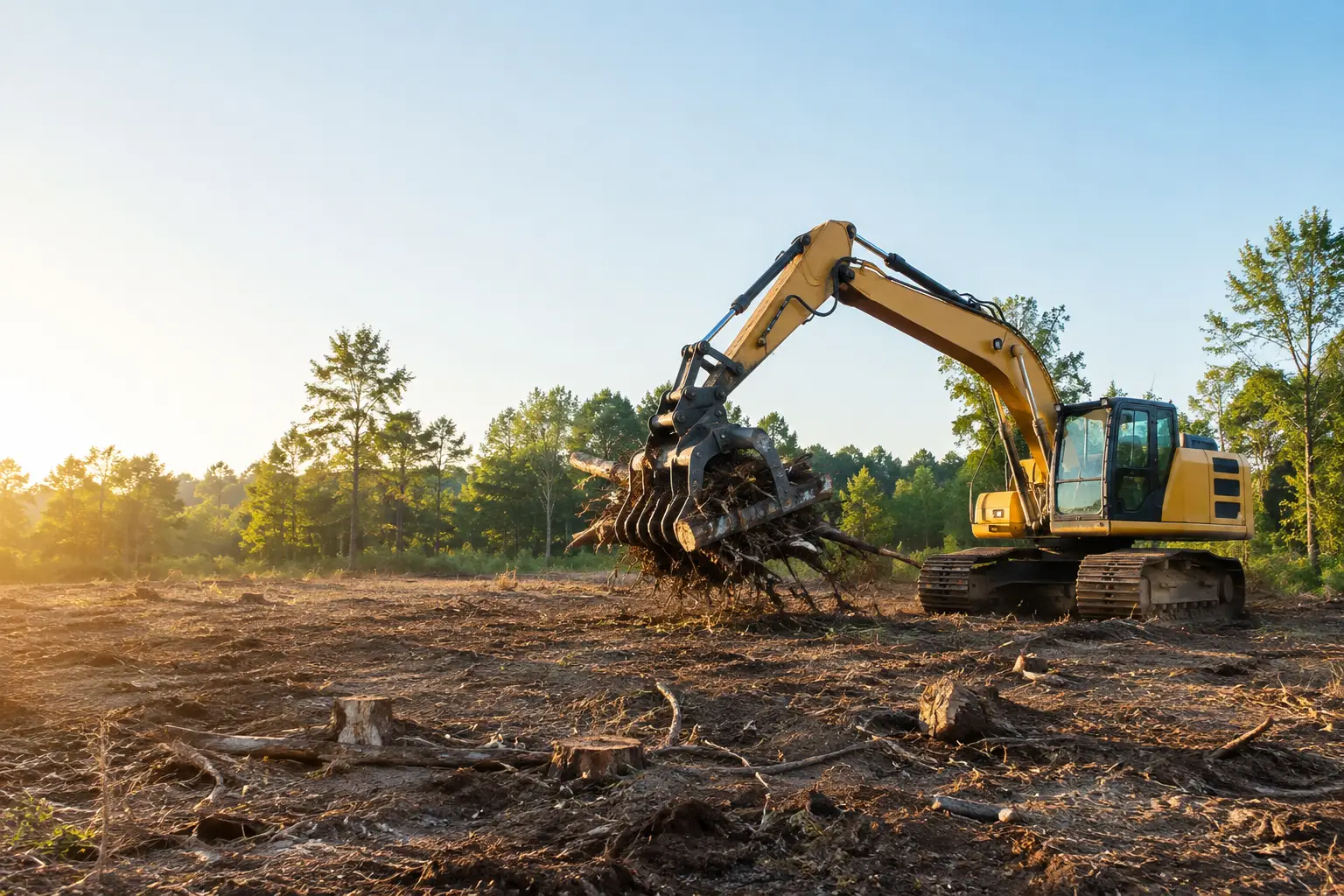
A property can look green and still be working against you. Dense Gambel oak, scrub brush, volunteer trees, deadfall, and invasive growth can block access, feed a fast-moving fire, and make useful acreage impossible to use. Comprehensive land clearing puts the ground back in your control – with a defined plan for what stays, what goes, and what the land needs next.
This is not a quick pass with a mower or a pile of cut brush left behind. Done right, clearing improves safety, creates workable space, and leaves the site ready for the job ahead. That could mean defensible space around a mountain home, a clean building envelope, a drivable access route, usable pasture, or a commercial site that is ready for grading.
What Comprehensive Land Clearing Actually Includes
Every property starts with a different problem. Some need heavy brush and small trees removed from several acres. Others need a narrow but reliable route opened through overgrowth. A good clearing plan matches the work to the property’s end use instead of treating every acre the same.
Comprehensive work may include brush removal, small-tree thinning, invasive vegetation removal, deadfall cleanup, forestry mulching, site preparation, rough grading, and cleanup of accumulated wildfire fuels. It can also include clearing around fences, outbuildings, roads, utility corridors, and future construction areas.
The point is not to strip land bare. The point is to remove the material that creates risk or prevents use while preserving the trees, contours, drainage paths, and healthy vegetation worth keeping. On Colorado properties, that judgment matters. Overclearing can expose soil, invite erosion, and leave a site looking rough. Underclearing leaves the fuel load and access problem in place.
Start With the End Use, Not the Equipment
Heavy equipment gets the work done, but the plan determines whether the result holds up. Before clearing begins, identify what the property needs to do when the work is finished.
A homeowner focused on wildfire mitigation may need spacing between trees, reduced ladder fuels, and a cleaner zone around structures. A landowner planning a barn or home needs a stable, accessible building area and room for construction traffic. A ranch or acreage owner may need brush removed from fence lines, gates, and pasture edges. A developer may need vegetation cleared, access improved, and the site prepared for the next phase of earthwork.
Those goals change the approach. A building pad may require clearing followed by grading. A fuel-reduction project may call for selective thinning and mulching rather than full removal. A steep parcel may need a lighter touch to protect slopes and drainage. Clear the wrong areas first, and you can create extra expense later.
Mark What Must Stay
Property owners should walk the site before work begins. Mark trees to retain, wells, septic components, irrigation lines, monuments, fences, utilities, and areas with limited access. If you have a survey, site plan, or proposed driveway alignment, have it ready.
Visible marks and a clear scope prevent costly guesswork. They also help the operator work faster and protect the features that matter to you. Underground utilities deserve special attention. Never assume a line is inactive or accurately shown by old surface clues.
Forestry Mulching vs. Traditional Clearing
Forestry mulching is often the right tool for dense brush, saplings, small trees, and accumulated fuels. A high-flow compact track loader with a drum mulcher can cut and process vegetation close to the ground, leaving mulch spread across the site instead of creating large burn piles or haul-off loads.
That mulch can help moderate soil temperature, reduce surface erosion, and slow the return of some growth. It also removes the standing and ladder fuels that allow fire to move from grass and brush into tree canopies. On rough Colorado terrain, track equipment can reach areas that are difficult for larger machines without opening unnecessary disturbance.
But mulching is not the answer to every clearing job. Large trees may need separate removal. Thick material, construction debris, rock, old wire, and hidden metal can change the plan. If a site must be graded for a foundation, road, or drainage improvement, vegetation removal is only the first phase. Mulch may also need to be managed differently in high-traffic areas or where future excavation is planned.
Traditional clearing methods may make sense when material must be removed from the site, when major excavation is coming, or when mature timber requires a different approach. The right method depends on the vegetation, slope, soil, access, fire-risk goals, and final use of the land.
Fire Mitigation Is More Than Cutting Brush
Colorado’s wildfire exposure is not limited to homes deep in the foothills. Properties near open space, grassland, draws, wooded lots, and unmanaged acreage can all carry heavy fuels. Wind, slope, and dry vegetation can turn a neglected edge of the property into a serious vulnerability.
A defensible-space project focuses on how fire can approach and move through the site. That means reducing dense brush near structures, removing dead and down material, limbing or thinning where appropriate, and creating workable access for residents and emergency equipment. It also means keeping vegetation managed after the initial project.
No contractor can make a property fireproof. Weather, neighboring fuels, construction materials, and emergency conditions all matter. What land clearing can do is reduce available fuel, break up continuous vegetation, improve visibility and access, and give your property a better starting position.
Access, Drainage, and Grade Need to Work Together
A cleared route is not automatically a usable route. Driveways, emergency access paths, gate approaches, and equipment lanes need enough width, stable ground, and sensible drainage to remain functional when weather turns.
This is where clearing and site preparation should work together. Removing brush may reveal ruts, soft ground, washouts, rock, or sharp changes in grade. Addressing those issues during the same project can prevent a cleared access route from becoming impassable after the next hard rain or spring runoff.
On sloped ground, water always gets a vote. Clearing should avoid sending runoff directly toward a home, road, or neighboring parcel. Retaining ground cover where possible, shaping drainage intentionally, and avoiding unnecessary soil disturbance help protect the work after the machines leave.
What Drives the Cost of Land Clearing
A price based only on acreage tells you very little. One acre of grassland is not one acre of tangled oak, standing dead trees, boulders, steep grades, and limited access. The condition of the site drives production.
The biggest cost factors are vegetation density and size, terrain, distance from a workable staging area, obstacles, desired finish, and whether material can be mulched onsite. Projects also change when there is trash, fencing, wire, old equipment, or buried debris hidden in the brush. These hazards slow the work and can damage equipment.
A clear scope gives you a better estimate and a better result. Define the work area, identify the vegetation to remove, explain the intended use, and state whether you need mulching, haul-off, grading, access work, or restoration. Photos are useful, but an onsite look is often the fastest way to spot the conditions that affect the job.
Prepare Your Property Before the Crew Arrives
A few practical steps keep the project moving. Move vehicles, trailers, and loose materials out of the work zone. Unlock gates or arrange access. Keep pets and people clear of active equipment. Mark irrigation heads, septic lids, utility boxes, and anything that could be damaged or buried under vegetation.
If the work is near a home or business, plan for noise, dust, and temporary limits on access. Clearing is active, physical work. Good communication before mobilization keeps the site safer and reduces downtime.
Yeti Defensible Landworks brings equipment-forward, veteran-owned accountability to difficult Colorado ground. Whether the job is wildfire-fuel reduction, access improvement, site prep, or an overgrown acreage cleanup, the target stays simple: clear it with purpose and leave the property ready for what comes next.
The best time to address dense fuels and blocked access is before they become an emergency, a failed project schedule, or a costly obstacle. Walk your land with the finished condition in mind, then build the clearing plan around that result.
Leave a Reply