
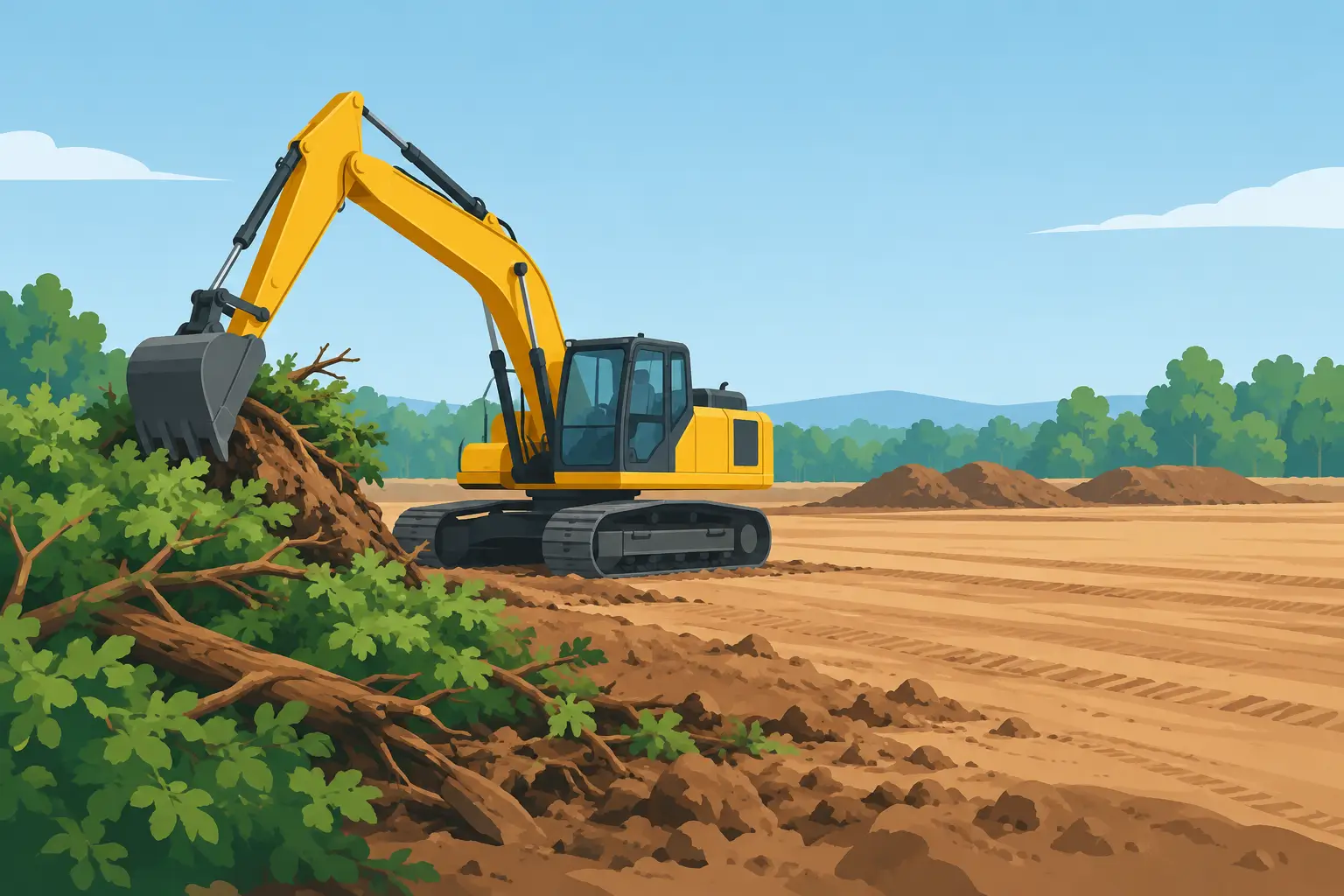
A build does not start when concrete arrives. It starts when crews and equipment can safely reach the work area, move through it, and work on stable ground. Construction site clearing handles that first hard step by removing the brush, small trees, debris, and rough vegetation that stand between raw land and a workable jobsite.
On Colorado acreage, that work often does more than make room for a building pad. It can open a blocked driveway, reduce dense wildfire fuels around future structures, expose drainage concerns, and give owners a clear view of what their land actually needs. Done right, clearing creates a clean starting point without tearing up more ground than the project requires.
What Construction Site Clearing Should Accomplish
Site clearing is not simply knocking down vegetation and leaving piles behind. The goal is a site that supports the next phase of work, whether that is surveying, excavation, utility installation, grading, fencing, or construction.
A properly scoped clearing job removes unwanted brush, saplings, deadfall, invasive growth, slash, scattered debris, and other obstacles within the planned work area. It also establishes usable access for trucks, trailers, compact equipment, and crews. On a rural lot, that may mean reclaiming an old two-track road before any actual building-site work begins.
The right finish depends on the project. A future home site may need a clean footprint and access route while preserving mature trees outside the build zone. A commercial parcel may require broader clearing to support utility trenching, staging, and grading. A wildfire-mitigation project may focus on thinning and mulching fuels rather than removing every tree.
That distinction matters. Over-clearing wastes money, exposes soil, and can create erosion problems. Under-clearing leaves obstacles that slow the next contractor down. The best approach is precise: clear what the project needs, protect what should stay, and leave the property ready for the work ahead.
Start With the Ground Conditions
Before machines move in, walk the property with the full project in mind. Mark the intended driveway, building area, utility routes, drainage paths, and any trees or features that need protection. A little planning prevents expensive rework after the ground is opened up.
Identify Access Before the Main Work Begins
Access is often the first real challenge on Colorado properties. A steep entry, narrow gate, soft shoulder, tight switchback, or overgrown lane can keep larger equipment from reaching the site. Clearing access may involve trimming vegetation, removing small trees, widening a route, addressing low-hanging limbs, or improving the travel surface.
Do not assume an existing road is ready for construction traffic just because a pickup can get through. Delivery trucks, dump trailers, excavators, and concrete trucks need room to turn, pass, and stay on stable ground. If access will not support the equipment needed later, solve that problem early.
Watch Water, Slope, and Soil
Vegetation can hide drainage swales, rocky outcrops, washouts, and changes in grade. Once clearing begins, those conditions become easier to see and address. They can also change how the work should proceed.
On sloped ground, aggressive disturbance can send soil downhill during the next heavy rain. In wet or soft areas, heavy equipment can rut the site and create problems that require additional grading. Clearing methods, travel routes, and timing should match the terrain. Sometimes the smart move is to wait for drier conditions. Other times, a compact track loader is the better fit because it can work effectively while spreading its weight across a wider footprint.
Know What Must Stay
Good site preparation is selective. Flag retained trees, property boundaries, septic areas, utility corridors, drainage features, and structures before clearing starts. If there are overhead lines or buried utilities, confirm their location before digging, pulling, or grading.
Mature trees deserve special attention. Their roots can extend well beyond the visible canopy, so running equipment too close or changing the grade around them can cause damage that shows up months later. If a tree is meant to remain, give it room and plan equipment paths around it.
Choose the Right Clearing Method
There is no one-size-fits-all method for construction site clearing. The right equipment depends on vegetation size, terrain, disposal needs, intended finish, and the next step in the project.
Forestry mulching is often a strong option for brush, small trees, thick understory, and overgrown access routes. A high-flow compact track loader with a drum mulcher can process vegetation in place, leaving a mulch layer across the soil rather than creating burn piles or hauling large volumes of material away. That mulch can help reduce erosion and keep soil covered, particularly on slopes.
Mulching is not always the final answer. If a building footprint requires stumps and root systems removed, excavation and grading may be needed after vegetation is cleared. If the site contains construction debris, metal, large rock, or hazardous material, those items must be handled separately. A mulcher is built for vegetation, not hidden junk buried in weeds.
Mechanical removal can make sense where the project needs a fully cleared pad, utility trench, or road base. It may include cutting, pulling, hauling, stump work, rough grading, and material disposal. This approach is more disruptive than mulching, but it can be necessary when the land must be reshaped or built on immediately.
The practical answer is often a combination: mulch the surrounding fuels, clear and remove vegetation inside the building envelope, improve access, then grade the disturbed areas for the next contractor.
Construction Site Clearing and Wildfire Risk
In many Colorado mountain, foothill, and rural properties, site clearing also creates an opportunity to reduce wildfire exposure. Dense brush, ladder fuels, deadfall, and small conifers can carry fire toward a future home, barn, shop, or equipment yard.
Clearing for construction should not ignore that reality. As access is opened and a site is prepared, it makes sense to evaluate the vegetation around planned structures, driveways, turnaround areas, and emergency routes. Removing concentrated fuels and creating workable defensible space can improve both fire readiness and day-to-day property management.
This does not mean stripping a lot bare. Healthy land still needs shade, screening, habitat, and soil stability. The goal is to break up continuous fuel, remove problem growth, and maintain separation between vegetation and structures. A property can look natural while being far more manageable and safer.
Common Mistakes That Create Delays
The most expensive clearing mistakes tend to happen before the work starts. Owners sometimes clear a broad area without a site plan, then discover they removed trees needed for screening or failed to clear the actual utility route. Others focus only on the building pad and leave no room for equipment staging, material storage, or truck turnaround.
Burning or piling vegetation without a clear disposal plan can also create a bottleneck. Depending on local conditions and restrictions, burning may not be practical. Hauling can add cost and time. On suitable sites, mulching reduces the material-handling problem by processing vegetation where it stands.
Another common issue is skipping rough grading after clearing. Once brush and small trees are gone, the site may still have ruts, exposed roots, holes, uneven approaches, and drainage issues. Clearing and grading are different tasks, but they should be planned together when the goal is a build-ready site.
What to Expect From a Professional Crew
A capable contractor should ask direct questions before quoting the work: What is being built? Where does equipment need to travel? What vegetation stays? Is the goal wildfire mitigation, access, a building pad, or all three? Are there utilities, steep slopes, drainage concerns, or material that cannot be mulched?
The crew should arrive with equipment matched to the property rather than forcing a standard approach onto every job. Compact track loaders and forestry mulchers are especially effective on rough, brush-heavy ground where maneuverability matters. They can work through difficult terrain, clear tight areas, and produce visible results without the broad disturbance of larger clearing operations.
Yeti Defensible Landworks approaches site work with that same discipline: clear the problem, protect the usable ground, and leave the property ready for what comes next.
A clean site is not just a better-looking site. It gives surveyors clear lines, lets trades move safely, exposes issues before they become change orders, and puts the project on solid ground. Plan the clearing around the work that follows, and the land will stop being the obstacle.
Leave a Reply