
A property can look manageable from the driveway and still be loaded with wildfire fuel, blocked access, invasive growth, and unusable ground. Brush and vegetation clearance changes that condition fast when it is planned around the land, the slope, and the job ahead. The goal is not to scrape a property bare. It is to remove the material creating risk and obstruction, then leave behind ground you can actually use.
For Colorado landowners, that work often starts with dense brush, ladder fuels, small trees, deadfall, and years of unchecked growth. Whether you need safer space around a home, access to a build site, or acreage brought back under control, the right clearing method makes the difference.
What Brush and Vegetation Clearance Should Accomplish
Good clearing work solves a specific problem. A homeowner in the foothills may need to break up continuous vegetation near structures. A ranch owner may need an overgrown fence line opened up. A developer may need a clean work area, better equipment access, and a site ready for the next phase.
The common thread is control. Clearing should reduce fuel loads, improve visibility, open travel routes, and remove vegetation that has taken over the property. It should also respect the parts of the land worth keeping, including mature healthy trees, drainage paths, stable slopes, and desirable native cover.
That is why “clear everything” is rarely the best plan. Heavy-handed work can expose soil, create erosion problems, and leave a site looking rough without making it more useful. Precision work identifies what needs to go, what needs to stay, and how to move equipment through the property without creating a bigger problem.
The Material That Usually Needs to Go
Brush and vegetation clearance can include far more than tall weeds. On many Colorado properties, the real fuel problem sits close to the ground or underneath the tree canopy. Dry grass, brush thickets, fallen limbs, dead shrubs, and young conifers can allow fire to move quickly across a property or climb into tree crowns.
Small trees are another common issue. Thick stands may look natural, but overcrowded growth competes for water and creates a connected fuel bed. Selective removal improves spacing and gives firefighters a better chance of working near the property if a wildfire moves through the area.
Invasive and nuisance vegetation also deserve attention. These plants can crowd out native cover, spread into open ground, and make a property harder to manage each season. Clearing is often the first step, but long-term control may require follow-up treatment, reseeding, grazing management, or regular maintenance. One pass can reset the ground. It does not always prevent regrowth.
Why Forestry Mulching Fits Many Colorado Properties
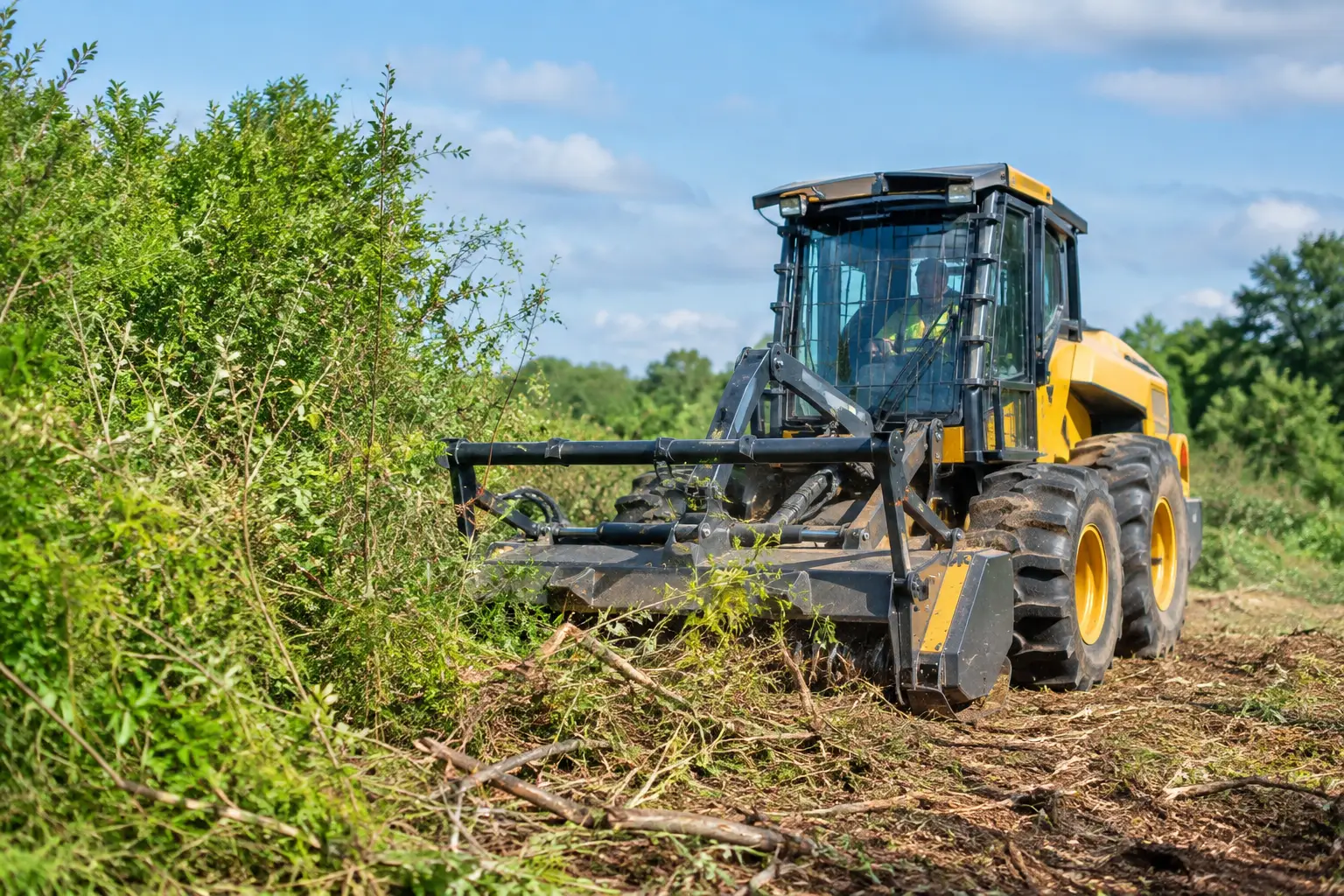
Forestry mulching is often the right answer for brush, saplings, and smaller woody material. A high-flow compact track loader equipped with a drum mulcher can cut and process vegetation in place, turning it into a layer of mulch across the soil surface.
That mulch has practical benefits. It reduces the need to haul and burn piles, helps limit erosion, and creates a more finished result than pushing brush into windrows. It also avoids the disruption that comes with extensive excavation or dozer work on sites that do not need it.
Mulching is not the right tool for every job. Large-diameter tree removal, major grading, stump extraction, and heavily rocky areas may call for different equipment or a combined approach. Ground conditions matter too. Steep terrain, wet soils, protected areas, and tight access can affect how work is performed and what the finished site will look like.
A capable contractor will not force one method onto every property. They will match the machine and plan to the terrain, vegetation, access, and end use.
Clearance for Wildfire Mitigation Is Selective
Defensible space is not a clear-cut. It is a managed zone that reduces the ability of fire to reach and ignite structures. The work may include thinning dense brush, removing dead material, pruning lower limbs where appropriate, increasing spacing between vegetation, and clearing access routes for emergency response.
The priority changes as work gets closer to a home, barn, shop, propane tank, or other critical structure. Vegetation immediately surrounding buildings needs more careful attention than vegetation farther out on the acreage. The objective is to interrupt fire pathways while keeping the property functional and visually sensible.
This work has trade-offs. Removing too little can leave a continuous fuel path. Removing too much can sacrifice privacy, shade, screening, and soil stability. A field assessment is where those decisions get made. The best result is safer ground that still looks like your property, not a stripped construction lot.
Access Is Part of the Job
Overgrown vegetation does more than raise wildfire risk. It blocks the work you need to do. Brush can narrow a driveway, hide culverts, choke a trail, cover a fence line, or prevent equipment from reaching a damaged area.
Clearing access improves day-to-day use and gives contractors, utility crews, and emergency vehicles a better route onto the property. For undeveloped land, it can be the first real step toward a future driveway, homesite, outbuilding, pasture improvement, or utility installation.
Access work needs discipline. The route must account for grade, drainage, turning room, overhead limbs, and soil conditions. Clearing a path without thinking through where water will go can create washouts later. When a project requires more than vegetation removal, clearing can be paired with site preparation, grading, and restoration work to build a route that holds up.
Plan the Work Before Equipment Arrives
A strong clearing project begins with a walk-through, not a guess from the road. Before work starts, define the areas that need attention and the outcome you expect. Mark or identify features that must be protected, such as structures, utilities, wells, septic components, fences, drainage features, and healthy trees.
It also helps to answer a few practical questions:
- Is the main goal wildfire mitigation, access, site preparation, appearance, or all of the above?
- Which trees, views, trails, or property features need to remain untouched?
- Will equipment have firm, legal access to the work area?
- Does the project require approvals, utility locates, or coordination with an HOA or local authority?
These details keep the scope clear and reduce expensive surprises. They also help determine whether mulching alone is enough or whether the project needs hauling, grading, erosion control, or additional restoration.
Timing Matters, but Waiting Can Cost You
Brush clearing can be completed during much of the year, depending on weather, ground conditions, and fire restrictions. Dry conditions may improve machine access in some areas, but they also increase dust and fire-safety concerns. Wet ground can limit access and create rutting. Snow can hide hazards, while spring growth can make a neglected property look worse almost overnight.
For wildfire mitigation, the best time is before fire season puts pressure on every contractor and property owner at once. Waiting until smoke is in the air is not a plan. Early scheduling gives you more room to assess the property, make smart decisions, and complete follow-up work if needed.
Yeti Defensible Landworks brings equipment-forward, safety-first execution to difficult Colorado ground. From foothill lots to rural acreage and undeveloped sites, the standard is simple: clear the hazard, protect what matters, and leave the land ready for what comes next.
Walk your property with purpose before growth and fuel loads build another season. Identify the brush that blocks access, the dead material near structures, and the ground you want to put back to work. A well-planned clearing project turns those problems into a safer, more manageable piece of land.
Leave a Reply