
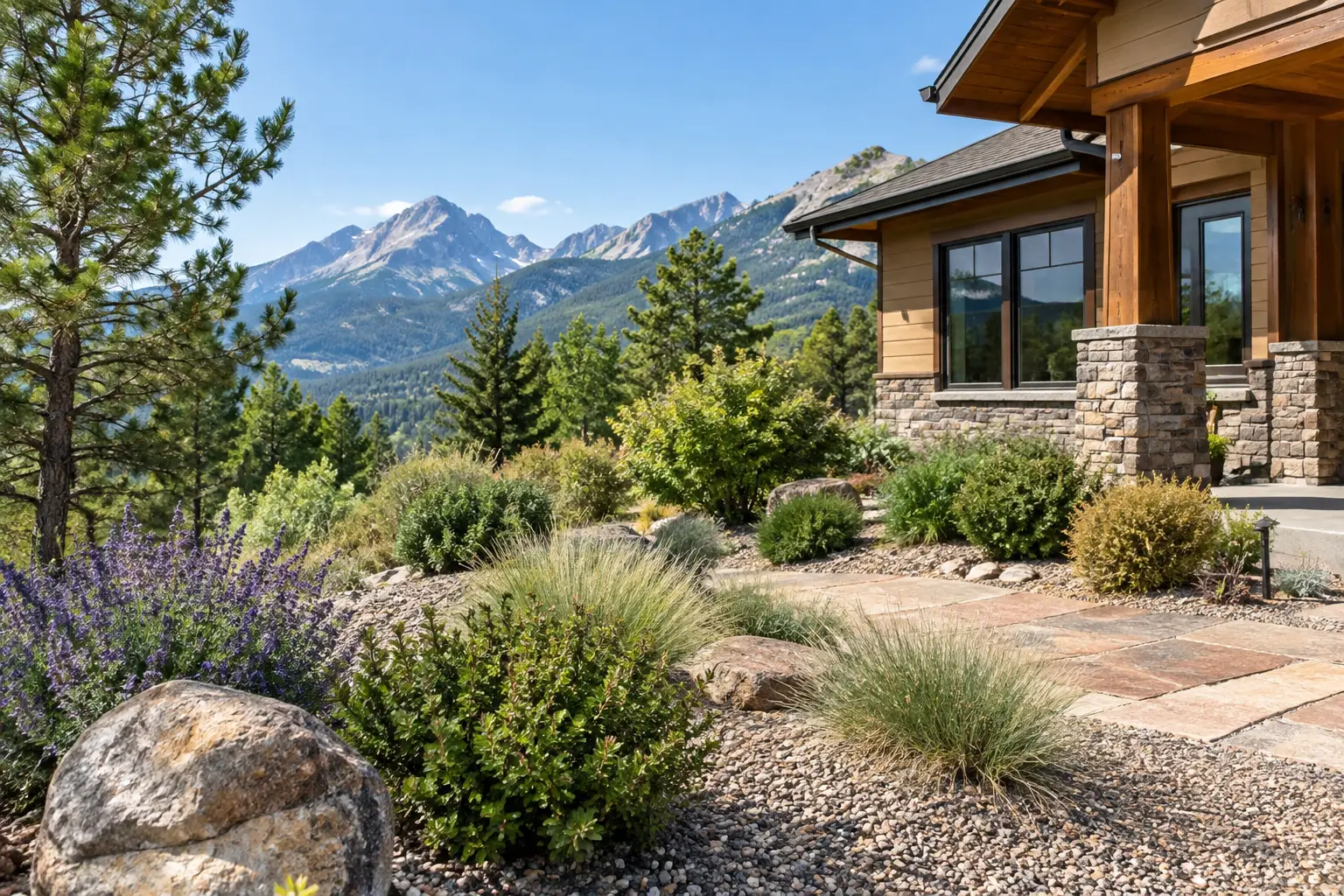
A wood-sided home tucked into dense gambel oak may look like classic Colorado. During a fast-moving wildfire, that same brush can carry flame straight to the structure. Colorado Firewise landscaping is not about stripping a property bare or turning it into gravel. It is about breaking fuel continuity, protecting the first few critical feet around the home, and building a landscape you can realistically maintain.
The goal is simple: give embers less to land in, give flames less to climb, and give firefighters a safer, clearer place to work. Every property is different. A foothills lot with ponderosa pine needs a different plan than a wind-exposed acreage in Elbert County or a mountain cabin surrounded by spruce. The principles stay the same. The work starts at the house and moves outward.
Colorado Firewise Landscaping Starts at the House
Wildfire does not need a wall of flame to damage a home. Wind-driven embers can travel well ahead of the fire front and collect in pine needles, dry leaves, bark mulch, deck corners, window wells, and brush against the foundation. That is why the area closest to the structure deserves the most attention.
Treat the first 0 to 5 feet as the noncombustible zone. Keep this area clean and simple. Rock, gravel, pavers, concrete, and well-maintained hardscape are practical choices. If plants belong here, use limited, low-growing, well-watered options and keep them away from vents, windows, decks, and siding.
This is also where routine cleanup matters most. Remove needles from roof valleys and gutters. Clear leaves from window wells. Do not stack firewood, lumber, cardboard, propane cylinders, or spare building materials against the house. A clean perimeter does not guarantee survival in every fire, but it removes easy ignition paths that cause preventable losses.
Build Separation Instead of a Fuel Ladder
From roughly 5 to 30 feet out, the job is to reduce the chance that fire moves from the ground into shrubs, lower branches, and tree crowns. Think in terms of spacing and separation, not a perfectly manicured yard.
Grass, native plants, and selected shrubs can still have a place in this zone. The key is keeping vegetation broken into manageable groups instead of allowing one continuous mass of fuel to connect the property. Maintain clear space between plant groupings. Keep shrubs from touching siding or crowding decks. Prune lower limbs where appropriate so surface fire has fewer routes into the canopy.
Fuel ladders are a common problem on neglected Colorado properties. Dry grass feeds a dense shrub. The shrub reaches low tree limbs. Those limbs lead into the crown. Removing every tree is not the answer. Removing the connection is often the move that changes how fire behaves.
Spacing depends on slope, prevailing wind, vegetation type, and tree size. Steeper ground requires more distance because fire moves uphill faster and preheats fuel above it. Tight stands of conifers may require selective thinning. Open ponderosa stands may need lower-limb pruning, brush removal, and regular needle cleanup more than heavy tree removal. A site walk tells the real story.
Choose Plants for Maintenance, Not Just Appearance
No plant is fireproof. A healthy, irrigated plant may resist ignition better than drought-stressed brush, but any vegetation can burn under severe enough conditions. Avoid buying landscaping on the promise of a single “fire-resistant” label.
A stronger approach is to choose plants that fit the site, space them properly, remove dead material, and keep irrigation realistic. Native and adapted plants can work well when they are managed. The problem is not simply having vegetation. The problem is letting dry, crowded, unmanaged vegetation build up next to the home.
Mulch deserves a practical conversation. Organic mulch helps retain moisture and improve soil, but shredded bark, dry wood chips, and pine needles can catch embers. Keep combustible mulch out of the immediate perimeter around structures. Use gravel or other noncombustible material near foundations, decks, and vulnerable openings. Farther from the home, mulch may still be useful, but it should be placed with fuel management in mind and kept free of dry debris.
Decorative grasses can also create trouble when they are allowed to dry out and stand through late summer. They are not automatically off limits. They do require placement away from structures and disciplined seasonal cutting.
Manage the Ground Layer and the Overstory
Most property risk sits in the messy middle: thick brush under trees, deadfall tucked into draws, volunteer saplings, invasive weeds, and years of accumulated needles. This is where a property can look green in spring yet carry heavy wildfire fuel by late summer.
Start by identifying what needs to go. Dead trees, downed limbs, dense brush patches, overgrown fence lines, small conifers growing under mature trees, and vegetation crowding driveways deserve attention. Then decide what stays. Healthy, well-spaced mature trees often add value, shade, privacy, and character. The objective is a cleaner stand with less continuous fuel, not a clear-cut lot.
Forestry mulching can be an effective option for dense brush, small trees, and invasive vegetation on larger or rugged parcels. A high-flow compact track loader with a drum mulcher can process material close to the ground and spread mulch across the site, reducing the need to haul every piece away. It is fast, controlled, and well suited to difficult terrain.
That said, mulching is not a one-and-done cure. The remaining mulch layer, future regrowth, and changing conditions still need monitoring. In some areas, hand work, selective removal, chipping, hauling, or grading may be the better fit. The right method depends on access, slope, vegetation, drainage, project goals, and local requirements.
Protect Access Before You Need It
A defensible property also needs practical access. Narrow, brush-lined driveways slow down residents leaving and make it harder for emergency crews to enter. Low branches can block larger vehicles. Unstable shoulders, washouts, and tight turnarounds create problems long before a fire arrives.
Clear vegetation back from driveways and private roads. Prune overhead limbs for adequate clearance. Keep gates operable and make sure the address is visible from the road. On acreage, consider whether an engine, skid steer, or service vehicle can reach key areas without crossing weak culverts or getting trapped by tight corners.
Access improvement is not glamorous work, but it matters. A cleared approach also helps with ordinary maintenance, snow access, fence repair, material delivery, and future construction.
Make Firewise Work a Seasonal Routine
Colorado landscapes change quickly. Spring growth fills in gaps. Summer heat dries fine fuels. Fall wind piles needles against buildings and fences. A defensible-space project should be followed by regular maintenance, especially near the home.
Walk the property several times a year. After wind events, check roofs, decks, gutters, and fence lines for debris. Mow or manage dry grass before it becomes tall, cured fuel. Remove new brush growth before it turns into another dense thicket. Inspect trees for dead limbs, insect damage, and overcrowding.
For many owners, the hard part is scale. A few shrubs near a suburban home can be handled on a weekend. Several wooded acres with steep ground, thick oak, slash piles, and limited access may call for professional equipment and a defined work plan. That is where Yeti Defensible Landworks can turn a high-fuel property into cleaner, more manageable ground with clearing, forestry mulching, access work, and site preparation built around the conditions on site.
Start With the Highest-Impact Work
Do not wait for the entire property to be perfect before taking action. Start at the structure, clear combustible material from the first few feet, address brush connected to decks and fences, and open the most critical access routes. Then work outward into tree spacing, brush reduction, and larger acreage management.
A good Colorado Firewise landscaping plan should leave your property looking intentional, not abandoned. Keep the trees worth keeping. Preserve the views and privacy that matter. Cut back the fuel that puts those assets at risk. The strongest results come from steady maintenance and decisive work where it counts most.
Leave a Reply