
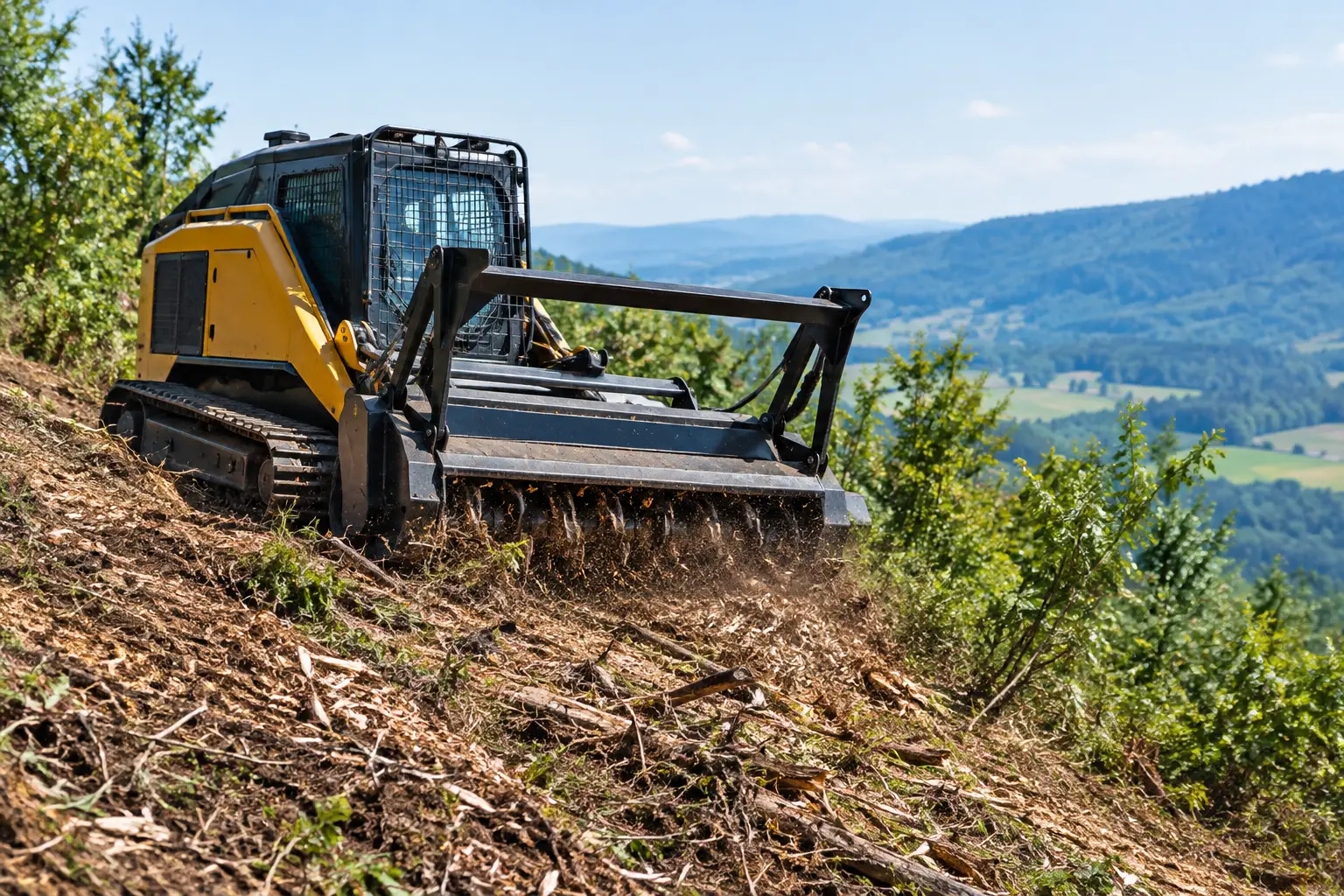
Does forestry mulching cause erosion? When it is done right, usually no. In fact, forestry mulching can be one of the better ways to clear brush, small trees, and wildfire fuels without leaving Colorado soil bare and exposed. The machine processes vegetation in place, leaving a protective layer of mulch across the ground instead of hauling off debris or pushing everything into burn piles.
But equipment alone does not prevent erosion. A poorly planned clearing job on a steep, loose, or heavily disturbed site can still create runoff problems. The difference comes down to the slope, soil, drainage, vegetation removed, weather timing, and operator discipline.
Does Forestry Mulching Cause Erosion? The Straight Answer
Forestry mulching generally causes less erosion than aggressive clearing methods that strip vegetation and disturb topsoil. A drum mulcher cuts and shreds brush and small trees near ground level. The resulting wood fiber stays on site, covering exposed dirt and helping slow the impact of rain and snowmelt.
That ground cover matters. Bare soil is vulnerable soil. Once rain starts moving downhill, it can carry fine sediment, cut ruts into access routes, plug drainage paths, and damage lower sections of the property. On Colorado acreage, those issues often show up during intense summer storms or fast spring runoff.
Mulch helps by softening raindrop impact, holding moisture longer, and slowing water across the surface. It also breaks down over time and adds organic material back into the soil. For defensible-space work, this lets a property owner reduce ladder fuels and overgrown brush without automatically trading wildfire risk for erosion risk.
The key word is generally. Forestry mulching is not a cure-all for erosion on every property.
When Forestry Mulching Can Create Erosion Risk
The biggest concern is not usually the mulch itself. It is site disturbance. Compact track loaders are built to work in rough terrain, but repeated travel can compact soil, especially when the ground is wet. Compacted soil absorbs less water. Instead of soaking in, runoff moves across the surface.
Steep terrain changes the equation as well. Thick mulch on a moderate slope can help stabilize the ground. On a very steep slope, however, mulch may shift during heavy runoff if it is applied unevenly or if the underlying soil has already been disturbed. Removing too much low vegetation can also expose flow paths that were previously held together by roots.
Erosion risk increases when a project includes more than mulching. Site preparation may require access improvement, grading, or the removal of larger trees and root systems. Those are valid services when a property needs a usable driveway, building pad, or cleared work area, but they require a different erosion-control plan than brush reduction alone.
Watch for these conditions before clearing begins:
- Steep slopes, especially where water already cuts channels after storms
- Loose decomposed granite, sandy soil, or exposed fill material
- Drainages, seasonal channels, culverts, and low points that collect runoff
- Wet or thawing ground that can rut under equipment traffic
- Areas where full vegetation removal is planned for construction or grading
A qualified operator should see these conditions before the first pass, not after water starts carrying soil downhill.
Mulch Protects Soil Only When It Stays Put
A proper mulch layer is not a uniform carpet laid across every inch of a property. Conditions vary. Dense brush may produce a deeper layer, while open ground may need a lighter pass. The goal is practical ground protection without creating piles that can smother desirable vegetation, block drainage, or become a problem on steep terrain.
On a defensible-space project, the work should focus on reducing hazardous fuel continuity. That means thinning dense brush, removing ladder fuels, and creating separation between vegetation – not scraping the land clean. Mature, healthy trees may remain. Native grasses and lower-growing plants may remain where they support the soil and do not create an unacceptable fire hazard.
This selective approach protects more than the view. Roots from retained vegetation help anchor the soil. Natural ground cover slows runoff. Keeping the right plants in the right places reduces the amount of exposed land that needs protection in the first place.
Drainage Must Be Part of the Clearing Plan
Water always finds a route. Good land work respects that route instead of forcing water into a new problem area.
Before mulching, inspect where runoff enters, crosses, and exits the property. Look at existing swales, roadside ditches, culverts, driveways, and natural drainage draws. A cleared access path that sends water straight downhill can turn into a rut after one hard storm. A mulched area that blocks a culvert inlet can create ponding and washouts where they were never expected.
On larger projects, operators may need to preserve drainage corridors, avoid unnecessary traffic in low areas, and keep mulch from accumulating in channels. If grading is part of the job, the finished surface should shed water in a controlled direction rather than concentrating it against a structure, road, or neighboring parcel.
For mountain and foothill properties, timing also matters. Working frozen or dry ground can reduce rutting compared with working saturated soil. That does not mean every job must wait for perfect conditions. It means the work plan should match the conditions on the ground.
Forestry Mulching Versus Dozing and Conventional Clearing
Compared with bulldozing or heavy root-raking, forestry mulching is typically the lower-disturbance option for brush and small-tree removal. Dozing can remove vegetation, roots, and topsoil in one pass. It has a place in road building, pad construction, and major earthwork, but it exposes soil quickly and often requires follow-up stabilization.
Forestry mulching leaves root systems largely intact. That matters because roots continue holding soil together after the above-ground fuel has been reduced. There is also less need to burn slash piles or haul vegetative debris away. Fewer disturbed areas and less bare ground usually mean fewer openings for erosion to start.
Still, do not choose mulching simply because it sounds gentler. Choose it because it fits the objective. If the goal is wildfire mitigation, property cleanup, trail clearing, or reclaiming overgrown acreage, forestry mulching is often a strong fit. If the goal is a level building site or engineered road, clearing may need to be paired with grading, drainage work, and appropriate erosion controls.
How a Professional Crew Limits Erosion During Mulching
Good operators work with the terrain. They avoid unnecessary passes, plan travel routes, and keep equipment out of sensitive drainage areas when possible. They do not treat every acre like a flat lot.
A high-flow compact track loader with a drum mulcher gives a skilled crew the ability to work precisely around trees, structures, fences, rock outcrops, and changing terrain. Precision matters on acreage where one careless turn can rut wet soil or damage a drainage edge.
The crew should also communicate clearly about the end use of the property. A homeowner preparing for wildfire season needs a different result than a developer preparing access for future construction. A ranch road, a mountain cabin approach, and a commercial site each move water differently. The clearing plan has to reflect that reality.
After the work, walk the site before the next major storm. Check driveway edges, drainage crossings, steep transitions, and areas where equipment traveled repeatedly. Small issues are easier to correct before they become gullies.
The Best Result Is Safer Ground That Still Holds Together
Forestry mulching does not inherently cause erosion. Done with a light touch, sound drainage awareness, and the right equipment, it can reduce wildfire fuels while preserving the soil protection your property already has.
If your land has steep grades, active runoff, fragile soil, or a mix of clearing and grading needs, do not treat it like a simple brush-cutting job. Build the plan around water first, then clear what needs to go. That is how you end up with safer, cleaner, more usable ground that stays where it belongs.
Leave a Reply