
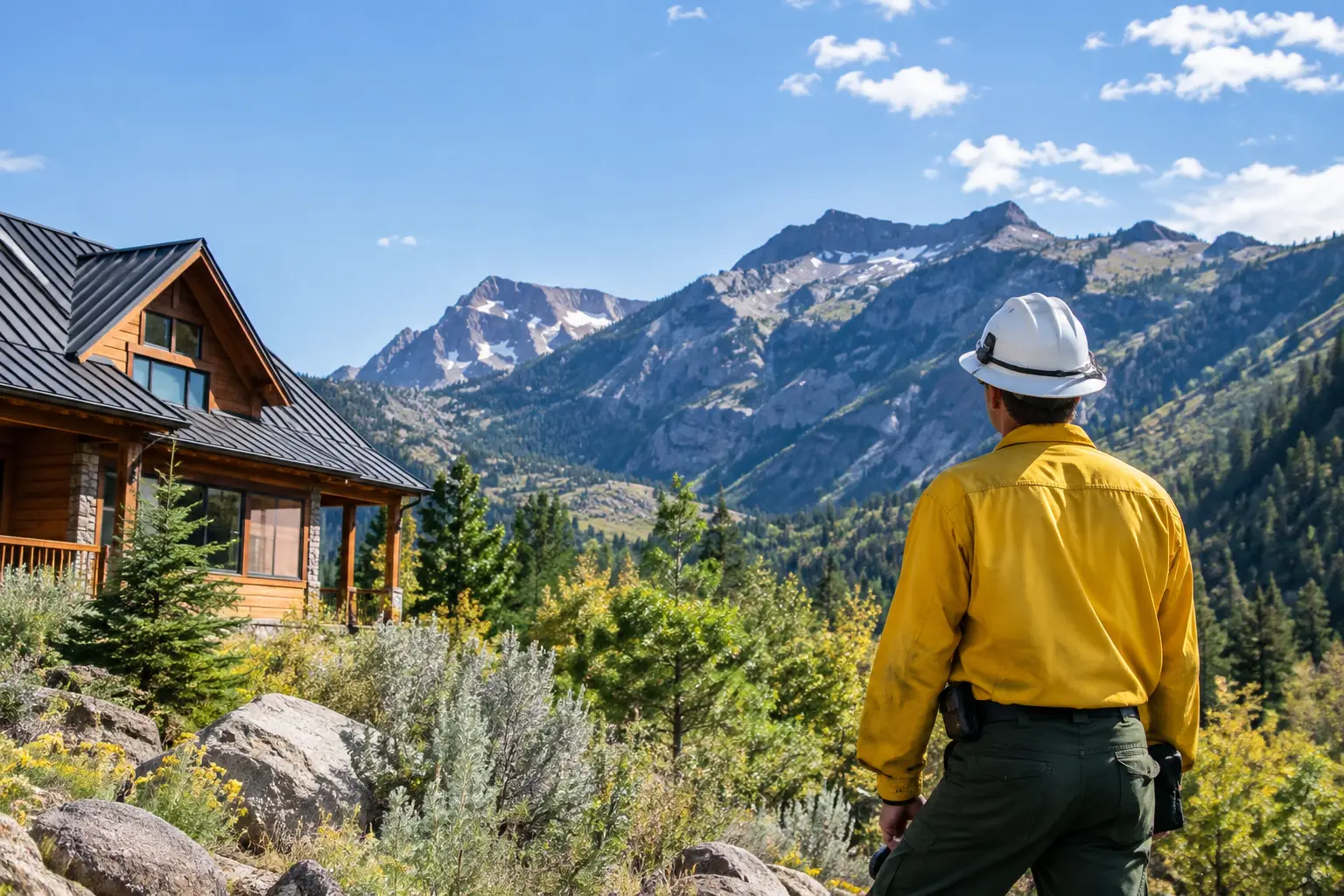
A steep driveway, thick gambel oak, deadfall below a deck, and one narrow way out can turn a beautiful Ouray County property into a hard wildfire problem. The Ouray County 2025 Colorado Wildfire Resiliency Code puts more attention on how new construction and certain projects perform in wildfire-prone areas. For owners, the practical question is simple: what needs to change on the ground before you build, remodel, or improve access?
This is not just a paperwork issue. Fire behavior is affected by the conditions around a structure: vegetation density, surface fuels, ember traps, access, slope, and maintenance. A clean, workable property gives you more options when it is time to build, insure, sell, evacuate, or defend what you own.
What the 2025 wildfire resiliency code means in Ouray County
Colorado’s wildfire resiliency code establishes construction and site standards intended to reduce losses in areas exposed to wildfire. Local implementation matters. The applicable wildfire hazard area, adopted amendments, permit triggers, and inspection process can vary by jurisdiction and project type.
That means property owners should not treat a general online checklist as a permit answer. Before ordering materials or starting site work, confirm the current requirements with the authority having jurisdiction. Ask whether the parcel is in a designated wildland-urban interface area, whether your work requires a permit, and which code version and local amendments apply.
The code conversation often centers on building materials and details that resist embers and direct flame exposure. But site conditions matter too. If dense brush and small trees press close to the building envelope, the land can continue feeding fire even when the structure itself has better protection.
For many mountain parcels, the work starts before framing. Clear access. Reduce vegetation that can carry flames. Remove piled slash and dead material. Create room for crews and equipment to work safely. Those are practical property improvements whether the project is a new cabin, an addition, a shop, or a long-overdue cleanup.
Code compliance and defensible space are not the same job
A wildfire-resilient building code and defensible-space work overlap, but they are not interchangeable. The code may govern a construction project. Defensible space is the managed area around a structure where fuels are reduced and vegetation is maintained to slow fire and limit ember ignition opportunities.
One does not automatically satisfy the other. A new home may meet required construction details but still sit behind unmanaged brush, low limbs, and unmaintained deadfall. An existing home may have well-managed vegetation but need different construction upgrades if a major renovation triggers code review.
That distinction matters in Ouray County, where terrain can be steep, lots can be irregular, and vegetation may change dramatically across a single parcel. A flat, open bench near a home and a timbered draw below it should not be treated the same way. The goal is not to strip a property bare. The goal is to manage fuels with the structure, slope, prevailing conditions, and access route in mind.
The ground conditions owners should address first
Start with the areas where fire can gain intensity and where people need to move. On a rugged property, that usually means the driveway, the immediate area around buildings, and the vegetation that connects wildland fuels to the home.
Access has to work under pressure
A scenic driveway can become a bottleneck when emergency vehicles need in and residents need out. Low branches, encroaching brush, unstable shoulders, tight turns, and poor visibility all make a difficult situation worse.
Access improvement may involve clearing vegetation along the route, widening usable travel areas where appropriate, improving turnarounds, addressing drainage, and removing obstacles that limit equipment movement. The exact requirements for a project depend on the site and the local authority, but clear access is never wasted work.
Do not assume that a track wide enough for a pickup is suitable for a fire apparatus or construction equipment. Walk the route with the whole job in mind: delivery trucks, excavation equipment, emergency access, and evacuation. If a gate, bridge, switchback, or soft section controls the route, deal with it early.
Break up fuel continuity
Wildfire spreads through continuous fuel. Grass can carry flame to brush. Brush can carry flame into low branches. Low branches can move fire into tree crowns. Dead limbs, downed material, and neglected piles add more heat and longer burn time.
The answer is targeted reduction, not random clearing. Remove accumulated dead material. Treat dense brush and small-diameter trees that connect fuel layers. Lift or remove lower limbs where appropriate. Reduce vegetation near structures and beneath decks. Keep mulch, firewood, lumber, propane areas, and other combustible storage away from the home according to applicable guidance and local requirements.
Forestry mulching can be a strong tool on suitable ground because it processes brush and small trees efficiently while leaving a manageable layer of material on the soil. It is not a universal answer. Heavy mulch placed too close to a structure, untreated large dead material, or a site with poor drainage may need a different approach. Good mitigation matches the method to the fuel, terrain, and intended use of the land.
Treat slopes and draws with respect
Fire can move faster uphill, and terrain channels wind and heat. A vegetated drainage below a structure, a steep hillside behind a garage, or a brush-filled saddle can deserve more attention than an open area with the same acreage.
This is where a one-size-fits-all distance can fail. The needed work depends on fuel type, slope, surrounding vegetation, and the structure’s exposure. A capable field assessment looks at how fire could approach the building, where embers may collect, and whether equipment can safely reach the work area without tearing up the property.
When to plan vegetation work around your project
The cheapest time to solve access and fuel problems is usually before the site gets crowded. Once foundations, utility trenches, finished driveways, and landscaping are in place, heavy equipment has less room to operate and more things to protect.
For a new build, handle major clearing, access preparation, and rough grading early in the site plan. Mark trees worth retaining, identify drainage paths, and establish material staging before equipment starts moving. This keeps the property usable while reducing unnecessary disturbance.
For a remodel or addition, inspect the conditions around the existing structure before construction begins. Contractors need room to work. Temporary materials and debris add combustibles. If the property is overgrown, clearing first can improve jobsite safety and reduce the chance that construction activity creates a bigger cleanup problem later.
Existing homeowners without a planned construction project should not wait for a permit trigger to improve defensible space. Regular fuel management protects the investment you already have. It also keeps a small maintenance job from becoming a full-scale recovery project after several seasons of growth, windthrow, and neglect.
A practical plan for Ouray County property owners
Start with verification, then move to field work. Confirm the parcel’s status and project requirements with local officials. Review your building plans, driveway, vegetation, decks, outbuildings, propane placement, and stored materials as one connected exposure problem.
Next, define the work in phases. Phase one should focus on immediate hazards: deadfall, brush against structures, blocked access, low limbs, and fuels near utility areas. Phase two can address larger acreage, slope work, thinning, site preparation, drainage, and restoration.
Finally, set a maintenance standard. Brush grows back. Wind drops limbs. Spring runoff moves material. A defensible space is not a one-time cosmetic cleanup. It is an operating condition that needs periodic inspection and follow-through.
Yeti Defensible Landworks can help owners turn an overgrown or hard-to-reach site into cleaner, safer, workable ground with equipment-built clearing, forestry mulching, access improvement, and site preparation. A field contractor can execute the ground work, but permit and code determinations should always come from the local authority with jurisdiction.
Questions to ask before work begins
Ask the building department which wildfire requirements apply to your address and project. Ask whether local amendments affect materials, access, or vegetation expectations. Ask your contractor how equipment will enter the site, what vegetation will be removed or retained, where processed material will go, and how drainage and erosion will be protected.
Also ask what happens after the equipment leaves. A clean line through brush is useful, but it needs a maintenance plan. If the property has steep ground, heavy timber, or difficult road access, plan for periodic touch-ups rather than waiting for fuels to rebuild.
The strongest move is to look at your property before the next permit, sale, storm, or fire season forces the issue. Clear the route. Break up the fuel. Keep the ground around your buildings ready to work when it matters.
Leave a Reply