
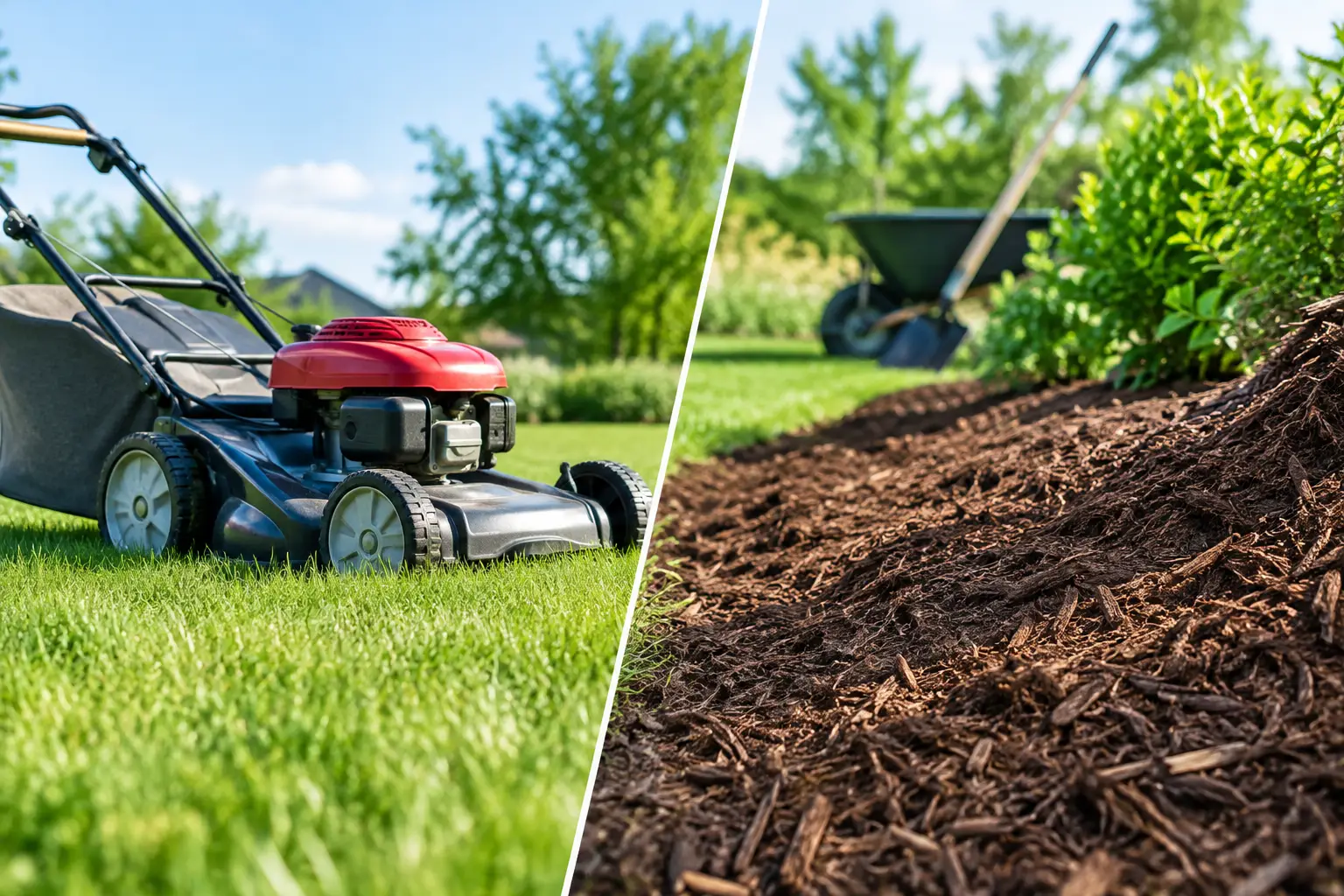
A mower can make a field look cleaner by the end of the day. A forestry mulcher can turn dense brush, saplings, and tangled fuel into a workable surface. Those are very different jobs. For Colorado property owners weighing mulching versus mowing, the right choice comes down to what is growing, what sits nearby, and what you need the land to do next.
If the property is carrying dry brush, small trees, invasive growth, or ladder fuels that can carry fire toward a structure, mowing alone is usually not enough. If the ground is already open and the goal is to keep grass and light weeds under control, mowing may be the efficient answer. Start with the condition of the land, not the machine you happen to have available.
Mulching Versus Mowing: The Core Difference
Mowing cuts vegetation down. It works best on grasses, light weeds, and low, flexible growth in reasonably open terrain. A rotary mower or brush hog can cover a lot of acreage quickly when obstacles are limited and the vegetation is not too woody.
Forestry mulching cuts and processes vegetation at the same time. A drum mulcher uses hardened teeth to break down brush, woody stems, small trees, and thick overgrowth into mulch spread across the ground. Instead of leaving piles of slash to haul, burn, or chip, the material stays on site as a low-profile ground cover.
That distinction matters on neglected acreage. A mower may knock tall grass down, but it can leave woody stems, stumps, tangled material, and dense understory in place. A mulcher is built to attack the fuel load itself. It creates visibility, opens access, and reduces the amount of continuous brush that lets fire move across a property.
When Mowing Is the Better Tool
Mowing earns its place. It is often the practical choice for regular upkeep after a property has already been cleared and brought under control. Open pastures, lawns, roadside grass, and fields with annual weeds generally do not need the force of a forestry mulcher.
Choose mowing when the vegetation is mostly grass or soft-stemmed weeds, the terrain is relatively smooth, and the goal is appearance or seasonal maintenance. It can also help maintain a previously established defensible-space zone by keeping cured grass shorter before it becomes a continuous fine fuel bed.
Mowing is not a cure for every overgrown parcel. Thick brush can wrap equipment, hide rocks and wire, and put a standard mower under real strain. Saplings and woody brush often grow back from the base after being cut. In dry conditions, mowing can also create sparks if blades strike rocks or metal. Timing, equipment condition, and site inspection matter.
For a maintained property, mowing is a recurring task. It keeps the work you have already done from slipping backward. Think of it as maintenance, not heavy land transformation.
When Forestry Mulching Makes More Sense
Forestry mulching is the better fit when the property has crossed from overgrown to difficult. That includes brush-choked lots, dense scrub oak, small pines, volunteer trees, thick Gambel oak, invasive vegetation, old fence-line growth, and land where access has disappeared behind years of unmanaged vegetation.
A high-flow compact track loader with a drum mulcher can work through material that would stop or damage lighter mowing equipment. It can clear around obstacles with precision, work on uneven ground, and process vegetation without creating large burn piles. The result is a cleaner site with reduced fuel continuity and room to inspect what is actually happening on the ground.
This matters in Colorado’s wildfire-prone foothills, mountain communities, and rural acreage. Brush and young trees can create ladder fuels – vegetation that allows a surface fire to climb into tree canopies. Removing or breaking up that connection is a central part of defensible-space work. Mulching will not make a property fireproof, but it can materially reduce unmanaged fuel and improve access for maintenance or emergency response.
Mulching also helps prepare land for practical use. Property owners use it to open driveways, reclaim building areas, create trail corridors, clear fence lines, and make overgrown acreage manageable again. It is often the first serious step before grading, fencing, construction, or restoration work begins.
Mulch Is Not a Free Pass
The mulch left behind has value, but it is not magic. It can help limit erosion, moderate soil temperature, and reduce bare-ground exposure. On slopes, that ground cover may be preferable to scraping everything down to dirt.
At the same time, mulch is organic material. In heavy concentrations near structures, it can still contribute to fire exposure. A defensible-space plan should not simply push mulch against the house, deck, or outbuildings. The amount and placement of processed material should match the site, slope, vegetation type, and proximity to improvements.
Woody plants can also regrow. Mulching removes above-ground material, but some species resprout from roots or crowns. Follow-up treatment, selective mowing, hand work, or repeat mulching may be needed to keep aggressive vegetation from reclaiming the area.
Cost: Compare the Whole Job, Not the Day Rate
Mowing often costs less for an open field because the machine moves fast and the work is straightforward. Forestry mulching costs more per hour because it requires specialized equipment, higher horsepower, and an operator who can work safely around rocks, slopes, structures, and hidden debris.
But day rate is not the whole comparison. If mowing leaves brush piles, cut saplings, exposed stumps, and recurring fuel problems, the lower first cost can become a series of repeat expenses. Mulching may eliminate the need for separate hauling or pile management while delivering a site that is ready for the next phase of work.
The most cost-effective plan is often a combination. Mulch the dense perimeter, tree clusters, drainage edges, and inaccessible overgrowth first. Then mow the open ground on a maintenance schedule. This puts the heavy equipment where it produces the most value and keeps future upkeep under control.
Terrain and Access Change the Decision
Colorado land rarely behaves like a flat suburban lawn. Slopes, decomposed granite, hidden boulders, old wire, irrigation components, drainage crossings, and narrow gates all affect machine selection. A property may look mowable from the road but become a different job once the operator reaches the back acreage.
Forestry mulching equipment on tracks can provide better traction and lower ground pressure than many wheeled machines. That does not mean every slope is safe to work. Grade, soil moisture, exposure, and obstacles still set the limits. A disciplined operator evaluates the route, identifies hazards, and works from a plan rather than forcing equipment into unsafe ground.
Access matters just as much. Before booking work, consider gate width, driveway condition, overhead branches, soft areas, and where equipment can turn around or stage. Good access planning saves time and prevents damage before the work starts.
How to Choose the Right Approach
Walk the property with a simple question: are you maintaining open ground, or reclaiming land from woody growth and wildfire fuels? If it is mostly grass, mowing is usually the right starting point. If you see brush layers, saplings, tangled understory, and blocked access, forestry mulching is likely the stronger tool.
Next, identify the outcome. A clean-looking field, a maintained pasture, and a defensible-space project are not the same scope. Neither are trail clearing, site preparation, and full vegetation removal. The best plan targets the actual result you need instead of applying one method everywhere.
For difficult acreage, a professional site assessment is worth the time. Yeti Defensible Landworks evaluates vegetation, terrain, access, and end use before putting equipment to work. That helps match the machine and method to the property instead of treating every acre like a mowing job.
A property does not need to stay overgrown because the work looks too big. Clear the dense material first, establish safer and more usable ground, then maintain it before brush gets the upper hand again.
Leave a Reply