
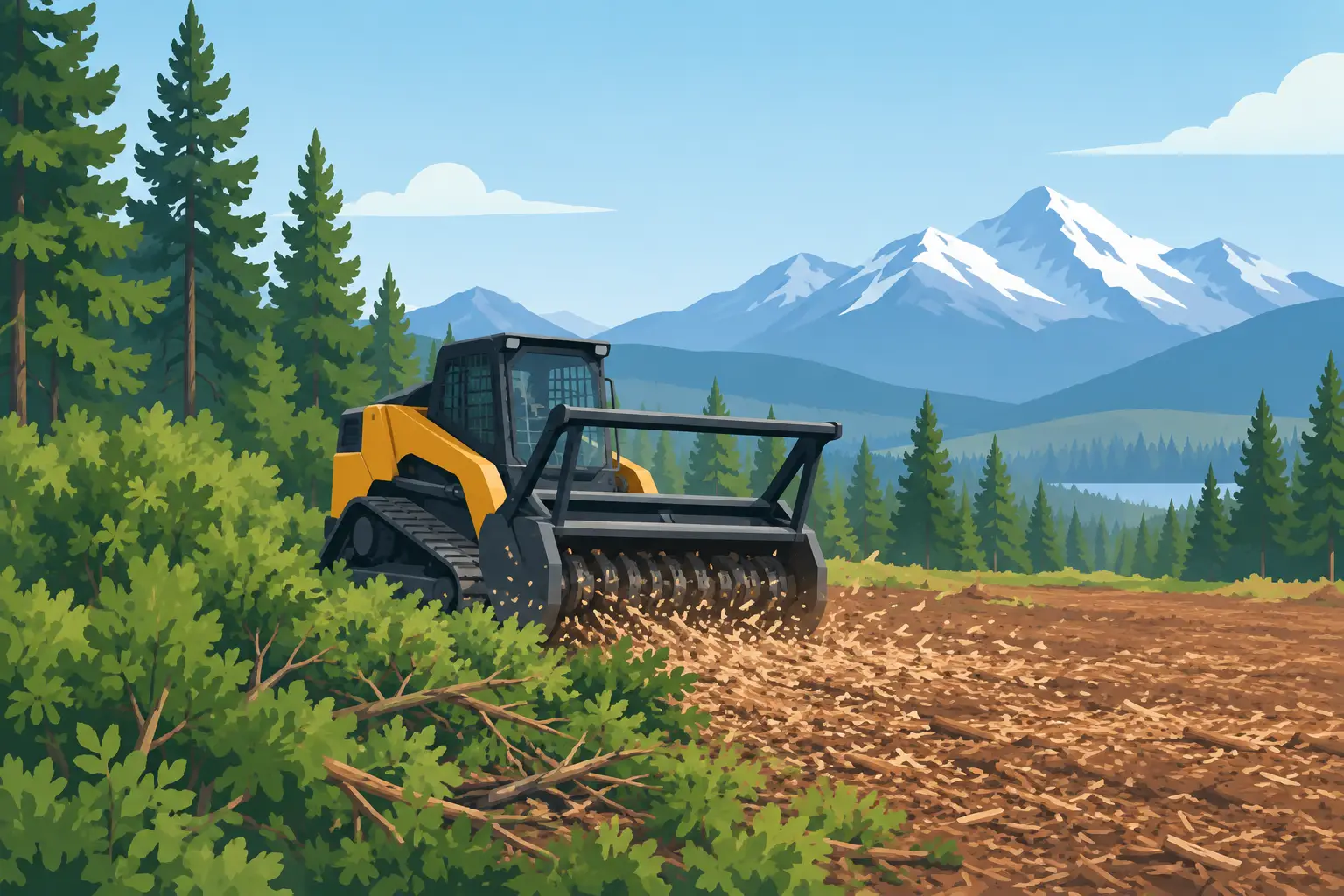
A Colorado property can look manageable from the driveway and turn into a fuel problem 100 feet beyond it. Thick Gambel oak, scrub brush, deadfall, volunteer trees, and invasive growth close off access, crowd structures, and give fire a path through the property. Forestry mulching Colorado property owners can rely on does more than make land look cleaner. It cuts hazardous vegetation down to size and leaves a workable layer of mulch behind.
For acreage owners, mountain homeowners, ranches, developers, and commercial sites, the right clearing method matters. Heavy disturbance can create erosion problems. Hand crews can be slow on large, tangled ground. Hauling brush away adds cost and traffic. A high-flow compact track loader paired with a drum mulcher gives capable operators a different option: process brush and small trees where they stand, protect the soil profile where practical, and move through ground that would stop lighter equipment.
What Forestry Mulching Changes on a Colorado Property
Forestry mulching uses a machine-mounted cutting head to shred targeted vegetation into mulch. The operator works through brush, small-diameter trees, saplings, slash, and overgrowth, reducing it into material spread across the ground. There is no burn pile to manage and, in many cases, no need to pile, chip, load, and haul every piece of debris.
The result is not bare dirt. That distinction matters. The mulch layer can help hold moisture, moderate soil temperature, and reduce the immediate exposure of disturbed ground. On slopes and open acreage, leaving material in place is often smarter than stripping the site clean.
It is also a serious visual transformation. Fence lines reappear. Driveways and turnaround areas become usable. You can see drainage patterns, rock outcrops, property boundaries, and the actual condition of the land. For land that has been ignored for years, visibility is the first step toward managing it correctly.
Mulching is not the answer for every tree or every acre. Mature trees that support shade, wind protection, habitat, or a property’s character may need selective work around them. Large timber, heavy deadfall, stumps, steep unstable slopes, and protected areas can require a different plan. Good land work starts with a clear scope, not a one-size-fits-all machine pass.
Forestry Mulching Colorado: Wildfire Fuel Reduction With Purpose
In Colorado, vegetation management is often about fire exposure before it is about appearance. Dense brush and small trees can carry flames quickly across the ground and push fire into lower branches. Dead material adds dry, receptive fuel. Overgrown vegetation near a home, barn, shop, propane tank, road, or gate can make a bad situation worse.
Forestry mulching helps reduce ladder fuels and breaks up continuous vegetation. That can support defensible-space work by creating separation between fuels, improving access for maintenance, and making the property easier to assess. It does not make a structure fireproof, and it does not replace a full wildfire-preparedness plan. Roofing, vents, decks, woodpiles, landscaping, access, address visibility, and ongoing maintenance all matter.
Still, clearing dense fuel is one of the most tangible actions an owner can take. A mulcher can target the thick brush belts, regeneration, and overgrown edges that create the most immediate concern. The goal is disciplined reduction, not clear-cutting. Keep the trees and vegetation that serve the property. Remove or thin what adds unnecessary risk.
Colorado’s weather makes maintenance part of the job. A treated area will grow back. Moisture, elevation, sun exposure, soil, and species determine how fast. Some properties need periodic touch-ups after a few seasons. Others need follow-up trimming around structures, access routes, and fence lines. Plan for the land you will have next year, not only the clean view you want this week.
Where Mulching Delivers the Most Value
Forestry mulching earns its keep when overgrowth is blocking a practical use of the property. On rural homesites, it can clear brush around buildings, improve access to outbuildings, and open room for safer maintenance. On ranch and acreage properties, it can reclaim neglected edges, improve line-of-sight along roads, and reduce brush encroachment around gates and fences.
For development and construction-adjacent work, mulching can be a strong first pass before site preparation. It exposes the ground, removes light woody vegetation, and gives the owner or project team a clearer picture of grading, drainage, utility, and access needs. It is not final grading. If a site needs a pad, driveway base, drainage correction, or finish contour, those tasks come next.
Commercial and managed properties benefit when crews need access without weeks of manual cutting. Utility-adjacent areas, storage sites, large residential lots, trail corridors, and vacant parcels can all become more manageable after targeted clearing. The key is matching the treatment to the property’s actual use. Clearing a future building envelope calls for a different finish than creating a low-fuel zone around a mountain home.
Why Equipment and Operator Skill Matter
Forestry mulching is not simply driving through brush until it is gone. The machine must have the hydraulic power and traction to run the mulcher effectively. The operator needs to read the terrain, spot buried debris, work around desirable trees, control mulch depth, and avoid turning wet or fragile ground into a mess.
A high-flow compact track loader with a drum mulcher is built for this kind of work. Tracks distribute weight better than wheeled equipment in many conditions and provide traction across rough Colorado ground. The drum mulcher can process dense vegetation efficiently while allowing the operator to work selectively around trees, rocks, structures, and uneven terrain.
Capability does not remove limits. Extremely steep terrain, saturated soils, hidden wire, old fence material, concrete, abandoned equipment, and large rock can slow work or damage equipment. Access width matters too. A job may have thick vegetation, but the real constraint could be a narrow gate, a soft crossing, or a driveway that will not handle equipment transport. A site review should identify those issues before mobilization.
Plan the Work Before the Machine Arrives
The fastest projects are usually the ones with a clear target. Walk the property and identify what stays, what goes, and what needs special attention. Mark or communicate the boundaries of the work area. Point out wells, septic components, irrigation, utilities, monuments, sensitive drainage areas, and anything hidden in the grass or brush.
Start with the outcome. Do you need a defensible-space zone around a residence? A cleared route to a building site? A reclaimed pasture edge? Better driveway visibility? A cleaner lot before grading begins? That answer determines where the operator starts, how aggressively vegetation is treated, and what condition the ground should be in at the end.
Timing can affect the job as well. Dry ground usually handles equipment better than saturated soil. Snow, mud, wind, and seasonal fire restrictions can influence scheduling and site conditions. In mountain communities and rural parts of Douglas, Jefferson, El Paso, Park, Clear Creek, and Western Colorado, early planning is especially useful because access and weather can change fast.
You should also expect an honest discussion about the finish. Forestry mulching leaves shredded material, not a manicured lawn. That mulch is often exactly what a property needs, but it may be too heavy in a planned lawn, a tightly defined building area, or a location requiring a different final grade. If the project needs clearing, hauling, grading, or restoration beyond mulching, build that sequence into the scope.
A Cleaner Property Is Easier to Protect
Overgrowth creates uncertainty. It hides hazards, blocks routes, crowds valuable structures, and turns routine maintenance into a bigger job than it should be. Targeted mulching brings the property back under control without automatically stripping it bare.
Yeti Defensible Landworks approaches that work with modern equipment, veteran-owned accountability, and a safety-first field standard. The objective is simple: clear the problem vegetation, reduce unnecessary fuels, and leave land ready for its next use.
Before brush becomes a barrier or wildfire fuel becomes a bigger concern, walk the ground and decide what you need the property to do. A clear plan and the right treatment can turn difficult terrain into land you can actually use and maintain.
Leave a Reply