
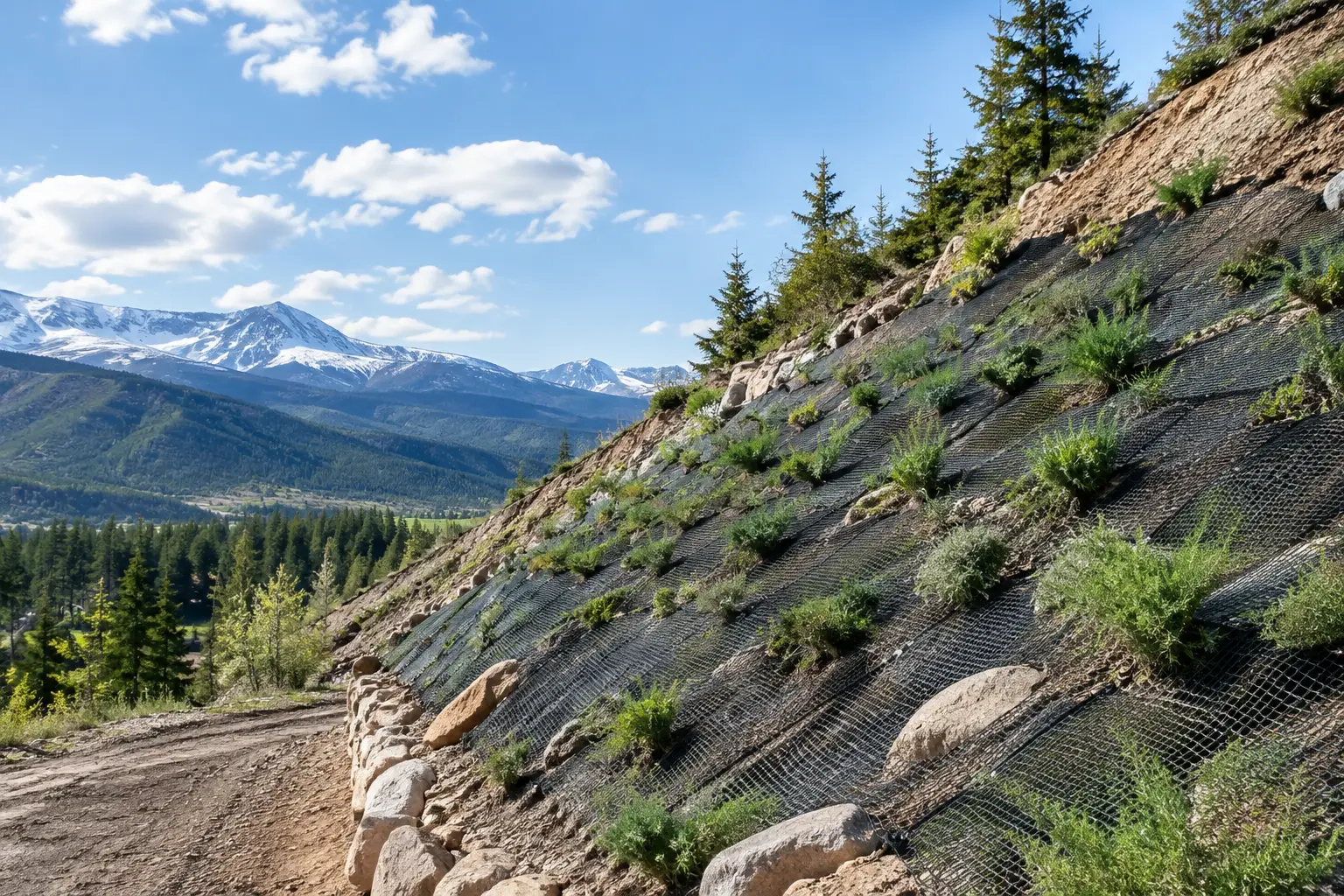
A hard Colorado rain can turn a minor drainage issue into a washed-out driveway, a rutted hillside, or soil moving toward a foundation. Slope stabilization is the work of keeping that ground where it belongs. Done right, it controls water, manages grade, protects access, and gives vegetation a real chance to hold the site together.
For property owners, the goal is not to make every slope look flat. It is to make the land safer, usable, and easier to maintain. That takes a clear look at what is failing, what is feeding the failure, and what equipment can safely reach the work.
What Causes a Slope to Fail?
Most slope problems start with water. Runoff picks up speed as it travels downhill. When it concentrates in a rut, along a driveway edge, below a roof outlet, or through bare soil, it cuts into the ground. That cut channels more water during the next storm. Small erosion turns into a washout fast.
Colorado terrain adds its own challenges. Steep lots, decomposed granite, clay-heavy soils, freeze-thaw cycles, spring snowmelt, and summer cloudbursts all put pressure on a slope. Dense brush can also hide the problem until a section of bank lets go or access becomes unsafe.
Poor grading is another common cause. If a pad, road, or drainage swale sends water toward a steep edge, the slope receives more runoff than it can handle. Clearing vegetation without a plan can create the same issue. Bare ground is exposed ground, especially before new plants establish.
Not every eroded slope is a structural emergency. Some need practical surface repair, water control, and re-vegetation. Others show signs of deeper movement and require a licensed geotechnical or civil engineer before equipment moves in. Cracks in the ground, leaning trees or fences, bulging soil, movement near a home, and repeated large slumps are reasons to stop and get an engineered assessment.
Slope Stabilization Starts With Water Control
Water has to be slowed, spread out, redirected, or safely carried through the site. There is no single fix that works on every property. The right approach depends on the slope angle, soil type, runoff volume, access, existing vegetation, and what sits below the hill.
On a manageable slope, the work may begin by reshaping ruts and restoring a smooth, stable grade. Shallow swales, drainage dips, berms, or properly placed rock can keep runoff from gathering speed. A driveway may need crowned or out-sloped sections so water sheds before it runs the full length of the road.
Where runoff crosses an access route, a culvert or drainage crossing may be needed. The inlet and outlet matter as much as the pipe itself. A pipe that dumps fast water onto bare soil simply moves the washout downhill. Outlet protection, rock, and grade control keep the system from creating a new failure point.
Drainage work should always protect structures. Water needs to move away from foundations, retaining features, and building pads. It also needs a defined destination. Sending runoff onto a neighbor’s property or into an unstable draw can create a larger problem and potential liability.
Grading Builds a More Stable Shape
Proper grading reduces the forces working against a slope. That may mean rounding a sharp drop, removing loose overburden, rebuilding an eroded shoulder, or creating a gentler transition between a driveway and hillside. Compact track loaders are valuable on difficult sites because they can work carefully on rough ground while limiting unnecessary disturbance.
The trade-off is simple: aggressive grading can solve one issue while exposing more soil. The goal is controlled movement, not stripping a hillside clean. A capable operator works in stages, maintains safe equipment positioning, and avoids cutting into ground that should be left intact.
On some properties, terracing or small benching can reduce slope length and slow runoff. On others, the best answer is less dramatic: repair the surface, manage the water above it, and retain established root systems wherever practical. The site decides the method.
If the slope supports a road, building, retaining wall, or critical utility, grading should not substitute for engineering. Structural slopes need structural answers. A contractor can help prepare access, remove brush, clear loose material, and complete the field work called for in an engineered plan. The design itself should be based on qualified site-specific evaluation.
Vegetation Is Part of the Fix
Roots help bind surface soil, and healthy ground cover softens the impact of rain. That makes vegetation a key part of long-term slope stabilization. It does not mean leaving every tree, weed, or brush patch in place.
Overgrown vegetation can create wildfire fuel, block drainage paths, conceal erosion, and make the slope impossible to inspect. Dead trees and dense ladder fuels may need to come out. Invasive plants can also take over disturbed ground without providing the stable, managed cover a property needs.
The practical approach is selective clearing. Remove hazardous brush, small trees, and fuel buildup while protecting useful vegetation when possible. Forestry mulching can process woody material close to the ground, leaving a mulch layer that helps reduce splash erosion and retains moisture. It is often a strong fit for accessible slopes, but it is not a cure for active drainage failures or deep soil movement.
After grading or clearing, disturbed areas need a stabilization plan. Depending on the site, that may include erosion-control blanket, native seed, mulch, rock, or planted vegetation. Timing matters. Seeding into dry ground ahead of a storm is not a plan. The surface must be prepared, the seed mix must fit the site, and runoff must already be under control.
When Rock, Retaining Systems, or Engineering Are Needed
Some slopes need more than vegetation and surface shaping. Rock armoring can protect drainage outlets, ditch lines, creek-adjacent areas, and steep sections where concentrated water cannot be eliminated. The rock must be sized and placed for the expected flow. Random loose stone rarely holds through repeated runoff.
Retaining walls, reinforced slopes, geogrid, soil nails, and similar systems are higher-stakes work. They may be the right solution where usable space is limited or where grade changes are severe, but they add cost, permitting considerations, drainage requirements, and engineering needs. A wall that holds soil but traps water behind it is set up to fail.
This is where a disciplined project sequence matters. First identify the water source and the extent of movement. Then determine whether the issue is surface erosion or structural instability. Finally, choose the least complicated solution that safely fits the property. Overbuilding wastes money. Underbuilding leaves the owner with the same problem after the next heavy storm.
A Field-Ready Plan for Your Property
Before starting slope work, walk the property after rain or during snowmelt if it is safe to do so. Look for water tracks, exposed roots, sediment deposits, soft driveway edges, blocked culverts, fresh cracks, and bare soil. Photos from different seasons are useful because many drainage problems only show themselves under flow.
Then separate the project into clear tasks: clear access, remove fuel or obstructive brush, correct runoff paths, repair damaged grade, stabilize exposed soil, and establish managed cover. That sequence prevents crews from clearing a site only to discover they cannot safely reach the damaged area or that the drainage route was never defined.
For Colorado acreage, mountain homes, rural roads, and undeveloped lots, the best results usually come from combining methods. Clear what creates risk. Keep what anchors the ground. Move water with purpose. Shape the land for the way it will actually be used.
A stable slope is not just cleaner to look at. It protects access, reduces maintenance, supports defensible space, and keeps small drainage problems from becoming expensive ground repairs. If your property has active erosion or a hard-to-reach hillside, address the water first, then put the right equipment and plan behind the repair.
Leave a Reply