
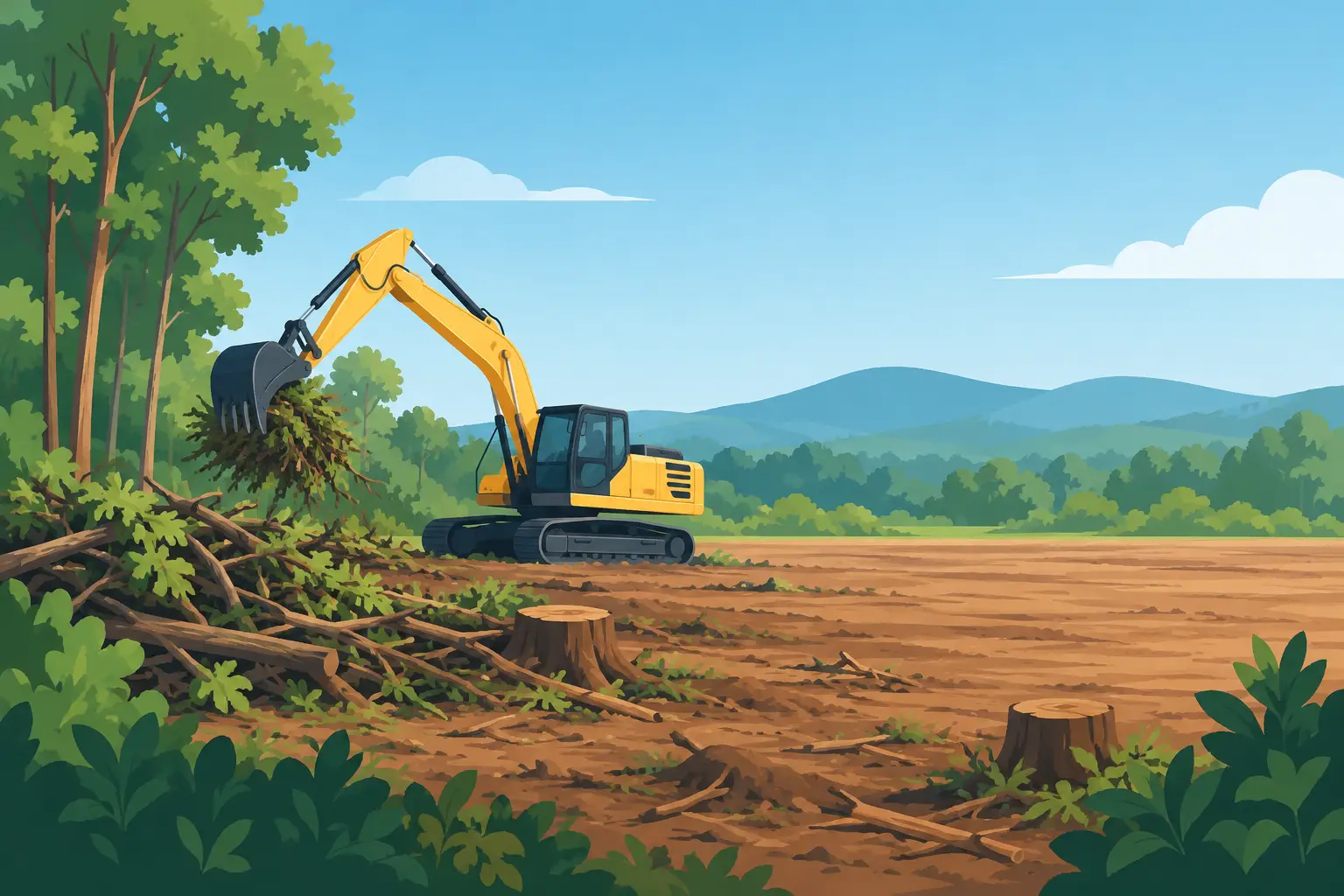
A property can look wide open from the road and still be nearly impossible to use. Dense brush, volunteer trees, deadfall, invasive growth, hidden rock, and years of accumulated fuels can block access, raise wildfire exposure, and turn a buildable parcel into a costly problem.
Undeveloped acreage clearing puts the land back under control. The right work creates usable access, reduces hazardous vegetation, exposes the true condition of the ground, and prepares the property for the next job – whether that is defensible space, a driveway, a homesite, fencing, pasture improvement, or future development.
Start With the Land’s Real Purpose
Clearing without a plan wastes time and money. Before equipment tracks onto the property, define what the acreage needs to do when the work is finished.
A rural homeowner may need a safer buffer around a cabin or primary residence. A developer may need a clean building envelope, access route, and room for utility work. A ranch owner may need brush removed from fence lines, trail corridors, or grazing ground. The end use determines how much material should come out, what should remain, and where the work should stop.
Not every tree needs to be removed. Not every slope should be stripped bare. On Colorado acreage, selective clearing often delivers better long-term results than flattening everything in sight. Keep healthy, well-spaced trees where they add shade, privacy, or slope stability. Remove the crowded understory, ladder fuels, dead material, invasive vegetation, and small trees that compete for water and carry fire toward larger timber.
That approach leaves land cleaner and safer without making it look abused.
What Undeveloped Acreage Clearing Usually Includes
Every parcel has its own obstacles, but most acreage-clearing projects involve a combination of brush removal, small-tree removal, forestry mulching, access improvement, and light site preparation.
Forestry mulching is often the right starting point for overgrown Colorado ground. A drum mulcher processes brush, saplings, and small trees into mulch directly on the surface. There is no need to pile and burn material, haul away every branch, or leave slash scattered across the property. The mulch helps cover disturbed soil, slows moisture loss, and reduces erosion on many sites.
That does not mean mulching solves every problem. Large timber, heavy rock, buried debris, steep unstable slopes, and material intended for off-site disposal may require a different approach. Some projects also need grading after clearing to establish a driveway, level a pad, improve drainage, or correct rutted access.
The best results come from matching equipment and method to the ground. A high-flow compact track loader with a drum mulcher can work effectively in tight, rough, and uneven terrain where larger machines may cause unnecessary disturbance or cannot safely maneuver.
Clearing for Wildfire Mitigation
In many Colorado communities, undeveloped land is not just unused land. It is part of the fuel path around a home, outbuilding, road, or neighboring property.
Dense shrubs, low branches, dead grass, downed limbs, and tightly packed young trees allow fire to move across the ground and climb into the canopy. This is why wildfire mitigation is more than removing a few visible piles. The goal is to break up continuous fuels and create separation between vegetation, structures, and access routes.
A well-cleared property still looks like Colorado. It may retain mature trees, native grasses, and natural contours. What changes is the fuel arrangement. Brush is reduced. Tree spacing improves. Dead and diseased material comes out. Access roads become easier for owners, contractors, and potentially emergency vehicles to use.
Conditions matter. A heavily timbered mountain parcel needs a different treatment than a dry Front Range lot choked with gambel oak, rabbitbrush, and volunteer pines. Elevation, slope, vegetation type, prevailing wind, nearby structures, and local requirements all affect the scope. Blanket rules rarely fit every property.
Access Comes Before the Big Work
Acreage is only useful if people and equipment can reach the right areas safely. Many undeveloped properties have faded two-tracks, narrow gates, soft ground, creek crossings, low-hanging limbs, or slopes that become impassable after weather moves in.
Clearing an access corridor can be one of the highest-value parts of the project. It opens room for inspection, fencing, surveying, utility crews, material delivery, construction equipment, and routine maintenance. It also gives property owners a clear route to move around their own land instead of pushing through brush or risking damage to vehicles.
Access improvement may involve removing encroaching vegetation, widening a route, cutting back limbs, addressing surface obstacles, and grading where appropriate. Drainage deserves attention here. A road that looks fine in dry weather can wash out fast if runoff is not managed. The right grade and water control protect the work long after the machines leave.
Know What Is Below and Around the Work Area
Undeveloped does not always mean untouched. Old fence wire, abandoned foundations, buried trash, wells, utility lines, irrigation components, and unmarked features can sit beneath thick vegetation. A careful walk-through catches many issues before they become expensive equipment damage or safety hazards.
Property boundaries matter too. Do not assume a fence line is the legal line. If clearing will run close to a neighboring parcel, easement, road, drainage, or utility corridor, verify the limits before work begins. The same goes for protected areas, local vegetation rules, and required permits.
A professional contractor should ask direct questions early: What is the planned use? Are there known utilities or wells? Where are the boundaries? What material stays and what material goes? Are there structures, septic systems, gates, or sensitive areas to protect?
Clear answers prevent avoidable rework.
Mulch, Haul-Off, or Piles?
Landowners often ask what happens to the vegetation after it is cut. The answer depends on the material, site goals, and fire plan.
Mulching is efficient for brush and small-diameter trees. It leaves a manageable layer of organic material on the soil and avoids the cost and disturbance of constant hauling. On sloped or erosion-prone ground, that ground cover can be especially useful.
Haul-off makes more sense when debris is mixed with trash, when a site needs a cleaner finish for construction, or when material cannot remain on the property. Piling may be appropriate for certain projects, but piles require a plan. They can create future fuel concentrations if they are not properly managed, chipped, removed, or disposed of under approved conditions.
The lowest upfront price is not always the lowest-cost solution. A quick cut-and-drop job can leave material that blocks access, increases cleanup work, or adds fuel near the exact areas meant to be protected. Ask how the finished ground will look and function, not just how many acres will be cut.
Timing Can Change the Job
Colorado weather sets the rules. Dry conditions, mud, snow, high winds, seasonal fire restrictions, and freeze-thaw cycles all affect access and production. A project that is straightforward in late summer may need a different approach during spring runoff or after an early snow.
Wildlife and vegetation timing can matter as well. Some properties benefit from clearing before construction activity begins. Others need work scheduled around grazing, seasonal access, or planned utility installation. Good planning puts heavy equipment on the ground when it can do the work cleanly and safely.
Choose Results, Not Just Machine Hours
Equipment matters, but operator judgment matters just as much. A mulcher in the wrong hands can scar soil, damage retained trees, miss key fuel connections, or leave a property rougher than it needs to be.
Look for a contractor who can explain the work area, identify trade-offs, and build a scope around your actual goal. Yeti Defensible Landworks brings equipment-built execution to difficult Colorado acreage, with a focus on safe access, fuel reduction, and visible land transformation.
Before booking, be ready to share parcel location, approximate acreage, photos or video of the vegetation, access conditions, known obstacles, and the intended end use. That information helps establish a realistic plan before the first pass begins.
Your land does not need to stay hidden behind brush, deadfall, and poor access. Clear the hazards, keep what serves the property, and create ground that is safer to own and ready to use.
Leave a Reply