
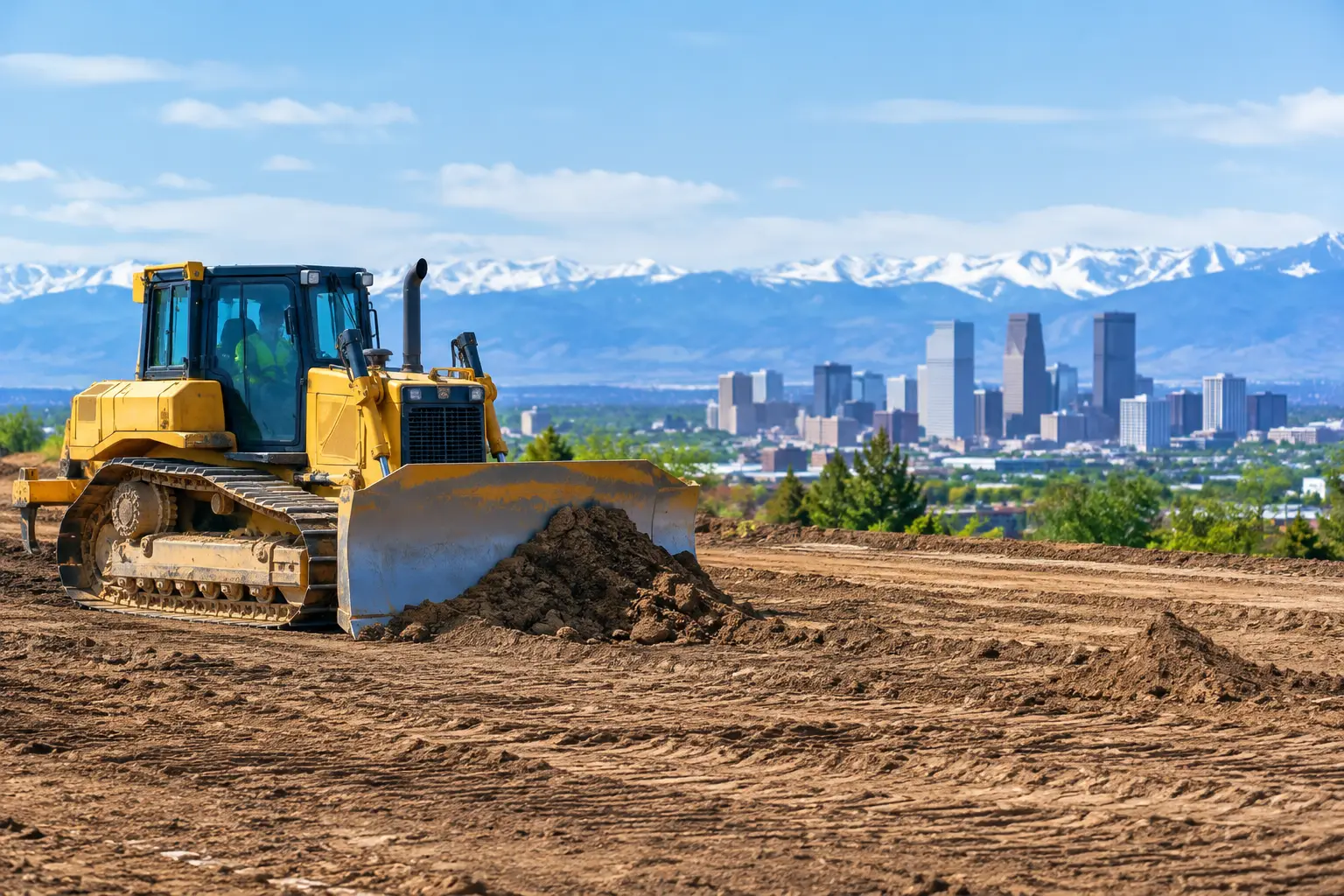
A Colorado lot can look flat from the road and still create expensive problems once water starts moving. Denver land grading is the work that puts the ground in command: directing runoff, building dependable access, creating usable pads, and preparing a property for construction, restoration, or safer day-to-day use.
Good grading is not simply pushing dirt until an area looks level. It is a planned change to the way a site performs. On Front Range properties, the right finish must account for clay soils, sudden hard rain, freeze-thaw cycles, existing drainage routes, slopes, trees, utilities, roads, and the intended use of the land. Get those details right before equipment mobilizes, and the property works harder for you afterward.
What Denver Land Grading Must Solve
Every site has a different objective. A homeowner may need runoff pulled away from a foundation and driveway. An acreage owner may need a rough, rutted access route reshaped so trucks, trailers, and emergency equipment can get through. A builder may need a stable pad and a workable route for the next phase of site preparation.
The common thread is control. Grading creates intentional high points, low points, and slopes so water does not collect where it can damage structures, cut ruts, soften drive lanes, or turn cleared ground into mud. It also establishes a surface that equipment and people can actually use.
That does not always mean a dead-flat yard. In fact, perfectly flat ground often holds water. Most successful grading uses measured fall to move runoff toward a planned outlet while keeping it away from buildings, retaining features, neighboring property, and sensitive areas. The exact slope depends on the site, soil, available drainage paths, and local requirements.
Start With the Ground You Have
Before a machine cuts or fills, walk the property with a practical eye. Look for standing water, erosion scars, washouts, soft spots, exposed roots, failing driveway edges, and areas where runoff already concentrates. These are not cosmetic flaws. They show how the land behaves under pressure.
Property owners should also identify the final use of each area. A future shop pad, parking area, fire-access route, pasture entrance, and backyard all require different preparation. A pad needs a stable, properly built surface. An access lane needs drainage and durable material placement. A defensible-space project may require light contouring after vegetation removal so the cleaned area sheds water without exposing bare soil to erosion.
Utilities matter just as much. Mark underground lines and confirm overhead clearance before work begins. If the project connects to public drainage, changes a major drainage path, involves a steep slope, or supports new construction, permits, engineering, or site-specific approvals may be required. A capable contractor can identify field conditions, but property owners should verify the permitting path that applies to their address and project scope.
Clear First, Grade Second
Overgrowth can hide the real condition of a site. Thick brush, small trees, invasive vegetation, old debris, and root balls make it difficult to see low areas, drainage channels, and unstable ground. They also limit where equipment can travel safely.
On many Colorado properties, clearing and grading belong in the same work plan. Forestry mulching can reduce brush and small trees while leaving mulch on the ground to help protect disturbed soil. Selective removal opens the area without stripping every living feature from the property. Once the site is visible and accessible, grading can address the actual contours instead of guessing beneath vegetation.
There is a trade-off. Mulch is useful for erosion control and moisture retention, but it is not a substitute for structural base material beneath a driveway or building pad. Where a surface must carry repeated vehicle weight, the organic layer and weak material may need to be removed or managed before aggregate and compaction work begin.
Drainage Is the Job That Keeps Paying Off
Water is usually the deciding factor in whether a grading project holds up. Denver-area storms can deliver a lot of water fast, while snowmelt creates a slower but persistent flow. If runoff has no planned route, it finds one. That route may be through a driveway, beside a foundation, across a neighbor’s lot, or down the steepest section of your property.
A sound plan preserves or creates positive drainage away from structures. It may use shallow swales, drainage ditches, shaped shoulders, properly placed culverts, or controlled outlets depending on the layout. On rural and mountain properties, drainage work often needs to protect access roads from being undercut or washed out during heavy weather.
Avoid the temptation to solve standing water by filling it without finding the source. Raising one low spot can push water toward a house, garage, fence line, or adjacent parcel. Likewise, cutting a channel without protecting the outlet can trade ponding for erosion. The finish has to work as a connected system.
Building Pads and Driveways Need More Than a Smooth Finish
A smooth-looking surface can still fail under a loaded truck, concrete delivery, or spring moisture. For building pads and access improvements, the question is not only whether the surface is level. It is whether the ground below can support the work ahead.
Topsoil, vegetation, loose organic material, and saturated soil can create weak zones. Depending on site conditions and project requirements, preparation may include stripping unsuitable material, shaping subgrade, placing aggregate, compacting in lifts, and building enough fall for drainage. Larger construction projects may need engineered specifications and testing. That is not overkill when the site will carry a structure or regular heavy traffic.
Driveways deserve the same discipline. A road that looks fine in dry weather can become a rutting, pothole-filled mess after runoff reaches it. Proper crown or cross-slope, stabilized base, controlled roadside drainage, and culverts where needed make the difference. The right approach depends on grade, soil type, vehicle traffic, and where water enters and leaves the route.
Equipment Matters on Difficult Ground
Tight residential lots, rocky acreage, uneven hillsides, and overgrown sites call for equipment that can work without causing unnecessary damage. Compact track loaders spread weight across a larger footprint than wheeled equipment, giving operators better traction and control on soft or irregular ground. With the right attachments, they can clear vegetation, move material, shape terrain, and improve access in areas that larger machines may struggle to reach.
Equipment alone does not make a grading job successful. Operator judgment matters. That means knowing when to work with existing contours, when to remove material, where to protect topsoil, and when wet conditions make the ground too vulnerable to traffic. Rushing across saturated soil can create compaction, rutting, and repairs that were avoidable.
Plan for the Finish, Not Just the First Day
The work is not complete when the machine leaves. Disturbed ground needs a finish that matches its purpose. A cleared and graded homesite may need erosion-control measures until construction begins. A rural access road may need periodic maintenance after major storms. A restored area may need seed, mulch, or other stabilization suited to the season and soil conditions.
Ask practical questions before booking the work. Where will material be placed or removed? How will runoff leave the improved area? What surfaces need aggregate or compaction? Which trees, fence lines, utilities, and drainage features must be protected? A clear answer to these questions prevents change orders and keeps the project focused on the result you actually need.
For property owners, the right Denver land grading project creates more than a cleaner view. It gives water a route, equipment a path, and future work a solid place to start. Walk your property after the next hard rain. What that water does will tell you where to begin.
Leave a Reply